
Names are considered a human universal. No matter the language or culture, every human population has a naming system that labels individual members of the group.
And in most cases, these labels (or names) are discrete sounds that don’t have anything to do with the person’s attributes. For example, the name is not an imitation of what the individual sounds like, nor is it describing their looks.
It’s thought that our various naming systems have evolved because we live in large and complex social groups – and within such large communities, it’s vital that we can speak to specific individuals. For a long time, we thought names were unique to humans, but recent research suggests this is not the case.
Indeed, a wide range of animals use names, too.
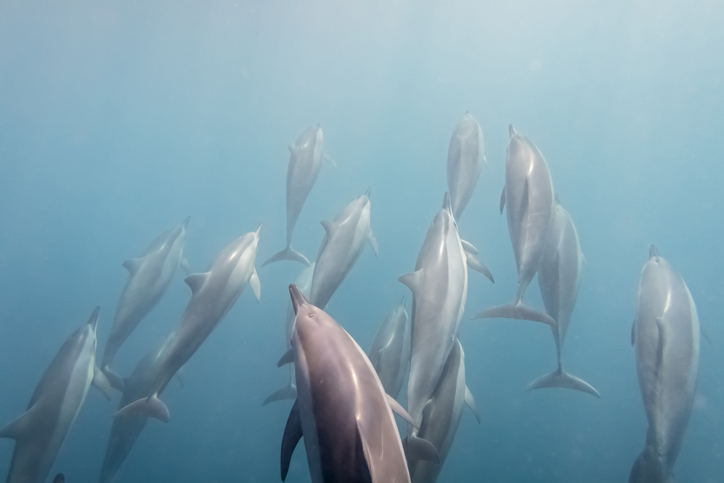
Both bottlenose dolphins and green-rumped parrotlets use ‘signature sounds’ to identify themselves. These are unique noises that the dolphins develop when they’re infants – making sure the sound is distinct from others in their social group – and that the parrotlet chicks learn from their parents in their first few weeks of life.
The parrotlet parents use unique calls to speak to each chick and the chicks learn this particular call, which then (with a little tweaking) becomes their signature sound. We know the calls between parent and offspring are not just similar due to genetics, as adopted chicks learn the calls that their unrelated parents give them.
While these signature sounds tend to stay stable throughout the animals’ lifetimes, there is some flexibility. For example, when groups of male dolphins become close ‘friends’, they sometimes change their signature sounds so they sound more similar. This is thought to strengthen social bonds and improve coordination.
The special dolphin and parrot sounds function a little differently to how names work in humans, however. Members of these animals’ social groups mimic an individual’s signature sound, whereas our names don’t rely on imitation, but rather learning an ‘arbitrary’ label.
- Whales speak in dialects and elephants have names for each other: The incredible secrets of animal language
- The US Navy detected a strange sound in the ocean. These scientists think it could be coming from the loneliest animal on the planet
The function is similar, though – the signature sounds are unique to each individual and are used as a way to communicate with specific others.
Other species who could be argued to have naming systems include marmosets and Egyptian bats. Common marmosets change the sound of their phee calls to address specific others, and, importantly, the intended receiver (the individual that the call is meant for) knows which calls are meant for them.
Similarly, Egyptian fruit bats make vocalisations that contain information about the intended receiver and the sender (the individual who’s speaking).
The aforementioned species have calls that work a little like human names, but there’s one animal that may use names in the same way we do. African elephants use different ‘rumbles’ (a deep, vibratory call) to communicate with specific individuals.
These targeted rumbles are arbitrary and discrete sounds and don’t rely on imitation, as in the case of dolphins and parrots. And individual elephants know which ‘name’ is theirs: they respond with enthusiasm when they hear it, while reacting less to the ‘names’ of others.
What all these species have in common is a complicated social life. They live in large groups where they interact with the same individuals over and over again – sometimes, as in the case of elephants, for half a century or more.
So it’s likely that these species have developed naming systems for the same reason humans have: to help navigate the complexities of being super-social creatures.
We still have a huge amount to learn about animal vocalisations, and it’s possible that many more species use names. In fact, as this is a relatively new (and difficult) field of study, it’s likely that we’ve barely scratched the surface.


