
Scientists are actively working to understand how the climate crisis is causing major shifts across the planet, particularly within ecosystems. Now, new research from the United States investigates how these environmental changes are impacting black bear hibernation.
Scientists at Virginia Tech’s College of Natural Resources and Environment examined both physical and environmental cues to help predict wildlife behaviours in a changing climate. As the first known study of its kind, it provides conservationists with baseline data on black bear hibernation, say the researchers, who published their findings in the journal Proceedings of the Royal Society B: Biological Sciences.
The American black bear (Ursus americanus) has 16 subspecies across the US and Canada, with hibernation typically lasting between three and eight months depending on local climate. Bears don't eat, drink, urinate or defecate during this time. Studying behaviour of an animal that remains hidden away and inactive for months comes with many challenges, meaning there are still many grey areas within bear hibernation.
Led by doctoral student Brogan Holcombe, the study examined how temperature and day length interact to shape black bear hibernation. By analysing more than 22,000 hours of continuous footage, the team tracked four wild, pregnant female bears in Virginia across multiple stages of the hibernation cycle. This identified 45 distinct behaviours and linked them to both physical changes and environmental cues, specifically temperature and daylight hours (known as photoperiod).
- Climbers descend 60m vertical shaft in Greece – and find bear scratch marks at the bottom
- I spent 15 days trekking the high peaks of the Himalayas in search of a legendary bear
Holcombe’s team found that temperature and daylight hours interact to regulate activity, particularly during pre-hibernation feeding and spring emergence. The exact onset of hibernation appears to be triggered by temperature alone, whereas both temperature and photoperiod drive activity during the other stages.
Historically, black bear hibernation was thought to be governed strictly by temperature. These findings challenge that long-held assumption, revealing a far more complex relationship with the environment that could be vulnerable to climate disruption. These unseasonal shifts may put pressure on food availability, ultimately driving bears closer to human-populated areas in search of their next meal.
- These are the world’s smallest bears – and no, you still can’t cuddle them
- What is the most numerous bear in the world?
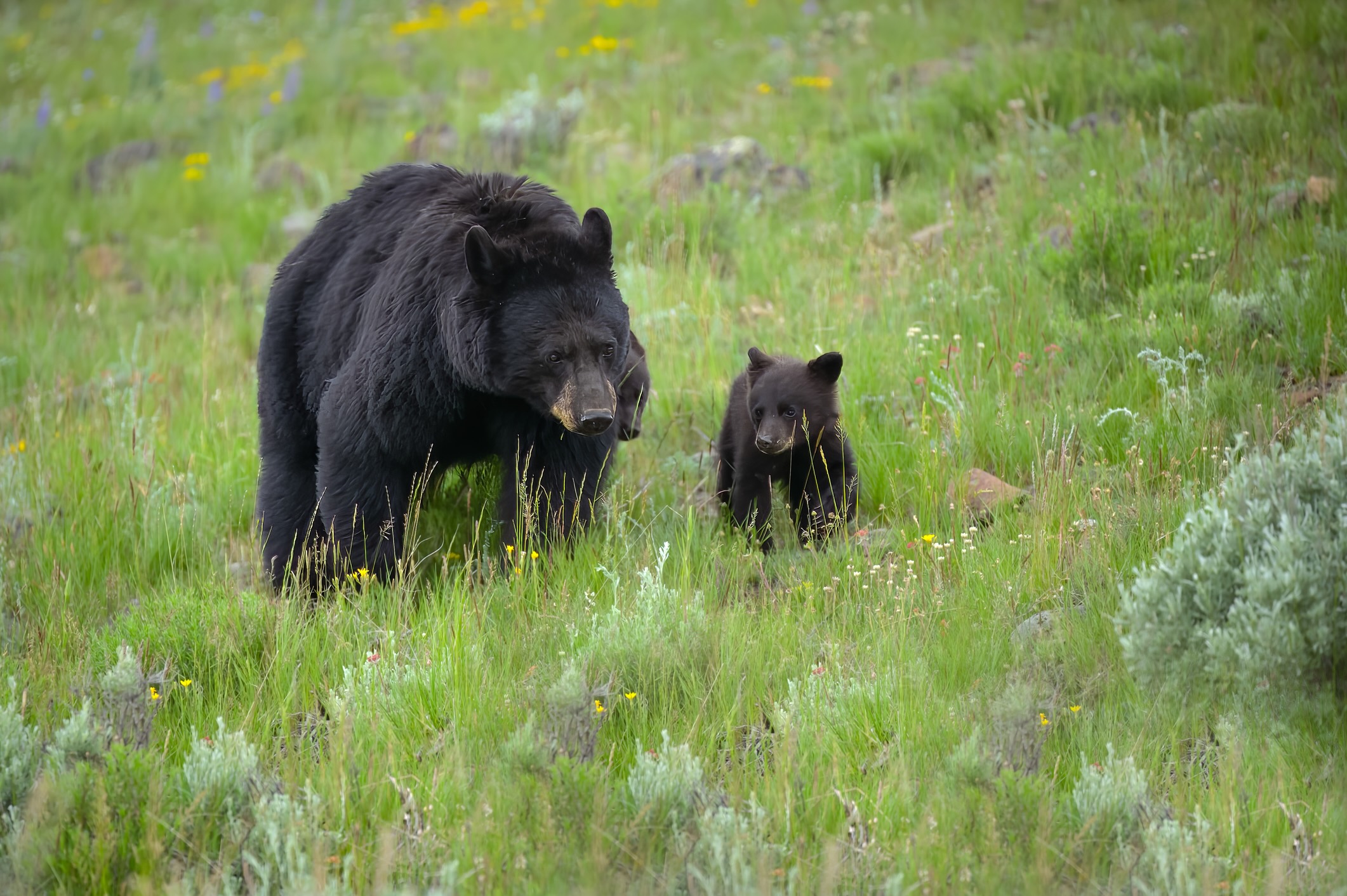
These findings will offer crucial data to help shape future conservation strategies, say the researchers. By deepening our understanding of how black bears respond to environmental change, conservationists will be better equipped to anticipate and manage future behavioural shifts.
Currently, black bears are not endangered; they hold the largest population of any bear species globally, with an estimated 850,000 to 950,000 individuals roaming the U.S. and Canada. While populations experienced historic declines, targeted conservation efforts have enabled impressive recoveries. A prominent example is the Louisiana black bear (Ursus americanus luteolus), which was listed as Threatened under the Endangered Species Act in 1992 due to habitat loss and overhunting, but officially recovered and was delisted in 2016.
Read the full findings of the study here.
Top image: trail camera catches a black bear walking in the forest near Blacksburg in the US state of Virginia. Credit: Brogan Holcombe
More wildlife stories from around the world
- I woke up to a bear cub pulling at my sleeping bag – and then its mother arrived
- What is Fat Bear Week and why is everyone so obsessed with it?
- 14 incredible photos of bears enjoying the water – whether it's swimming, fishing or just cooling off – in some of the world's wildest places
- This Italian mountain range is home to the world’s only population of these adorable brown bears


