
Eyes wide, I pointed at the candyfloss-coloured creatures in front of me. Their bumpy skin and blushing protrusions wouldn't look out of place on a teenager's acne-ridden face but, even so, they were quite adorable.
The other diver smiled vaguely, signalled 'OK' to indicate she’d seen them and, after a second or two, swam off. I’d never dreamed I’d see one of these minuscule creatures with my own eyes, so I was baffled by her fleeting glance. Only once we were back on the boat did I realise she thought I was pointing at the pretty sea fan. She hadn’t even spotted the miniature blobs nestled within its nodules: a pair of pygmy seahorses.
- “One of the ocean’s best kept secrets”: adorable pygmy seahorse filmed hiding in coral reef
- Sea muppets look just like seahorses – but they are not really seahorses at all...
These teeny animals are extremely habitat-specific. Bargibant's pygmy seahorses (Hippocampus bargibanti) – the species in front of me – only live on Muricella gorgonian corals and adults spend their whole lives on the same sea fan.
You’d think knowing where to look would make them easy to find but that’s not the case. After all, they’ve adapted to mimic the knobbly pink sea fans they live on as a masterful disguise to keep them safe from predators.
Their size also helps them hide. The largest of the eight known pygmy seahorses grows to just 2.7cm. At less than 1.4cm, the smallest (Satomi’s pygmy seahorse, Hippocampus satomiae) is smaller than a five pence piece.
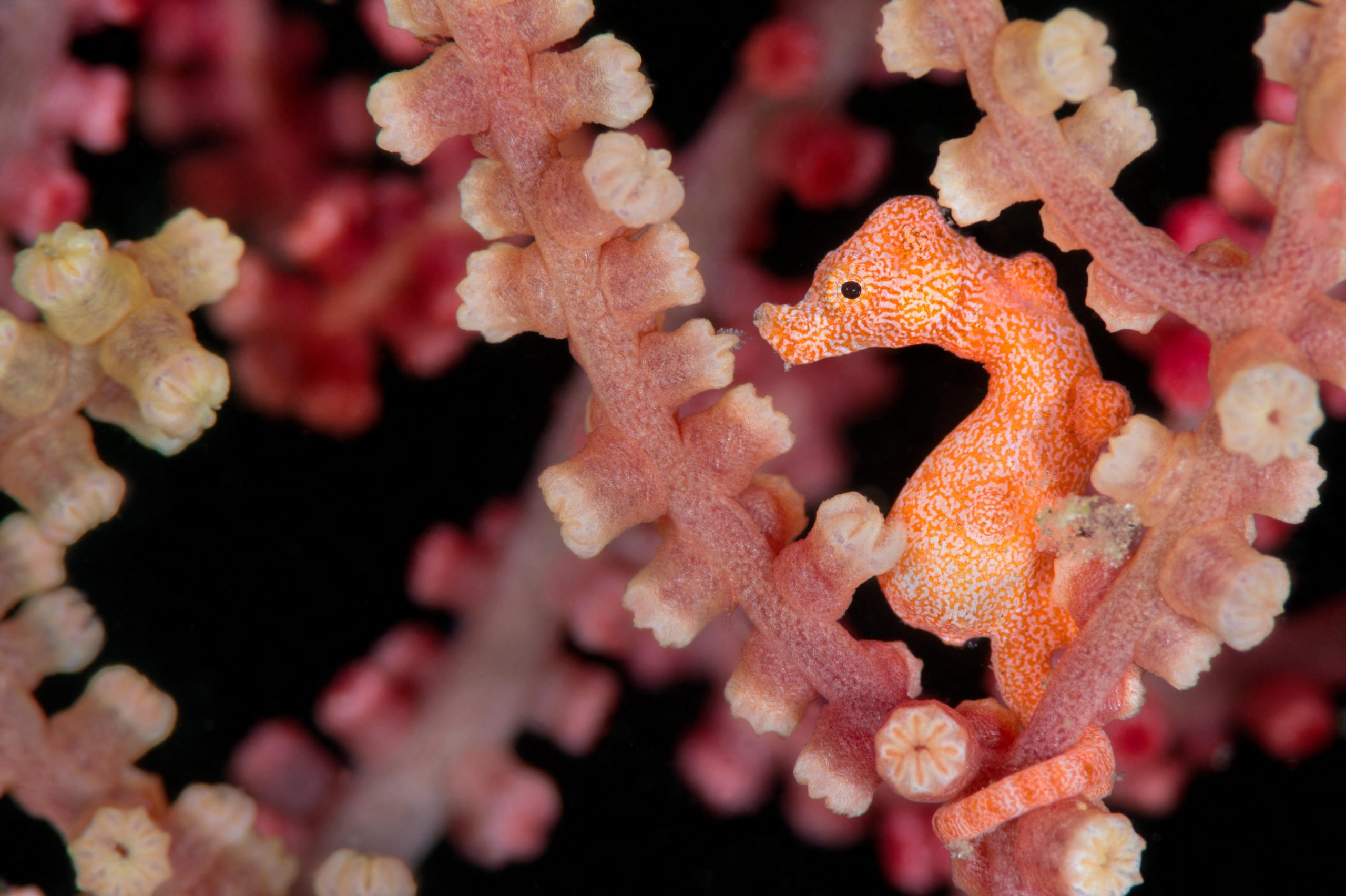
During our week diving in Raja Ampat, Indonesia, my dive guide Yeray Moreno, head of experience and conservation at Rascal Voyages, finned purposefully over to every single Muricella and peered closely. Despite scrutinising every sea fan on around 10 reefs, he only found this one pair. I was reassured he didn’t touch, move or poke anything in his search.
Sadly, that’s not the case for every guide. “There's a lot of pressure from guests to see these animals,” says Richard Smith, the world's leading pygmy seahorses expert. Smith says he’s become aware of “all sorts of crazy behaviour” from people trying to find the little animals: disturbing the seahorses by tapping sea fans with metal pointers or even breaking off sections of gorgonian. “I’ve heard of them moving [the sea fan], cutting them, physically moving the pygmy to get photos, which is perverse,” he says.
On some reefs, word of a pygmy sighting can cause divers to flock there. “I've seen the same gorgonian go from a beautiful fan to a nub in a matter of weeks just from the pressure that they're under,” says Smith, adding that even careful divers can make contact with delicate sea fans.
- Why do seahorses look like miniature horses?
- How and why do seahorses change colour?
- "Giving birth through their narrow clitoris, a female has a birth canal of only about one inch across, making it both painful and risky." 10 craziest animal births ever...
To prevent such damage, Smith created a code of conduct outlining how divers can reduce their impact. This includes “very easy things” such as never touching or manipulating the seahorses or gorgonians, paying close attention to your fins, limiting flash photography and not looking for pygmy seahorses at night. “They don't like bright torches. If the very bright light is on them, that really causes a lot of stress.”
The tiny animal looks so strange that you'd be forgiven for thinking it was created by AI. Its lumpy body blends in perfectly with the little bulges that swell from the fronds of the sea fan. Its camouflage is so perfect that the species was discovered by accident: researcher Georges Bargibant was collecting a gorgonian specimen for a museum collection and realised two tiny seahorses were clinging on to it.
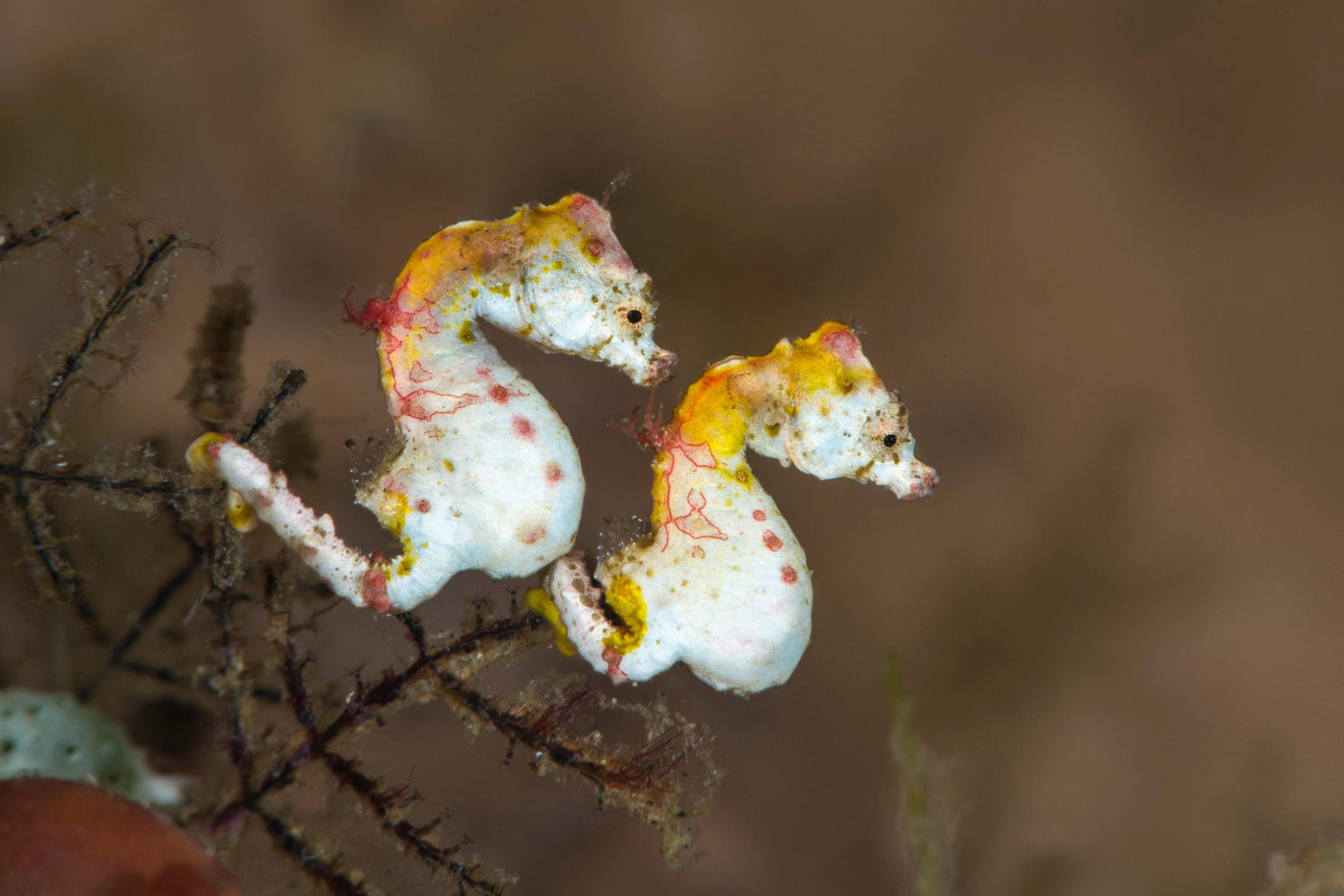
The other species associated with gorgonians is Denise's pygmy seahorse (Hippocampus denise), which lives on at least 10 different types of gorgonians as well as whip corals. While Bargibant's pygmies are always covered in protrusions, Denise's can be smooth or bumpy, depending on the texture of their host coral. Others don’t live on corals at all: Pontoh's pygmy seahorses (Hippocampus pontohi) are found on algae and hydroids.
Their diminutive size protects pygmy seahorses from being spotted by predators but may also be why they’ve been rather overlooked. “People just assume little things just are not worth paying attention to somehow,” says Smith. Bargibant's pygmy seahorses were only discovered in 1970 and the other seven known species were all described after the year 2000. “They're really not well known at all,” he says.
Smith is on a quest to change this, having learned first-hand how captivating they are. He’s spent hundreds of hours watching their lives unfold like a tiny underwater soap opera.
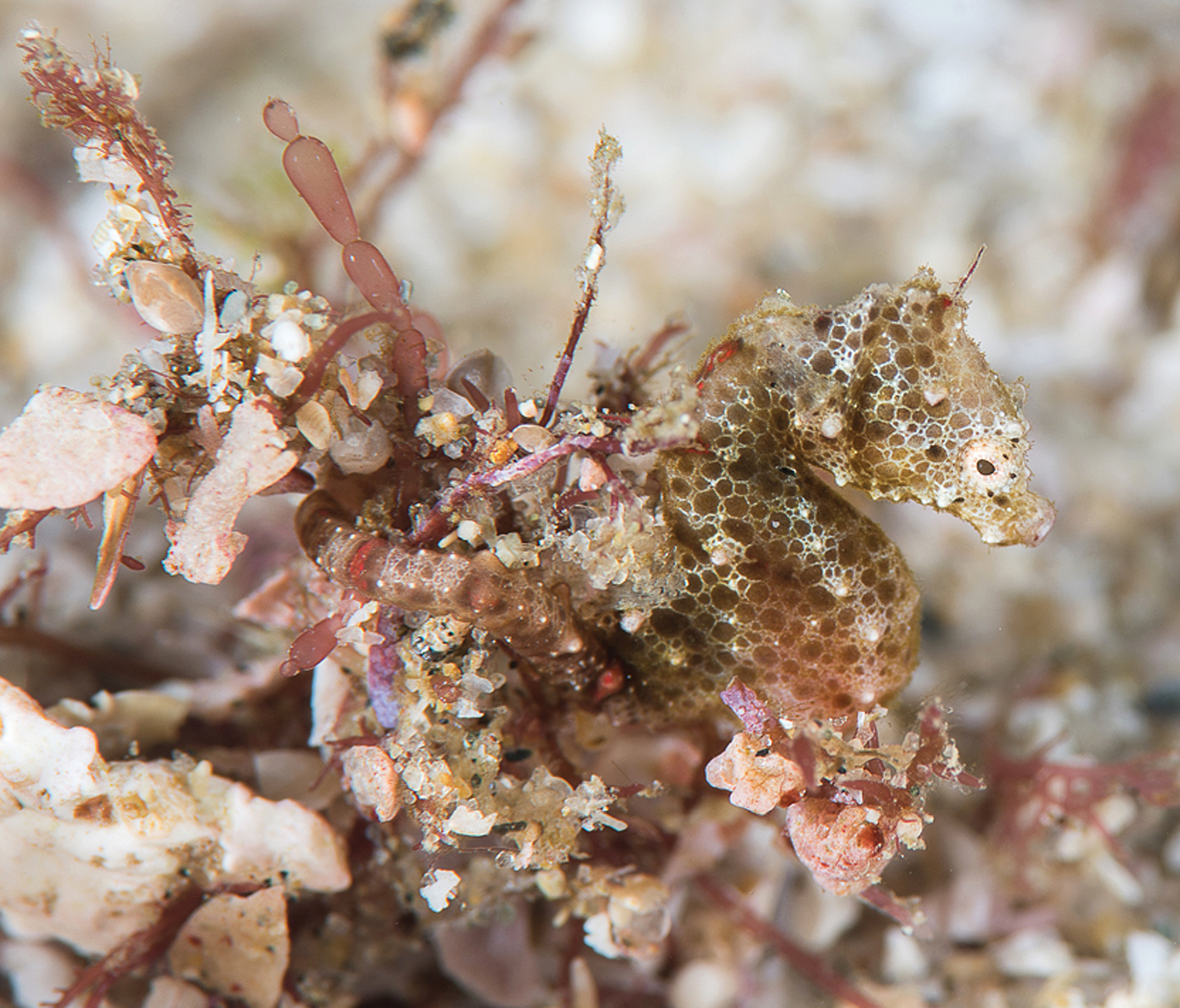
These tiny fish potter around feeding on tiny crustaceans but Smith has seen all sorts of surprising behaviours. “They have little places that they sleep, and they interact with each other and do little dances,” he says. He’s seen couples mating and males giving birth. Like the other seahorse species they branched off from about 18 million years ago, in pygmy seahorses it’s the males who carry the young and give birth. During courtship, females transfer their eggs to the males who fertilise them. The dads incubate the embryos and give birth when the fry are ready to survive on their own.
- Seahorse guide: what they are, where they live - and why they change colour
- How and why do male seahorses get pregnant?
- Coral reefs guide: what is coral and coral bleaching, and species to spot
Smith has even seen rivals strangling each other while competing over a female, “a bit like a mini version of an elephant seal,” he says. Arguably, this dominance display was cuter than the violent skirmishes that break out between seal bulls.
New species are still being discovered. Smith was amazed to discover the Japanese pygmy seahorse (Hippocampus japapigu) in 2018 which lives “just a stone’s throw from Tokyo”.
Even more amazingly was the totally unexpected discovery of the Sodwana pygmy seahorse (Hippocampus nalu), which Smith and colleagues described in 2020. Finding the species in South Africa’s Sodwana Bay was incredible because no one knew there were pygmy seahorses in the Indian Ocean.
When the IUCN specialist group for seahorses, pipefish and sea dragons were looking for a new pygmy pipe horse, they asked local dive guides to share their sightings. When one photo made its way to Smith in efforts to identify the creature, he was flabbergasted: it was a pygmy seahorse. “That's the first one in the whole Indian Ocean,” he says. With colleagues, he put together an expedition to look for the new species. “There's a lot of pressure,” he recalls. “You've got to find a needle in a haystack.” He did find the ‘needle’ – a pair of adults – along with their tiny baby.
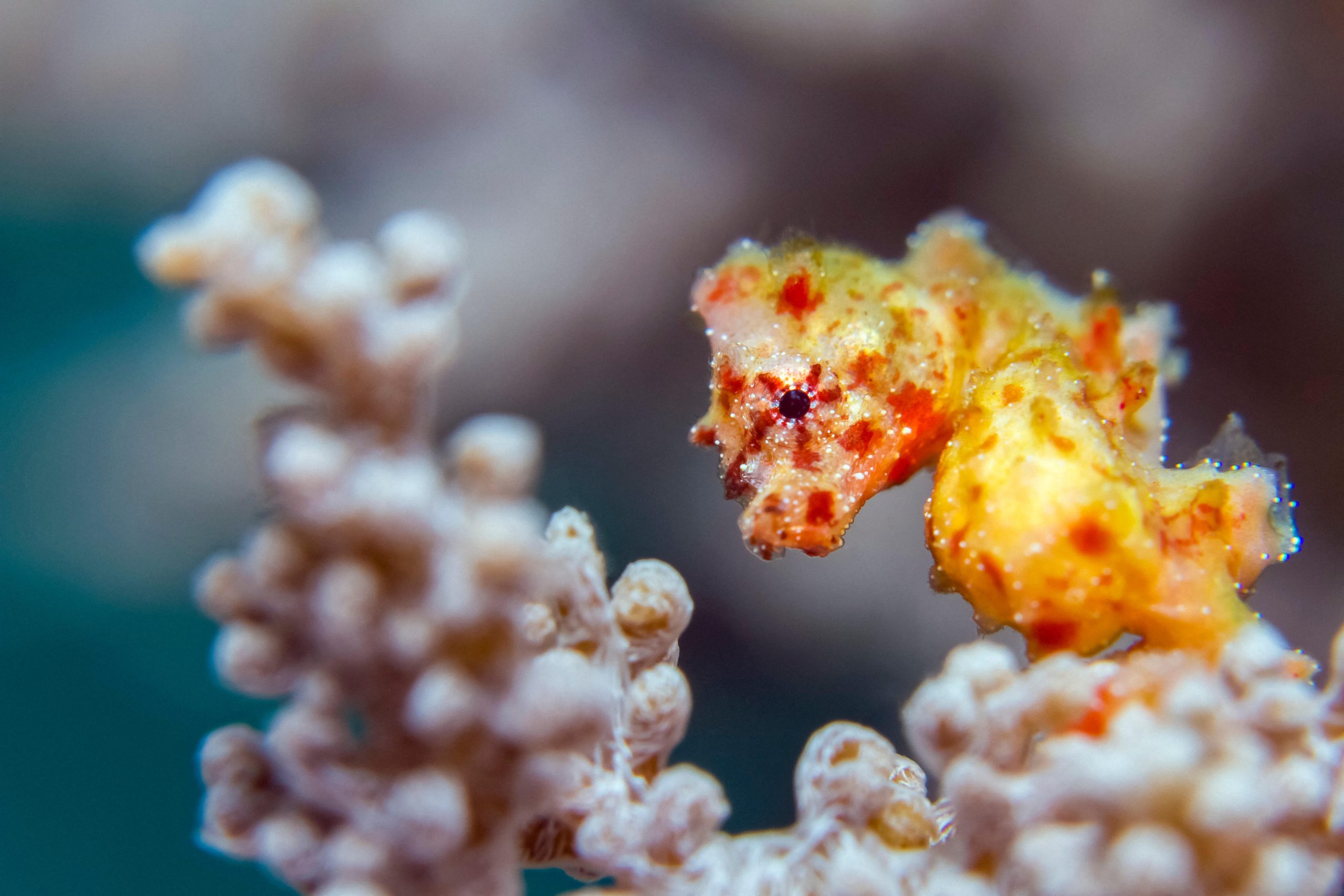
Relying on such a specific home puts these itsy-bitsy seahorses at risk. If anything happens to their home – such as bleached corals dying in warm waters – the seahorses also perish.
- It has no scales, swims upright and grips with its tail – so why is the seahorse considered a fish?
- AI is being used to save pygmy seahorses and whale sharks in Papua New Guinea's Coral Triangle
The Walea soft coral pygmy seahorse (Hippocampus waleananus), which is endemic to the Tomini Gulf in Sulawesi, Indonesia, only lives on Nephthea soft corals. Smith saw them 15 years ago but when he recently returned to the same area, he was heartbroken to see that the reef had been destroyed by bleaching and dynamite fishing. “There was hardly any of the soft coral that this pygmy lives on,” he says. “It's the only place in the world that it's found, and we couldn't find it at all.”
This is the first Critically Endangered species of seahorse and Smith worries it may already have been lost. “I couldn't find a single one,” he says. “And if I can't find it, then that doesn't look good.”
Pygmy seahorses have been hiding in plain sight on reefs for millions of years – unnoticed by humans for most of those – but without healthy reefs they cannot survive. Reducing greenhouse gas emissions and pollution is important for all ecosystems – not just reefs and seagrass beds – and preventing damage to nearshore reefs keeps precious pygmy habitats intact for future generations. Divers and snorkellers can also become citizen scientists by sharing their seahorse sightings with conservation initiatives such as REEF and iSeahorse.
To save these enigmatic pocket-sized treasures before it’s too late, we must act.
Top image: Bargibani's pygmy seahorse. Credit: Marli Wakeling/Alamy
Discover more wildlife stories from around the world:
- "Its venom contains over 100 different toxins and has the power to paralyse muscles." 8 most dangerous, deadliest animals in Florida
- At 2 metres long this is one heck of a tooth – and weirdly it's also the creature's only tooth
- It’s almost the size of the UK, incredibly dangerous and deep enough to swallow Mount Fuji and visited by one third of the world’s whales and dolphins


