
Along the coastline bordering France and Spain are tempestuous waters so rough that several ships, shipping containers and even World War U-boats have been lost here.
- It cost an eye-watering $40,000 to sink this ship and turn it into a reef – and the costly reason weighed less than a pineapple
- "At first, they are little more than bare surfaces in the ocean’s vast expanse.” Why do sunken ships make good artificial reefs?
The Bay of Biscay is around 86,000 square miles and is known for being incredibly dangerous. Although its waters can be flat and calm, violent storms can rage, especially during the winter months.
Although nearly half (44.8%) of the waters in the Bay are less than 200 metres deep, the seabed drops away and plummets to around 4,735 metres at the Biscay Abyssal Plain. If you plonked Mount Fuji on the seafloor in these deepest parts, the mountain’s highest peak would still be nearly 1,000 metres below the surface.
These steep drop offs, complex underwater landscape and exposure to the North Atlantic Ocean are the perfect ingredients for stormy seas with huge swells.
These deep, dangerous waters are also epic for wildlife watching… if you can stand the seasickness.
- It’s deep enough to hide Mount Kilimanjaro, contains bone-eating worms and is the world’s largest habitat
- It can swallow 5 Empire State Buildings, is as long as Portugal – and is home to a deadly but rare big cat
Upwellings from its deep canyons and freshwater streaming from the land bring plenty of nutrients. And where there is food, there are animals hoping for a bite.
There are around 90 different species of cetaceans (whales, dolphins and porpoises) on the planet and around 30 of them can be seen in the Bay of Biscay.
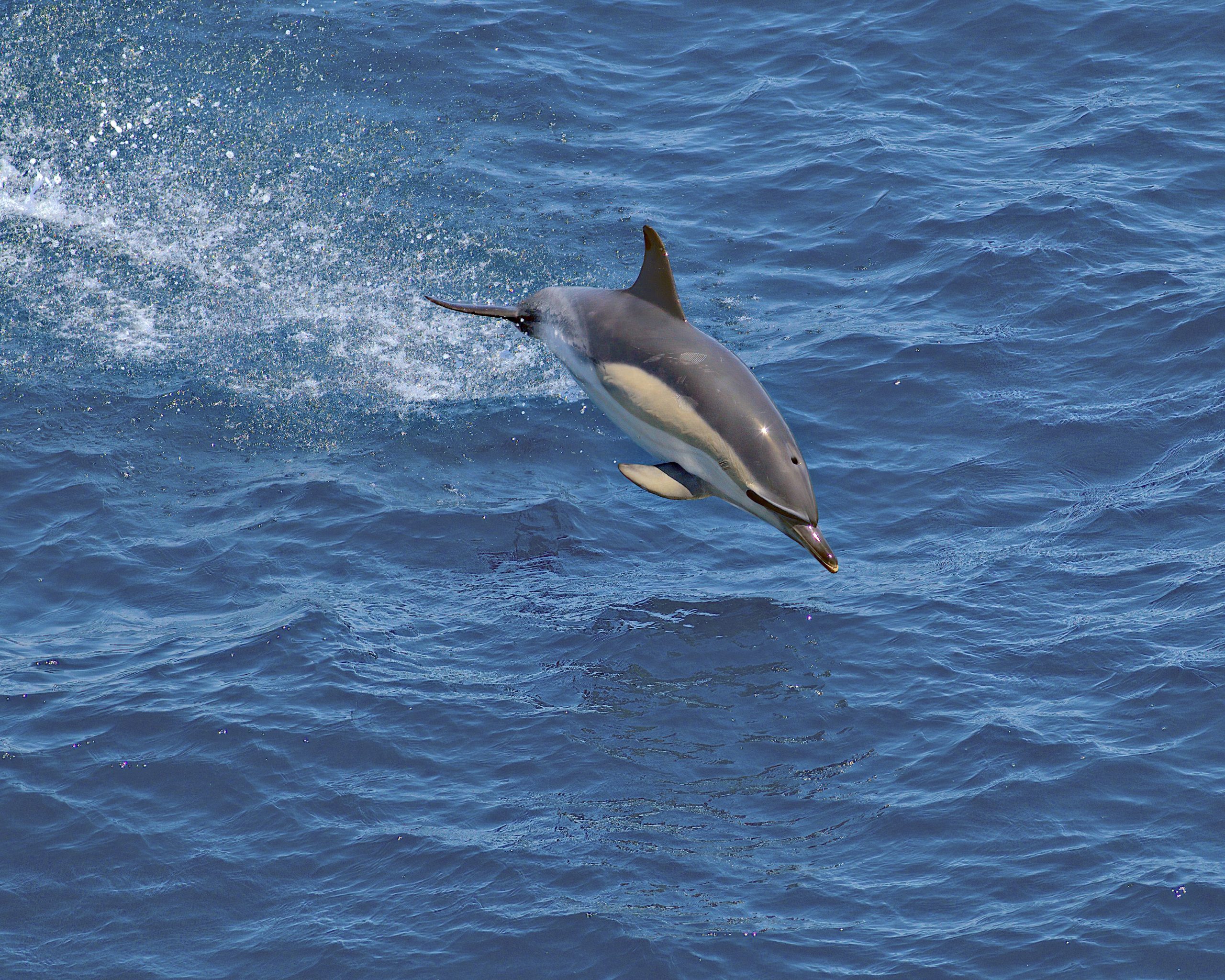
Striped, common and bottlenose dolphins leap from the water, putting on an acrobatic display for anyone watching (or maybe just because breaching is so much fun) while timid harbour porpoises glide along more stealthily, less keen to attract attention.
Long finned pilot whales are spotted frequently but seeing the dark, scratched back of a Risso’s dolphin is much rarer (although sometimes possible).
- It's sleek, black, incredibly beautiful and very fast – and is known as the 'cheetah of the deep sea' despite weighing over a tonne
- At a staggering, gigantic 33 metres long it's not only the biggest animal in the world today, it is the largest animal to have ever lived...
Some lucky travellers have even been known to see blue whales, although sightings of these gentle giants are rare. Those wanting to see ocean titans could still be in with the chance of seeing the world’s second largest whale: fin whales, which visit these waters regularly (especially in the summer), are just a few metres shorter than blue whales and just as spectacular to see in real life.
Biscay’s underwater canyons are like sweetshops for sperm whales which come to hunt squid in the deep waters. Cuvier’s beaked whales – the world’s deepest diving mammals – have the same idea and are thought to frequent these waters throughout the year. Although beaked whales tend to be elusive, scientists have documented Northern bottlenose whales, Sowerby’s beaked whales and True’s beaked whales here too.
- It's as heavy as 10 elephants, as long as 2 buses and needs to eat a massive 2 tonnes of food a day… Oh and it can cruise at speedy a 37kmh…
- Can whales and dolphins crossbreed?
Minke whales also visit but they can be harder to spot because they’re smaller than many other baleen whales and don’t lift their tail fluke above the water when they dive down. To see them, look out for the characteristic band of white on their pectoral fins.
There’s so much going on in these waters that marine conservation charities, such as ORCA and MARINElife join ferries and cruise ships to collect wildlife sightings data from the region.
But everyone travelling through these waters has the chance to see something incredible. “You don’t need to be a marine biologist to enjoy Biscay’s incredible wildlife, you just need to know how to look,” writes a member of the ORCA team in a blog. “Don’t try to watch all of the sea at once – scan just below the horizon and use your peripheral vision for movement closer to the ship.”
They recommend looking out for dark shapes, unusual movement or splashes in the water, the blow of a whale exhaling or lots of excitable birds. “If you spot several seabirds circling and diving in one concentrated area, it’s worth keeping a close eye on the water below,” they add.
The warmer summer months tend to be the best time for whale watching but cool sightings can surprise you. “There’s no guaranteed time for sightings,” according to ORCA, “but the more time you spend outside, the better your chances.”
top image: The island on the coast of the Bay of Biscay, Basque Country, Spain. Credit: imageBROKER/Kavram / Getty Images
Discover more wildlife stories from around the world:
- It's home to sharks, crocodiles and a deadly 'lethal cocktail' of bacteria, diseases and body parts
- It's the same size as Houston and just teeming with deadly American alligators and highly venomous snakes
- “As it touches the seafloor, it kills whatever living thing it contacts by encasing it in a tomb of ice…” 10 mind-bending, terrifying ocean phenomena


