
Sometimes a seahorse isn’t quite a seahorse. The true seahorses - those oddly proportioned fish with equine heads and curling prehensile tails - are restricted to the genus Hippocampus. These are the fish you see in tacky bathroom art and children’s cartoons and, occasionally, sold as mummified souvenirs in beachtown tourist shops.
Seahorses belong to the family Sygnathidae, which also includes 300 or so species of pipefish, pipehorses and seadragons. Many pipefish and pipehorses have long, pencil-thin bodies lacking the curvature and upright posture that make seahorses so distinctive. However, some of these finned steeds have been molded by millennia of evolutionary forces into very similar shapes.
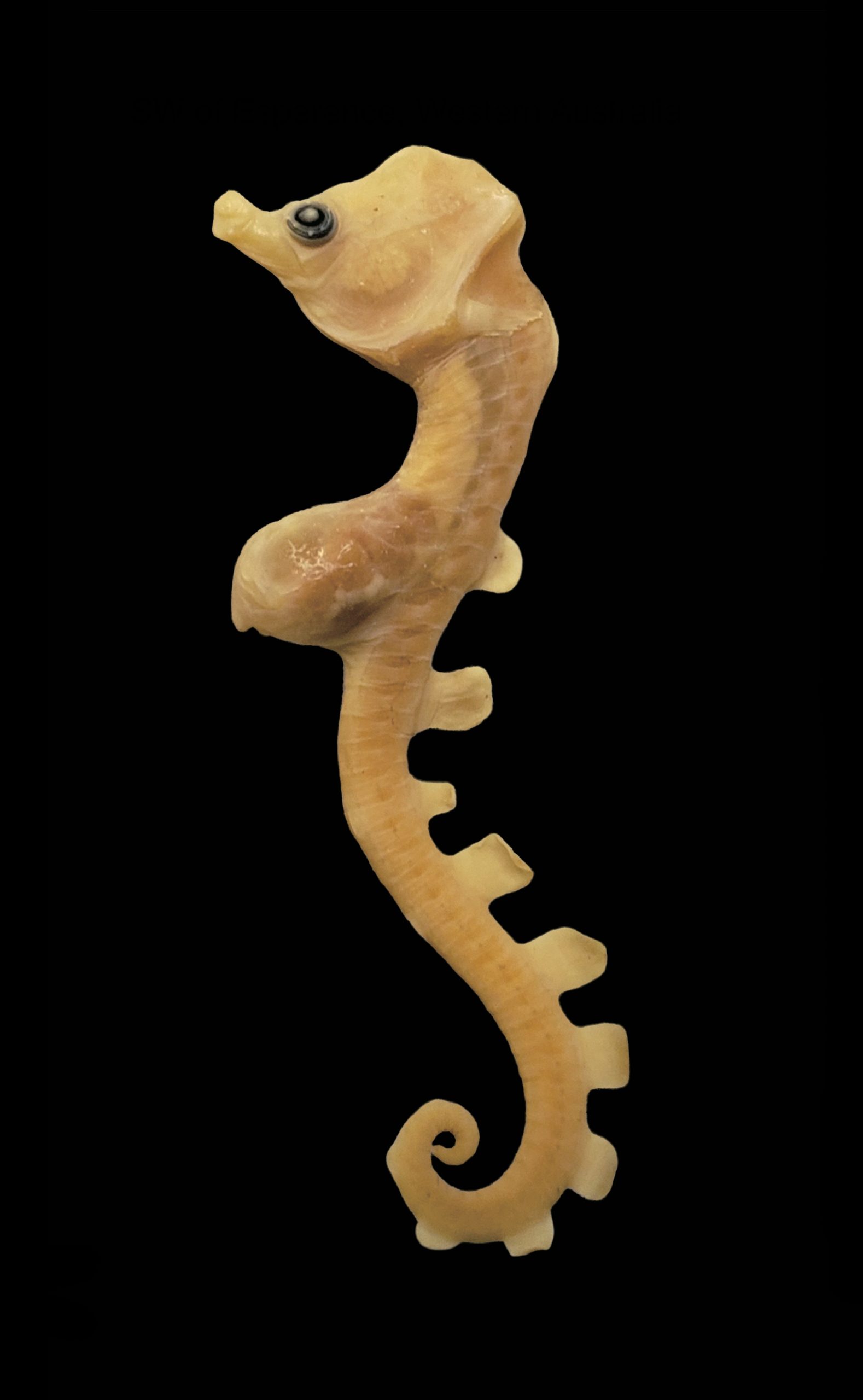
A group of creatures whimsically dubbed sea muppets perfectly illustrates this convergence. Researchers describe three of these not-quite-seahorses in the Journal of Lost Species. They do indeed look much like their Hippocampus cousins - and were initially classified as such.
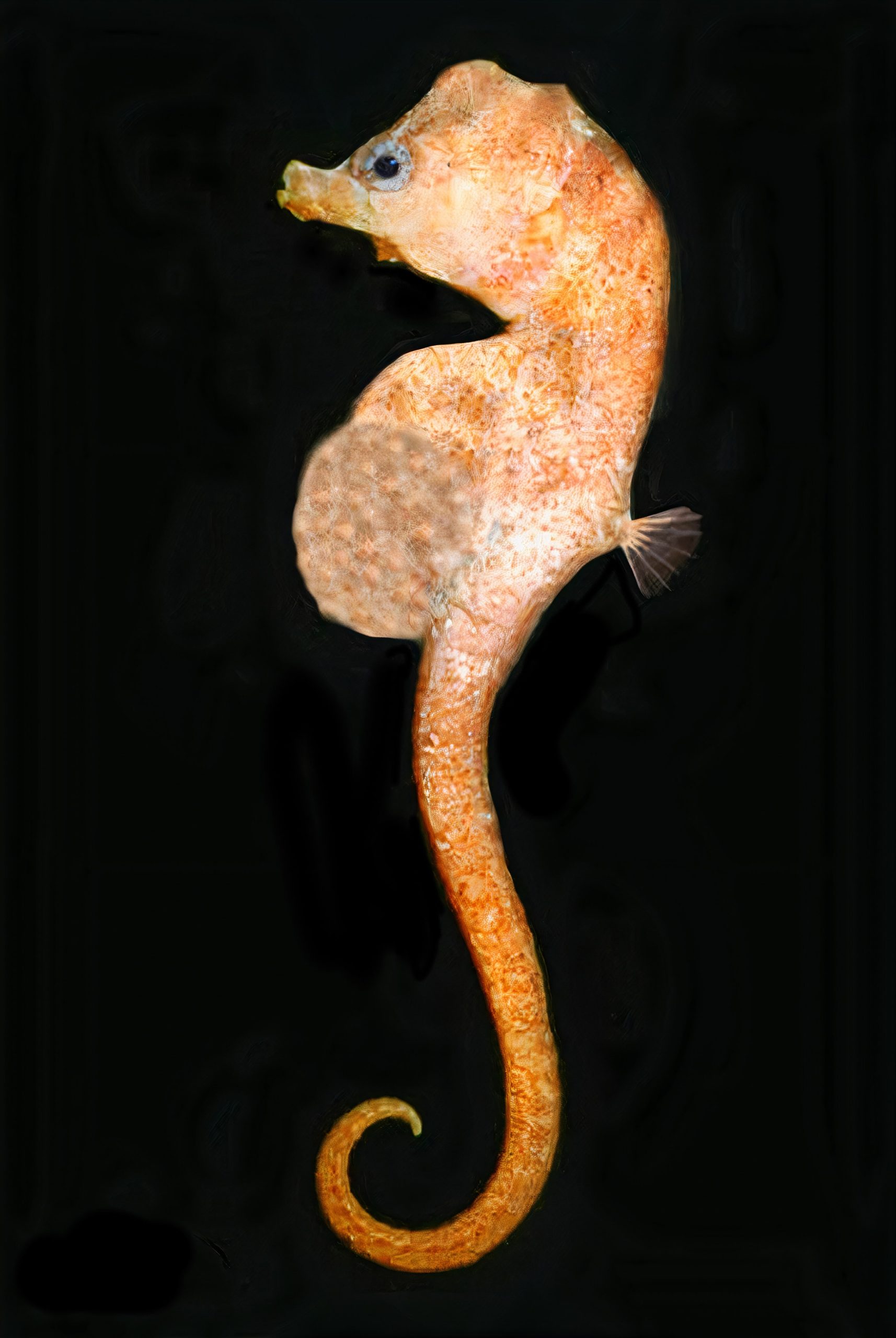
“The seahorse-like body plan has evolved independently several times in the family,” explains lead author Graham Short, an ichthyologist at the California Academy of Sciences. “You see it in the true seahorses, the pygmy pipehorses, the Atlantic genus Amphelikturus and now in the sea muppets. These forms are not close relatives of one another. They sit on separate branches of the family tree and reached the same shape on their own. The sea muppets themselves fall within a group of pipefishes, well away from the true seahorses.”
Until Short and his colleagues examined two previously discovered species of sea muppet - and described a new one - they were considered unusual seahorses. They were all found off the coast of southern Australia in a mesophotic zone - a dark, twilight ecosystem that differs from the bright environs in which sygnathids are typically found.
“Most members of the family are shallow-water animals found in seagrass, macroalgae and coral reef ecosystems,” Short says. These cartoonish creatures were brought to the surface incidentally in survey trawls at depths of 50–124 metres, in a region characterised by sponge and bryozoan communities.
- 16 of the strangest fish in the world
- It has no scales, swims upright and grips with its tail – so why is the seahorse considered a fish?
The first two species were described in 1997 and 2010 respectively. They were tentatively classified as H. minotaur and H. paradoxus. The third was pulled from the depths of the opening of the Spencer Gulf in 2006. As it turned out, this specimen - the only one ever discovered - was the key to accurately classifying these surreal animals.
“It happened to be preserved in ethanol rather than formalin, so we could finally get good DNA from it,” Short recalls. “The genetics placed it nowhere near the true seahorses. When we then micro-CT scanned all three, they shared a distinctive skeleton in the lower body that no other seahorse or pipefish has.
"The genetics told us the ethanol fish was not a seahorse and the scans showed the same unique anatomy running through all three species. The two older ones could be joined only on anatomy, since their formalin fixation ruled out good DNA.”
Now, they sit in their very own genus, the Australyichthys - A. minotaur, A. parodoxus and A. aegis. They are not even in the same tribe as true seahorses, Hippocampini. They are instead part of Haliichthyini, a tribe containing a group of Indo-Pacific pipefishes and Pacific pygmy pipehorses.
Comical though they may appear, they serve as an important example of how evolutionary demands can sculpt even distantly related species into the same form. The seemingly awkward seahorse body type must be advantageous.
Find out more about the study, published in the Journal of Lost Species
Top image: Australyichthys aegis. Credit: courtesy of Graham Short
More amazing wildlife stories from around the world
- ‘Golden trees’ over 1m tall discovered deep in Pacific Ocean
- 'Ghost sharks' are lurking off the coast of Washington – and they have teeth growing out of their foreheads
- Scientists capture first-ever footage of killer whales making seaweed grooming 'tools'
- "I started screaming." Scientists were filming dolphins in Australia, when this happened


