Ah Florida. Land of eternal sunshine, giant theme parks and golf courses galore. Millions of tourists flock here each year to ride rollercoasters, lounge on sandy beaches and spot alligators.
But Florida’s wild side extends well beyond its famous alligators. From bull sharks to black bears, the Sunshine State is home to plenty of creatures it’s best not to get too close to. Meet some of Florida’s deadliest residents.
- "It can run at speeds of 35mph, climb 30m up a tree in seconds and is an excellent swimmer…" 8 most dangerous, deadliest animals in Florida's Everglades
- Florida scientists are using underwater umbrellas to protect coral reefs
- "Hippos and crocodiles have been known to capsize boats and kill the occupants..." 10 most dangerous, deadliest swamps on the planet
Florida's 8 deadliest animals
Eastern diamondback rattlesnake
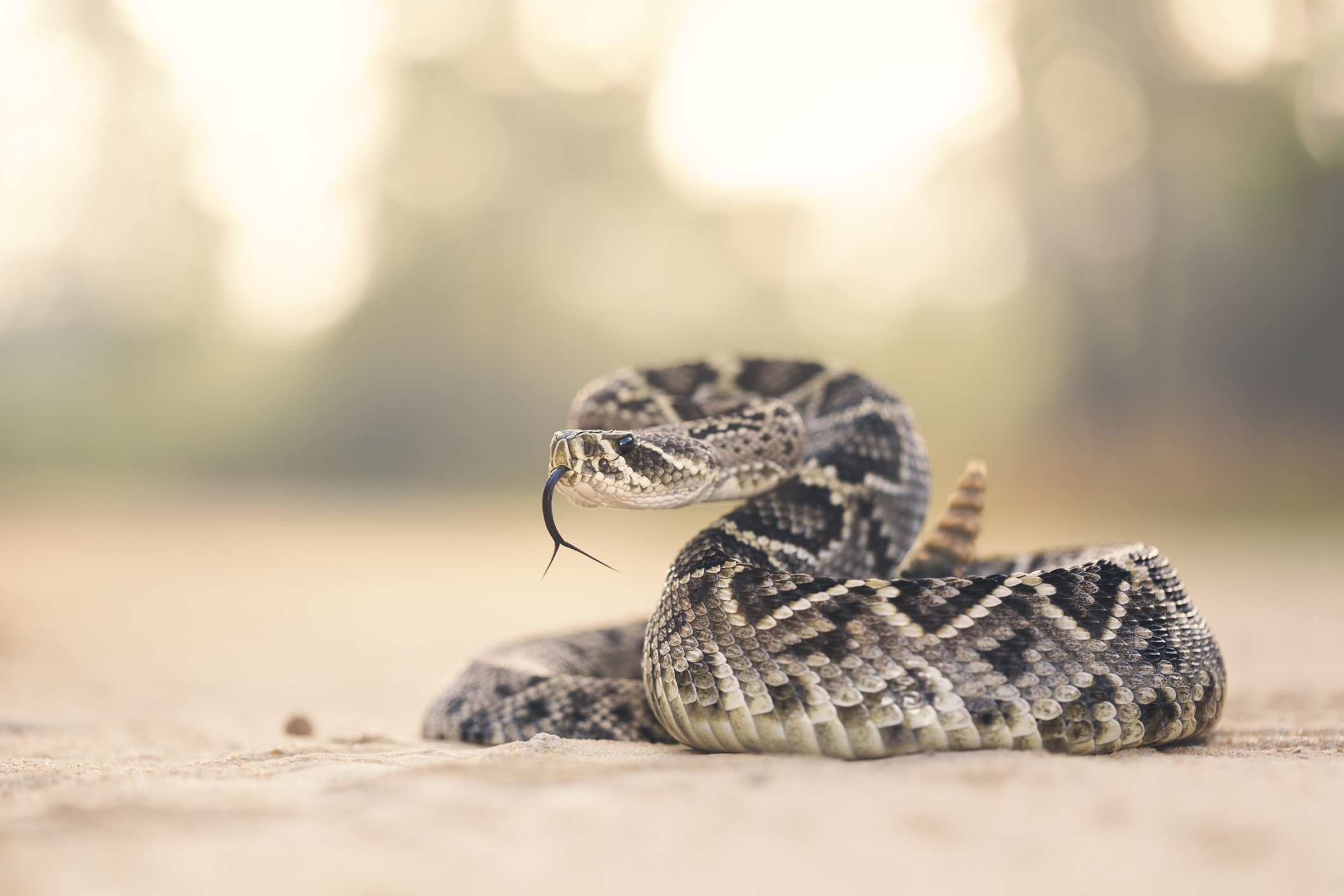
Its reputation precedes it. The eastern diamondback rattlesnake is said to be the most dangerous venomous snake in North America. Its venom, which it keeps locked and loaded in specialised glands in the back of its upper jaw, contains over 100 different toxins. Collectively, they have the power to destroy red blood cells and paralyse muscles.
This Florida resident, which can grow up to 2.5 metres long and weigh as much as a microwave oven, prefers to save its venom for rabbits, rice rats and other small animals. Human bites are rare but do happen. Without treatment, the fatality rate is up to 30%.
- It's one of the most deadliest and feared snakes in the Americas, able to kill a person with one lethal bite…
- Remote camera catches bobcat attacking biggest rattlesnake species on Earth
Bull shark
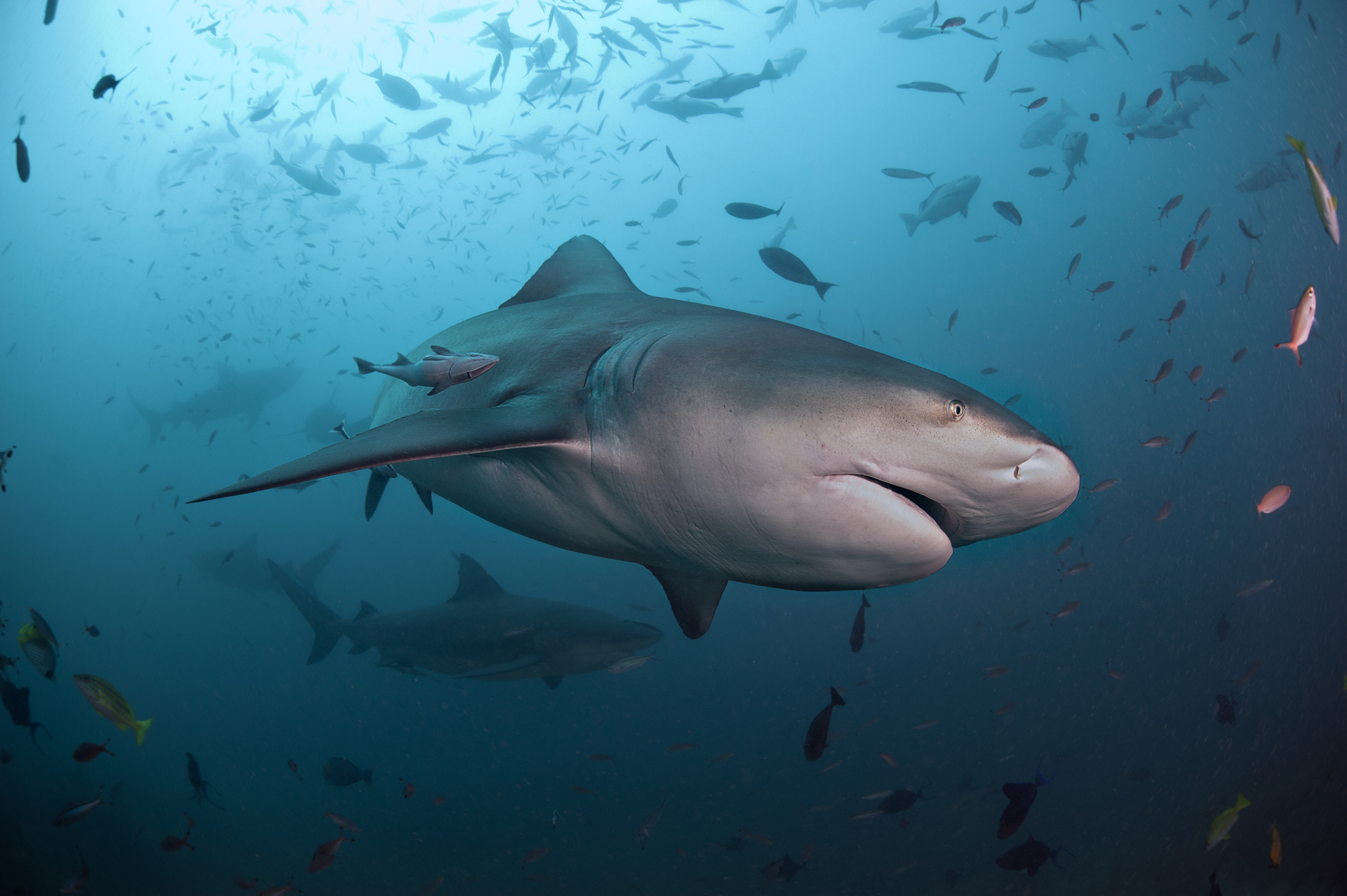
Bull sharks, which can be found in Florida’s coastal shallows and brackish waterways, are notoriously aggressive. Apex predators, they hunt bony fish, small sharks and other animals using a ‘bump-and-bite’ method where they repeatedly ram and then chomp their prey.
- Just how deadly are sharks to humans?
- It's huge, crotchety, has a fondness for head butting, and is dangerous to humans – oh and can be found in BOTH rivers and oceans
Although Florida is frequently called “the shark bite capital of the world,” the vast majority of its shark bites are minor ‘test-bites’ caused by smaller species such as blacktips.
Bull sharks account for about 16% of all the state’s shark bites. Fatalities are thankfully rare, but even ‘test-bites’ can be life changing. In September 2026, a 40-year-old diver from Mississippi was bitten on both arms by a 135 kg bull shark while spearfishing off the Florida coast. He was airlifted to hospital where he required emergency surgery.
Four-handed box jellyfish
Box jellyfish are wibbly aquatic invertebrates, with transparent, cube-shaped bodies and long, trailing tentacles. In Florida, the largest species is the four-handed box jellyfish, so-called for the four fleshy, hand-like structures that protrude from the bottom corners of its bell. Bundles of seven to nine tentacles – each up to four metres long - dangle from each ‘hand’.
- This predator uses its 24 eyes to help with transferring sperm packets during courtship. It could be lurking in the shallows near you
- Deadly box jellyfish discovered on Singapore's 'Island of Death Behind'
Each tentacle contains many thousands of stinging cells, which act like spring-loaded harpoons, injecting venom into things that they touch. If this includes humans, the result is a painful sting that can cause intense pain and burning. Although stings are not usually fatal to adults, they can be to children. In 1991, a four-year-old boy died after being stung by a four-handed box jellyfish in the Gulf of Mexico.
Portuguese man o’ war
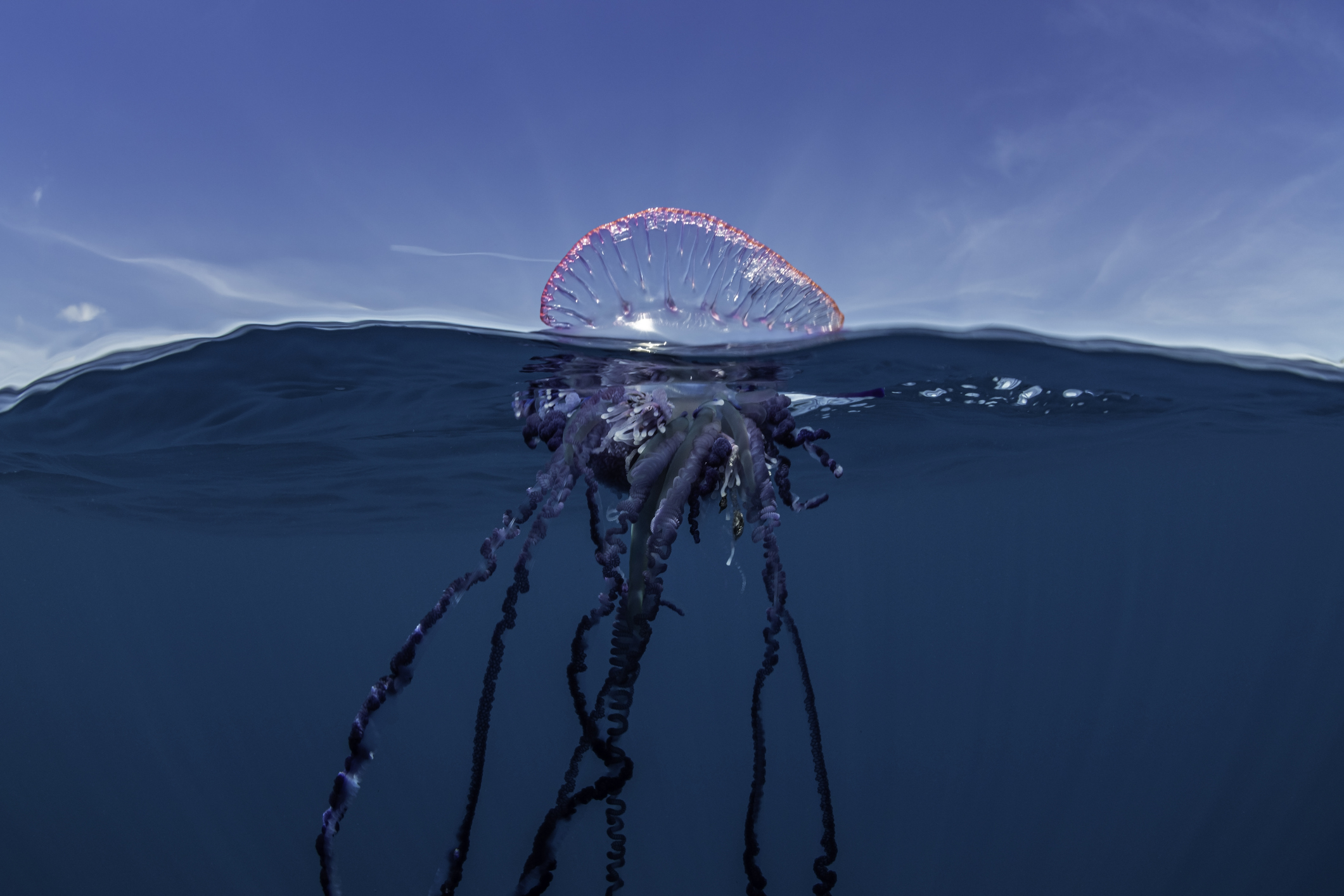
Although they look and sting like jellyfish, the Portuguese man o’ war is a different type of animal called a siphonophore. These are colonial organisms, made up of many smaller, specialized units known as zooids. The animal gets its name from its gas-filled float, which is said to resemble an 18th-century Portuguese warship.
Carried towards shore by strong winds and ocean currents, Portuguese men o’ war are frequently spotted on Florida’s beaches between November and April. Steer clear. Even a beached man o’ war can still sting. Their tentacles are armed with venom-filled stinging capsules that can cause pain, welts and, in severe cases, nausea, muscle cramps and difficulty breathing. Fatalities, while extremely rare, do happen. In 1987, a person died after being stung off Florida’s Atlantic coast.
- Barely the size of a grape, it's able to take on the deadly Portuguese man o’war — and can deliver a painful sting to humans, causing nausea and vomiting
- Killing off the sickest and creating brains: The secrets behind super organisms
Mosquitoes
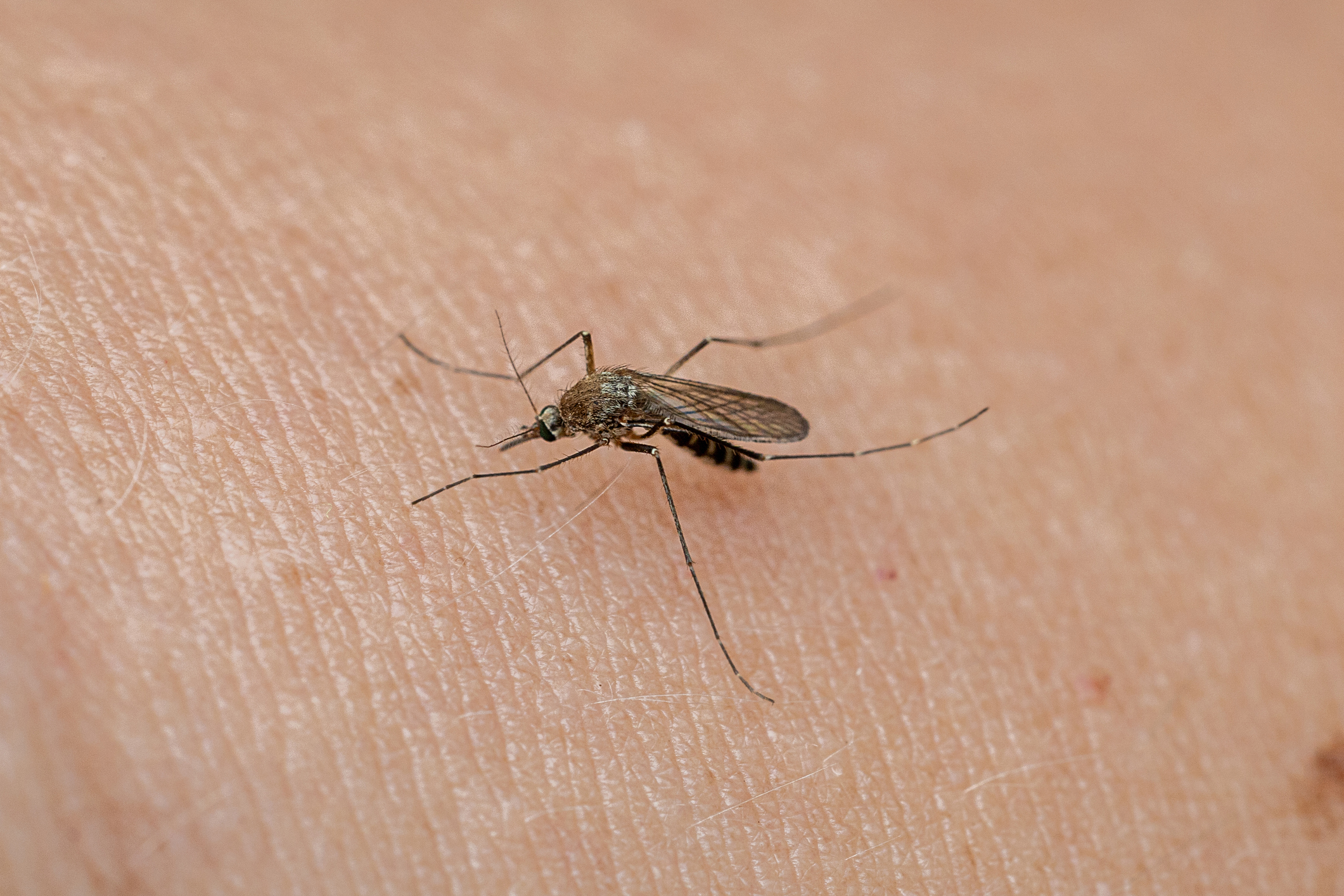
Mosquitoes are the deadliest animal on the planet, responsible for more than 600,000 human deaths each year by transmitting deadly diseases such as malaria and dengue fever. In Florida, the tenacious insects are active year round, thanks to the state’s warm climate.
- Google wants to release millions of mosquitoes across the US. Here’s why
- Could climate change bring malaria to the UK?
- Why the RAF parachuted cats into Borneo’s mountains – the bizarre true story
This makes the risk of catching malaria in Florida sound high, when in reality, it’s extremely low. Malaria is not endemic to Florida, and most cases are imported by people who have travelled to countries where it is present. Local transmission can still occur though. In July 2023, seven cases of locally acquired malaria were identified in Sarasota County. With treatment, the individuals recovered, but the outbreak prompted authorities to issue mosquito-control measures and public-health warnings.
Red Widow Spider
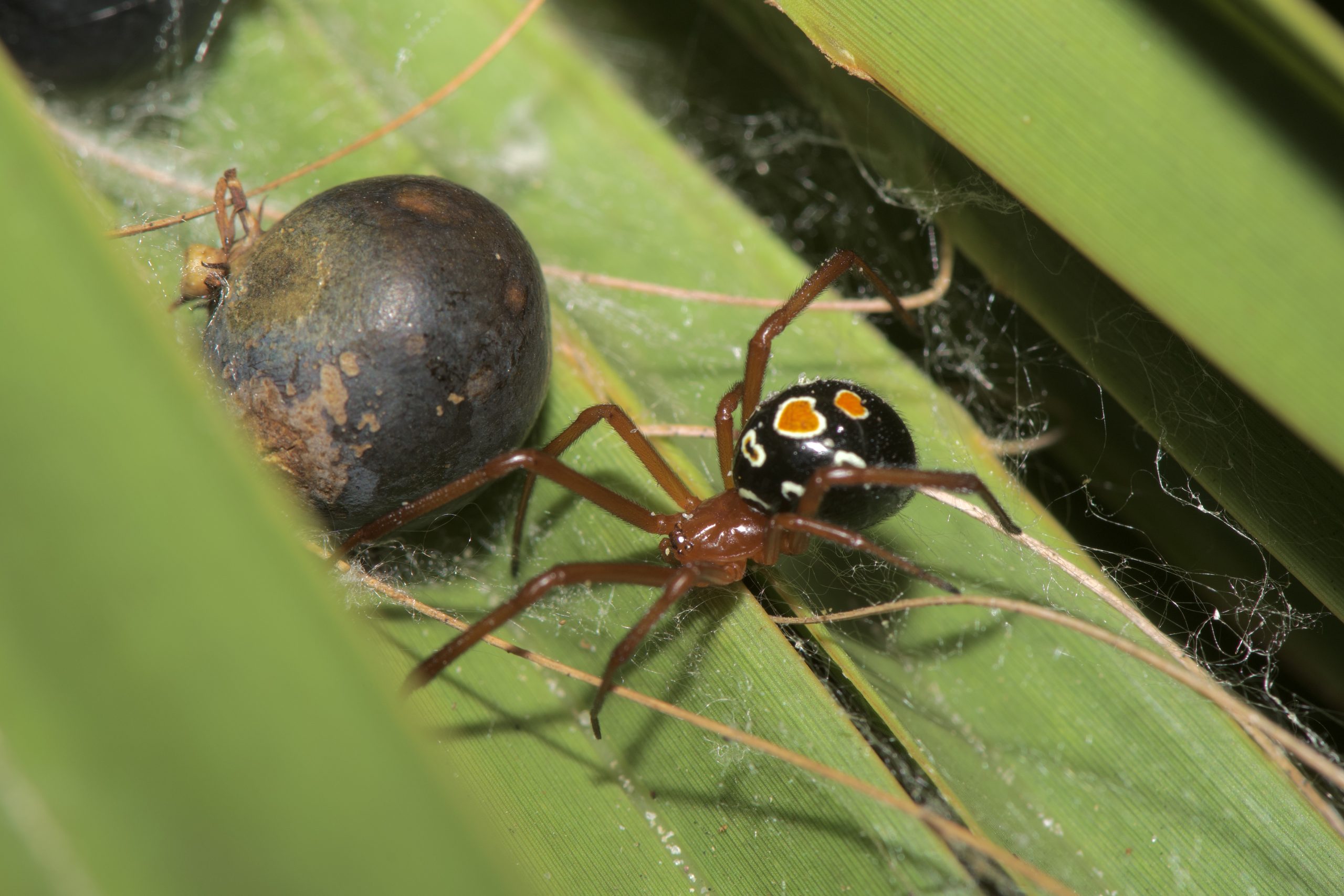
With gold-rimmed scarlet spots set into an obsidian-coloured body, the red widow spider is a bejewelled beauty on eight red legs. In Florida, this highly venomous arachnid is restricted to ancient sand pine scrub habitats in the centre and south of the state. There, it dines primarily on the scarab beetles that get stuck in its web.
To avoid getting injured by a thrashing beetle, the spider flings sheets of sticky silk over it, before sinking its venom-laden fangs into the body. Bites to humans can cause pain, muscle cramps and nausea, but there are no known fatalities.
The red widow spider still makes the list, however, because it has a taste for murder within the family. Widow spiders earn their name from the female’s tendency to eat the male after mating.
- 10 deadliest, most venomous spiders on the planet: Are these dangerous spiders as fearsome and lethal as their reputation?
- The vampire spider that drinks human blood and has a liking for smelly socks
Florida black bears
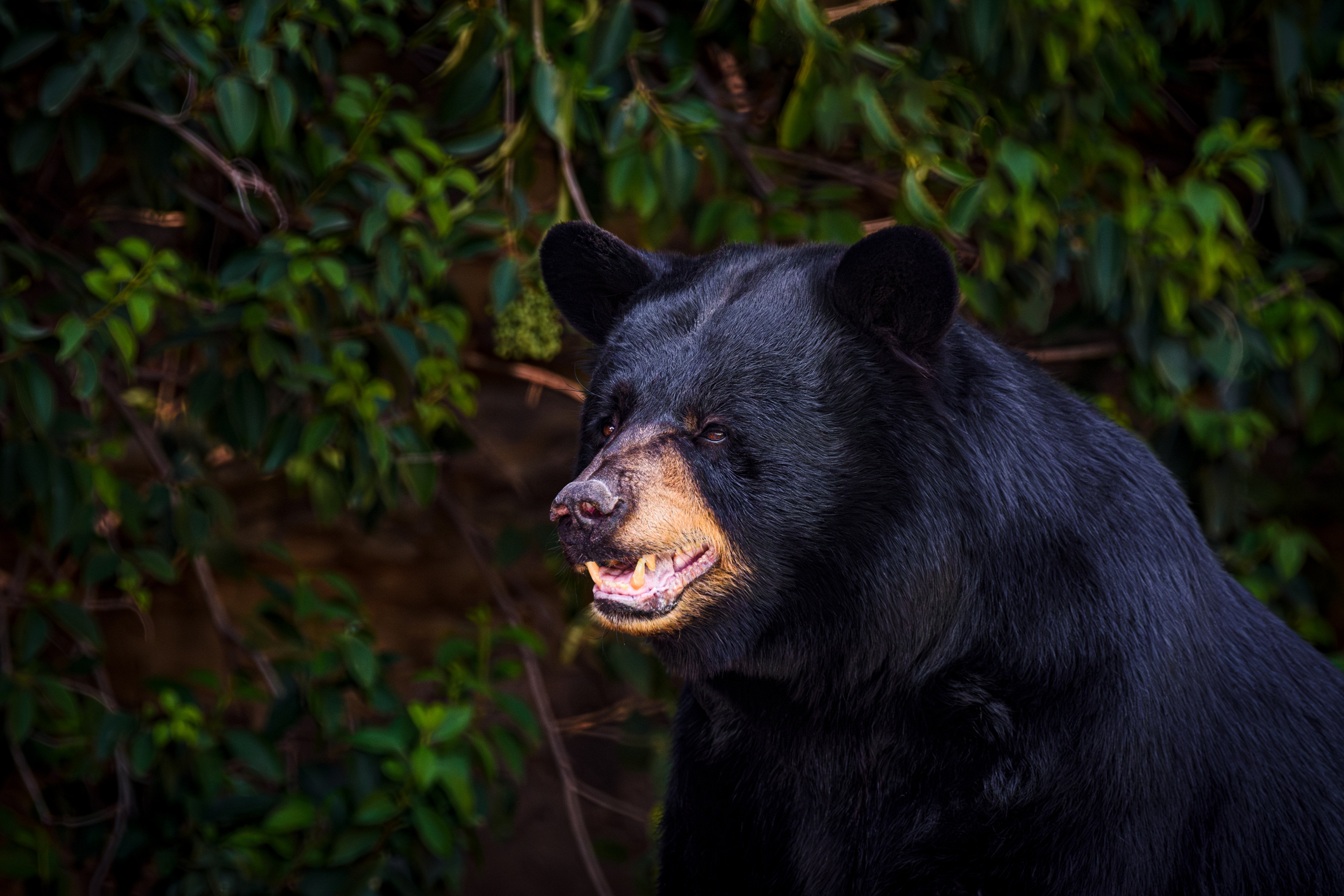
The Florida black bear is a conservation success story. Numbers fell to around 500 in the 1970s due to habitat loss and hunting, but have since rebounded to around 4,000, spread across seven subpopulations. The bears favour forested areas and swamps and generally avoid people. Attacks are rare, but not unheard of.
The Florida Fish and Wildlife Conservation Commission has documented 42 such incidents in the last 70 years, three of which caused serious injuries. In May 2025, an 89-year-old man was killed in a bear attack near his home in Jerome. The bear was later trapped and killed by wildlife officials.
- Scientists spent 22,000 hours watching black bears hibernating in Virginia. Here's what they learnt
- "They are designed for ripping apart blubbery seals, so they will make short work of our puny bodies:" The 10 deadliest bears on the planet
Florida cottonmouth
- Twice a year, this road in Illinois starts crawling with thousands of snakes. Here’s why
- It straddles two US states, contains 15,000 alligators, and is home to a snake as long as a bed
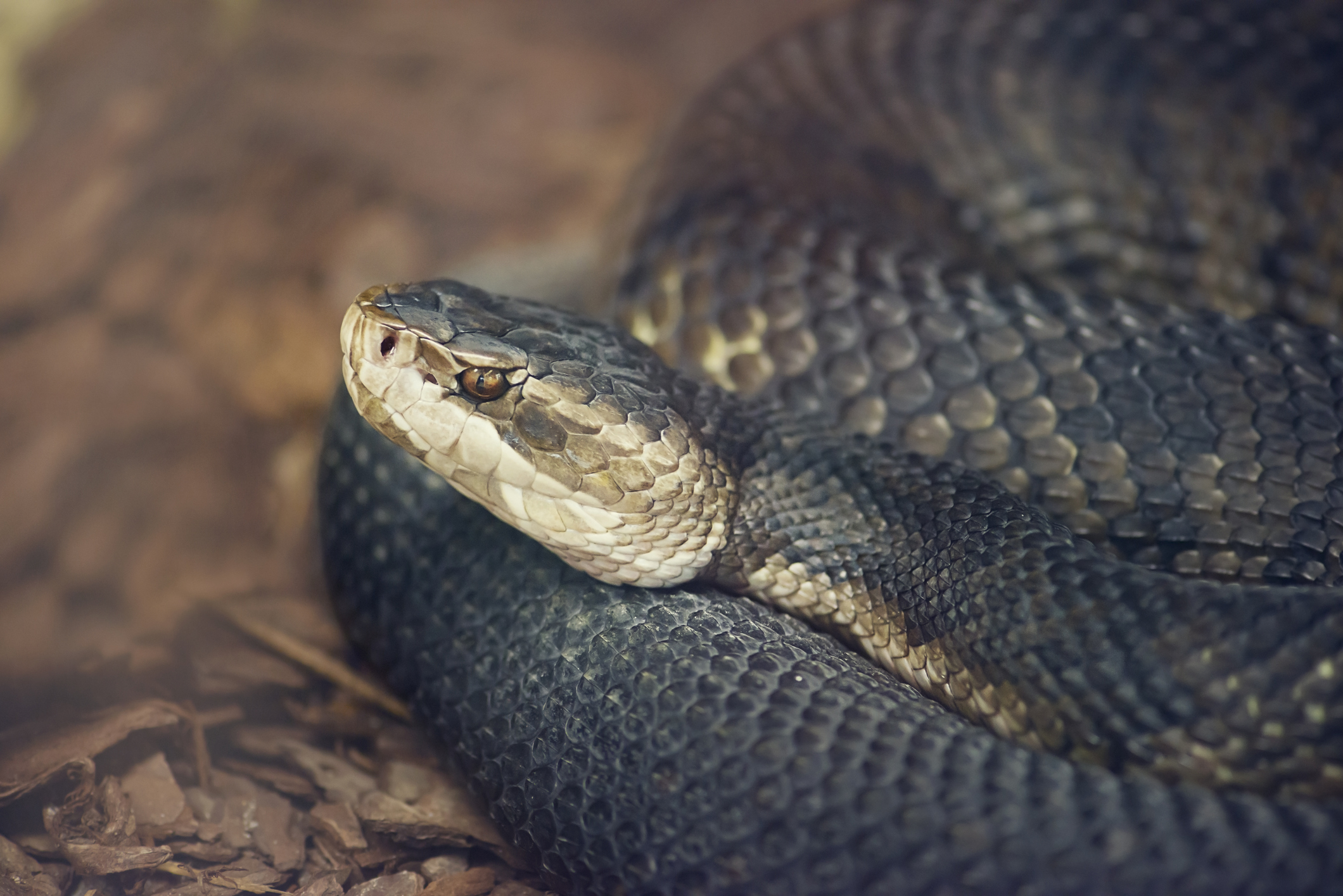
The Florida cottonmouth snake is found in all 67 counties of Florida, from the Panhandle to the Keys. Semi-aquatic, it can be found near virtually any water source, including lakes, rivers, ponds, ditches and salt marshes. Adults are about a metre long, with cryptic markings and a reptilian swish of black eyeliner. While generally wary of people, this venomous snake may strike if stepped on or otherwise provoked. Fatal bites are extremely rare, but any bite requires prompt medical attention. The snake’s venom can cause tissue damage and disrupt blood clotting, causing pain, swelling and bruising. Antivenom is available for serious cases.
top image: Florida Cottonmouth or water moccasin snake, close up. Credit: Saddako/ Getty Images
Discover more wildlife stories from around the world: