
Not all moths are harmless buffoons dashing themselves into porch lights and clumsily scattering pollen as they flit from flower to flower. The Madagascar tear drinking moth (Hemiceratoides hieroglyphica) has no compunction about plunging its barbed proboscis into the eyes of slumbering birds in a quest for vital nutrients.
Researchers documented three cases of the moth feeding from avian eyes in western Madagascar in 2004 and 2005. The moths availed themselves of two common newtonias (Newtonia brunneicauda) and a Madagascar magpie robin (Copsychus albospecularis). Though the species was first discovered in 1891, this was the first time it had been seen engaging in this unusual behavior.
- What is the world’s largest moth?
- Scientists set a trap to lure rare moth
- "She emerges, not looking like a moth at all, but rather a peculiar pale thing with reduced legs and antennae that you could easily mistake for a maggot..."
Around 100 species of moths from the tropics and neotropics are known to feed on the tears of vertebrate species — and two consume nothing else. This was the first time a moth had been seen slurping them from the eyes of a bird. Most lachryphagous species, as they are called, feed on the tears of mammals and reptiles. Even some butterflies in South America supplement their diets with turtle and caiman tears. Few temperate species do the same — though trail camera footage taken in Vermont documented moths drinking from the eyes of a very confused moose.
The Madagascar species — which is also found in Namibia and South Africa — has a particularly savage strategy. The end of its proboscis — the organ through which moths and butterflies ingest their food — bifurcates into two serrated tips. The researchers hypothesize that these harpoon-like structures allow the moths to penetrate the birds’ eyelids and nictitating membranes.
This weaponized schnozz likely derives from an adaptation to feeding on fruit — the preferred food of many of the moth’s relatives. One genus, Calyptra, even uses its proboscis to pierce skin and dine on blood.
None of the birds appeared bothered by their thirsty visitors, leading to speculation that they might inject an anaesthetic compound before feeding, as some flies do. However, the sleeping birds may simply have failed to notice. Other species of lachryphagous moth are known to transmit disease to mammals — raising the potential that birds may be at risk too.
Since then, two other moth species have been discovered slaking their thirst with bird tears — one in Brazil and one in Colombia. Scientists believe that this unusual proclivity likely results from a need for salt and protein. Many butterflies and moths engage in mud-puddling—sipping dissolved salt and amino acids from shallow bodies of water or mud. Birds may be an alternate source when appropriate concentrations of these compounds are not available from puddles — which may also be risky due to the presence of terrestrial predators.
- Humming-bird hawk-moth guide: what they look like and when to see them
- Stunning new species of moth with whip-like defensive mechanism discovered in Brazil
- Butterfly vs moth: what's the difference between them - AND just how do you tell what you're looking at?
Males engage in this behavior more frequently, probably because salt comprises a significant portion of its nuptial gift — a package of nutrients deposited into the female’s reproductive tract during mating. This gift offers essential compounds to the female and her eggs, enhancing reproductive success. At least one of the Madagascar tear drinking moths was determined to be male, lending credence to this explanation for its strange appetite.
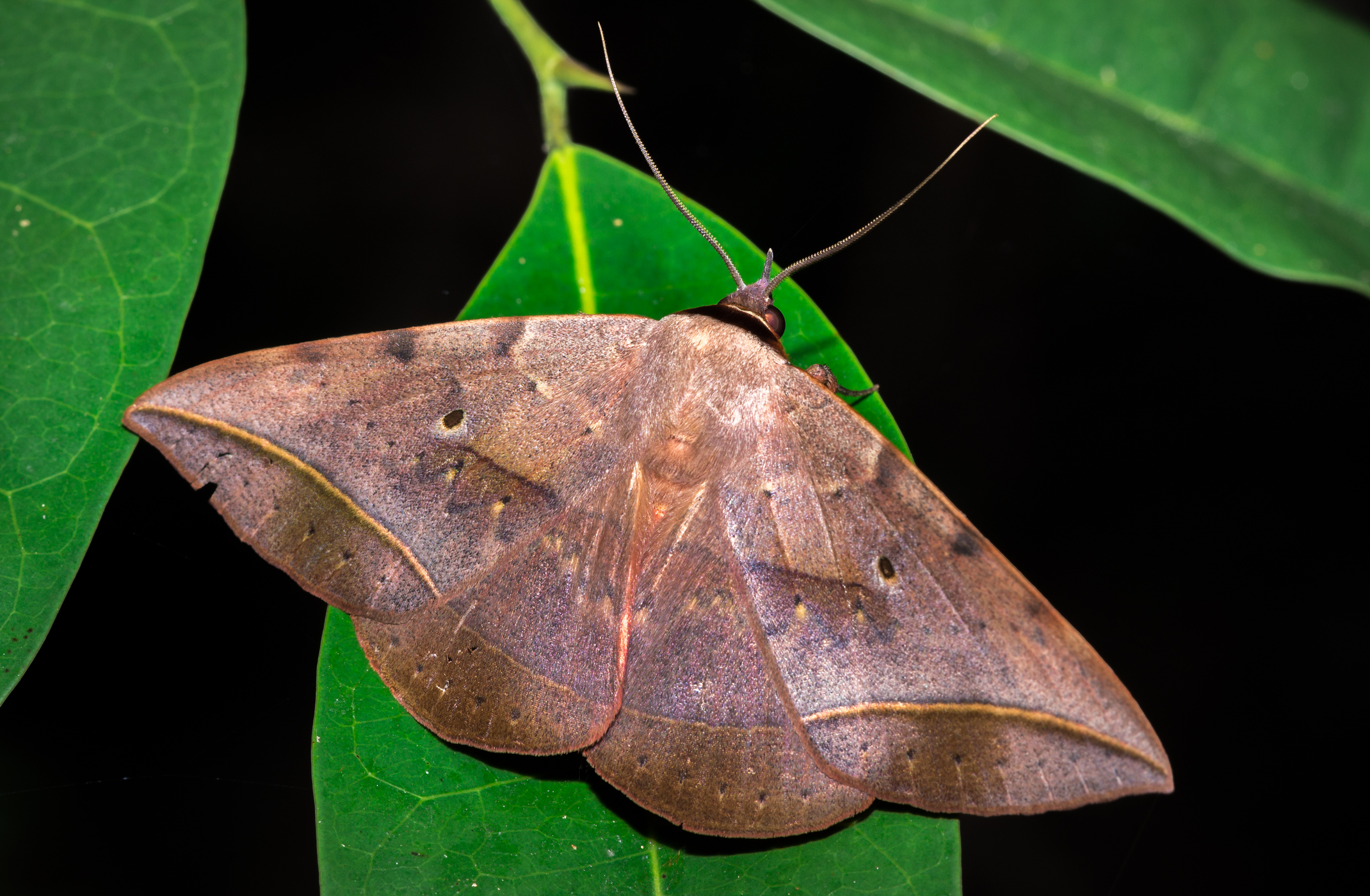
top image: Close up of moth of a male moth with its pectinate (feathered antennae)(This individual is not a Madagascar tear drinking moth). Credit: Sven Damerow/500px / Getty Images
More wildlife stories from around the world:
- Two tiny new species discovered with their own built-in front doors – they can close them and shut themselves away
- Think your home is free of bugs? Think again! The average US house is home to a whopping 93 different species
- "Prey are suspended in the air in a tangled web of tunnels and trip-wires." 10 most terrifying spider webs built by some of the deadliest spiders on Earth


