Roaming the open bush and scrublands of sub-Saharan Africa, African savannah elephants communicate with each other through low-frequency rumbles, often occurring in overlapping choruses. This cacophony of sounds can be tricky to analyse – but a new study now reveals its intricacies and purpose.
The research was led by scientists from ElephantVoices and Earth Species Project, with collaborators from Amboseli Trust for Elephants. The findings are published in the journal Scientific Reports.
- Elephants have names for each other, just like humans, study finds
- Whales speak in dialects and elephants have names for each other: The incredible secrets of animal language
Overlapping, multi-caller vocalisations – often called choruses – are very common in the animal kingdom. They’re used by chimpanzees, sperm whales, male Atlantic spotted dolphins, green woodhoopoes and acorn woodpeckers, among many others.
These vocalisations can carry rich social information, so they’re very important to scientists – but they’re also difficult to study. Separating out the many overlapping voices in a chorus comes with a phenomenon known as the 'cocktail party problem', wherein the brain focuses on one particular stimulus, excluding the others.
Elephants communicate with very low-pitched rumbles (many of them below the range of human hearing). These rumbles encode several distinct types of information - individual elephants have unique vocal signatures, and vary with age, sex, and emotional and psychological state of the animal. Previous studies have shown that these rumbles can also sound different depending on the population or even social groups within that population.
The structure of some rumbles has also been shown to vary depending on the individual being addressed, serving as a form of 'name'.
Even with all of this information being known about single elephant rumbles, rumble choruses are less studied and understood – and 60 per cent of rumbles happen in choruses, with two or more elephants rumbling at the same time.
To close that gap, researchers turned to machine learning to help them analyse recordings of wild families of African savannah elephants (Loxodonta africana), captured over four decades of fieldwork in Amboseli National Park in Kenya.
“Our study of elephant choruses was based on the voices of individually known Amboseli elephants calling in known contexts. Over half of elephant calls overlap with other callers, sometimes producing a cacophony of sound that is difficult to tease apart and measure,” said Dr. Joyce Poole, scientific director at ElephantVoices.
The choruses were recorded during six different social and behavioural contexts, including greetings, maintaining contact when separated, comforting and reassuring calves, and exchanges associated with coordinating movement.
As it turns out, elephant choruses are not just random noise – they carry multiple layers of information at once, including what a family is doing together. The machine's predictions of behavioural context were significantly better than chance – and while behavioural context has previously been predicted from recordings in sperm whales and orcas, this is the first time researchers have shown it is possible for elephant choruses.
“Using machine learning, our study showed that far from being a jumble of sound, these choruses retain information about the social situation and that, during some exchanges, the voices of the participants become acoustically similar," said Poole.
“Our findings offer a new window into how elephants maintain bonds, negotiate movement and coordinate their social lives.”
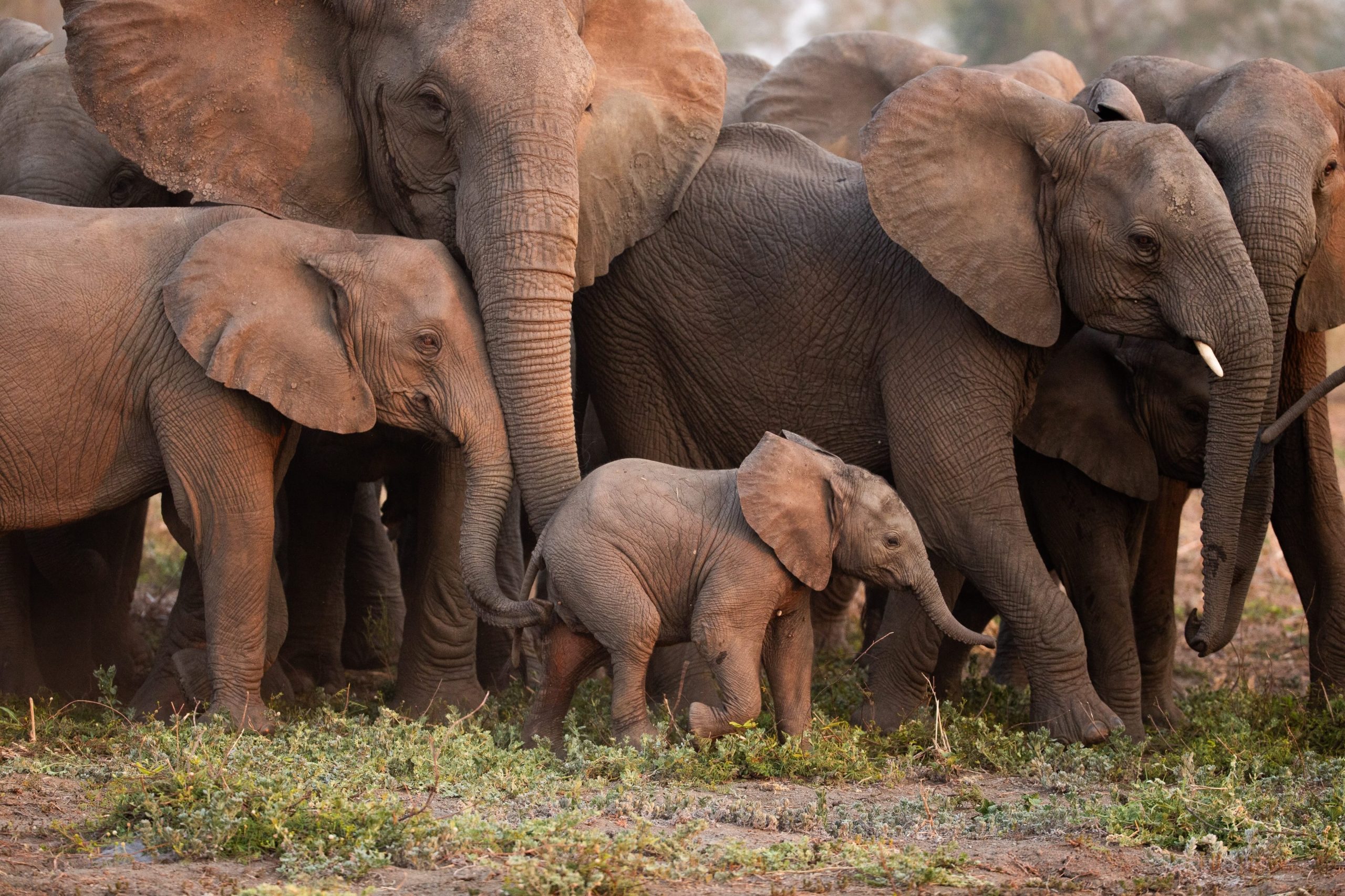
- This baby elephant taking its first trembling steps is the cutest thing you’ll see today
- Baby elephant suck their trunks, like human babies suck their thumbs. Here's why they do it...
In tune
During interactions associated with coordinating movement and greetings, the elephants’ rumbles became progressively more acoustically similar as the exchange unfolded – a pattern known as vocal convergence.
The researchers suggest that this 'getting in tune' with each other might play a role in helping elephant families build a plan of action, although this hasn’t been experimentally demonstrated as of yet.
“For me, this is one of the most exciting results of our study. We have known for years that elephants are capable of vocal learning, meaning that they can learn to modify their vocalisations in response to what they hear, but little is known about how they use this ability in the wild,” said Dr. Mickey Pardo, senior scientist at ElephantVoices.
“Our discovery of rapid vocal convergence during certain choruses provides an example of vocal learning in action among wild elephants, and it also suggests some intriguing possibilities for how elephants may coordinate group activity.”

Wider implications
These findings could have bigger implications for elephant conservation. Being able to identify behavioural context from sound could eventually allow passive acoustic monitoring to reveal where elephants are and what they’re doing across a landscape, particularly in places where direct observation might be difficult, and inform approaches to human-elephant coexistence.
Read the full findings here.
Top image: Two elephants stand close together with their trunks touching. This behaviour is typically accompanied by 'greeting' rumbles. Credit: ElephantVoices