
A new study has found that reproductive female Antarctic krill actively use deep-sea hydrothermal vents as a habitat, suggesting these environments may play a role in the animals’ reproductive cycle.
Researchers observed groups of the animals moving along mineral-rich fissures in the ocean floor, with every krill collected from the site found to be a reproductive female carrying eggs. The animals were observed through live footage from the remotely operated vehicle (ROV) SuBastian, deployed from the Schmidt Ocean Institute’s research vessel Falkor (too).
- Grandeur and resilience of Antarctic wildlife captured in 14 incredible photos
- 100km-wide "hidden giant" discovered beneath Antarctic ice sheet
In the study, published in the journal Communications Biology, researchers led by biological oceanographer and National Geographic Explorer Kim Bernard and marine ecologist Rachel Kaplan collected specimens from the vents.
Analysis of their stomach contents, conducted with National Geographic Explorer Andrew Thurber, revealed evidence that the krill were feeding on chemosynthetic microbes. Unlike the phytoplankton that underpin much of the Southern Ocean food web, these microbes produce organic carbon using chemicals (including sulphur compounds) released by the vents rather than energy from sunlight.
The krill also contained elevated levels of minerals such as manganese, zinc and iron, which are important for reproduction and early embryonic development. However, researchers also found extremely high levels of toxic heavy metals, including lead and cadmium, raising questions about the potential effects of vent environments on the animals.
The expedition was part of the National Geographic and Rolex Perpetual Planet Ocean Expedition ‘Into the Southern Ocean’, conducted in collaboration with the Schmidt Ocean Institute.
“It was shocking, to say the least,” says Bernard. “Antarctic krill possess the largest biomass of any wild animal species on the planet and serve as the ultimate foundational species.
“They’re a crucial part of the entire Southern Ocean food web, supporting marine mammals, seabirds and fish, while simultaneously aiding in the fight against climate change by ingesting organic carbon in the form of phytoplankton — the ocean’s microscopic plants — and sequestering it at the ocean floor. Finding krill feeding on chemosynthetic microbes at a hydrothermal vent changes our current understanding of their ecology.”
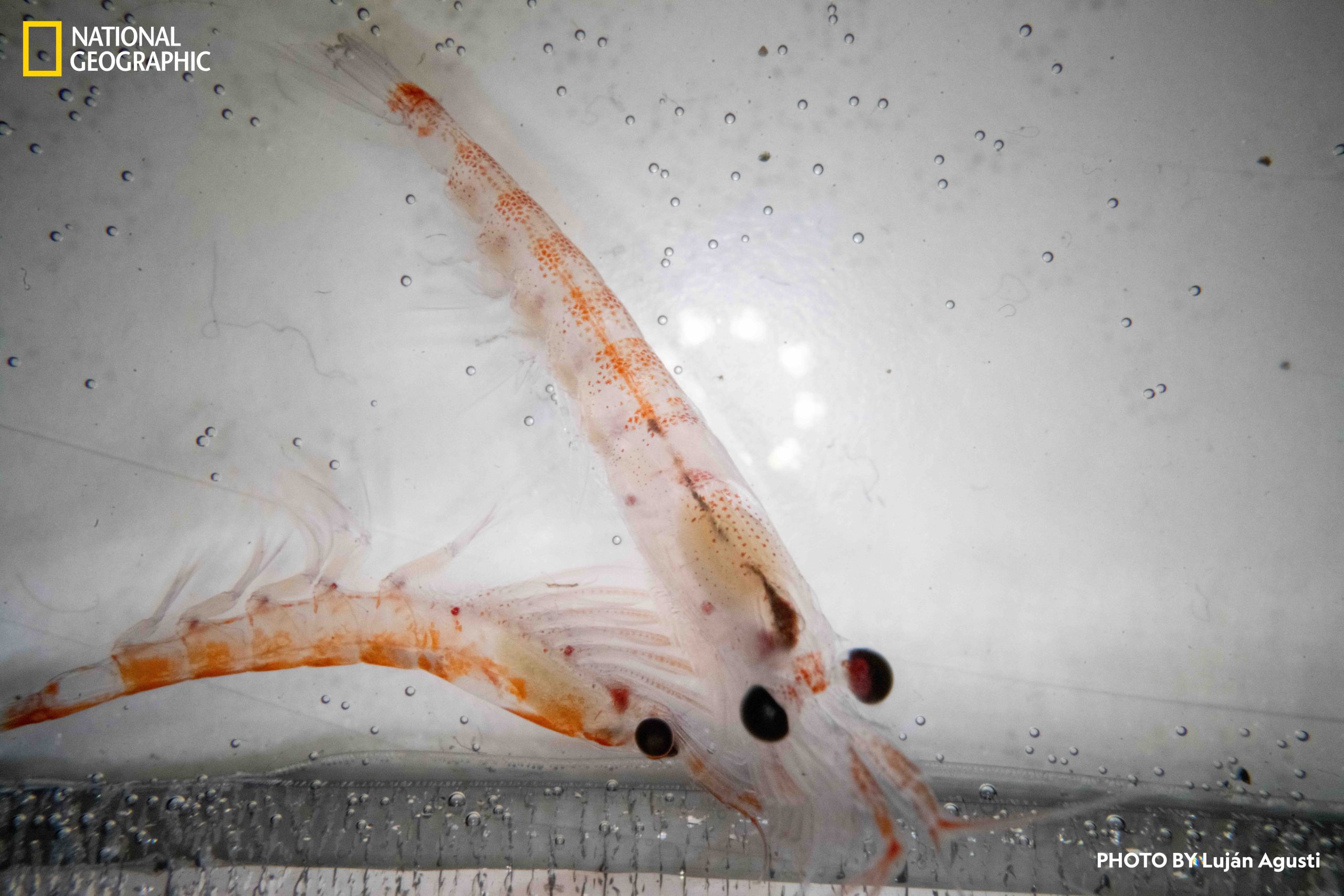
Despite more than a century of research, scientists have largely studied krill in the upper 300 metres of the ocean, leaving their deep-sea ecology comparatively poorly understood.
Researchers have traditionally assumed that krill release their eggs, in a process known as spawning, in the upper ocean. Finding egg-bearing females at hydrothermal vents suggests that scientists may need to reconsider where some reproductive activity takes place.
“One key aspect of the krill life cycle that is necessary to understand is where the reproductive females release their eggs — a process known as spawning,” Bernard explains. “For decades, scientists have assumed spawning occurs in the upper waters of the ocean. Finding ready-to-spawn females at the seafloor forces us to rethink this assumption.”
The researchers argue that the findings could have implications for conservation and marine protected area planning, particularly if reproductive females actively use hydrothermal vents as part of their life cycle.
Discover more wildlife stories:
- Krill guide: what they are, and why they are so important
- Scientists looked at Antarctica from the air. What they saw has them worried
- 10 amazing Antarctic animals – including one with antifreeze in its blood
Top image: Antarctic krill specimens retrieved during a dive by ROV SuBastian in the Weddell Sea. Credit: Luján Agusti/National Geographic


