
Intelligent, empathetic and remarkably agile, dolphins are among the ocean's most captivating creatures.
While most people are familiar with their high-jumping antics and playful reputation, these marine mammals hide a wealth of surprising evolutionary secrets – from specialised brain cells shared only with apes and humans to surprising hybrid species and unique freshwater adaptations.
Dolphin facts
1. There are 43 extant species of dolphins around the world: 38 oceanic species and five (possibly six, according to a study) species of river dolphin.
2. Dolphins can hold their breath underwater for around 20 minutes. They are voluntary breathers, meaning they have to deliberately come up to the surface to breathe.
3. River dolphins have evolved to have flexible necks and bodies adapted to freshwater habitats, where there are obstacles such as flooded forests to be avoided.
4. The presence of river dolphins is an important indicator of river health. As apex predators in their areas, they depend on a large, steady supply of healthy fish, so if populations of dolphins are thriving, it means the entire food chain is thriving too.
5. The fastest dolphin species is the short-beaked common dolphin, which can reach speeds of up to 37 mph (60 kph).
6. Dolphins and whales can technically interbreed. That said, only a small number of wholphins – rare hybrids of a false killer whale and a common bottlenose dolphin – have ever been documented.
7. Some species of dolphins have special brain cells called spindle neurons. Humans and great apes have them too, and scientists think they enable us to feel complicated emotions and also to understand and relate to how others are feeling (empathy). These cells are found in bottlenose dolphins, Risso’s dolphins and orcas (killer whales).
8. Along with porpoises and whales with teeth, dolphins belong to a group known as odontocetes or ‘toothed whales’.
9. One of the biggest differences between whales and dolphins is their social structure. Dolphins tend to hang out in groups or pods, whereas whales are likely to be more solitary. Dolphins are found more in shallower waters closer to shore.
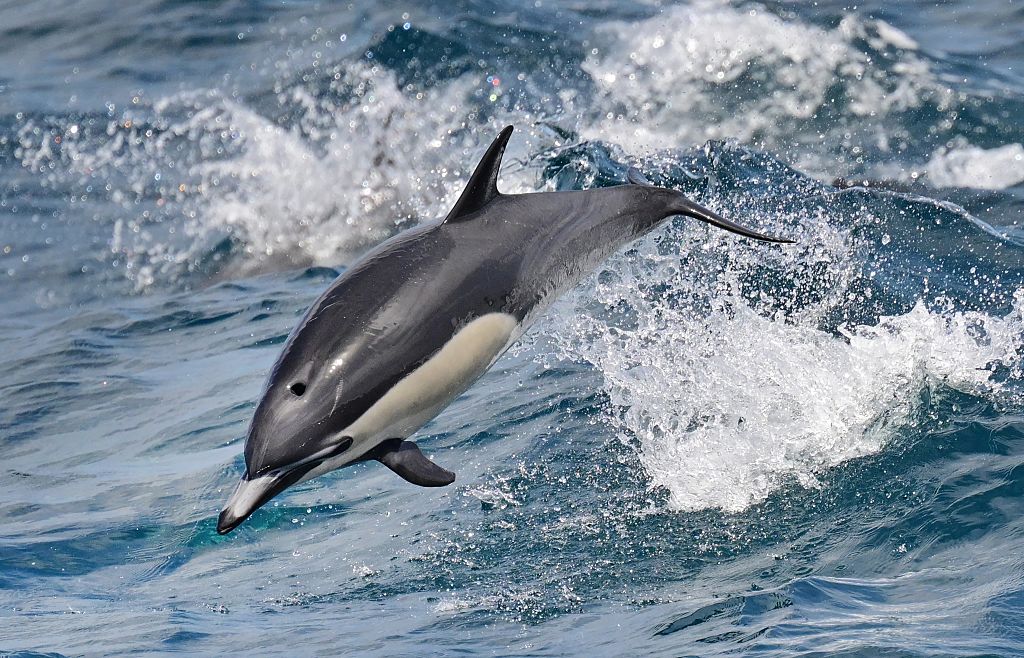
10. Bottlenose dolphins can recognise themselves in a mirror. The ability to recognise yourself in a mirror (mirror test) is often used by developmental psychologists as a measure of intelligence and self-awareness. This skill is rare and a test that some dolphins pass with flying colours. Besides humans, only bottlenose dolphins, chimpanzees, elephants and magpies have been shown to recognise themselves in a mirror.
11. Despite its misleading name, the killer whale (orca) is actually a dolphin. They were originally named by Spanish sailors as ‘ballena asesina’, or ‘whale killer’, due to the fact that they can hunt and take down much larger whale species. This name subsequently got flipped in English to ‘killer whale’, which has led to some confusion. They are actually the largest member of the dolphin family.
12. Dolphins have a fission-fusion social structure, which means that some individuals stay together over longer periods of time and make long-term relationships, while others move between groups.
13. Like humans, dolphins breastfeed their young. The calf inserts its tongue into the mammary slit of the mother and sucks.
14. Dolphins produce three primary categories of sound: whistles (individual identity), echolocation clicks (foraging and navigation) and burst-pulse sounds (social behaviour).
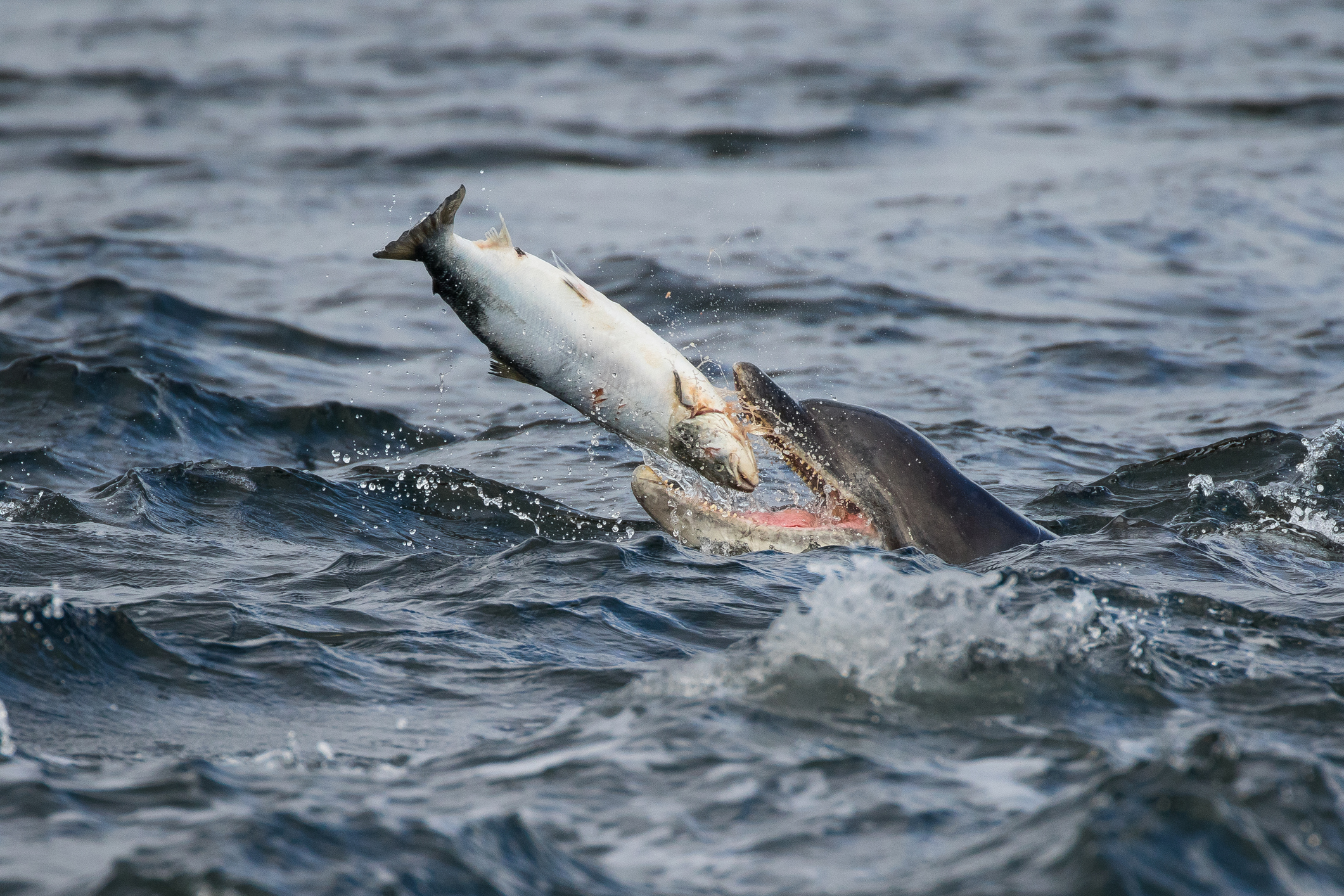
15. In order to pee, the Amazon river dolphin (also known as Botos) flips onto its back and pees into the air – a behaviour known as 'aerial urination'. We included this fact in our round-up of the weirdest types of animal pee.
16. There are two pink species of dolphin: the Amazon river dolphin and the Indo-Pacific humpback dolphin. Both have a distinct pink colouring.
17. The biggest difference between dolphins and sharks is the fact that dolphins are mammals, sharing characteristics with humans, including being warm-blooded, giving birth to live young and nursing their young with milk. Sharks, on the other hand, are fish.
18. Dolphins breathe air when at the surface of the water through a specially adapted nostril or blowhole, located on top of their heads.
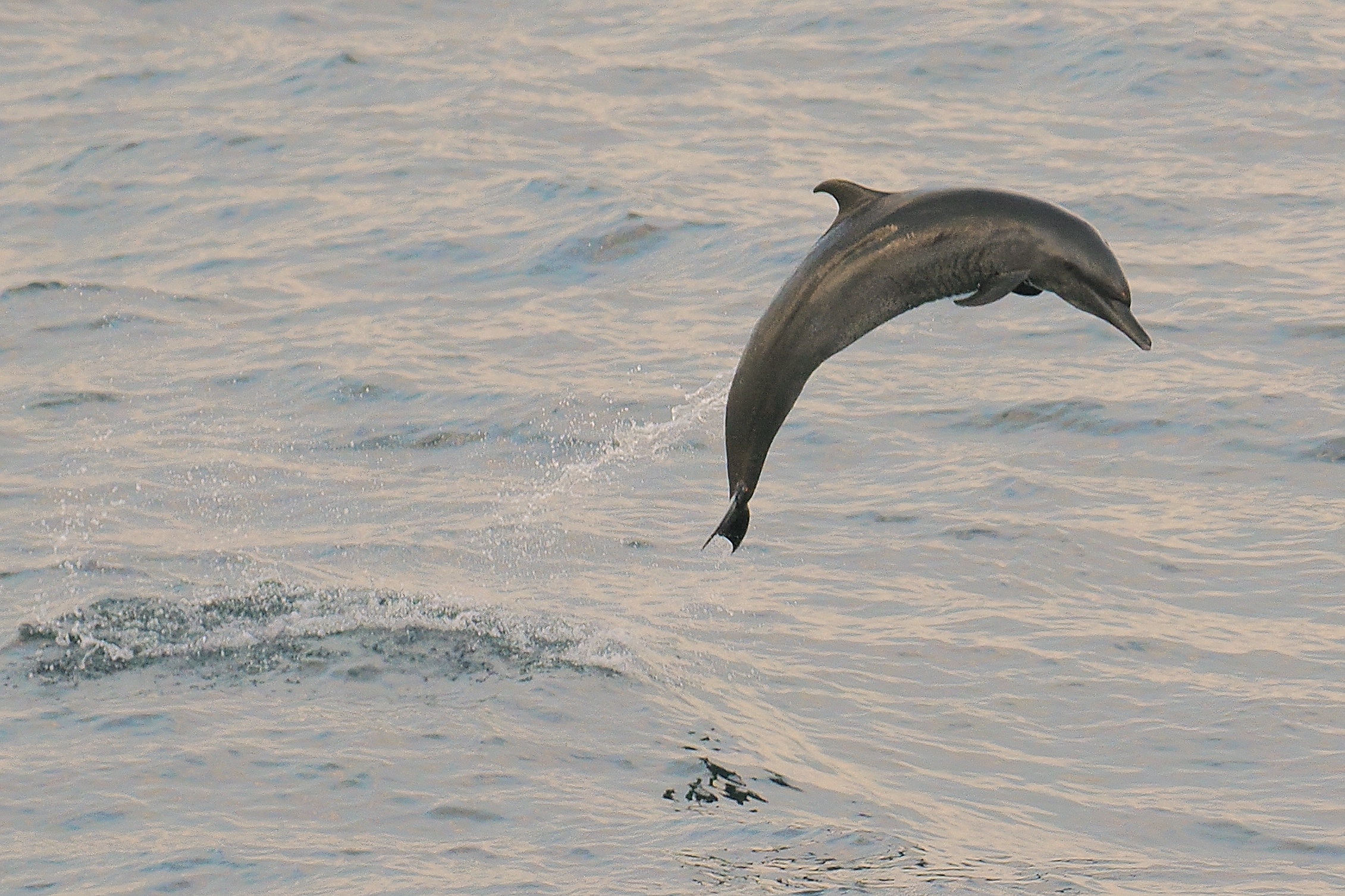
19. In early 2026, a northern right whale dolphin was spotted ‘tail walking’, holding itself upright and skipping across the water as if it was using its tail like feet.
20. The killer whale is the greatest apex predator of the dolphin family. They can grow up to 10m long.
21. Risso’s dolphins are the most heavily scarred of all dolphins. They gradually accumulate pale scarring as they age, to the extent that they can often appear white. These scratches are inflicted by members of their own species when playing or fighting, and are unique to each individual.
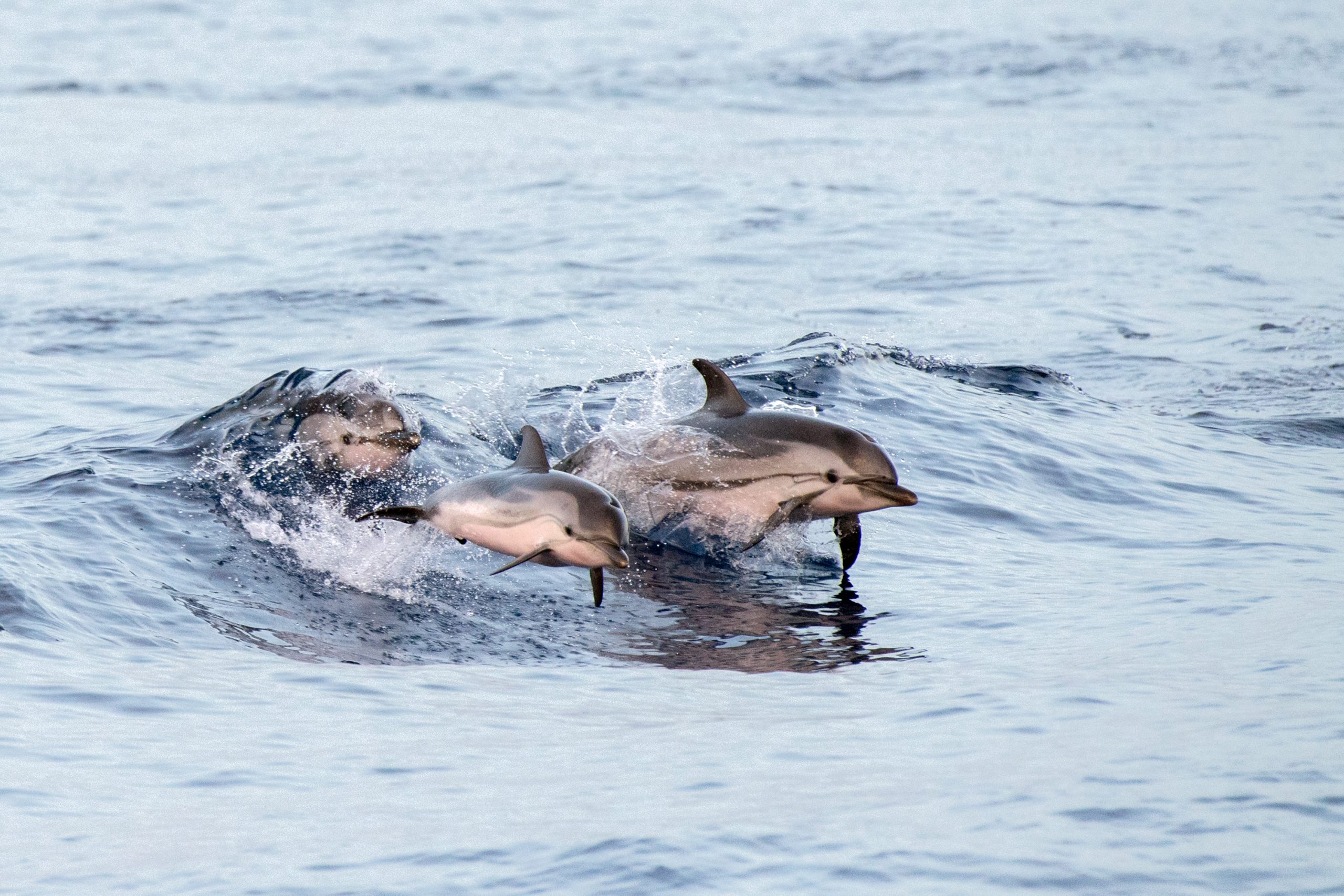
Top image: dolphins surfing waves. Credit: USO/Getty Images


