
Dolphins are captivating. Graceful, intelligent and famously playful, they have another remarkable talent: speed.
Most of the time they travel at an economical pace to conserve energy. But due to streamlined bodies, powerful tail flukes and remarkable agility, some dolphins can accelerate to more than 50 kph in short bursts. Here are five species that rank among the ocean’s fastest dolphin swimmers.
Fastest dolphin species
Short-beaked common dolphin – the sports car
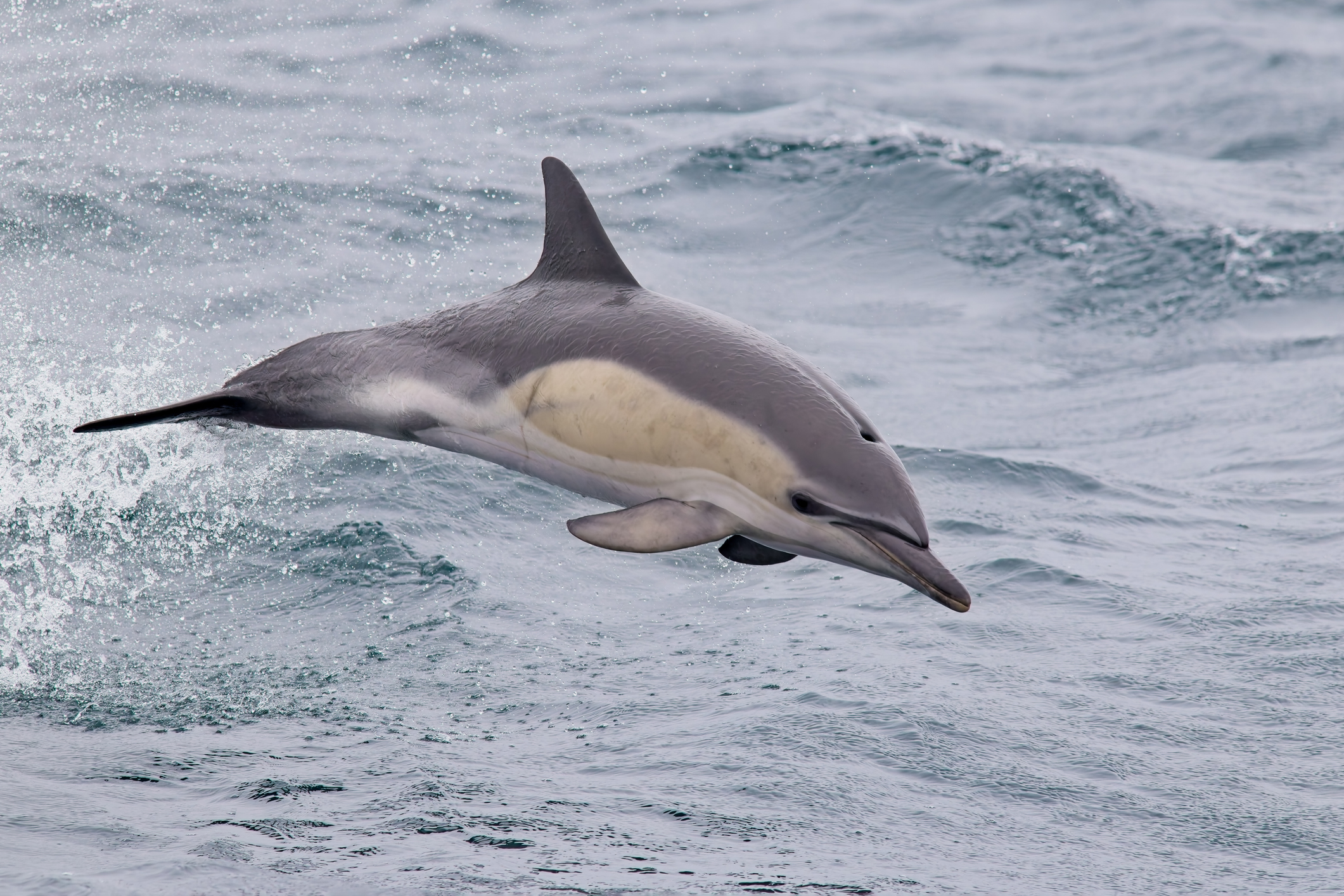
Top speed: around 37 mph (60 kph)
Typical cruising speed: 6-12 mph (10-20 kph)
Scientific name: Delphinus delphis
Often regarded as one of the fastest dolphins in the world, the short-beaked common dolphin is built for high-speed pursuits. Individuals can reach bursts of around 60 kph, making them formidable hunters and one of the ocean’s most impressive marine athletes.
Their torpedo-shaped bodies minimises drag, while a powerful tail provides the thrust needed for rapid acceleration. Unlike fish, dolphins move their tails up and down rather than from side to side. Large muscles running along the spine power these movements, driving the tail flukes through the water.
The species is also capable of covering considerable distances at much more moderate speeds, allowing it to balance speed with energy efficiency.
What makes it so fast?
- Streamlined, low-drag body shape
- Powerful tail flukes
- Strong muscles along the spine
- Smooth, flexible skin that helps reduce friction and maintain efficient flow through the water
- Exceptional acceleration for chasing fast-moving prey
Pacific white-sided dolphin – the rapid winger
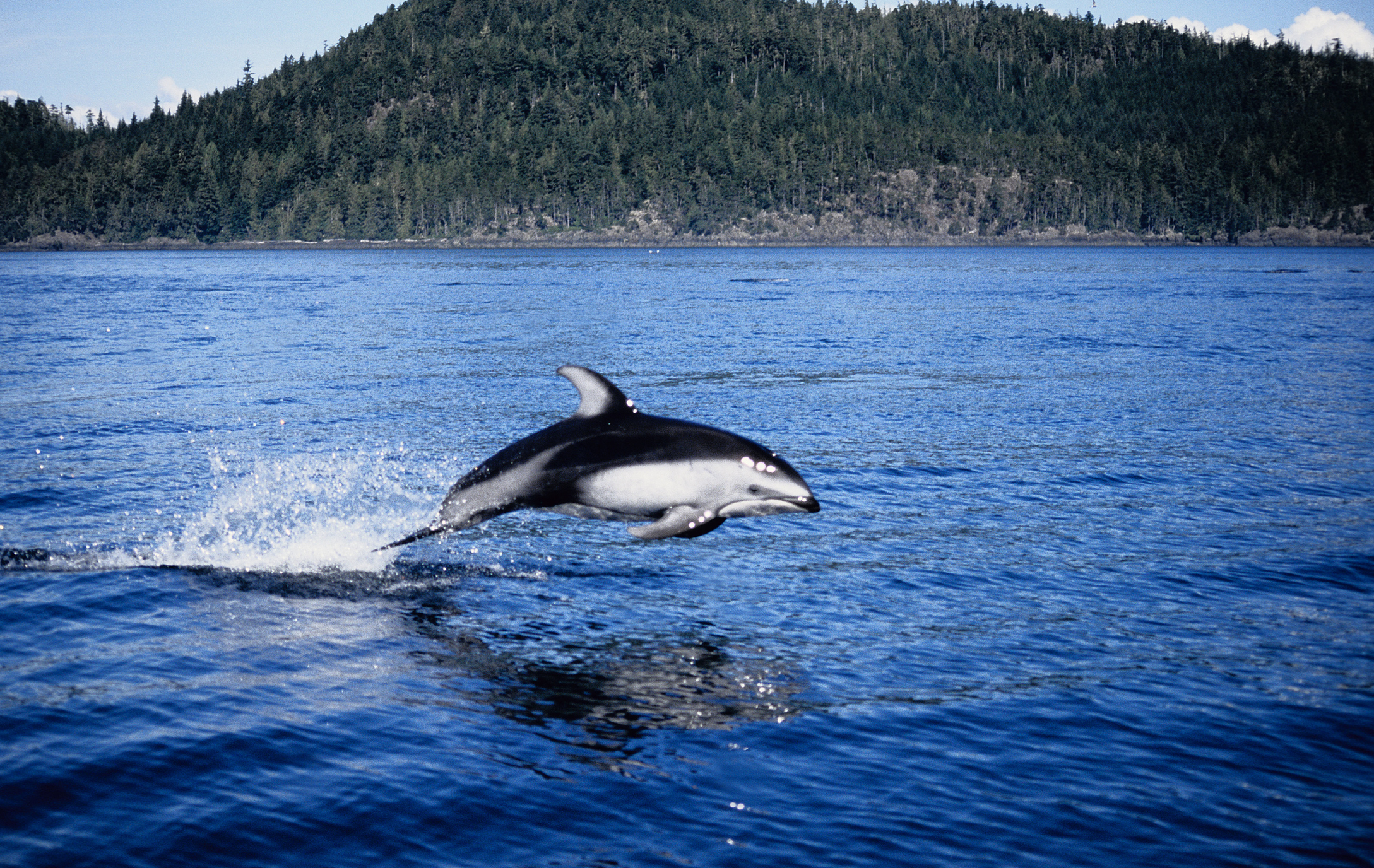
Top speed: around 35 mph (56 kph)
Typical cruising speed: 9-15 mph (15-24 kph)
Scientific name: Lagenorhynchus obliquidens
Energetic, acrobatic and highly social, the Pacific white-sided dolphin is quick and can reach approximately 56 kph, particularly when pursuing prey.
Found in the cool, productive waters of the North Pacific, these dolphins often hunt schooling fish. Their prey can change direction rapidly, so speed alone is not enough – the ability to turn and manoeuvre at speed like a rugby winger is equally important.
The Pacific white-sided dolphin’s compact, powerful body helps it accelerate quickly, while its relatively long flippers provide precise control during high-speed chases.
Speed meets agility
For this species, athleticism is more than just reaching a high top speed. Rapid acceleration, sharp turns and precise steering can make the difference between catching a fast-moving fish and watching it disappear.
Striped dolphin – the wave rider
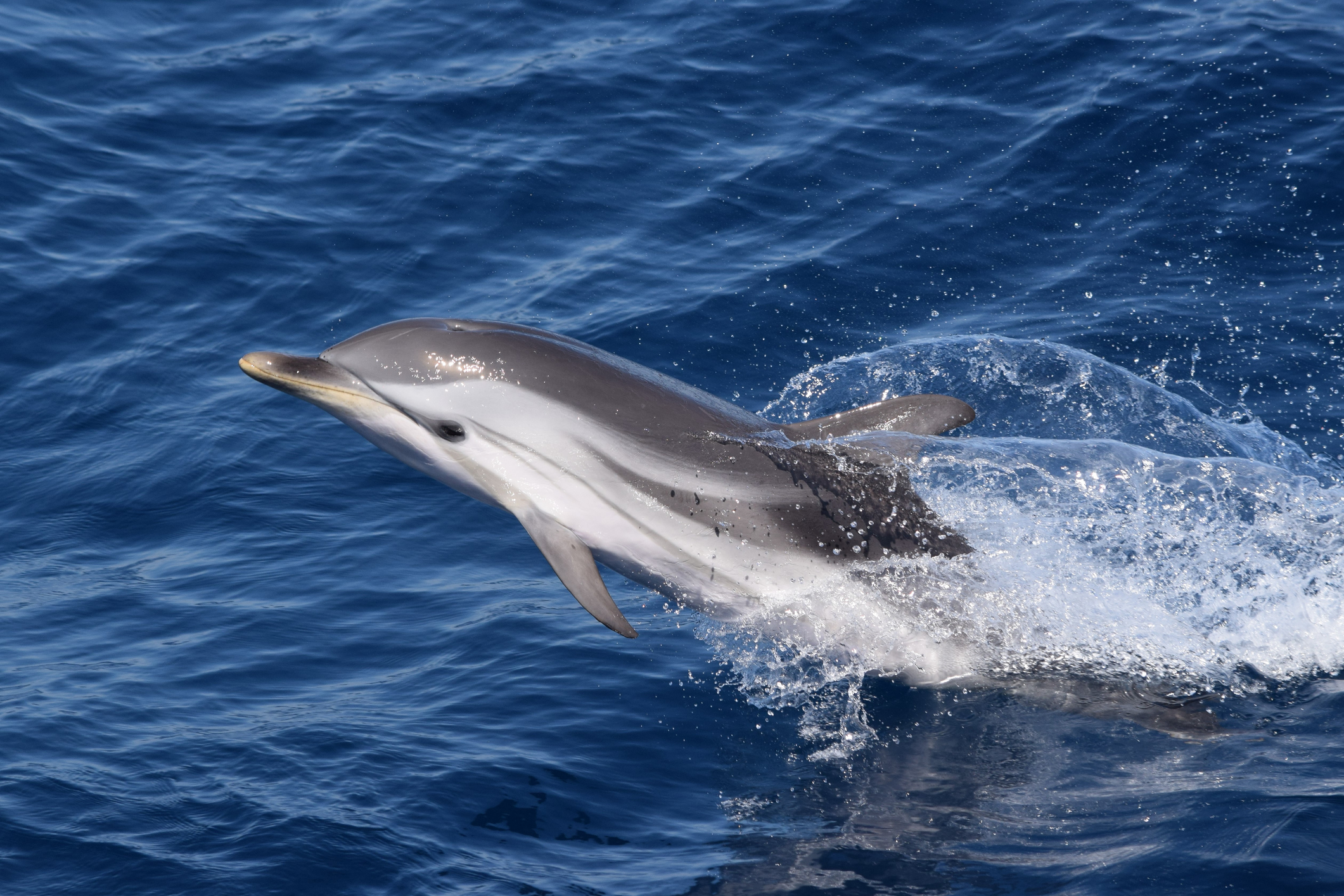
Top speed: around 34 mph (55 kph)
Typical cruising speed: 8-13 mph (13-21 kph)
Scientific name: Stenella coeruleoalba
Recognisable by the distinctive stripes running along their bodies, the striped dolphin is a swift and highly energetic swimmer. It can reach bursts approaching 55 kph, although its everyday travel is undertaken at a considerably lower rate.
One of their most spectacular behaviours is riding the pressure waves created by the bow of moving ships. Dolphins can position themselves in these hydrodynamic zones and appear to race alongside vessels while expending less energy than they would if swimming at the same speed independently. By taking advantage of fast moving water, the dolphin can reduce the effort required to maintain speed.
- "I started screaming." Scientists were filming dolphins in Australia, when this happened
- Why don't whales and dolphins suffer from the bends like humans do?
Built for efficient movement
The striped dolphin combines a streamlined body with powerful propulsion, giving both speed and endurance. Dolphins have evolved to make efficient use of their marine environment – as well as have some fun, including surfing on waves.
Spinner dolphin – the speedy acrobat
Top speed: around 30 mph (48 kph)
Typical cruising speed: 6-12 mph (10-20 kph)
Scientific name: Stenella longirostris
The spinner dolphin is best known for one spectacular trick: launching into the air and spinning repeatedly around its own longitudinal axis.
These famous leaps begin with a powerful underwater burst. Spinner dolphins can reach around 48 kph in short sprints, building enough momentum to propel themselves clear of the water.
Their slender streamlined bodies and beaks help reduce drag as they accelerate through tropical waters. Once airborne, their characteristic spinning behaviour may play a role in communication, social interaction or parasite removal – although scientists continue to investigate the exact reason behind this manoeuvre.
Whatever the reason for the spins, one thing is certain: getting airborne requires serious underwater acceleration.
- Why do dolphins like to follow boats and surf the bow waves?
- Watch gobsmacking footage of thousands of dolphins leaping alongside and encircling a boat...
From sprint to spectacular leap
The spinner dolphin demonstrates that speed isn’t always about chasing prey. In this species, explosive propulsion can also power some of the ocean’s most remarkable displays of animal acrobatics.
Bottlenose dolphin – the speed feeder
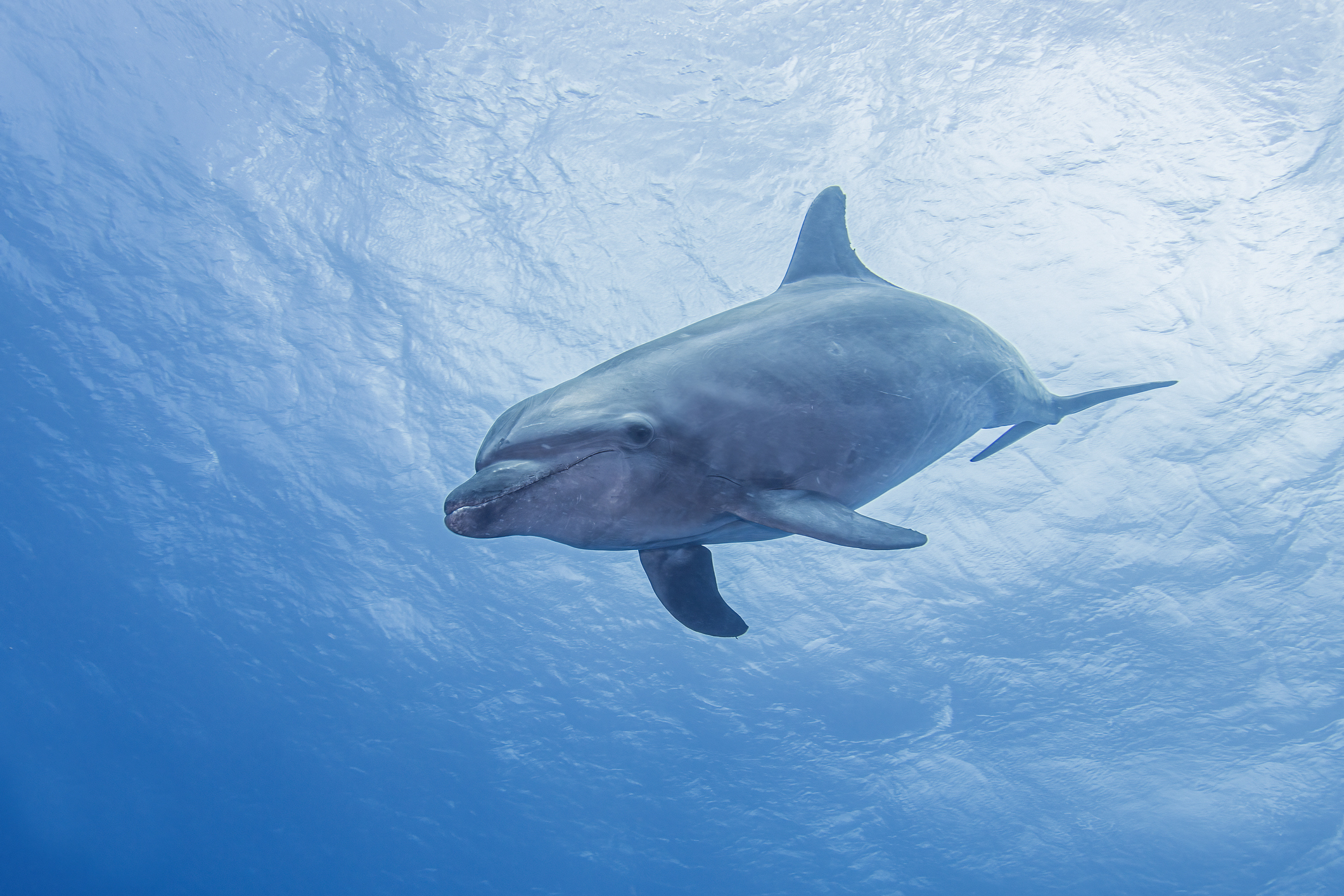
Top speed: around 22-25 mph (35-40 kph)
Typical cruising speed: 4-8 mph (6-13 kph)
Scientific name: Tursiops truncatus
Perhaps the best-known dolphin of all, the bottlenose dolphin may be stockier than some of its offshore relatives, but it is still an impressive swimmer.
They can reach bursts of approximately 35-40 kph, while generally travelling at much slower cruising speeds. Rather than relying on sustained high-speed pursuits, bottlenose dolphins often combine moderate speed with intelligence, communication and teamwork.
During cooperative hunts, for example, groups can work together to strand feed: where they cooperate to herd schools of fish towards the shallows and then lunge out of the waters, temporarily stranding themselves to snatch the prey before sliding back into the deeper water.
This strategy allows these dolphins to exploit their intelligence and coordination, instead of carrying out prolonged high-speed chases.
Speed with a strategy
The bottlenose dolphin shows that being an effective predator isn’t necessarily about being the fastest through the water. Intelligence, cooperation and precise sprints can be just as valuable.
Other quick movers
Orcas
Orcas, the apex predators of the ocean, can reach bursts of up to 56 kph. Despite their large size, they are powerful and agile swimmers, using their strong tails to propel themselves through the water. Their speed is particularly useful when hunting, as they can rapidly pursue fish, seals and other marine species.
Dall’s porpoise
Dall’s porpoises are small but remarkably fast, reaching bursts of around 55 kph. Their compact, streamlined bodies help them move efficiently through the water, while their powerful tails allow them to accelerate rapidly. Their impressive speed helps them avoid predators and catch fast-moving prey.
- “Beaching here could be lethal.” Dolphins in South Carolina have developed a genius – but deadly – hunting strategy. Watch the tense Attenborough-narrated footage
- "It doesn’t have much to smile about with fewer than ten remaining." 10 of the world’s rarest whales and dolphins teetering on the brink of extinction
Why are dolphins such fast swimmers?
Although different dolphin species have different body shapes and swimming styles, their speed is built on a remarkably efficient design.
Streamlined bodies
Dolphins have smooth, streamlined bodies that reduce resistance as they move through the water. Their contours help water flow efficiently around them, minimising drag.
Powerful tail flukes
The tail flukes provide the main source of propulsion. Powerful muscles connected to the flexible spine drive the tail up and down, generating the thrust needed for both cruising and explosive acceleration. Whales and dolphins evolved from terrestrial mammals, with legs positioned underneath their bodies, hence their backbone articulates up and down (dorsoventral undulation). Whereas fish have vertical tail fins that move from side to side (known as lateral undulation).
Flexible bodies
A dolphin’s flexible spine allows it to move efficiently through the water and helps transfer muscular power into forward motion.
Fins for control
The dorsal fin and flippers act as stabilisers and steering surfaces. This is particularly important when dolphins are travelling at high speeds and need to make sudden changes of direction.
Top image: bottlenose dolphin jumping in the air. Credit: Westend61/Getty Images
More stories from around the world:
- “My mind was completely blown.” This diver was filming fish in Borneo, when suddenly the shoal parted to reveal a breathtaking sight
- Deep-sea 'ghost shark' spotted feeding in the shallows off the coast of Vancouver Island
- It has human-like, sharp chisel teeth and a powerful bite. Divers are advised to swim away, as making for the surface only encourages an attack…


