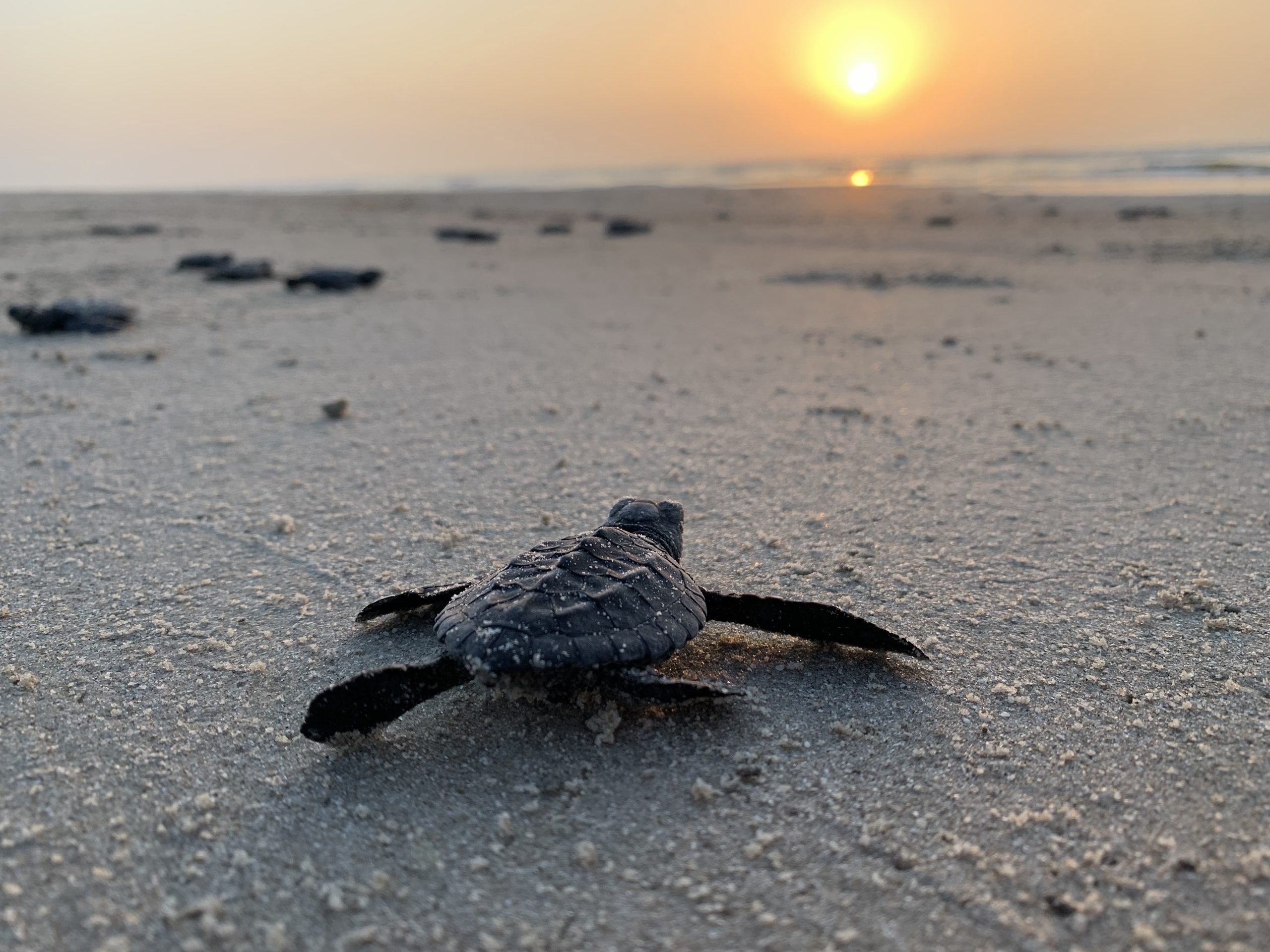
Conservationists in Texas are celebrating a bumper nesting season for Kemp’s ridley sea turtles – the world’s rarest and most endangered species of sea turtle.
In the 2025 nesting season, staff and volunteers from the U.S. Fish and Wildlife Service (FWS) and National Park Service (NPS) documented 449 nests. In 2026, this number rose to 697 nests – an increase of 55%.
Once abundant in the Gulf of Mexico, Kemp’s ridley sea turtles were driven close to extinction in the mid-20th century due to habitat loss, egg collection and fishing bycatch. By the 1980s, there were estimated to be fewer than 250 nesting females left.
Since then, decades of conservation work by the FWS, NPS and partners have seen the rare turtle’s numbers gradually increase.
“What began as a conservation emergency has become a remarkable success story,” says Donna J. Shaver from the Division of Sea Turtle Science and Recovery at Padre Island National Seashore in South Texas.
“On the Texas coast, growing from about one nest every three years in 1978 to nearly 700 nests in 2026 would not have been possible without decades of partnership among thousands of people and organisations across the US and Mexico.”
The public play a vital role in protecting these rare turtles. Between March and September, beachgoers are asked to drive slowly on Texas beaches and keep a distance of at least 30m (100ft) from the turtles. Stranded, injured and nesting sea turtles can also be reported by calling 1‑866‑TURTLE‑5.
“The Kemp’s ridley’s continued progress reflects the commitment of Texans who care deeply about our coast,” says Alicia Walker, Texas Parks and Wildlife Department biologist and state coordinator of the Sea Turtle Stranding and Salvage Network.
“From practicing responsible fishing techniques to protecting vital beaches and nearshore habitats, Texans play a direct role in protecting these turtles,” says Walker. “Sea turtles are a key part of a healthy Gulf ecosystem, and every report of a nesting, cold‑stunned or stranded sea turtle helps us respond quickly and give these species their best chance at survival.”
FWS biologist Cynthia Rubio adds: “Seeing a nesting turtle is an amazing life experience, and by reporting them you help ensure the species’ future.”
More wildlife stories from around the world
- Incredibly rare giant turtle with a face like a frog found in India's tropics
- “This is what a turtle eruption looks like – wait till the end!"
- “That’s unbelievable.” Scientists strapped a camera to a turtle. What it filmed shocked them all
- Turtles in Saudi Arabia just led scientists to a gigantic carbon sink
Top image: mature Kemp’s ridley sea turtles can nest up to three times every year on the Texas coast. Credit: Cynthia Rubio/USFWS