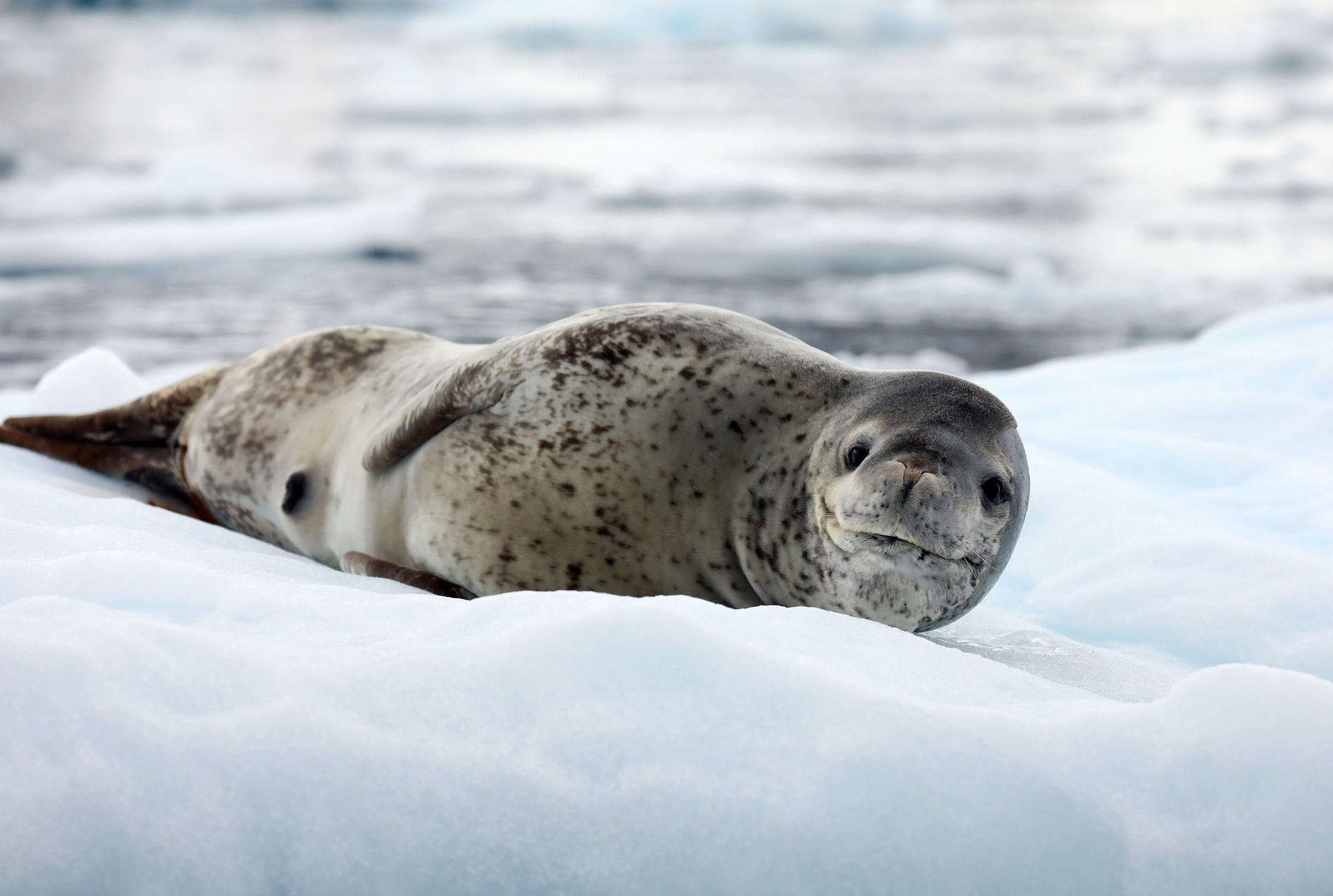
With a huge reptile-like head, powerful jaws and a sleek, muscular body, the leopard seal is one of Antarctica's most formidable apex predators.
The third-largest seal species ranking behind elephant seals and walruses, these solitary hunters are capable of tackling penguins and even other seals and can swim at speeds of up to 25mph.
What do leopard seals look like?
Their name comes from the distinctive grey, white and black spots covering their body – reminiscent of their big-cat namesake.
- These strange, blubbery giants weigh up to a tonne and can grow as long as a car – awe-inspiring Arctic powerhouses that can crush anything in their path
- Why are walruses so chubby? Just how fat are they? The secret behind their flabby obese look
Females are also bigger than males, a trait known as reversed sexual dimorphism, which is rare among marine mammals
Where are leopard seals found?
Leopard seals are creatures of the Southern Ocean with most breeding and feeding among the pack ice surrounding Antarctica. However, they have an enormous range and some live year-round around subantarctic islands including South Georgia, Macquarie Island and Heard Island.
They are also impressive travellers. Individuals occasionally venture much further north and have been recorded off the coasts of Australia and New Zealand – and even as far north as the tropical Cook Islands.
They belong to a group of earless seals known as the Phocidae family, or ‘true’ seals. But despite their name, earless seals do have ears – they’re the small holes located on the sides of their head, just behind their eyes.
What do leopard seals eat and how do they hunt?
They are the only species of seal known to actively prey on both penguins and seal pups, including crabeater, Weddell, Ross, southern elephant and Antarctic fur seals.
They can patrol the waters close to colonies, waiting to ambush birds - particularly vulnerable youngsters - as they enter or leave the sea. Once caught, penguins may be shaken violently at the surface to ‘deglove’ (remove the skin) and then tear the carcass into pieces small enough to swallow.
Crabeater seal pups are among their prey and many survivors carry distinctive parallel scars made by leopard seal teeth.
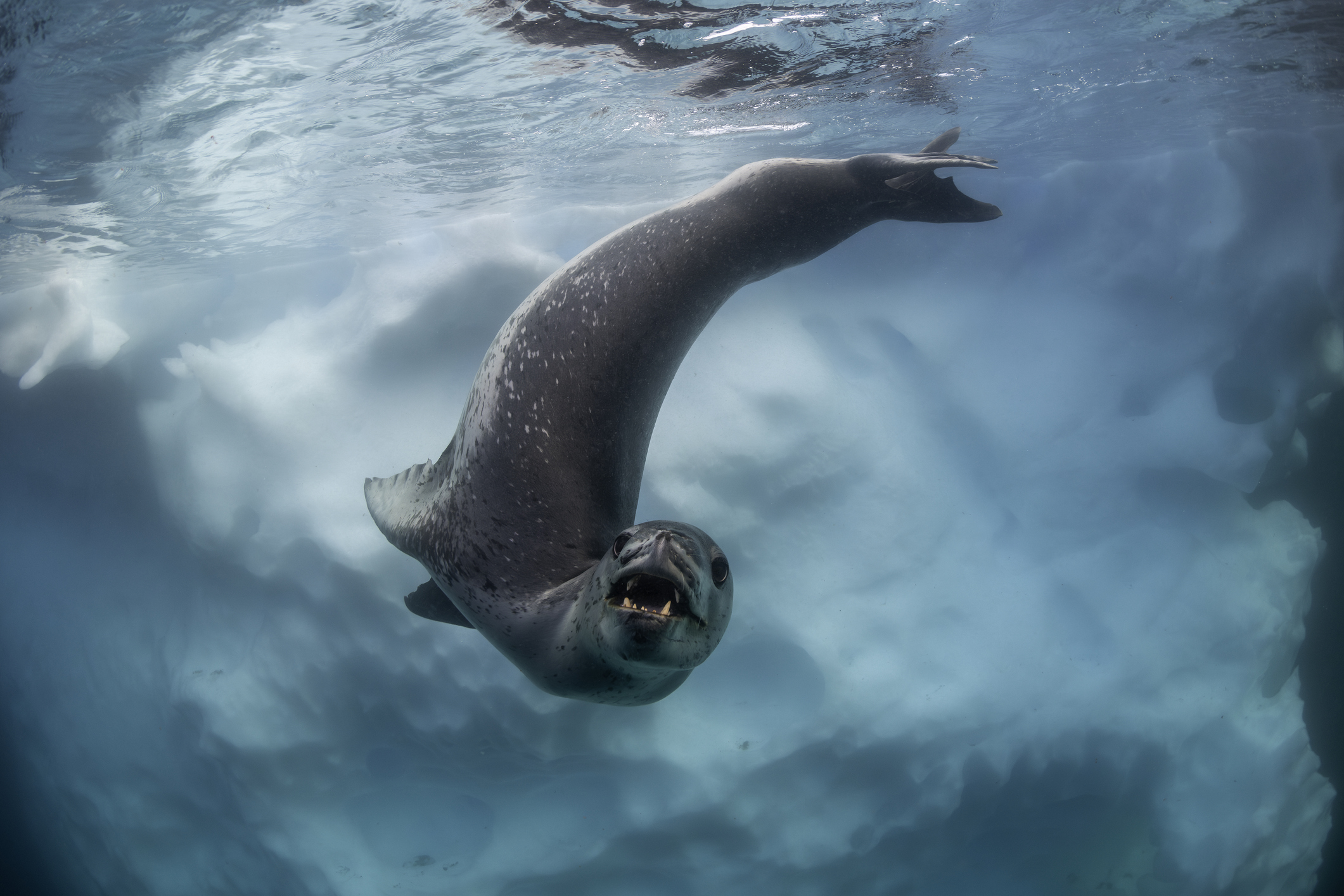
Yet despite their fearsome reputation, leopard seals don't survive solely by hunting large prey. They are opportunistic feeders whose menu can include krill and small crustaceans - making up almost half of their diet. This is reflected in their teeth long, sharp canines up to 1 inch (2.5 centimeters) for hunting and lobed molars, which allow them to filter-feed on smaller prey.
Few predators can exploit such a wide array of prey from tiny crustaceans to sizeable warm-blooded animals - a remarkable adaptation of this species.
Are leopard seals dangerous to humans?
Large and powerful predators should always be treated with caution, particularly in the water. But attacks on people are extremely rare.
In 2003, British Antarctic Survey marine biologist Kirsty Brown was killed after being attacked while snorkelling off the Antarctic Peninsula – the first recorded human fatality caused by a leopard seal.
- "They can survive up to an hour in the icy water and use razor-sharp protruding teeth to scrape away ice."10 amazing, remarkable Antarctic animals...
- "While snorkelling a scientist was dragged underwater and drowned by one of these huge predators…" 8 deadliest animals in the Antarctic Ocean
Their inquisitive behaviour can also bring them close to boats and divers. However, curiosity shouldn't automatically be interpreted as aggression. These are wild predators investigating an unfamiliar animal in their environment.
On the rare occasion they haul out on land, leopard seals will first issue a warning growl before defending their space more violently.
What is the life cycle of a leopard seal?
Females typically give birth to a single pup on sea ice or a snow-covered beach in October or November following a gestation of around eight to nine months but can be extended to eleven months. And these are no tiny newborns. A leopard seal pup can measure around 1.6m long and weigh more than 30kg at birth.
- Adorable seal pups among 15 spectacular images from Underwater Photographer of the Year awards
- Why do humans grow so slowly compared to other animals?
Mother and pup remain together on the ice while the youngster nurses for around a month. After weaning, the pup begins hunting krill and can double in size within only a few months. Females reach sexual maturity between roughly two and seven years old, while leopard seals are thought to live for around 12–26 years in the wild.
There is still a remarkable gap in knowledge of their private lives: scientists have never observed leopard seals mating in the wild but captive animals have been seen mating underwater.
Do leopard seals have any predators?
Adult leopard seals sit close to the top of the Antarctic food chain but there is one predator powerful enough to turn the tables: the orca.
Killer whales are considered their only natural predator but witnessing such interactions is rare in such a remote location, so scientists are currently unable to say how frequently they hunt leopard seals.
How do leopard seals communicate?
This species spends much of their lives alone but beneath the Antarctic water they can be surprisingly vocal.
During the breeding season, males produce distinctive underwater calls. Research suggests individual males have their own characteristic sequences or 'songs', which may help advertise themselves to potential mates or rivals. Females also vocalise around the time they are ready to mate.
They are also highly curious animals and have been observed closely investigating people and unfamiliar objects. One of the most famous encounters involved National Geographic photographer Paul Nicklen, who spent days with a female leopard seal that repeatedly brought penguins towards him.
Are leopard seals under threat?
Currently leopard seals are classified as Least Concern, although their remote habitat makes accurately estimating their total population difficult. But their future is closely tied to an Antarctic environment undergoing rapid change.
Sea ice provides important habitat for breeding and resting, while changes to the abundance and distribution of krill, fish, penguins and other seals can ripple upwards through the food chain. Scientists therefore expect continued sea-ice loss caused by climate change to affect leopard seals, although the consequences may differ between populations and locations.
Commercial fishing for Antarctic krill adds another potential pressure to an ecosystem in which the species is a fundamental food source for everything from penguins and seals to whales.