
“People were saying, ‘They're everywhere,’ ‘I can't believe what's going on,’ or, ‘This is a bit of an invasion happening,’” says film-maker David Palfrey. He was about to go on a scuba-diving holiday to Cornwall and, if the rumours were true, he had a good chance of seeing an octopus.
He didn’t see one octopus. There were hordes of them. “You’d see seven on a dive,” he says. On every dive, just a minute or two would pass before a tentacled creature scuttled along the seafloor or peered out from behind the kelp. “You'd suddenly notice some eyes looking at you.” Palfrey had seen octopuses in Cornwall years before but this was different. There were more of these clever cephalopods and they seemed bolder.
- Angry octopus caught punching big fish in South Pacific Ocean
- Breathtaking footage shows diver's close encounter with the world's biggest octopus
The first people to notice this bloom of common octopuses along the UK’s south-west coast were the fishers. “They were eating all their crabs and lobsters,” says Bryce Stewart, senior research fellow at the Marine Biological Association (MBA).
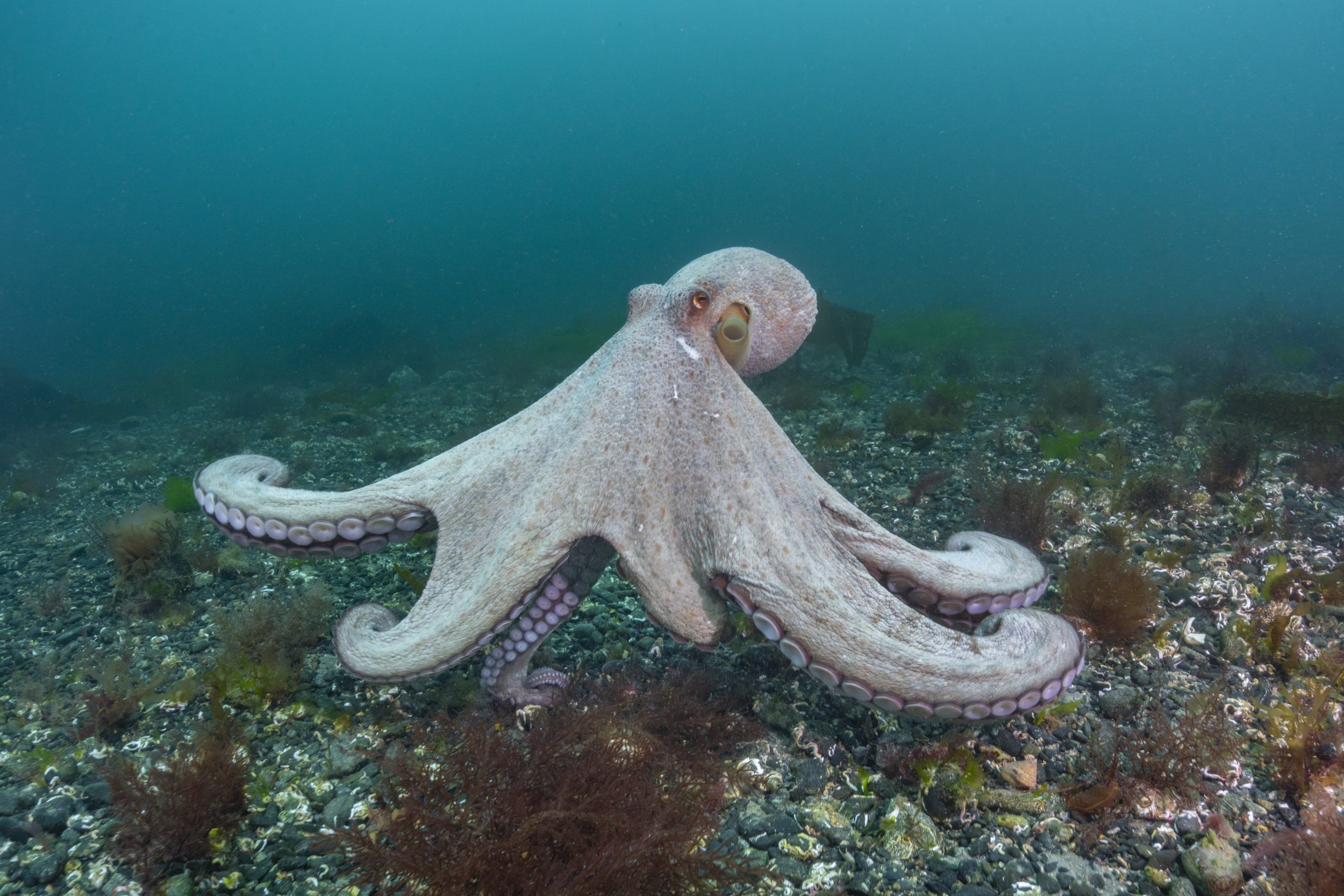
These wily predators wedge themselves through the mesh of crab pots, devour the crab or lobster inside, then squeeze out again, moving from pot to pot like a hotel guest at a breakfast buffet. When the traps were retrieved, the catch was gone and the perpetrator was often nowhere to be seen. “They would pull up these pots, sometimes with the octopus in them, but often just with bits and pieces of crab claws and lobster bodies,” says Stewart.
Some people were angry, says Palfrey, while others were in awe of these fascinating animals. Despite the name, the common octopus is not typically common in the UK. Although native to British waters, it's more usually found in warmer seas such as the Mediterranean. Numbers exploded in 2025 but blooms such as this have happened before: in 1899, the 1930s and the 1950s. It’s linked, says Stewart, to unusually warm seas, so it’s likely to happen again.
Fascinated about what was going on, Palfrey worked with Stewart and the MBA to create a short film called Bloomin' Octopus! – A Tentacular Spectacular.
The UK is home to just two species: the common octopus and the curled octopus, but there are hundreds of species around the world. Octopuses are found in every ocean on the planet, from the shallows to the deep. The Abdopus octopus is so well adapted to life in tidepools that it can walk on land, while glass and Dumbo octopuses – named after their fins, which look a little like an elephant’s ears – live hundreds or thousands of metres deep, far from the surface. Found in shallow waters and the deep sea is the largest known species: the giant Pacific octopus, which can weigh up to around 50kg – about the same as a fully grown Rottweiler.
- Scientists gave an octopus a mirror. Here’s what happened next
- “This is no ordinary octopus.” Watch the weird sea creature that can walk on land – wait, what?
- 3 deadliest octopuses in the world – and one has enough venom to kill dozens of humans within minutes
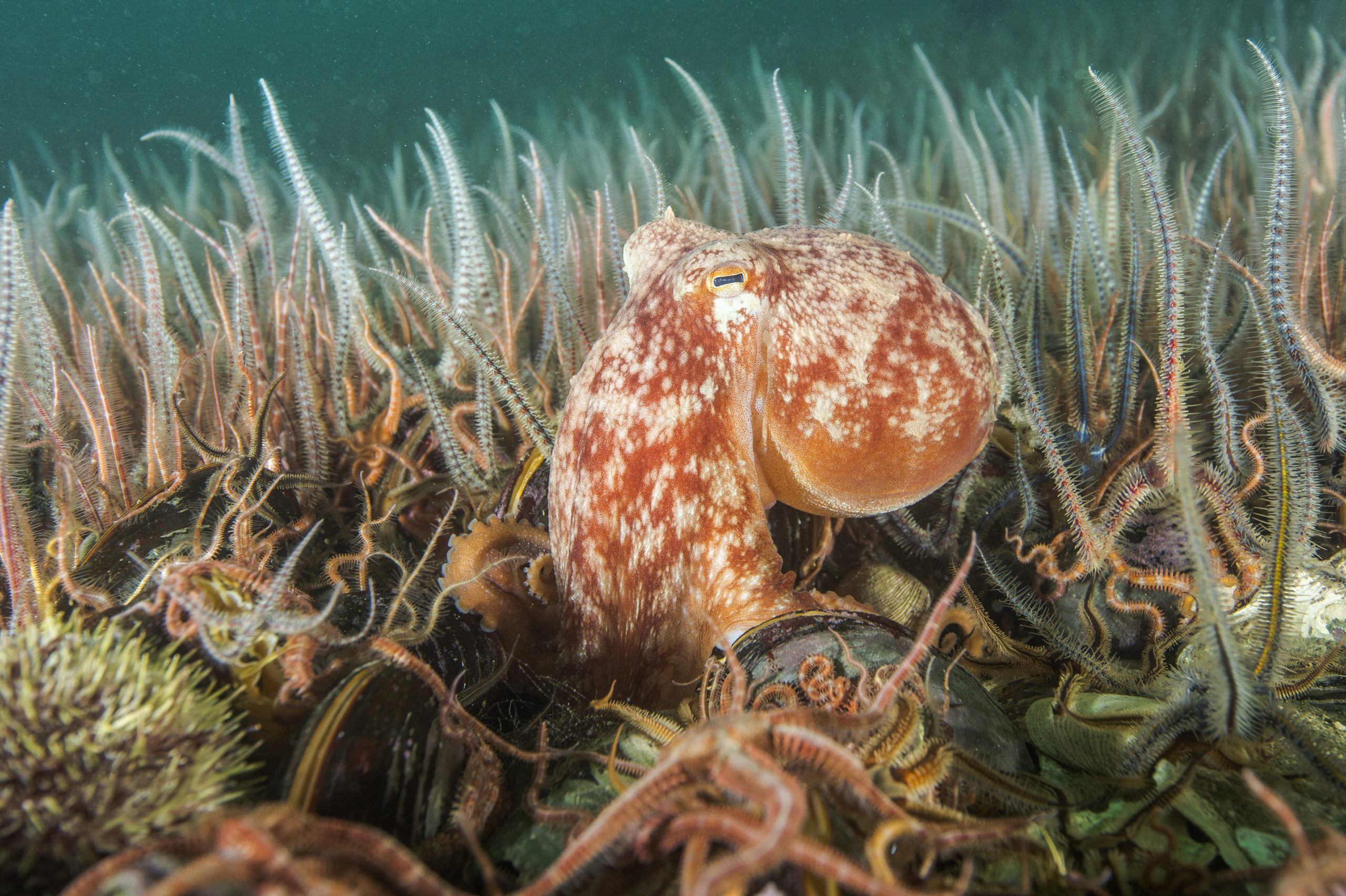
With their large mantle, colour-changing bodies and eight sucker-lined arms, it’s no wonder this eruption of octopuses has been compared to an alien invasion. And, like many of the extra-terrestrial lifeforms portrayed in movies, octopuses are incredibly intelligent. They can unscrew jars, solve puzzles and even navigate mazes. “They can actually get better at it over time,” says Stewart.
Their decentralised nervous system allows each arm to function semi-independently. “If you and I had eight arms and we were an octopus, we could write eight different letters at the same time,” says Stewart. “To be able to have independent limbs that can do two different things at the same time is extraordinary.”
They can even use tools. The California two-spot octopus can use a mirror to find a reward while coconut octopuses carry debris, such as coconut shells or seashells, to use as a shield in case they find themselves under threat.
- "A quick tap then startles their prey into fleeing straight into the open tentacles" – A shadowy hunter that waits silently for the perfect moment to strike
- This ocean titan has 9 brains, hunts sharks at night and can grow as long as a school bus
Octopuses are such effective hunters that other animals even team up with them. While scuba diving on the Great Barrier Reef, Stewart has seen predatory fish lined up around a hunting octopus waiting to profit from its hard work. “They are basically waiting for something that's trying to escape,” he says, “or maybe something that's been injured by the octopus.” Octopuses can benefit from this partnership too (the fish help track down prey) but they have been seen punching the fish, perhaps to keep them in line.
As British fishers noticed when they pulled up their empty traps, octopuses are exceptional escape artists. These Houdinis of the sea can fit their entire body through the tiniest of holes. “The only hard part in them are these beaks, which are like a parrot's beak,” says Stewart. “Anything larger than that, they can squeeze through.”
Squishing their soft bodies into surprisingly small spaces helps these cephalopods remain unseen, so they can pounce on passing prey. It also keeps them hidden from potential predators, for whom an octopus is a mouth-watering meal. “An octopus is like a juicy rump steak,” says Stewart. “It is literally a big ball of protein and it's soft. It's not got any spikes.”
Octopuses can change the colour and texture of their skin in the blink of an eye using special pigment cells called chromatophores. When moving along the seafloor from the pale sand to a dark rock or tangle of seaweed, “They will nearly instantly change to match that background,” explains Stewart.
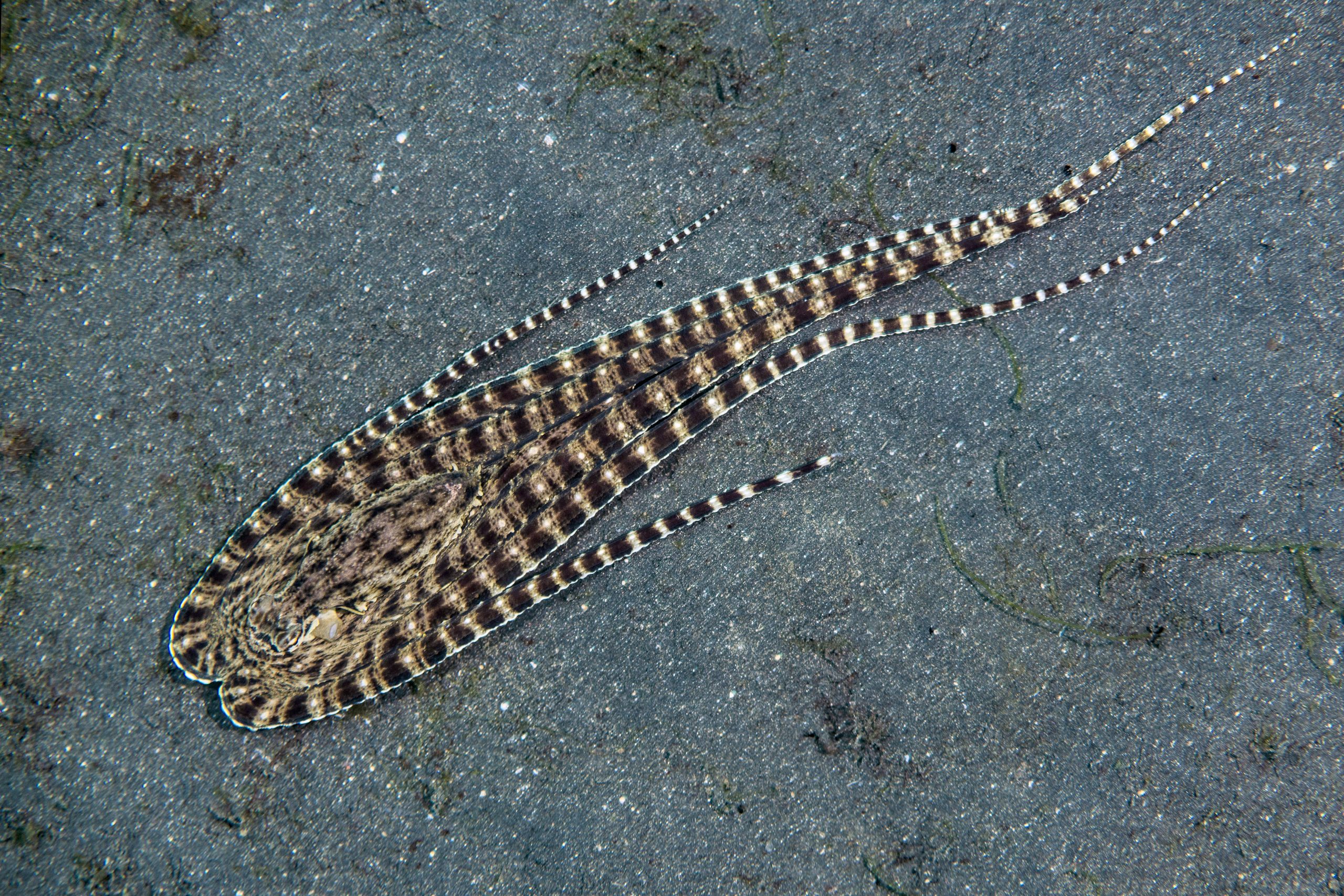
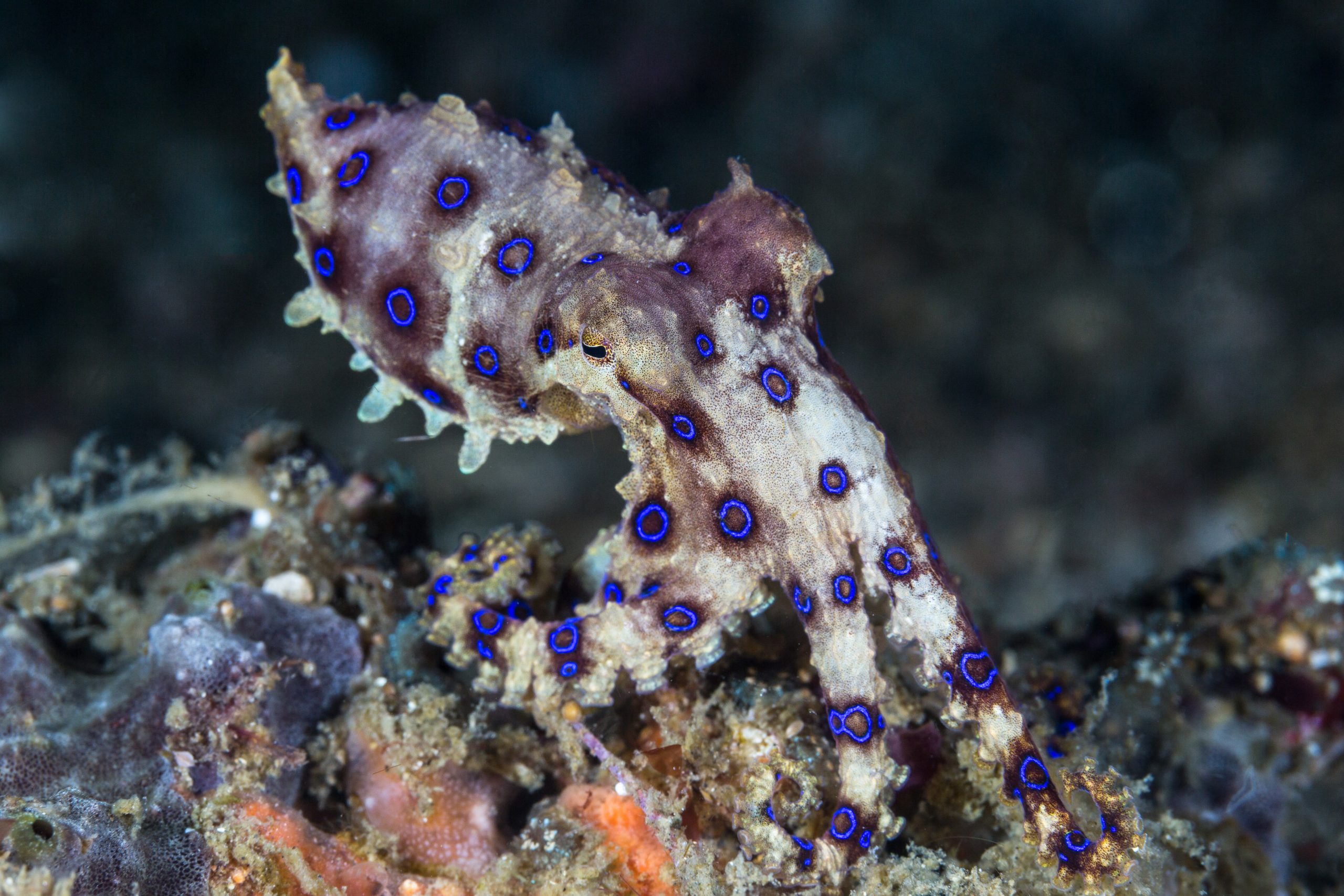
Perhaps best known for its camouflage is the extraordinary mimic octopus, which can imitate as many as 13 species, from lionfish to sea snakes. They get their whole bodies involved, using the shape of their arms to complete the cunning disguise. Meanwhile, the deadly blue-ringed octopus displays its vivid cobalt rings to stand out, using them to warn potential threats to back off. Anyone who sees this species display its rings would be sensible to heed that advice: the neurotoxin (tetrodotoxin or TTX) delivered through a bite is believed to be 1,000 times more deadly than cyanide.
- “I nearly lost my dive watch and a glove while ‘holding hands’ with an octopus in this way.”
- 15 magical photos that show just how uniquely beautiful octopuses can be
- Baited camera dropped to Pacific seabed. Then this happened
Without a protective shell, these features keep these squishy cephalopods safe. Other marine animals took different paths. “Are you going to develop speed so that you can catch things or get away from things, or are you going to develop camouflage, or are you going to be covered in spikes?” asks Stewart.
It worked. They have been on the planet – in a similar form to what we see today – for more than 300 million years. “Yes, they are soft-bodied but they are incredibly intelligent, they can camouflage, and they can squeeze into tiny holes,” he says.
Octopuses have short lifespans, dying soon after reproducing. Adults don’t provide parental care, so newly hatched young must be able to survive as soon as they’re born. Parents “guard their eggs and then, when they hatch, that's it,” says Stewart. These short lifespans mean dramatic ‘boom and bust’ population changes can happen rapidly in response to shifting environmental conditions. “It really plays out quickly,” he says.
Blooms can happen anywhere. “This is the sort of thing that's happening all over the world,” says Stewart. The ripple effect can be positive or negative for coastal communities. In the UK, many fishers lost business but some turned lemons into lemonade. “Fishermen, being fairly innovative as they are, started to then catch the octopuses as well,” says Stewart, “and realised they could get actually quite a good price for them.”
Ocean ecosystems are made up of an intricate web of relationships, so it’s natural that their impact on people’s lives and livelihoods is complex too. That’s what Palfrey hopes people will consider when they watch Bloomin’ Octopus, he says: “I wanted to spark their curiosity and get them thinking about changing seas.”
Top image: Southern blue-ringed octopus at night, Port Phillip Bay, Victoria, Australia. Credit: Gary Bell/Oceanwide/Naturepl.Com
Discover more wildlife stories from around the world:
- At 2 metres long this is one heck of a tooth – and weirdly it's also the creature's only tooth
- "Its venom contains over 100 different toxins and has the power to paralyse muscles." 8 most dangerous, deadliest animals in Florida
- It’s almost the size of the UK, incredibly dangerous and deep enough to swallow Mount Fuji and visited by one third of the world’s whales and dolphins


