Many have lost their lives on this rugged stretch of Namibian coast. The 500 kilometre stretch of land, which stretches from the Ugab River in the south to the Kunene River on the Angolan border, contains two types of carcasses – those of ships and those of marine mammals.
The San people called it “The Land God Made in Anger.” Portuguese sailors dubbed it “The Gates of Hell.” Today, it’s known as the Skeleton Coast.
It’s not difficult to see how it acquired its fearsome reputation. Here, hot, dry desert air meets cold, moist air over the Atlantic, creating a thick, persistent fog that can blanket the coastline for more than 100 days a year.
- "It’s estimated that 35,000 creatures died on this beach…" 10 deadliest beaches on the planet including Skeleton Coast – world’s largest ‘ship graveyard'
- "It looks like an alien and can cause cardiac arrest within minutes…" 14 deadly, highly dangerous beach animals you could encounter on the sand
Combined with treacherous currents, shifting sandbars and heavy surf, these conditions made the coast particularly dangerous for the sailing ships of yesteryear. Now, up to a thousand shipwrecks are thought to litter the Skeleton Coast, making it one of the world’s great ship graveyards.
Over the decades, the encroaching desert has left some vessels that once ran aground on the shoreline stranded far inland. In 1909, the Eduard Bohlen, a large German cargo ship carrying equipment for a diamond mine, ran aground in the dense fog.
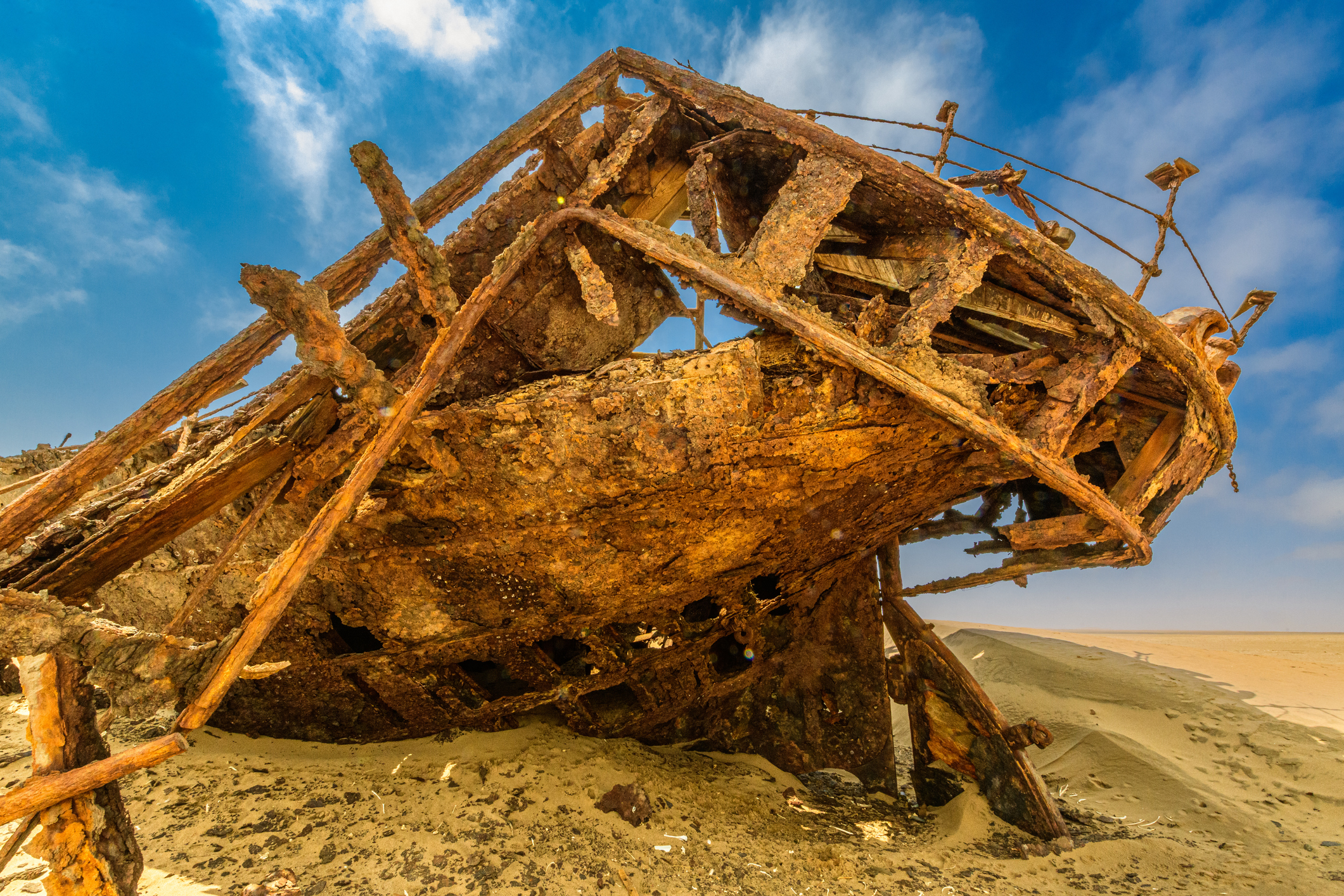
When attempts to refloat it failed, the miners used the stranded vessel as a hotel. Then the desert slowly reclaimed it. Now, its rusting hull lies around 400 metres inland.
But the ships aren’t the only things to have left their skeletons behind. The coast takes its name, in part, from the bleached bones of whales and seals that once littered its beaches, remnants of the commercial whaling and sealing industries that operated here.
Long before the arrival of European whalers, local communities made use of the marine bounty washing ashore. Beached whales provided a rich source of food, while their enormous bones were put to practical use. Archaeologists have documented ancient settlements where whale ribs and jawbones were incorporated into shelters.
- How do you get rid of a dead whale before it explodes? Scientists discover new "ecologically beneficial" method
- "Balloons don’t get much bigger than a gas-filled whale": Just why do whales explode?
- Scientists found a dead whale 1,288m deep in the Pacific. They filmed it for 20 years – and discovered this
Later, commercial whaling added to the grisly accumulation. Tens of thousands of whales were slaughtered, and when their remains washed up on the Skeleton Coast, they stayed there, slowing rotting in the sun. Over time, the desert became a graveyard for giants.
- Siberia’s ‘Gateway to Hell’ is getting bigger. And it’s spewing out prehistoric animals
- "Known as the Gateway to Hell, where lurid-coloured acid lakes create an eerie, alien world." 10 barren dead zones where nothing survives...
- It’s made up of 1,000 miles of tunnels and was once thought to be the gateway to the underworld – but remains largely unexplored