
Southern right whales (Eubalaena australis) migrate thousands of kilometres each year between winter breeding and summer feeding grounds. But exactly how they navigate and choose their routes has remained a mystery – until now.
- Experts tested whales’ teeth for nuclear fallout – and accidentally found the oldest killer whale on record
- Astounding footage shows humpback whales teaming up with California sea lions to hunt in Monterey Bay
Seasonal migration is widespread in the animal kingdom; an evolutionary strategy borne out of necessity and shaped by environmental factors. These journeys are usually a matter of life or death – but, as suggested by new research, some baleen whales appear to take the scenic route.
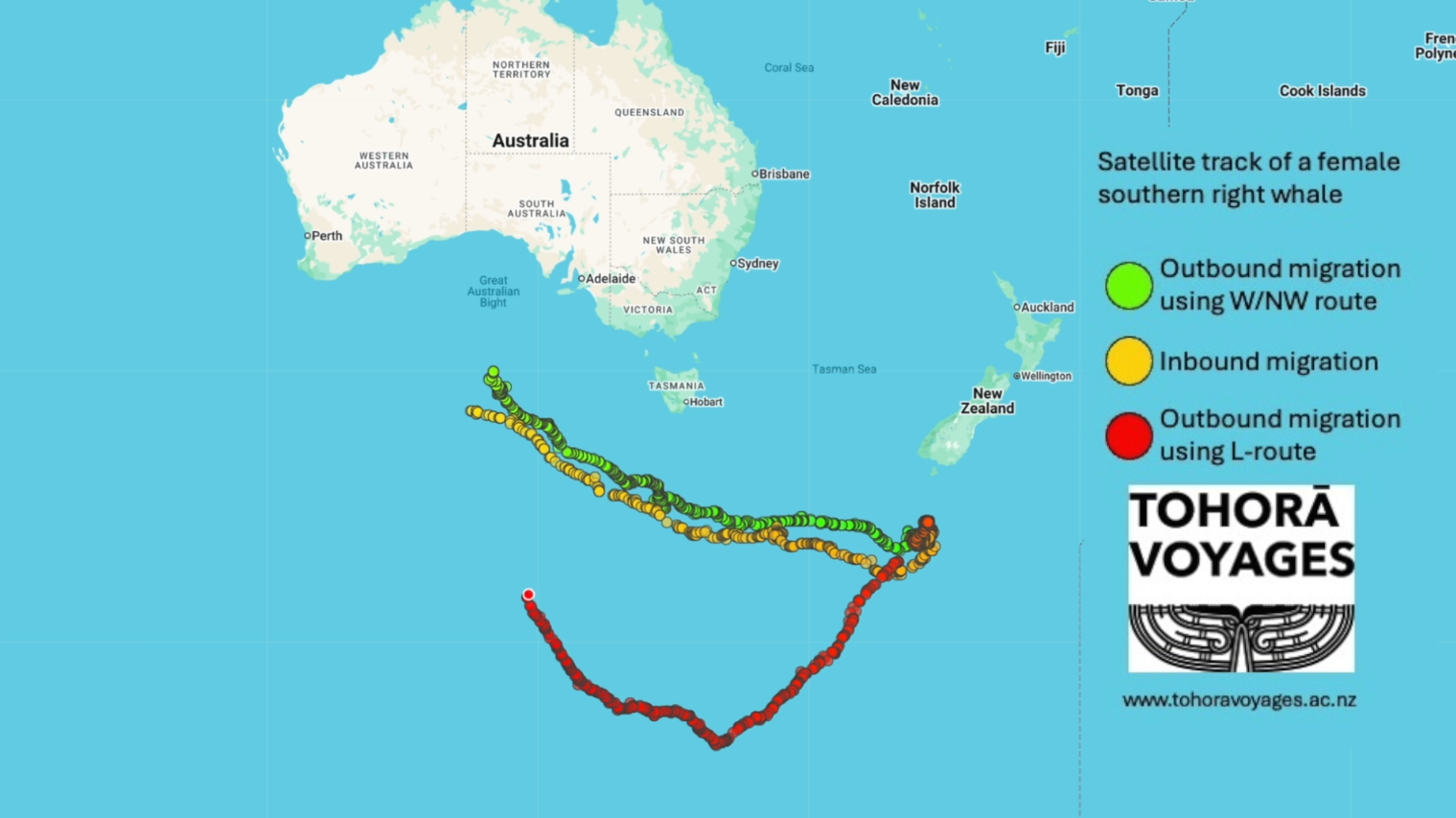
Scientists from University of Auckland, Australia, alongside international partners, tracked 21 southern right whales from their winter home in New Zealand’s subantarctic Auckland Islands (Maungahuka) to feeding grounds south of Australia. The whales were observed over three years (2020-2022), and the findings are published in the journal Proceedings B.
In a surprising turn of events, the study revealed that while half the whales took a direct route westward, the others headed further south before returning north again – taking an L-shaped, scenic journey across the ocean.
Both groups reached the feeding grounds at roughly the same time, which coincided with a peak in prey availability. The whales that took the long route simply left around a month earlier and travelled more slowly. On average, the long trip took 64 days and the short one 42 days.
And, interestingly, departure time was the only significant predictor of route: sex, body length, age and body condition were not consistent between short and long route whales.
- Epic 15,000km humpback whale journey breaks world record
- Hundreds of baby whales are washing ashore dead – and the suspected cause is horrifying
Priorities
According to Leena Riekkola, the lead author of the study, these findings suggest differing priorities among the whales – some of them may be saving energy, and others time.
Southern right whales observed in this study also appeared to use a mix of natural cues to navigate the ocean. The whales using the L-route usually made the distinct turn near the southern edge of the Antarctic Circumpolar Current, a huge current circling Antarctica. The turn also coincided with a shallower seabed, which the whales followed.
The whales also seemed to be influenced by subtle variations in the Earth’s magnetic field, with most turns happening where the magnetic inclination varied between -82° and -84°.
And, according to the scientists, these whales also show flexibility in their behaviour. For example, a female might delay migration and take the shorter route to wait for her calf to grow bigger. The next year, she’ll travel alone – and choose the longer route.
This flexibility is important in the face of climate change, giving the still-recovering population (southern right whales populations suffered from hunting) a potential leg up.
“A population that can adapt its behaviour has a better chance of coping with changing seas,” said Emma Carroll, an associate professor at the University of Auckland.
- Scientists put three decades of whale migration data into a digital map – this is what they saw
- Underwater recorders capture sound of mysterious, 10m-long giant off Australian coast
Read the full findings here.
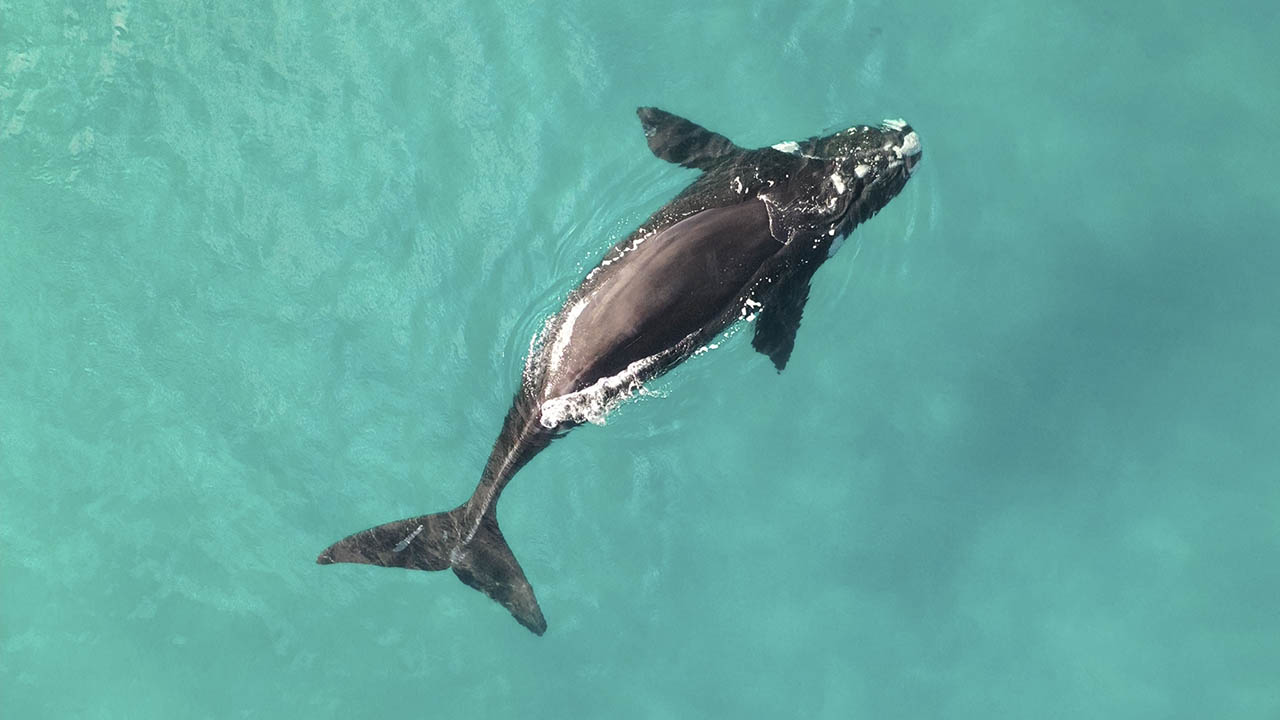
Top image: Southern right whale, mother and calf. Credit: University of Auckland


