
There are ancient animals in the ocean that can live for hundreds of years, have no organs and can rebuild themselves if their bodies are torn apart.
They might not swim like fish, scuttle like crabs or slither like eels, but sponges are animals. You could be forgiven for thinking these immobile creatures are plants – even scientists didn’t realise they were animals until the mid-1700s.
Although sponges don’t move anywhere, they’re much more fascinating than the soggy lumps we know from our bathrooms.
Firstly, these animals are ancient. Researchers believe sponges were one of the earliest animals on the planet, potentially appearing more than 608 million years ago.
This figure has been a cause of contention for scientists because most of today’s sponges have a skeleton made up of tiny, needle-like structures called spicules. If you look back through the fossil record, you won’t find spicules beyond around 543 million years ago. It seems to track that sponges didn’t exist before this time.
But genetic information suggests that sponges have been around for more like 700 million years.
“The first sponges were soft-bodied and lacked mineralised skeletons,” explains Eleonora Rossi, honorary research associate at the University of Bristol’s School of Biological Sciences. Her paper suggests that sponges evolved 100 million years before the fossil record. “That’s why we don’t see sponge spicules in rocks from around 600 million years ago — there simply weren’t any to preserve.”
This means there were sponges in our seas hundreds of millions of years before the dinosaurs existed. Back then, the ocean was a very different place with lower oxygen levels – something that doesn’t bother sponges too much.
“Although, like other animals, they require oxygen to metabolise, they don’t need much because they are not very active,” explains Smithsonian National Museum of Natural History on its website.
- There’s a bizarre animal in the deepest depths of the Pacific Ocean that looks like a toast rack – and it uses deadly hooks to kill its prey
- Mysterious ‘ghost shark’, carnivorous ‘death ball’ sponge, and a worm living in a ‘glass castle’ – more than 1,100 new marine species discovered
Scientists think there are around 15,000 different species of sponges on the planet, only half of which have been described – meaning there are thousands of different sponges yet to be discovered.
There are many weird and wonderful sponges researchers already know about. There’s the harp sponge (Chondrocladia lyra) which is found thousands of metres deep and looks like a toast rack and the ‘death ball’ sponge that looks like a bundle of pretty pink ping pong balls hanging from a tiny coat stand.
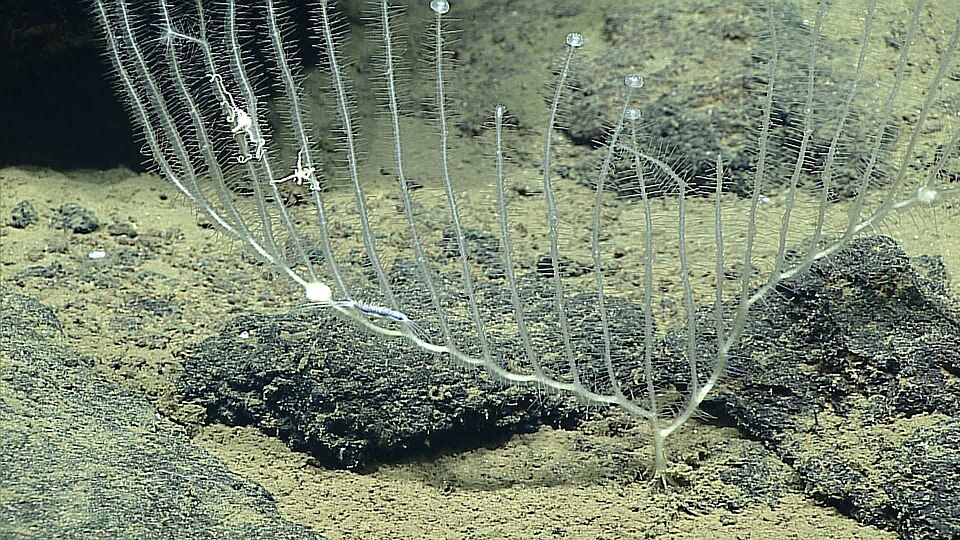
Deep-sea scientists in the Pacific Ocean were amazed when they stumbled upon a Dr Seuss-like landscape of synchronised sponges on sticks all facing in the same direction. The scene looked so strange researchers dubbed it the “forest of the weird.”
The biggest known sponge in the world is an ancient glass sponge that researchers found in 2015 in the Pacific Ocean near Hawaii. It’s the size of a car: around 3.5 metres long, 2m high and 1.5m wide. It may have been on the planet for thousands of years.
- Underwater robot discovered record-breaking creature the size of a car that could be thousands of years old, one mile down in the Pacific Ocean
- “Jeez, talk about a Dr Seuss-like landscape." Underwater robot discovered bizarre ‘forest’ full of animals all facing in the same direction. Here’s why...
The longest-lived species – the giant volcano sponge (Scolymastra joubini) – is even more impressive. It can live for around 15,000 years and may even reach 23,000 years old.
Even the so-called boring sponge is pretty interesting. This species (Cliona spp.) gets its name from its tendency to bore holes through hard surfaces made of calcium carbonate, such as coral skeletons and oyster shells.
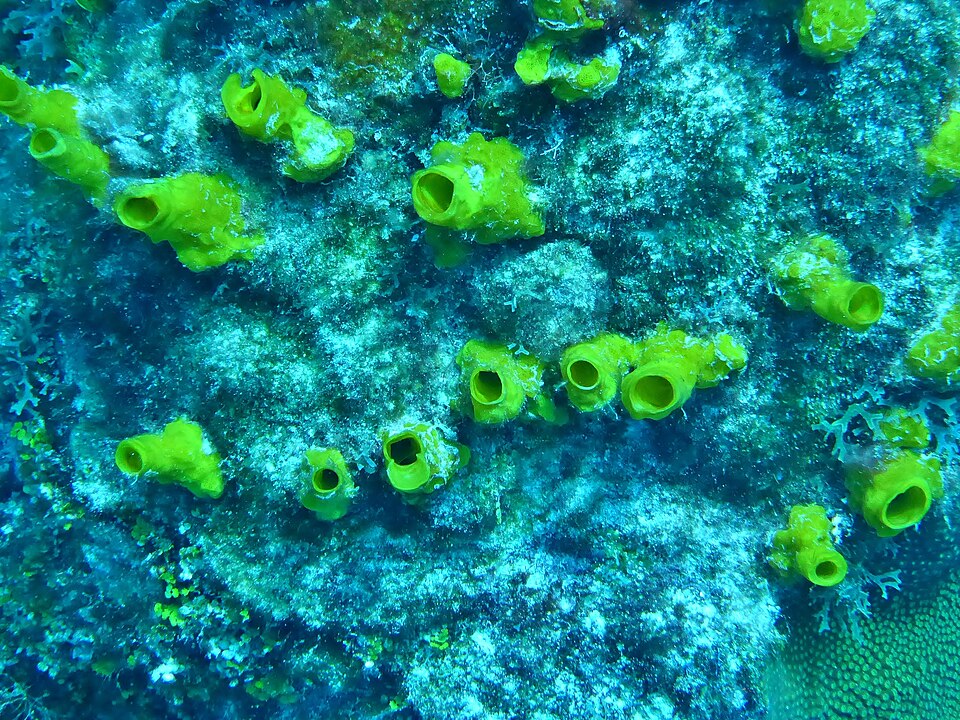
Like corals, sponges spawn by releasing eggs and sperm into the water column. As algae, they swim through the water looking for the perfect place to live (they’d best choose a good spot as, once they’re settled, that’s it for life). Once attached to a hard surface, they remain there and cannot move. These invertebrates don’t have a brain, organs or a nervous system.
One of their most remarkable skills is the ability to reform after being broken apart. “Sponges are the only animals that if broken down to the level of their cells, can reassemble themselves,” writes the National Museum of Ireland on its website. “Experiments have shown that a sponge can survive after being passed through a fine cloth to break apart its individual cells.”
- Older than Stonehenge and bigger than Luxembourg, this ancient underwater realm is home to creatures thought extinct for millions of years
- Weirdest sea creatures - meet 15 strange ocean animals, including one that's part vegetable and one that resembles a toast rack
They can be disassembled for short periods and still find their way back together. “When left in seawater over a few days, the cells still recognise each other and begin to come together again, reforming into a functional sponge and the original cells return to their respective functions,” they add. “If cells of two different species are mixed, they sort themselves out and reform individuals of each separate species. This process is known as reaggregation.” Talk about masters of reinvention!
Sponges feed by taking in water and filtering out bacteria, plankton and organic material. This helps to keep the water clean and marine ecosystems healthy. “She sponges filter water, collect bacteria, and process carbon, nitrogen, and phosphorus,” explains NOAA’s National Ocean Service on its website. “In nutrient-depleted coral reefs, some sponge species are thought to make carbon biologically available by excreting a form of “sponge poop” that other organisms feed on, thereby fuelling productivity throughout the ecosystem.”
top image: Barrel sponge at the reef bottom. Credit: Aleksei Permiakov/ Getty Images
More wildlife stories from around the world:
- Whales were once hunted to the brink of extinction – what happened when the world called a halt to commercial whaling?
- "Like bulldozers in a demolition derby.” These chaotic baby horseshoe crabs giving each other piggybacks are too cute for words
- Deadly predators, colossal giants and animals visible from space: 20 ocean record breakers that will boggle your mind


