
The largest animal rescue operation in history took 45,000 volunteers to save almost 40,000 birds
On 23 June 2000 a Panamanian-registered ship carrying iron ore suffered structural damage off the coast of South Africa, between Robben and Dassen Islands. While the crew was air lifted to safety, a large amount of the MV Treasure's own 1,300 tons of fuel - bunker fuel, one of the most dense of all oils - was leaked into the sea, causing one of South Africa's biggest environmental disasters.
- Penguins are taking over a beach in South Africa and the locals love it
- Why is oil so deadly for birds' feathers?
It wasn't the first time an oil spill like this had happened, but it sparked a huge international response in the conservation world, with concerns immediately focusing on the colonies of African penguins, often dubbed jackass penguin (Spheniscus demersus), that made the shorelines nearby their home.
What is the MV Treasure Penguin Rescue?
After an oil slick of about 3 by 4 nautical miles was spotted following the sinking of MV Treasure, one of the largest ever bird rescue missions was put into place. At that time the global population of African penguins was thought to be about 173,000, and around 20,000 had been oiled by the disaster.
Several organisations including the International Fund for Animal Welfare, International Bird Rescue and The South African Foundation for the Conservation of Coastal Birds mobilised and worked together to try to save the penguins and other wildlife affected by the oil spill.
What did they do?
About 19,000 penguins had been oiled by the spill, but experts quickly realised they needed to do a pre-emptive strike by removing un-oiled penguins from the islands. It was the first time a clean-up operation focused on birds that weren't directly affected by the oil.
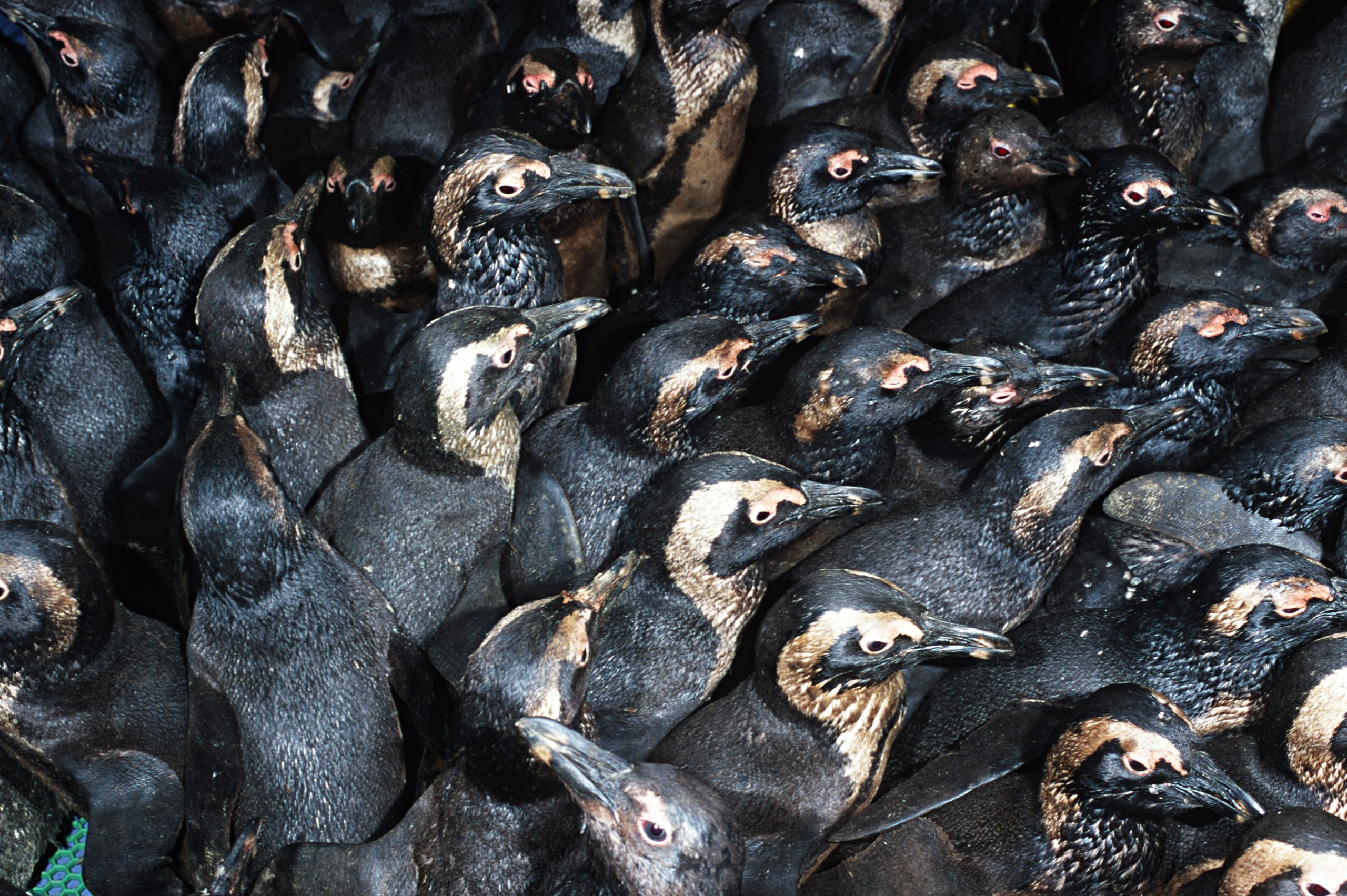
Around 20,000 un-oiled penguins were caught and removed from the islands and taken to Cape Recife, 800 kilometres east of Cape Town. These birds were then released and monitored with satellite tracking devices that meant people could follow the birds as they made their way back home. It took between one and three weeks for them to return, by which time the oil had been cleaned up.
How many penguins were rescued?
Around 40,000 penguins - both oiled and un-oiled - were the focus of the rescue and roughly 90 per cent of the oiled African penguins survived. The survival rate was much higher in this oil spill than in some previous, smaller spills and it is thought that the pre-emptive care for un-oiled birds was a significant reason for this.
- Threatened Mauritian reptiles rescued form disastrous oil spill
- It can be seen from space, is the size of Morocco and home to animals found nowhere else on Earth
How many people were involved?
There were over 45,000 volunteers involved in the rescue, who had to help care for the oiled birds in a five acre railway warehouse for twelve weeks. At the height of action, over 50 trained responders worked alongside 500 volunteers daily to clean and feed the penguins and prepare them for life back in the wild.
Are the penguins OK now?
Researchers continued to track the penguins that had been released back into the wild and many went back to their home and were breeding at normal mortality rates years after the event. However, African penguin numbers are in significant decline and were listed as critically endangered by the IUCN in 2024. In South Africa and Namibia the total breeding population has fallen to about 10,000 pairs, which is attributed to overfishing, climate change and oil spills.
Top image: Two Jackass penguins, or African penguins (Spheniscus demersus) © Shaen Adey /via Getty


