
A long-term study into the arboreal habits of Burmese pythons in South Florida should provide greater understanding of the environmental impacts and aid effective control of this invasive population of snakes.
Between November 2017 and December 2024, more than 350 individual pythons in southern Florida were tracked with the use of radio transmitters to better understand their movements and habitat preference.
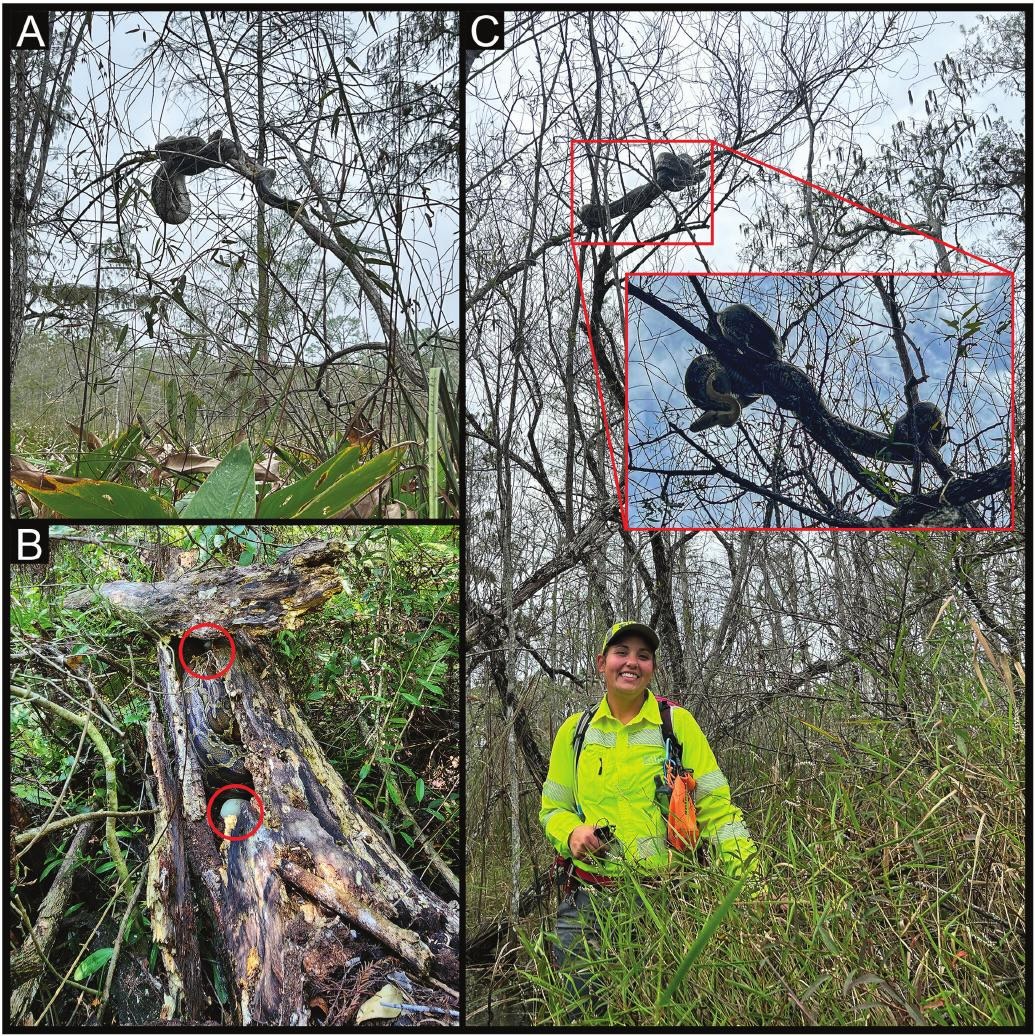
The results, published in the Journal of Herpetology by the Society for the Study of Amphibians and Reptiles (SSAR) show a preference for specific tree species and distinctive shifts in behaviour as the snakes age and grow.
- "That’s the length of a double decker bus!" 10m monster tops biggest snakes in the world list
- A carnivore has moved into Florida's Everglades – and it's threatening native crocodiles and alligators
Native to Southeast Asia, the Burmese python (Python bivittatus) is one of the largest snake species in the world, capable of growing to more than 5m in length and 150kg in weight.
Although they are rated Vulnerable within their natural range by the International Union for the Conservation of Nature (IUCN), they remain popular in the pet industry, with escapes and deliberate releases of animals increasingly common.
Burmese pythons have been recorded in Florida since the 1930s, but numbers increased through the latter part of the 20th century, and a breeding population was recognised in 2000.
Despite their size, they can be difficult to detect, being largely nocturnal and spending long periods tucked into refugia. This, coupled with a high reproductive rate (females typically lay between 30 and 60 eggs every other year) has seen a rapid expansion within Florida, coinciding with a decline of many native species.
- Researchers deploy 120 robots in Everglades National Park. Their mission is to help catch 20ft snakes
- How do Burmese pythons swallow prey whole?
During the study, researchers tracked 188 adult and 168 juvenile Burmese pythons across sites such as the Big Cypress National Preserve. Each specimen was sexed, weighed and measured, with the VHF radiotelemetry transmitters surgically implanted.
Weekly records were made of each snake’s location, with specific arboreal habitat identified and the behaviour classified into one of six types – aggregating (when two or more snakes were found within 1m of each other), basking, eating, moving, brooding eggs and resting.
- What’s the deadliest snake in the USA?
- 10 amazing snake facts you (probably) won't have heard before
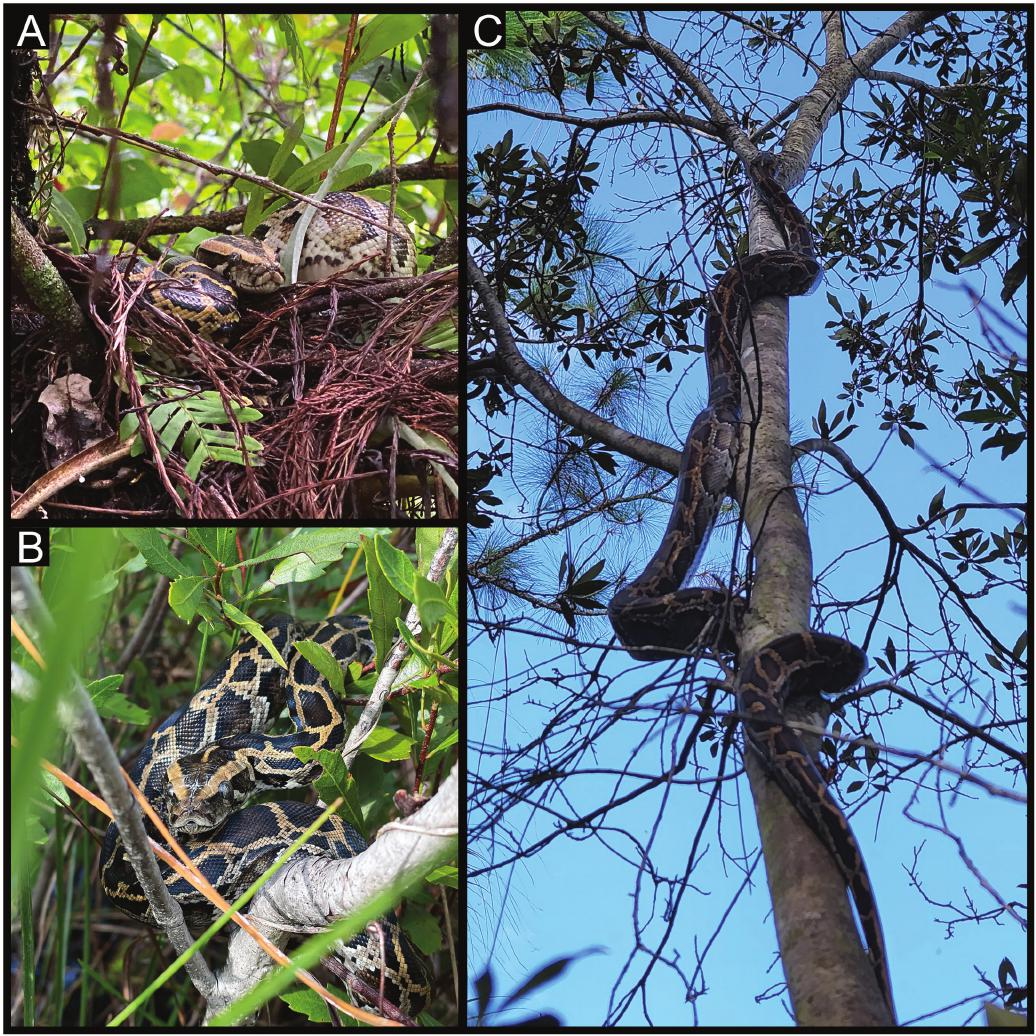
"We observed adult pythons basking, resting, aggregating with other pythons, or brooding eggs in arboreal habitat," say the authors in the study, "whereas we observed juvenile pythons resting, basking, or moving between tree limbs."
The results also showed that adult pythons favoured cypress species and coastal plain willows, whereas juveniles, while also utilising cypress, often frequented cabbage palms. As the snakes became heavier, so they tended to use more substantial tree species such as Brazilian peppertrees and oaks.
Overall use of arboreal habitat was relatively low, accounting for observations of 14.4% of adults and 17.3% of juveniles. These figures increased during the Florida dry season, which is when temperatures are lower, indicating a seasonal shift in habitat preference.
The authors of the article conclude that having reinforced previous research that determined the Burmese python to be a habitat generalist, the improved understanding behind specific arboreal use can aid the success of future species management.
More wildlife stories from around the world
- Snake Island, the terrifying island off Brazil that only scientists and soldiers can visit
- “We would find piles of rattlesnakes.” Scientists witness undocumented snake behaviour in Wyoming's mountains
- It's the biggest snake den on the planet – 100,000 crammed into a small cavern
- 61 black mambas captured in African city. Here's what experts found in their scales – and why it matters
Top image: Male python in Big Cypress National Preserve. Credit: A. F. Larroque / image adapted from L. M. McBride et al., Journal of Herpetology 2026, under CC BY-NC-ND 4.0 license.


