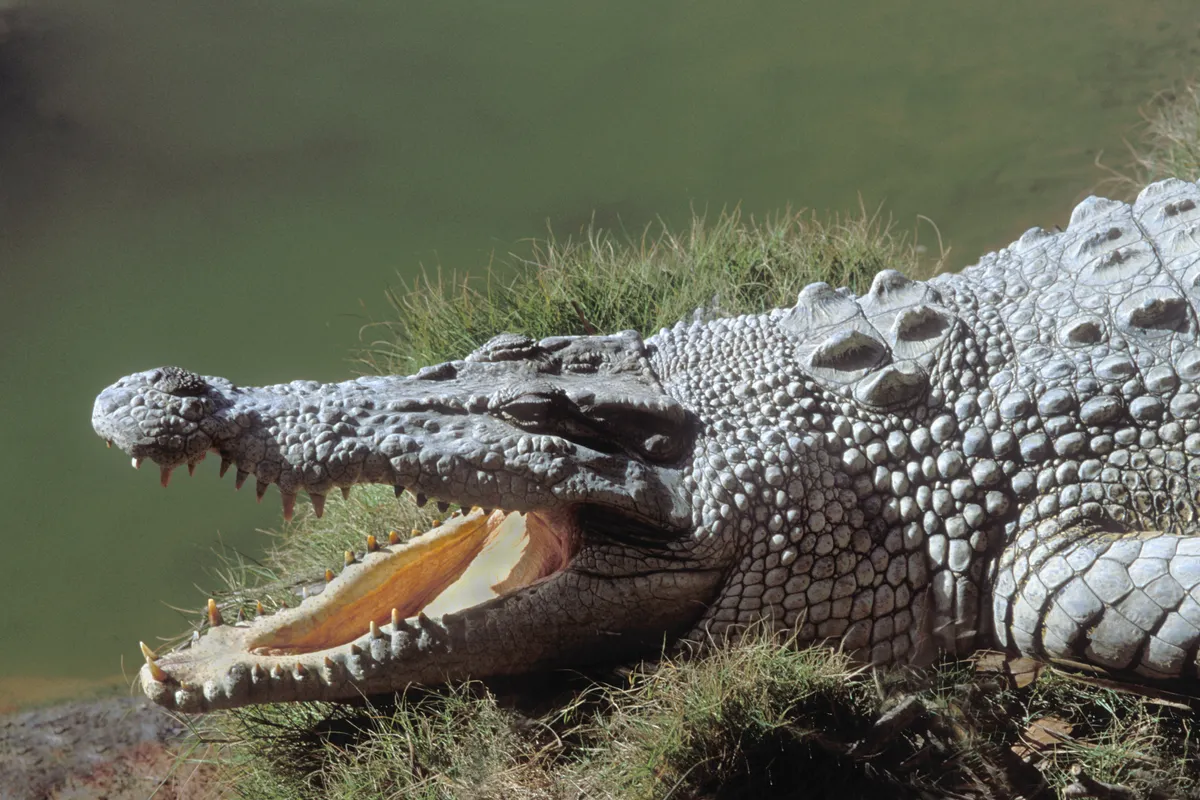
The Fitzroy River in Rockhampton, Central Queensland, Australia, is home to around 500 saltwater crocodiles – and it has now been approved to host the Olympic and Paralympic rowing and canoeing events at the 2032 Summer Olympics.
- Staggering crocodile photos reveal just how ferocious these apex predators can be
- Australia’s most terrifying wildlife spectacle: 50 saltwater crocs crammed into one small stretch of river waiting to strike
Olympic authorities confirmed this on 17 September after months of debate about the controversial site, which is known for being home to these deadly predators, locally known as ‘salties’.
After passing an independent technical assessment into the river’s suitability, the flatwater course on the Fitzroy River has been endorsed by international sport federations World Rowing and Paddle Worldwide.
The report was commissioned by the Games Independent Infrastructure and Coordination Authority (GIICA) and undertaken by internationally-recognised marine engineering experts WaterProof Marine Consultancy and Services B.V.
“Based on the extensive analysis undertaken, we now know that the Fitzroy River is capable of providing fair competition conditions during the period of the Games, consistent with the requirements of Olympic and Paralympic Rowing,” said Jean-Christophe Rolland, President of World Rowing, said in a Queensland Government media statement.
As listed on the GIICA website, the assessment did not consider the crocodiles’ presence, but focused on analysis of river flows, water levels and Fitzroy Barrage operations; assessment of wind, weather and environmental conditions; and evaluating flow, wind and wave conditions across a range of scenarios.
The GIICA also noted that the Fitzroy River “is already a training and competition venue for flatwater sports, supporting school state championships, local regattas, and national team training camps.”
As such, any rowing events held at Fitzroy River have contingency plans in place if crocodiles are spotted.
As reported by The Guardian in 2025, a noticeboard at Fitzroy Canoe Club lists tips on being ‘Croc Wise’: enter boats briskly; don’t drag arms and legs in the water; if you capsize, get out as soon as possible.
And the Brisbane 2032 President, Andrew Liveris, was reported saying “There are sharks in the ocean and we’re still surfing… it’s a can do, not a can’t do – please change the mindset here,” in 2025 by the BBC, in relation to the course’s suitability.
- Do crocodiles get a taste for human flesh?
- Can a human outrun a crocodile? Just how fast are these deadly, ferocious reptiles?
Croc country
Saltwater crocodiles are widely considered one of the deadliest predators in the world, with an average male measuring 5m and weighing around 500kg.
Importantly, marine experts and locals note that the largest and most dangerous crocodiles favour the tidal lower reaches of Fitzroy River. The course approved for the 2032 Olympics lies on the stable, freshwater stretch, upstream of the Fitzroy River barrage.
Spotting one of those apex predators there isn’t particularly likely, with the whole river having a density of approximately 0.2 crocodiles per kilometre. There are also no recorded deaths from a crocodile attack in the area.
You’re even less likely to come across a large croc in Fitzroy River, as park rangers are tasked with removing “all large crocodiles” (larger than 2m is the official guideline) and any “displaying dangerous behaviour” from the water.
In 2023, a 4.5m saltwater crocodile was captured by rangers in the river after being spotted on the bank. More than 20km of the river was surveyed in search of the animal, which was then moved to a government facility.
The crocodiles living in the river aren’t the only concern. Strong currents were raised as a potential problem, as well as flooding heavy silt loads that would demand frequent dredging and repairs to keep the course up to Olympic standards.
Top image: Saltwater crocodile (Crocodylus porosus). Credit: Rizky Ade Jonathan/Getty Images