
For the first time, scientists have been able to study the bone structure of one the more extraordinary serpentine tails in the natural world.
The spider-tailed horn viper (Pseudocerastes urarachnoides) is found in the Zagros Mountain range in West Asia and remained unclassified as a singular species until 2006. A specimen found in Iran in 1968 was taken to the Field Museum in Chicago, where it was deemed to be an existing member of the Pseudocerastes genus, either P. fieldi or P. persicus, with a deformity on the tail.
“It sat on the shelves of the museum for decades,” explains Sara Ruane, Associate Curator of Herpetology at the Field Museum, “but it wasn’t until another specimen with a similar tail was found in 2003 that people revisited it.”
It was theorised that the tail, which has a series of ‘spiders-leg’ appendages and a bulb-shaped tip, had evolved to be used as a lure with which to attract prey.
In 2008, footage was recorded in the wild of the snake behaving in this precise manner. As the viper remained still, camouflaged against a rocky outcrop, it tweaked the very tip of the tail in a provocative, figure-of-eight pattern, mimicking the movement of a spider. This movement increased with the presence of potential prey, and birds such as Isabelline shrike and several warbler species have been recorded trying to ‘catch’ the spider only to be caught themselves by the snake.
“The appendage at the end of its tail is so outrageous, I remember thinking it was so cool. It’s truly unique among snakes.” Ruane added.
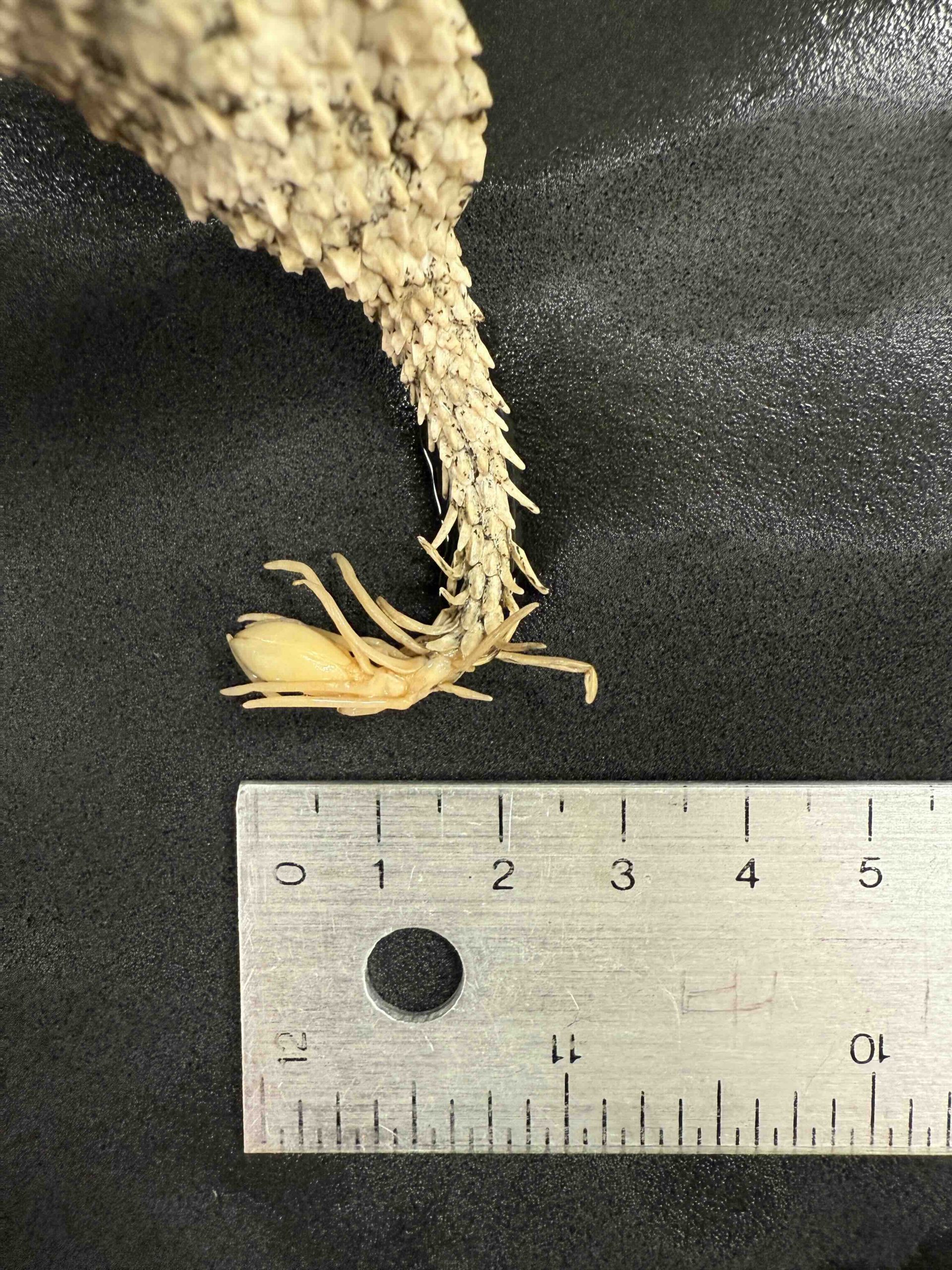
The study, published in the journal The Anatomical Record, details the collaborative efforts of Ruane and Georgias Georgalis, an associate professor at the Polish Academy of Sciences in Kraków.
They made use of a new X-ray Computed Technology (XCT) Laboratory at the Field Museum to produce a 3D rendering of the tail from that original spider-tailed horned viper specimen.
- Largest snake species in the world discovered in Amazon rainforest – and it's a whopper!
- 10 animals that could swallow a human whole – from snakes to sharks
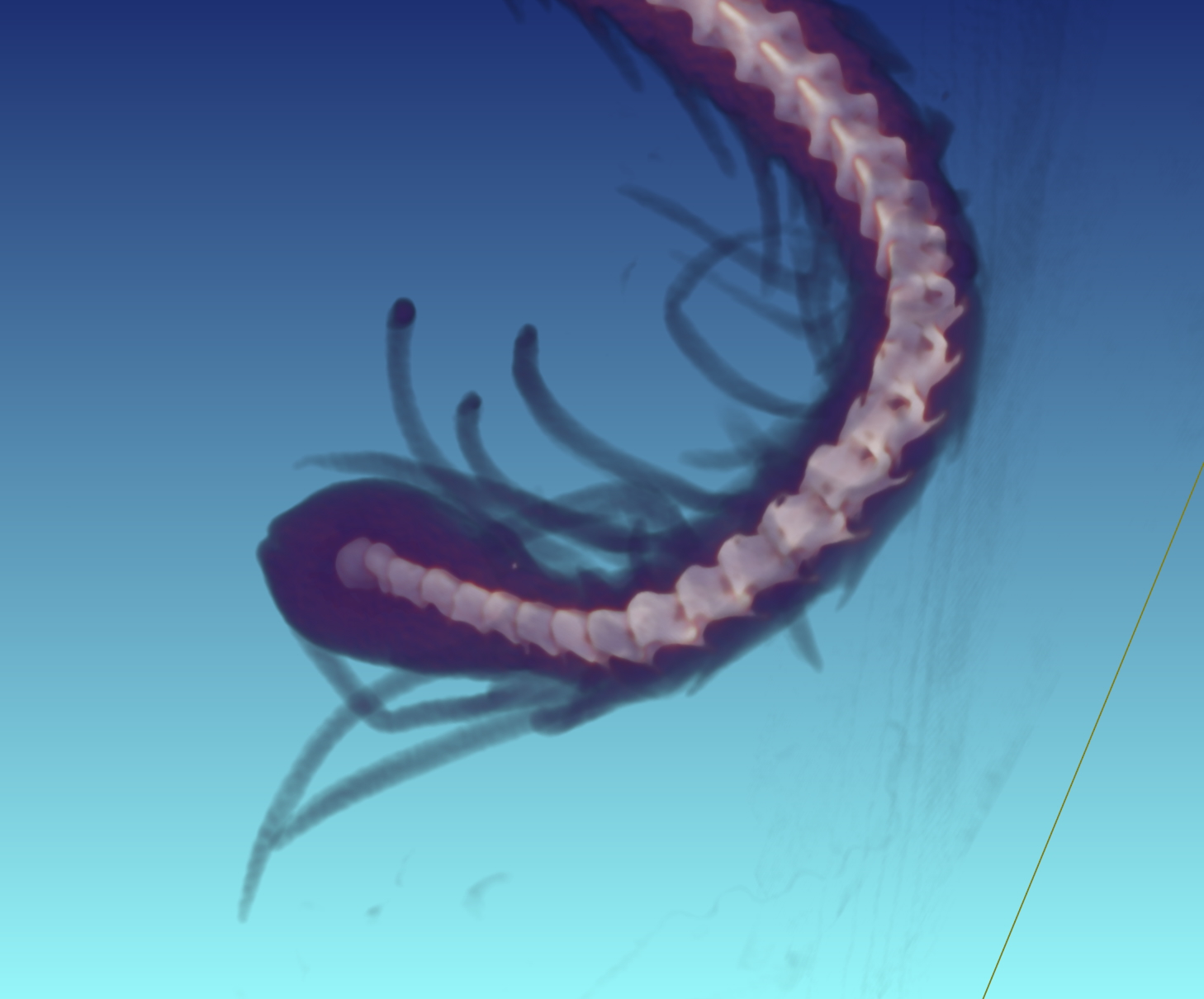
“With the spider-tailed horned viper, we were particularly interested in seeing what the vertebrae at the tip of the tail look like, because the exterior of this snake’s tail is so unusual,” explained Georgalis, who, as a palaeontologist, has a particular interest in the physical appearance of an animal beyond what may be learned from skeletal remains.
“It turned out that the spider tip on the tail is only external morphology – the tail vertebrae themselves were typical of most vipers,” Georgalis continued, “There was nothing in the snake’s skeleton that would suggest how extreme its tail looks on the outside.”
Having determined that the tail bones of Pseudocerastes urarachnoides are typical of a viper species, the researchers hope that their findings will provide groundwork for further research into the external tissue structure of the spider-like lure.
More wildlife stories from around the world
- More than 1,000 rattlesnakes caught in Michigan wetlands. What scientists find in their DNA is concerning
- ‘Ghost’ green mamba rediscovered after 90 years
- "That’s the length of a double decker bus!" 33ft monster tops biggest snakes in the world list
- Snake Island, the terrifying island off Brazil that only scientists and soldiers can visit


