The Tsushima leopard cat has been given a “clean genetic bill of health” after fears that its DNA had become contaminated by domestic cats. The findings are reported in the journal Global Ecology and Conservation.
The Tsushima leopard cat lives only on Tsushima, a remote Japanese archipelago in the Korea Strait. About the same size as a domestic moggy, this critically endangered wild cat sports bold facial stripes, fuzzy brown spots and, crucially, a long bottle-brush tail.
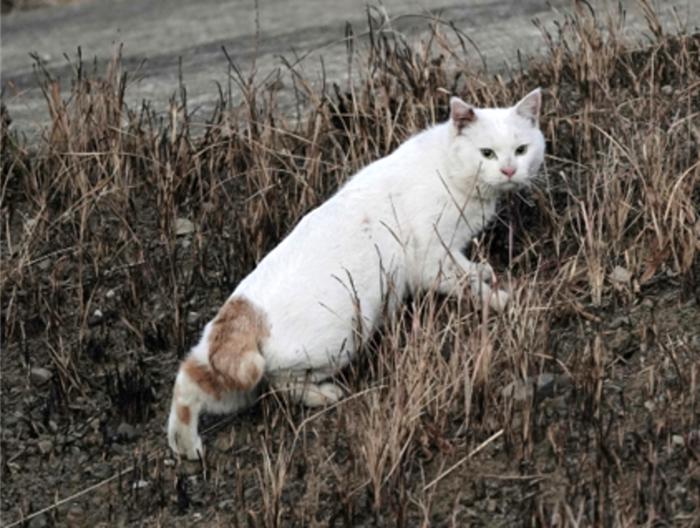
So, when conservationists spotted a handful of individuals with abnormally short tails, it gave them pause. Three such cats were recorded in routine surveys between 2024 and 2025. One had a tail just half the normal length.

Shortened tails are relatively common in domestic cats but have not been documented in leopard cats. This raised concerns that domestic cats could be interbreeding with Tsushima leopard cats and producing hybrids. Hybridisation could dilute the wild cat’s unique gene pool and threaten its already uncertain future.
"An unusual phenotype [appearance] can immediately raise concerns about hybridisation, but we wanted to determine objectively what the genome actually tells us before drawing conclusions from appearance alone," says Yuki Matsumoto from Azabu University, Japan.
- How can I stop my cat hunting wildlife?
- How we domesticated the cat
- Why do cats play with their prey?
The team analysed DNA samples from 16 Tsushima leopard cats, including one with a stumpy tail, five local domestic cats and four continental Amur leopard cats, a close relative of the Tsushima leopard cat. Reassuringly, they found no evidence that wild and domestic cats were interbreeding.
This left one question: why did some cats have unusually short tails?
Injury can’t be ruled out. Perhaps their tails were damaged in a spat or an accident.
In domestic cats, short or kinked tails have also been linked to specific mutations. Sometimes, these genetic changes arise spontaneously, but the Tsushima leopard cats didn’t carry either of the two mutations they tested for.
Other genetic changes could still be involved. When the Florida panther population fell to just 30 individuals in the 1990s, tail abnormalities became common. This was linked to inbreeding and a lack of genetic diversity.
With just 150 or so individuals remaining, Tsushima leopard cats do show signs of genomic inbreeding, but levels were no higher in the short-tailed individual. For now, the cause of the shortened tails remains a mystery.
The team hopes their findings will help inform conservation practice. "Appearance alone can be misleading when managing endangered wildlife," says Matsumoto. "By combining long-term field observations, veterinary examination, and genome-wide data, we can make conservation decisions on the basis of genetic evidence rather than phenotype alone.”
Find out more about the study.
Top image: A short-tailed Tsushima leopard cat photographed on Tsushima. Ministry of the Environment, Tsushima Wildlife Conservation Center
More wildlife stories from around the world
- 131 feral cats removed from remote Japanese islands – then something exceptional happens
- When India's grumpiest cat moved into a house in the Himalayas, the family who lived there moved out
- Scientists hid 956 camera traps across the Himalayas, sprayed them with perfume and waited...
- “My heart was pounding": photographer recalls dramatic snow leopard encounter in Chinese mountains