
Underwater canyons are often full of life. Their landscapes provide shelter, habitats and nurseries for lots of different animals – and there’s plenty of food for marine life because of the way nutrients are funnelled down into their valleys.
That’s what drew researchers to explore the Mar del Plata Canyon in Argentina in 2025. “Since submarine canyons are known for being hotspots of biodiversity, it was a no-brainer when the time came to choose where to work in the deep sea,” says Daniel Marcelo Lauretta, a researcher at Museo Argentino de Ciencias Naturales Bernardino Rivadavia, in a statement.
The marine scientists sent a remotely operated vehicle (ROV) down on 17 dives between 1,120 and 3,820 metres deep and took photos of this section of seafloor for the first time ever. Some of their discoveries were exciting: they recorded 40 species that may be new to science.
But they also found something else: rubbish.
The team was shocked to see 29 man-made items in total across 10 of their dives. These included plastic bags, food wrappers and discarded fishing gear. The findings are published in PLOS One.
“For me, the most striking individual piece of litter was a single boot, lying on the seafloor,” says Lauretta.
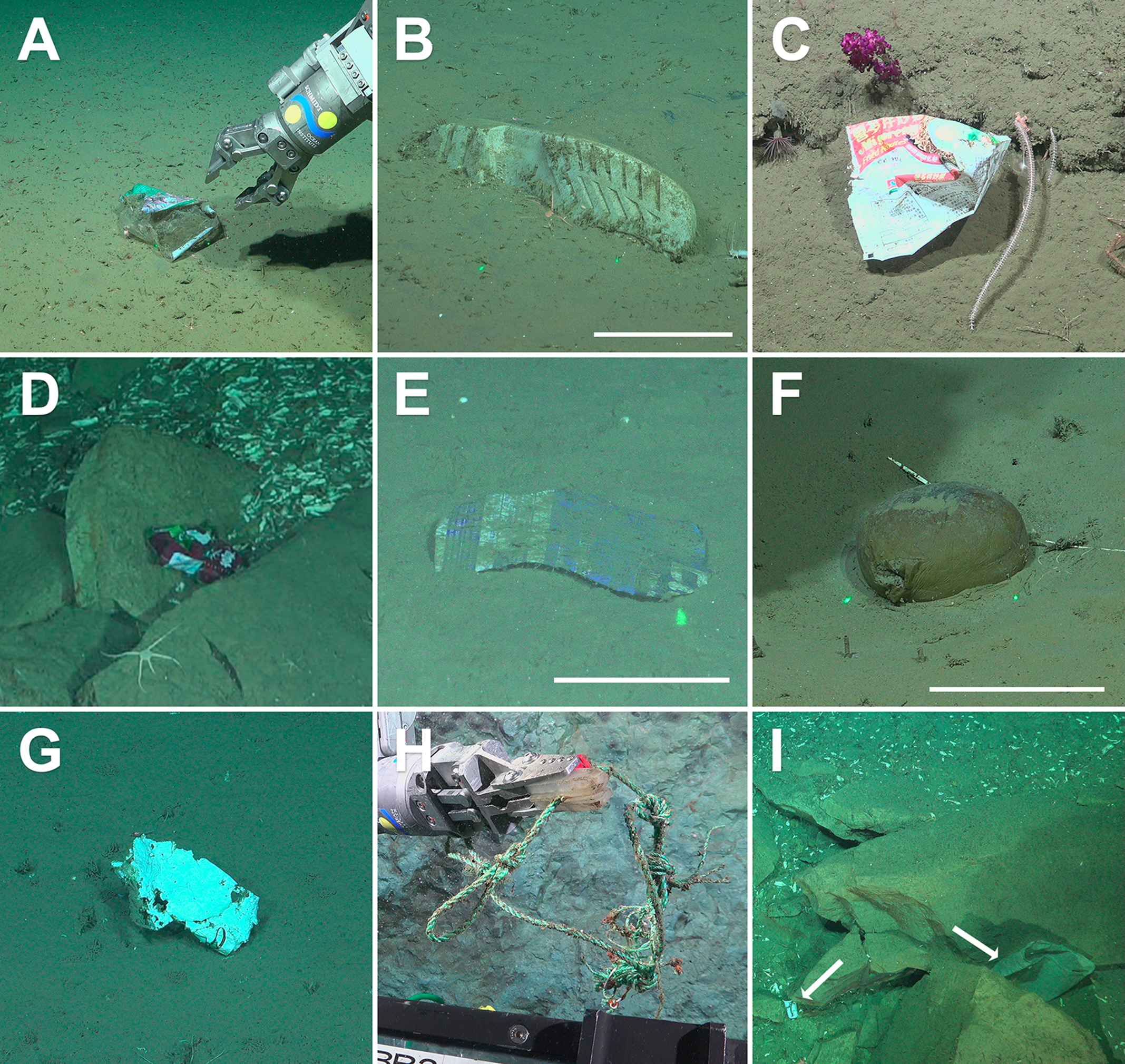
Much of the trash seemed to have come from offshore fishing vessels, although there’s a chance it could have been carried here by the currents.
“What struck me most was a fishing rope that suddenly appeared directly in front of the ROV, forcing us to stop immediately to avoid colliding with it,” adds colleague Diego Urteaga.
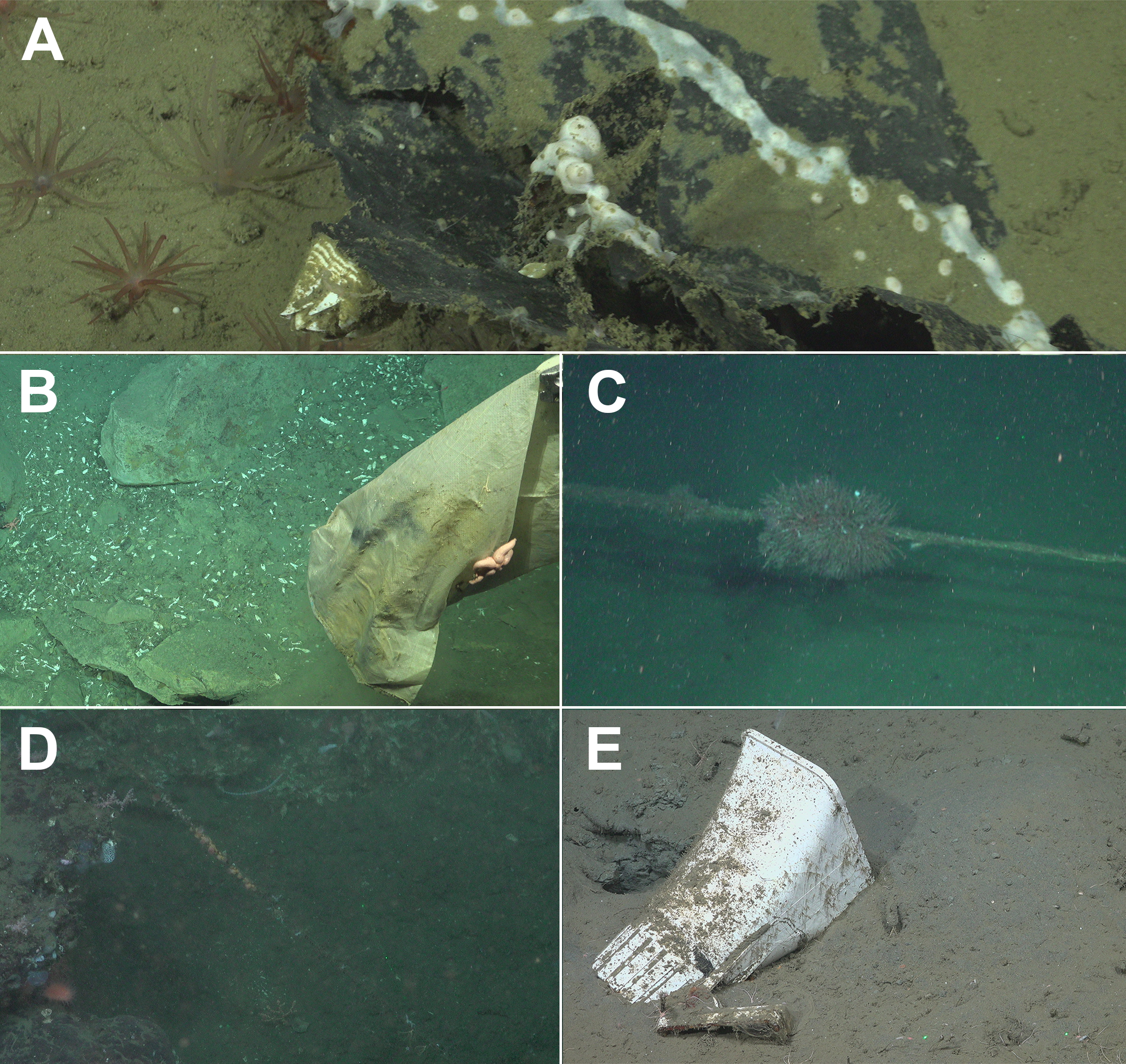
In some places, living things had started growing on or interacting with seven of the pieces of litter they found.
“Organisms were primarily associated with partially buried plastic bags and with fishing-related materials such as ropes and nylon filaments,” write the authors in the study. “Partial burial likely stabilises otherwise mobile plastic items and indicates prolonged exposure on the seafloor.” Essentially, this gives animals more of a chance to attach themselves.
The fact that animals were living among the litter doesn’t mean it’s a good home for them. It may change the communities of animals living in deep sea areas and could also form a raft that takes them outside their usual area of distribution. “The ecological consequences of this process are still poorly understood,” says Urteaga.
- Jurassic squid-like animal unearthed in Wyoming is “fattest” ever discovered
- Drone films "apex predator at full strength” taking down turtle in Australia
- Tiger shark vomits up spiny anteater, shocking Australian scientists
The deep sea is clearly not safe from human rubbish. Even the Mariana Trench – the deepest point in the ocean – has been affected by plastic pollution. In 1998, a plastic bag was recorded there, in the hadal zone.
The scientists have shared their findings in the hope that it might prevent further marine pollution.
“We may already be altering deep-sea communities that we have barely begun to understand,” says Urteaga, “and recognising this should encourage us to better protect these ecosystems.”
Find out more about the study.
Top image credit: adapted from Teso et al., 2026, PLOS One, CC-BY 4.0
More wildlife stories from around the world
- “This moment was wild.” Astonishing footage shows sharks exploding out of water so fast they land on beach
- 16ft great white shark found with perfectly circular hole in head – and we know exactly what caused it
- When this tiger shark bumped into a ray, something truly shocking happened
- NASA officials sent over 2,000 baby jellyfish into space. Tens of thousands more came back to Earth


