
Shrouded in a veil of darkness and tucked away in the recesses of our planet, caves have fascinated, frightened and sheltered humans for thousands of years. Most caves present today formed about 23 million years ago, but there are a couple of outliers – such as the Sudwala Caves, which started forming a whopping 240 million years ago.
- "Stop, prevent your death! Go no further." 9 deadliest, most terrifying caves on the planet
- It's been sealed off for an inconceivable 5 million years and is rich in toxic chemicals. Life shouldn't survive here – but it does...
Located in Mpumalanga, eastern South Africa, Sudwala Caves are one of the oldest known caves on the planet. Set in Precambrian dolomite rock first laid about 2.8 billion years ago, these caves began taking shape back when Africa was still part of the supercontinent called Gondwana. This ancient landmass incorporated present-day South America, Africa, Arabia, Madagascar, India, Australia and Antarctica.
The Sudwala Caves’ formation was caused by natural acid in the groundwater seeping through the faults and joints of the prehistoric dolomite rock.
The system is over 30km in length, but parts of it remain unexplored. Made up of a series of passageways and large chambers, it was surveyed and mapped in 1969 by H. Jackson – the map below is an adapted version of Jackson’s map which has served as a foundational reference for subsequent studies.
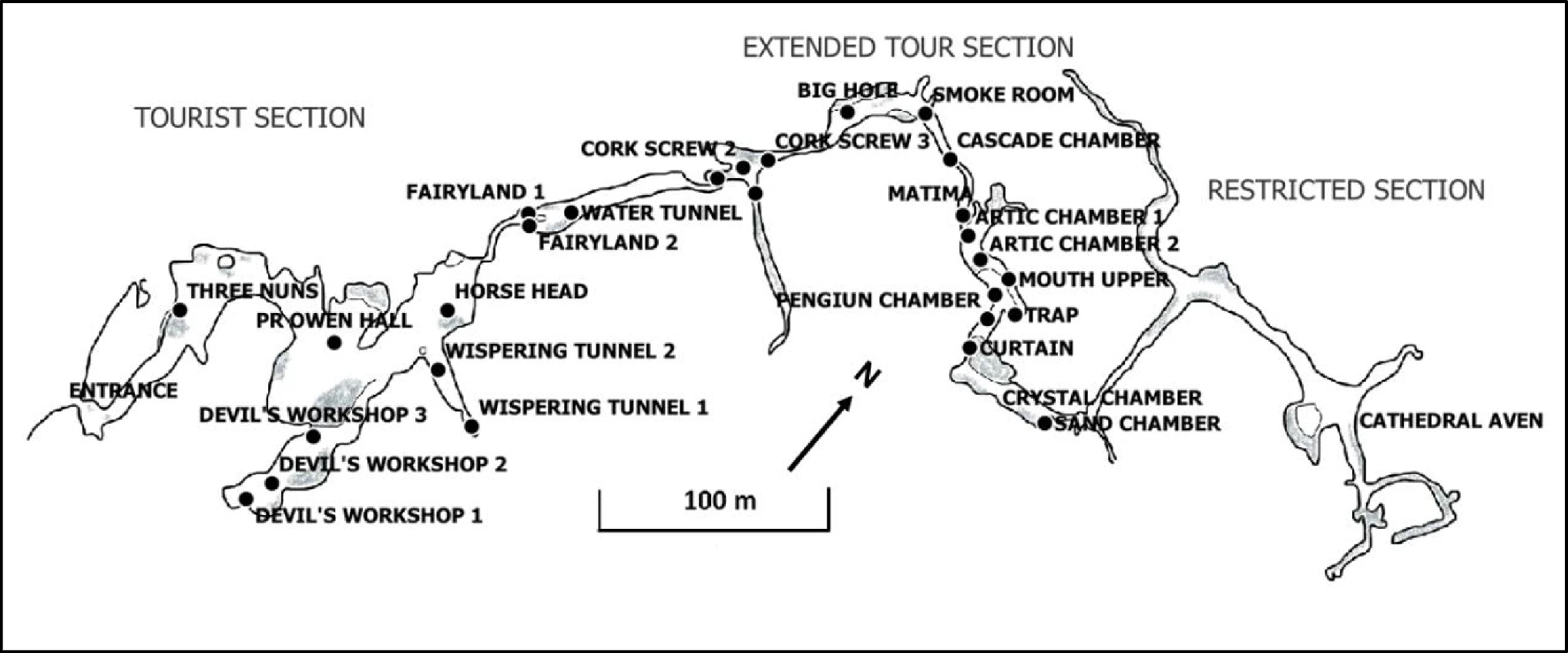
Near the entrance to the system is a massive chamber spanning 70m in diameter and reaching a height of 37m, with a dome-like ceiling and ventilated by a rush of cool, fresh air from an unknown source. Due to its exceptional acoustics, the chamber serves as an amphitheatre known as the PR Owen Hall, named after Philippus Rudolf Owen, who purchased the land in 1965 and opened the caves to the public.
- There’s a cave in Kentucky that’s 426 miles long, 118 metres deep – and fish-eating spiders lurk in it
- This deep, dark cave may secretly stretch 20km to the sea – and the 'human fish' hides in its shadows
What natural structures can be seen in the Sudwala Caves?
The amphitheatre is only the beginning of the amazing features of this cave system – natural sculptures such as stalagmites, stalactites and flowstones can be seen at various points.
There’s the Lowveld Rocket, which stands an impressive 14m tall and 2.5m wide, formed over 150 million years. And it’s still growing, though slowly – just 2.5cm per century.
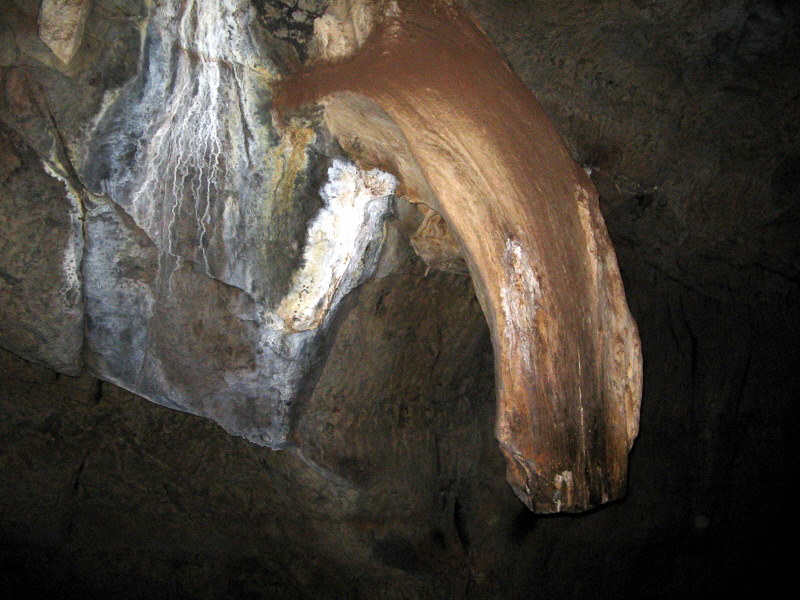
Somcuba’s Gong, a porous flowstone formation that produces a distinctive hollow sound when struck, creates reverberations that can travel at speeds of up to 1,500m per second. This structure was used by the Swazi people, who used to inhabit the caves in the 19th century, as an alarm system.
The Screaming Monster, one of the most dramatic formations in the caves, forms a jagged, open-mouthed silhouette resembling a creature screaming. This structure is an estimated age of 180 million years.
Does anything live in the Sudwala Caves?
There aren’t many signs of life in the Sudwala Caves, apart from primitive microbial fossils of a cyanobacterium known as collenia found in the rock, and a colony of around 800 horseshoe bats.
But humans certainly have made their mark on this ancient cave system. Some of the primitive tools belonging to Homo habilis, one of the earliest members of the genus Homo, have been found inside. These prehistoric humans are thought to have inhabited the Sudwala Caves as far back as the early Stone Age era (2.5 million years ago), and the most recent archaeological finds date to a few thousand years B.C.
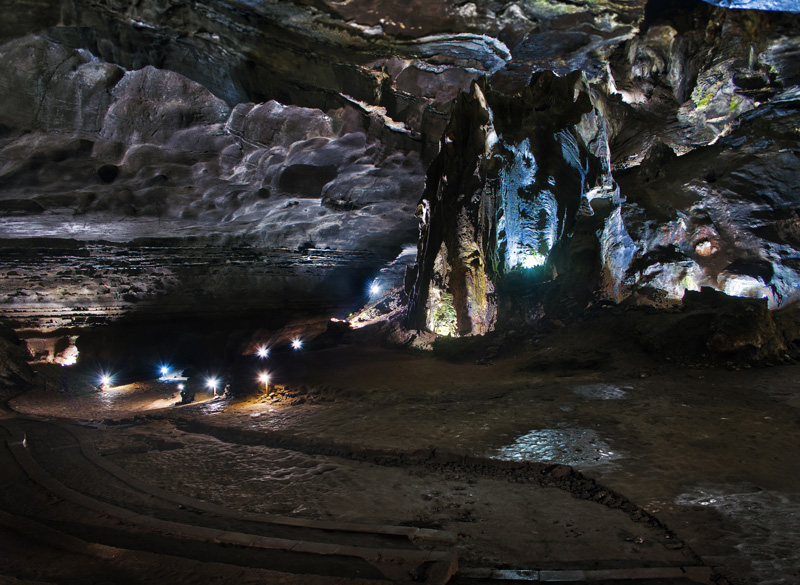
The caves also served as a fortress and refuge for the Swazi prince Somquba in the 19th century during a conflict with his brother and heir apparent, Mswati. The caves provided a source of fresh water and shelter, and the narrow entrance could be easily watched and defended.
During the Second Boer War, which lasted from 1899 to 1902, the caves were used to store ammunition. After the war ended, there were rumours that South African President Paul Kruger hid gold in the caves to protect it from the British. The treasure is estimated to be worth around $500 million today – but it’s never been found.
- The prehistoric ‘graffiti’ cave where teenagers spray-painted their hands 9,000 years ago – and no one knows why...
- “Once they descend into the cave, they trudge 150m in the pitch black, feeling around with their trunks.” 9 weird animals found in caves
Are Sudwala Caves open to tourists?
Sudwala Caves can be visited on guided tours that explore the first 600m of the cave and 150m underground. The more adventurous can embark further on the Crystal Tour – 2,000m into the cave system – leading to the Crystal Chamber filled with shimmering aragonite crystals. This tour involves crawling through narrow tunnels, climbing rocky terrain and wading through underground water passages.
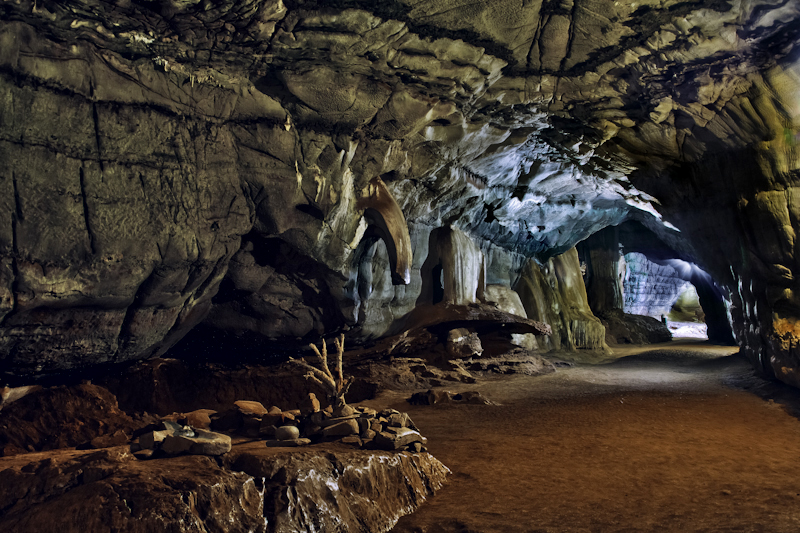
Top image: Screaming Monster, main cavern of Sudwala Caves. Credit: Guyermer, CC BY-SA 3.0, via Wikimedia Commons


