
The waters surrounding the UK coastline might often look grey and unenticing but there are entire playgrounds below the seas for nature enthusiasts, history-lovers and wreck divers.
One example is Scapa Flow in the Orkney Islands, which is littered with several wrecks that were lost to the waves more than a century ago, when the Germans scuttled them after the end of World War One.
When the German navy sank 52 of their 74 warships off the coast of Scotland on 21 June 1919, they had one thing in mind: preventing their fleet becoming spoils of war (the British navy towed 22 of the ships to shore where they beached them in shallow water). Little did they know that some of the ships would provide a home for marine life more than a century later, attracting scuba diving tourists from around the world.
- Sunken warships fill this eerie lagoon – and they're scattered with gas masks, skulls and bullet casings
- It's longer than the Leaning Tower of Pisa, weighs 499 tonnes and sits 24 metres below the surface, where sharks patrol Noonu Atoll’s tropical waters
- This haunting shipwreck in North Carolina has its own 'shark ballroom'
“Of the 74 German ships interned at Scapa Flow, 52 (or an equivalent of about 400,000 tons of material) were scuttled within five hours, representing the greatest loss of shipping in a single day in history,” says the Imperial War Museums on its website.
Most of the vessels were retrieved by a huge salvage operation during the 1920s and 1930s. They were broken down and sold as scrap metal.
The steel has since been very important because of when it was created. “Since nuclear bomb testing, and the use of nuclear bombs against Japan in 1945, all steel made after that date is slightly radioactive, due to the atmospheric radiation in the oxygen used in the smelting process,” writes Stromness Museum. “This steel is not suitable for medical or scientific instruments that record radioactivity.”
The uncontaminated steel salvaged from the wrecks could therefore be used in equipment for science, medicine and even space exploration.
“Legend has it that there is German Fleet steel in NASA’s space probe Voyager, but NASA has never confirmed this,” they add.
Seven of the warships are still on the seafloor today: the SMS Dresden, SMS Cöln, SMS Karlsruhe, SMS Brummer, SMS Kronprinz Wilhelm, SMS Markgraf and SMS König.
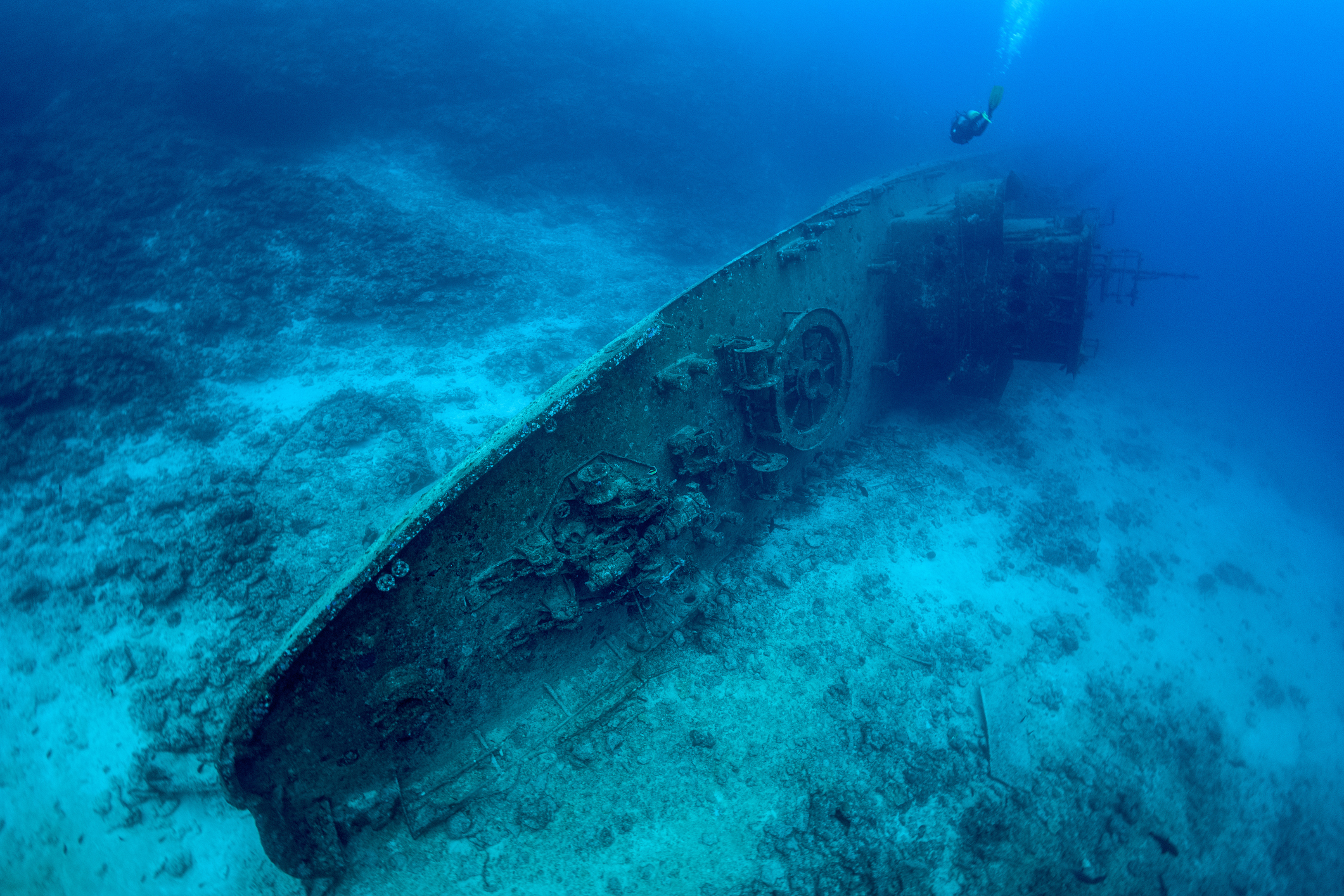
“Today the wrecks of three battleships, three light cruisers and a fast mine-layer – ships that all escaped complete removal during salvage operations – remain on the seabed of Scapa Flow,” says the Scapa Flow Wrecks website. “Lying between 45 and 12 metres under the surface, these wrecks have become imposing and insightful pieces of history. They offer distinct and rare diving experiences.”
- 10 incredible, dramatic shipwrecks around the world that are just teeming with marine life
- On a site the size of 27 football fields, 2 million of these were dropped in the ocean to create an artificial reef – instead, it became a disaster
- This giant ship sank off the Egyptian coast in 1941. Now an animal that looks like a crocodile hides in its shadows
These shipwrecks don’t just attract history buffs. Wildlife lovers flock here too because the ships provide the perfect habitat for marine life.
“On a seabed comprising mainly of silt and sand, the wrecks have become rich artificial reefs,” says Scapa Flow Wrecks. “The multitude of nooks and crannies provide the perfect hiding spot for crabs and lobsters, while the wrecks teem with fish.”
The ecosystem ebbs and flows as the seasons change. In spring and autumn, algal blooms turn the waters murky for a while but this soon clears as hungry organisms arrive and eat the algae. This phytoplankton (plant-like plankton) is important for everything further up the food chain. Zooplankton (tiny animal organisms that drift through the water) eat the microalgae before being gobbled up by other predators like fish and jellyfish.
There are usually lots of pollock, cod, ling and saithe swimming around the wreck, although they tend to avoid humans if they can help it.
The wrasse are more confident, sometimes even coming up to divers. It might be that they associate people with food and come to investigate whether there’s a snack on offer. Feeding the fish isn’t recommended as it can change a wild animal’s behaviour but many people have done it and the fish seem to remember.
- The ocean's hidden, deadly killer: Why thriving seas can suddenly die and turn into mass underwater graveyards
- Toxic killers and 4m giants – meet the 9 weirdest crabs on the planet
The sound of cameras clicking in the water is said to be enough to attract these confident fish. “They seem to gather round when the cameras are out, as if waiting for their photograph to be taken,” says Scapa Flow Wrecks.
There can also be the chance to see grey seals, common seals and, during summer, even enormous basking sharks – the second largest fish on the planet – and plenty of seabirds.
top images: Underwater photography from the US Navy military shipwreck Prab in Chumphon marine park. Credit: Johan Holmdahl/ Getty Images
More fascinating wildlife stories from around the world:
- Drowned at the end of the Ice Age: The flooded abyss longer than the Grand Canyon and teeming with hundreds of creatures, from mammals to reptiles
- This strange, steamy lake bubbles with boiling volcanic water – but sometimes almost vanishes
- "It’s responsible for sinking 800 ships and killing 20,000 people…" What are the most dangerous parts of the ocean?


