
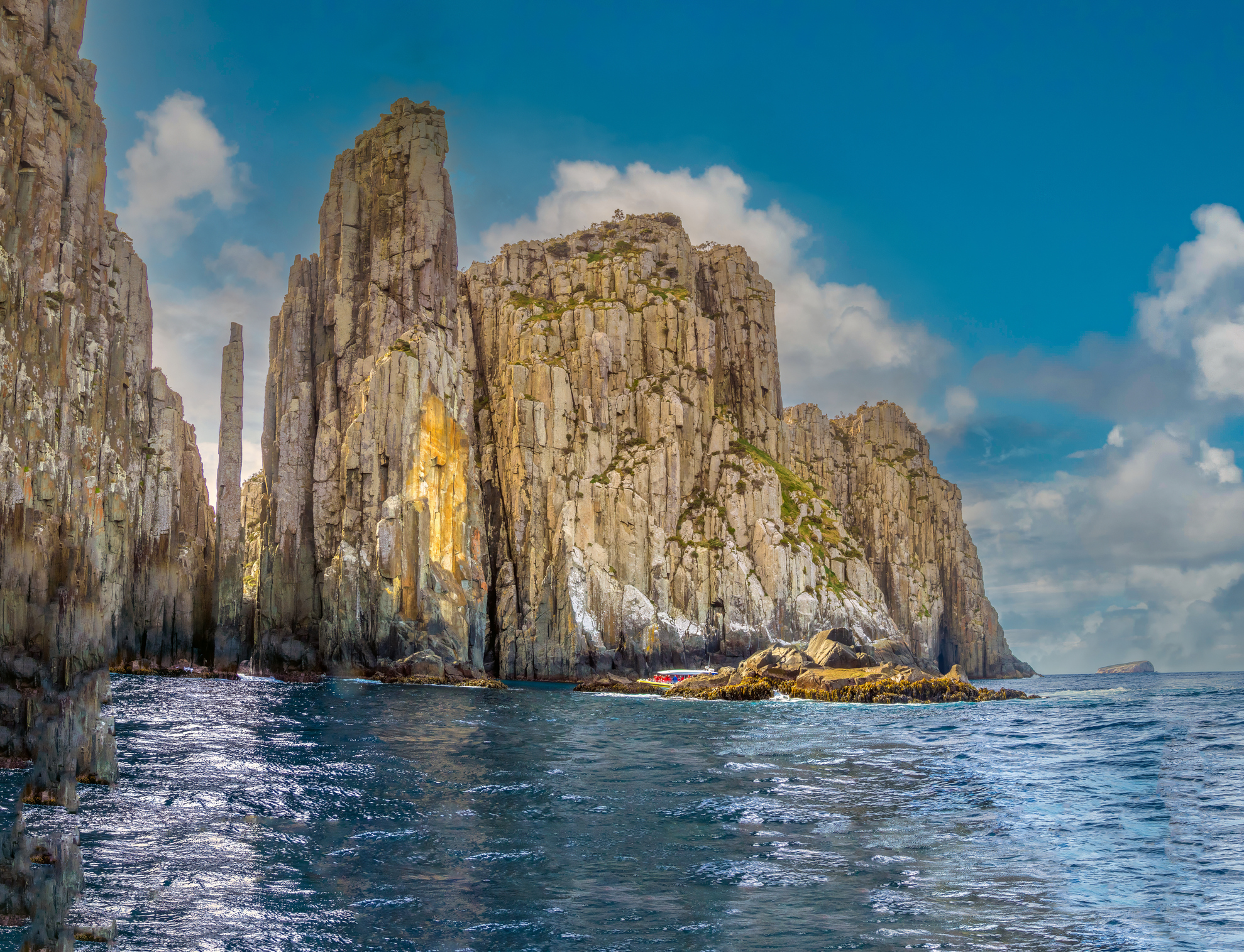
The coastline of southern Tasmania in Australia is known for the extraordinary rock columns that rise up to 300m above sea level. One of them is the aptly-named Totem Pole, a slender, freestanding column measuring 65 metres tall, around the same height as Tower Bridge in London.
- It can grow as tall as a 10-storey building and live for 400 years – and it's filled with tiny 'helicopters'
- It's around 5,000 years old and as tall as an elephant – and it's home to some extraordinary creatures
The Totem Pole is part of the Tasman National Park in Tasmania (an island state around 240 kilometres from the Australian mainland), located in Cape Hauy on the southern tip of the island.
How did the Totem Pole form?
This astounding structure is a coastal stack, or sea stack: a large stack of rock in the sea resembling a tall stone tower, separated from the main shoreline. The ingredients needed for a sea stack to form are simple: a cliff face, water and lots of time.
Sea stacks start out as part of nearby rock formations and end up separated from them over thousands or even millions of years of wind and waves breaking them down bit by bit. First, cracks form, then parts of the rock chip away. Finally, the wind and water break through, creating a cave or arch.
Then, with more time, this arch also falls away, separating one part of the rock from the original cliff and creating the sea stack. Despite their grandeur, these formations aren’t permanent: the wind and waves never stop working away, eventually breaking down the sea stack into a sea stump.
Can you climb the Totem Pole?
Geologists estimate that the Totem Pole has been standing tall for roughly a hundred years – and according to some, it should have collapsed a long time ago. With a diameter of only 4 metres and the erosion at the base due to strong waves, the Totem Pole is both a climber’s dream and biggest nightmare.
The Totem Pole contains a number of climbing routes, all of which require a Tyrolean traverse to return to the mainland – a technique that enables climbers to cross a void between two fixed points. It’s an extremely advanced (and very adventurous) climb.
The Totem Pole was first climbed in 1968 by John Ewbank and Allan Keller but is probably most famous for Paul Pritchard’s attempted climb in 1998, which ended in a tragic accident. While attempting to go up the sea stack, the climber was hit on the head by a boulder. After surviving on a ledge for 8 hours, he was rescued but was left paralysed on his left side, with speech and memory difficulties.
Pritchard later wrote a book on the experience and returned to climb the Totem Pole in 2016, successfully completing the climb.
Top image: the Totem Pole on Cape Huay, Tasmania, Australia. Credit: mlharing/Getty Images
