Twitchers tend to have a bad name, says Mark Ward. They are the inveterate collectors and listers of the birdwatching community, who will drop everything to drive, fly or sail to a remote corner of Britain on receiving the news of the latest ‘Mega’. I am one such person.
Once, I suffered a severe bout of actual (that is, bodily) twitching while seawatching at the fabled Bridges of Ross in County Clare. I had travelled there, with two friends, due to its track record for views of one of the most sought-after seabirds on the British and Irish list: Fea’s petrel, a scarce ocean-going species that breeds in Cape Verde and the Madeiran islands.
- 10 reasons why you should never - EVER - date a birder
- LRPs, PG Tips and Jizz: Cracking the secret language of birders
For four long August days, we stared at a largely birdless sea, but on our final day the wind picked up. A strangled shout of “Fea’s!” sent my arms and legs into an uncontrollable bout of shaking. After 20 seconds of panic, I pulled myself together. The moment when the bird towered up above the waves and through my field of view was one of pure elation. I remember thinking that enjoying nature should not be that stressful.
I love seeing things I’ve never seen before. There are some spectacular organisms out there.
The collecting instinct has always been strong in me. When I was a child, I collected keyrings, stamps, pencils and action figures. Fortunately, I discovered nature and started to collect bird sightings. It was inevitable that I’d become a twitcher.
The listing habit is not just restricted to twitchers, however. Many birdwatchers keep a list of birds they have seen in or from their garden – although not all of them would, as I did, balance on a flat roof to ’scope a distant coot on a gravel pit half a mile away. The latest craze is sound recording through the night in the hope of detecting the calls of birds migrating overhead in the darkness.
There are also world listers, local-patch listers, county listers, year listers and even day listers who spend 24 hours trying to see and hear as many species of bird as possible. Some people keep lists of birds they have seen pooing, mating or on TV (including ones that appear in the background in news reports or sports broadcasts). ‘Self-found’ listers count only birds they have found themselves – no twitching allowed there. And it is not just birds – there are people who keep a list of, for instance, butterfly species that have perched on their finger.
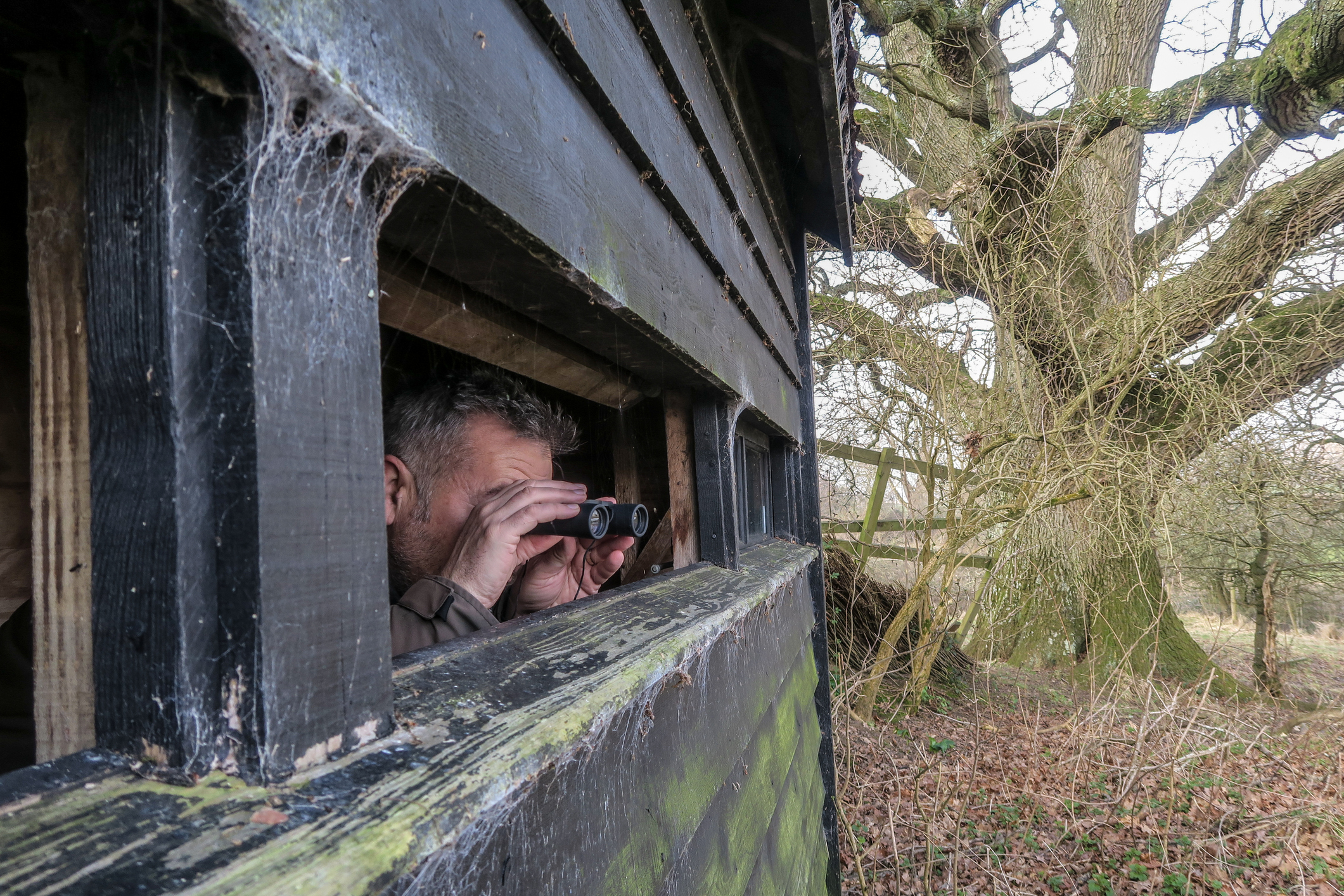
Now a new form of listing has created limitless possibilities for nature-lovers who have the collecting urge. This is pan-species listing – recording all of the species of Britain and Ireland.
The term was invented by ecologist Mark Telfer, a man instrumental in what has become the pan-species listing movement. Mark is currently third in the British and Irish pan-species listing rankings, with a total of 8,239 species. “I just love seeing things I’ve never seen before,” he says. “If you open your mind to all species being equal, and go a bit micro, there are some spectacular organisms out there. I almost regret those years chasing only birds when I could have been amassing a big list of other wildlife.”
Where twitching is a game of diminishing returns, pan-species listing isn’t. “You’re never going to hit the listing doldrums when you are looking for absolutely everything,” says Mark. “We don’t even know what the total British pan-species list is. I’ve estimated there might be 80,000 wild species, but it could easily be plus or minus another 10,000. The leading twitcher has seen about 90 per cent of the birds recorded in Britain, but the 12,500 or so species seen here by the top pan-species lister, Jonty Denton, is only a small percentage of the pan-species total.”
Expanding beyond birds clearly provides a golden opportunity to get a big list and enjoy the thrill of the chase, so is pan-species listing a natural progression for avian twitchers? Mark Telfer provides a clue. “Most birders are into butterflies, moths, dragonflies and orchids as well,” he suggests. “You’re pushing at an open door with twitchers when you say you can also look at freshwater fish, for example.”
I’ve become official county recorder for species I once knew nothing about.
When I joined the throng of people lining the banks of the Thames to see a lost beluga whale – the pan-species tick of 2018 – it certainly felt like I was swapping one type of crowd for another. “I don’t really see pan-species listing in the same light as twitching,” Mark agrees. “It’s not just about chasing stuff if you want to get a big list.
I could go into my garden and get five new species just like that. It might be difficult, as it could be mosses or lichens, or I might have to sieve through the compost heap, but I could do it. The trick is to find a plant, look really closely and you can tick off the rust associated with it, the mildew, the leaf-miner, the flea beetle, the weevil…”
When you twitch birds you can end up doing some strange things, such as driving through the night in a car with three strangers, or spending hundreds of pounds travelling to Orkney for the weekend. Get into other groups of wildlife and the strange behaviour knows no limits. I’ve loitered in a dodgy-looking car park in the Chilterns with a flashlight (to see an edible dormouse), stood outside a packed pub on a Friday evening brandishing a sweep net (stag beetle) and travelled across three counties to view the contents of a pot in someone’s fridge (death’s-head hawkmoth). I now find myself getting excited when I spot a poo. There are some great fungi and beetles associated with poo.
Last September, I even physically twitched again – not for a rare bird, but for a fly. This was my pan-species listing nemesis: Callicera spinolae, the golden hoverfly, and a real rarity. I’d spent four consecutive autumns peering at patches of ivy along a country lane – where it had been seen twice before – attracting looks of curiosity, perhaps pity, from passing joggers and dog walkers. When I finally laid eyes on the golden beauty I was torn as to what to do first – photograph it, video it or share the news. The shakes set in again and I dropped my phone in the process.
I’ve seen crowds of photographers trampling woodland wildflowers to bring butterflies into range.
My wife, Laura, is sceptical about my motivations for getting into pan-species listing. “You’re only doing it because you’ve run out of birds,” she snorts. I speak to ecologist Graeme Lyons, ace naturalist and top 10 pan-species lister, about my new fascination for seeing and listing everything, and whether it is just self-indulgence.
“Pan-species listing has completely revolutionised my natural history watching,” Graeme says. “In 2010, my pan-species list was 2,800. Eight years later, I’ve tripled it. Since 2014, I’ve only seen two new birds, but I’ve become the official county recorder for groups of species that I once knew absolutely nothing about. There’s potential for new discoveries everywhere you go.”
I am reminded of the time I added a new species to my list while having a shower. On spotting an unfamiliar spider on the wall, I yelled for my wife. She burst in thinking something terrible had befallen me and I received a withering look when I pleaded with her to bring me a collecting tube. Essential kit for a successful twitcher consists of optics and a pager or smartphone app to tell you where the bird is. By contrast, pan-species listers might not need to travel far, but the potential kit list is endless. As the spider incident taught me, you need a supply of pots and tubes. Then there’s a sweep net, pond-dipping net, pooter, hand lens, microscope, pheromone lures, chemicals for testing reactions of fungi, camera, moth trap, spider catcher, bat detector…
Another staggering listing achievement is the 22,008 species of living organisms photographed by top naturalist Alan Outen. He estimates 12,000–13,000 of these are UK species. Such focus beyond birds unquestionably makes you a better naturalist, but it can also help you spot more birds. I was once in a crowd at a twitch and excitedly told the people around me that an elusive Pallas’s warbler had just flown from the sallow by the rosebay willowherb into the oak. I received a sea of blank looks for my trouble – some of those people, ignorant of botanical matters, missed out.
But one thing nagging at my conscience has been the effect of twitching and listing on our threatened wildlife and delicate habitats. I witnessed an unsavoury stampede of twitchers across an East Sussex heath when a short-toed eagle appeared. Had they been aware of the delicate ground flora, not to mention the adders lurking beneath their feet, they would almost certainly have thought better of it.
I’ve also seen welly-clad orchid hunters splashing gleefully through a sphagnum-moss-carpeted bog to catch up with bog orchids, and crowds of photographers trampling woodland wildflowers to bring black and brown hairstreak butterflies into range – such behaviour is clearly unacceptable. Pan-listing could help in that respect.
And, as our wildlife faces increasing pressure, are we more likely to notice something amiss with more eyes looking? This pastime could be a key part of conservation and habitat management.
Pan-species listing is generating many more records for seriously under-recorded groups. I’m currently fighting a development on wildlife-rich land by my house. My bird records were picked up from my Local Biodiversity Record Centre’s database by the developer’s ecology report, but there was nothing for the other 610 species I’d recorded on site. Now I've submitted my records for all groups, this has become one of the best recorded arable fields in the area.
So, while the county bird recorder will always be pleased to receive any records, however unremarkable, recorders for other species groups will be ecstatic to hear from a pan-lister.
It’s the dream of any birder to find a ‘first’ for Britain. But with the pan-species listing movement having added about 50 species to the British list already, I can’t help thinking that if more people turned their attention to the ‘little guys’, finding a ‘first’ could become much more likely.
Mark Ward is the RSPB's magazine's editor-in-chief and a natural-history author. His book, A Year in British Wildlife (New Holland, £14.99), is out now.

