
Four white rhinos, each weighing over two tonnes and with a shoulder height of up to six feet, stood shoulder to shoulder, huffing, stomping their front feet and kicking up clouds of dust. They were close enough that, though they have notoriously bad eyesight, even they could have read the trainee name tags on our chests.
Our ‘escape plan’ was to scramble up and into a fallen tree – the highest we could get still well within reach of their massive front horns –and hope that they would lose interest in us. This wasn’t exactly how I’d imagined my field guide training in South Africa would go.
- Rhino guide: how to identify, where to see and why they're endangered
- World Rhino Day 2026: Here's how many rhinos are left on the planet
Being a field guide should be much more than finding wildlife and reciting the five facts you’ve learnt about them to your guests. You want to create an unforgettable experience for them and developing an understanding of animal behaviour can help you do this, while keeping everyone safe.
This is particularly important if you are on foot. You need to be able to make an informed prediction of how an elephant, for example, is likely to react to you if it smells you but can’t see you, or how a buffalo determines whether you are a threat or not. Preparing for these situations means experiencing them firsthand, under the supervision of an experienced guide.
On a warm, windy day, we clambered aboard the old Land Rover that had been demoted over its lifetime from guest game-drive vehicle to research vehicle, and finally to somewhat-unreliable-but-characterful trainee transporter. The goal of the day was to approach white rhino on foot and to see how they react in different scenarios.
Knowing the rhinos were grazing on the open grasslands north of the lodge, we headed there to test the theory that, while their eyesight may be notoriously poor, their hearing and sense of smell more than make up for this limitation. Of the two rhino species encountered on foot in South Africa, white rhinos are generally considered less temperamental and curious than black rhinos. This probably worked in our favour later that day.
- "The dreaded call came: a rhino cow was killed for her horns, and her calf was missing..."
- 7 animals that can kill a rhino: They may be fearsome, heavily armoured, and weigh more than 2 tonnes but they aren’t invincible
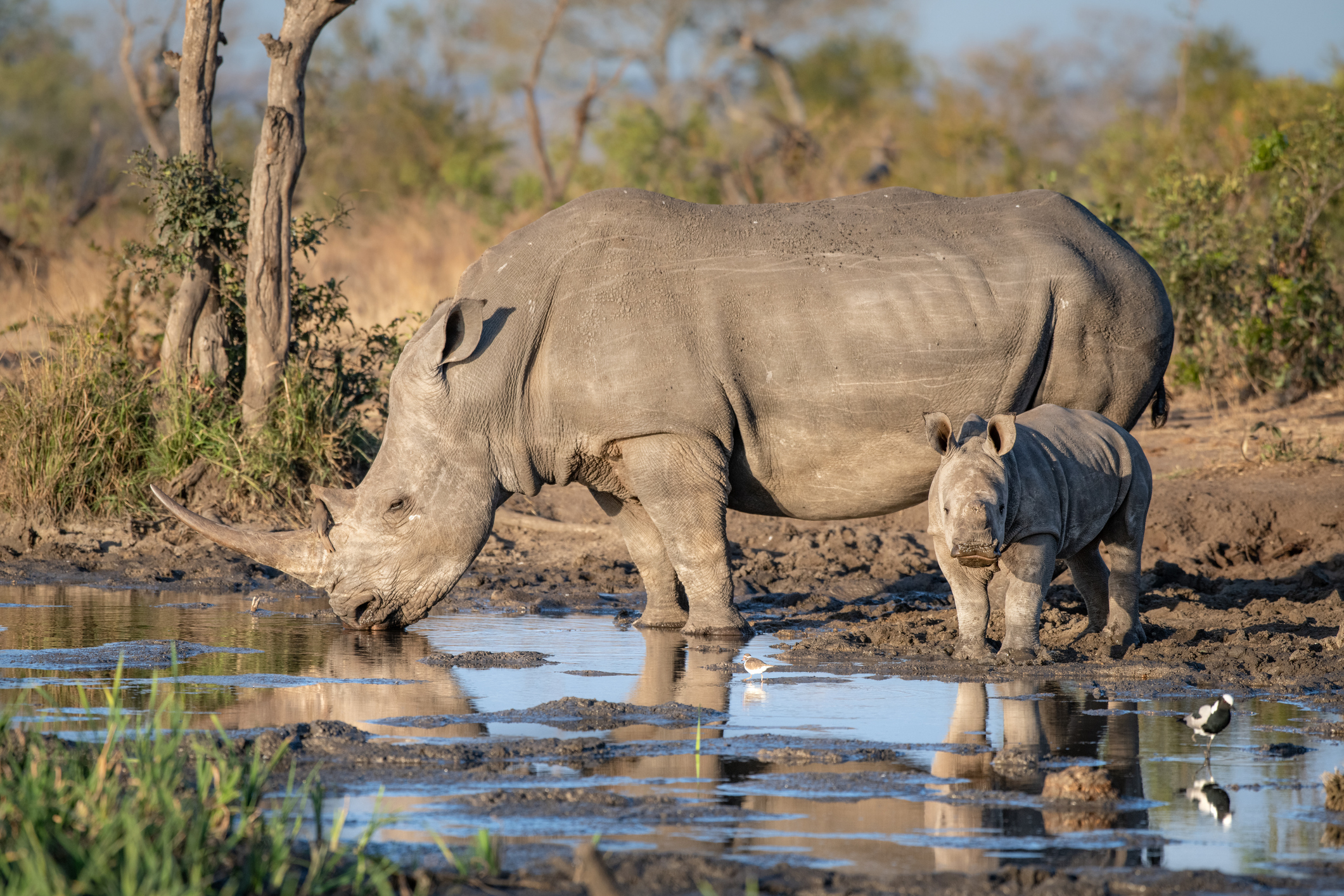
First, we tested their sense of smell. We positioned ourselves uphill of a mother and calf who were grazing over 150 metres away down the slope. The wind was blowing down the hill, so we initially stood off to the side so that our scent was not blowing toward them, before we slowly moved directly upwind. Within moments, they both raised their heads, looked towards us and, apparently sensing our presence without actually seeing a threat, slowly moved away downhill.
Further down the slope, four more rhinos grazed peacefully. Our trainers saw an opportunity to test their eyesight by remaining downwind as they approached. We looped around to avoid detection, settled quietly beside a recently fallen tree and watched them draw nearer.
Unlike antelope such as impala, which must constantly watch for predators, rhinos can afford to be less vigilant, particularly when grazing in a group without young calves. It would take a foolhardy pride of lions to tackle them. As a result, the four barely looked up as they approached our rather exposed hiding place.
We eventually had to decide whether to retreat quietly to the vehicle or sit tight and let them pass. Our trainer judged that the fallen tree would provide sufficient cover, allowing us to manoeuvre around it as the rhinos wandered by.
What none of us had considered was the whereabouts of the mother and calf.
- Can a human outrun a rhino? Just how fast are these giants when they charge?
- “The huge shadow of an irate black rhino emerged. Running would be futile. My only option was to pretend to be a tree.”
As the four rhinos approached to within ten metres, our trainer signalled for us to move slowly around the tree, keeping it between us and the animals. It was at this point that we were abruptly reintroduced to the mother and calf – closer than any of us, rhino or person, were comfortable with. While we had been fixated on the approaching group, the pair had also made their way downhill, directly behind the tree. A fellow trainee at the back of our group nearly walked into the calf, which squealed in fright and bolted downhill. Fortunately, its mother followed closely behind.
That, however, still left us facing the other four rhinos. Startled by the calf’s squeal, they formed a formidable front guard. We needed little encouragement to scramble into the fallen tree’s branches, climbing as high as possible into what remained of its canopy. It offered precious little cover, however, and I can only imagine what we looked like to the four rhinos.
For one agonising moment, we huddled and dangled at their mercy. Then, apparently deciding we weren’t worth confronting further, the rhinos turned and thundered away into the bush.
Top image: white rhino standing in the middle of a gravel road in Namibia. Credit: Marco Bottigelli/Getty Images
Discover more wildlife stories from around the world:
- It's the biggest snake den on the planet – a staggering 100,000 crammed into a small cavern
- "Alan fired off a dart. Relatives clustered around her as the drug began taking effect, and within 15 minutes they were all sedated"
- Watch amazing, jaw-dropping, close up footage of a lioness chancing her luck with elephants – who aren't impressed by her antics


