
Aside from woolly mammoths and woolly rhinos, there were few ice age animals larger than aurochs. These giant bovids stood taller than most humans and tipped the scales at more than a ton.
Like their domesticated descendants, aurochs were keystone animals for many early civilisations - though unlike today’s cattle they were very wild and certainly not the kind of animal you’d risk petting.
What are aurochs?
The aurochs is a recently extinct species of bovine, a group of herbivorous, ruminant mammals that includes a variety of different cow-like animals. The aurochs, or Bos primigenius, is widely considered the wild ancestor of modern domestic cattle (Bos taurus).
- These are the biggest cow breeds in the world
- The truth about cows and methane: How much cattle farming contributes to the climate crisis and what can be done about it
As a species, aurochs emerged in the Middle Pleistocene approximately 700,000 years ago. It’s unclear exactly where they first appeared, though researchers think they likely evolved somewhere in Asia before migrating west and north during warmer periods between ice ages.
Where did aurochs live?
At their peak, aurochs ranged from West Europe and North Africa to India and East Asia. Their distribution gradually declined in the last few thousand years as humans drove them closer and closer to extinction.
The last known auroch remains were found in Bulgaria and date to the late 17th or early 18th century, meaning this ice age animal lived long enough to witness the Acts of Union officially uniting England and Scotland - not that they’d have cared that much!
- "Extremely rare event": why an ancient bone found at Dinosaur Cove in Australia has got evolution scientists so excited
- Cyclops, pouākai, bunyips – 9 mythical, monstrous, monsters that may have been inspired by huge, real-life, prehistoric creatures
What did aurochs look like?
The majority of extinct animals are known only from scant, fossilised remains. This makes it difficult to paint an accurate picture of what they’d have looked like in life, leaving a lot to the imagination and guesswork based on their relationships with living animals.

This isn’t the case for aurochs; having lived deep into the modern period, their appearance has been documented in paintings, carvings, and even lengthy, taxonomic descriptions.
According to a 16th-century description by historian Sigismund von Herberstein, aurochs were pitch-black with a grey streak along their backs. This was later confirmed in the early 1980s when the first remains of an auroch’s hair was discovered.
It’s thought calves were probably born with a chestnut-coloured coat before they grew a darker, black coat as bulls. The females, or cows, are believed to have retained their reddish-brown colour as they grew older.
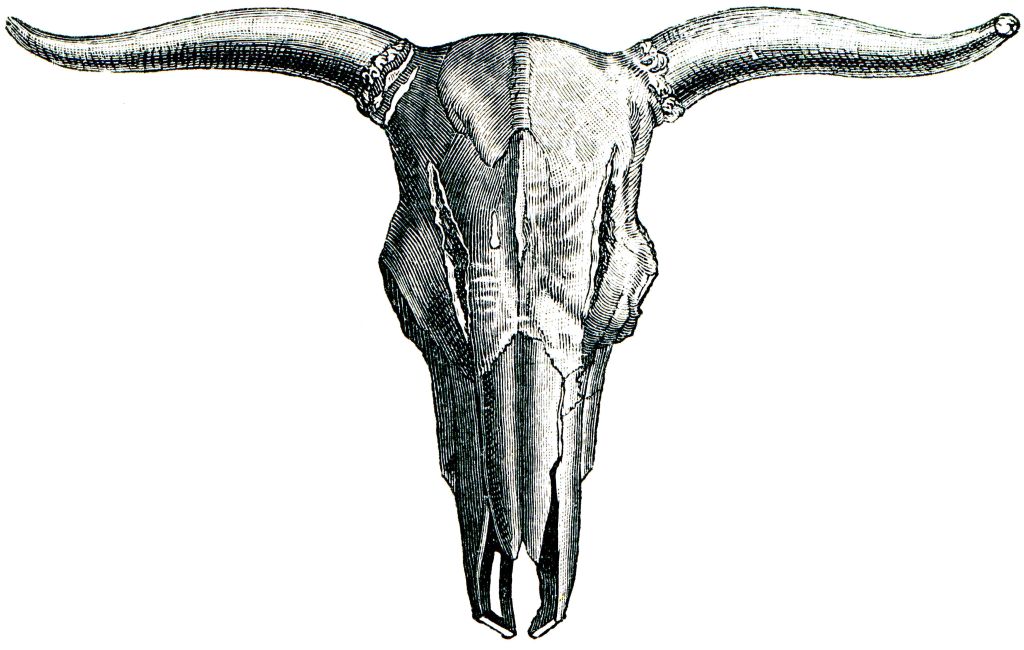
While they looked distinctly like modern cattle, their proportions and overall body shape differed slightly. Their legs were a lot longer and their skull, which sported two, 80cm-long horns, was significantly larger and more elongated than in most of today’s cattle breeds.
How big were aurochs?
Aurochs were also a lot larger, on average, than modern cattle. The bulls stood 1.8m at the shoulder and weighed in at 1,500kg, which is around the same size as an Italian breed of white cattle known as Chianina. This is the largest breed in the world and one that has been selectively bred for its size.
Female aurochs were a little smaller, but standing 1.5m tall and weighing nearly 1,000kg, they were still huge.
- Before they shrunk: 6 huge prehistoric ancestors of animals you know today
- "Holy cow, that's huge!" Scientists unearth remains of prehistoric 'swamp dweller' in north-west Colorado
Where did aurochs live?
Spanning West Europe to East Asia, aurochs lived in a variety of different habitats. Their remains have been found in steppes, open plains, temperate forests, and even on high-altitude plateaus.
A 2008 study on specimens found in the UK suggests aurochs preferred low lying, relatively flat landscapes, such as forests bordering rivers or wetlands along the margins of large lakes.
As the climate warmed in the Holocene, they were restricted to open country and forest margins where they faced competition from humans and their domesticated livestock. This competition shrunk their range even further, separating populations and eventually leading to irreversible decline.
What did aurochs eat?
Unlike domesticated cattle, aurochs only formed small herds and may have even lived alone or in loose family groups during certain times of the year.
Based on wear patterns on their teeth, researchers also think they had varied diets and alternated between grazing on low-lying grasses, like their descendants, and browsing for soft leaves, shoots, and fruits.
Were aurochs dangerous to humans?
According to historical descriptions, aurochs were swift, despite their bulky builds, and could be very aggressive if provoked.
They were also said to be ‘unfearful’ of humans, with Julius Caesar famously noting they stood their ground rather than ran away when they encountered people.
Did humans and aurochs regularly interact?
The relationship between aurochs and humans runs deep, there’s even evidence they interacted with our now-extinct cousins Neanderthals.
At a site located in Biache-Saint-Vaast, northern France, researchers have found 240,000-year-old bones of aurochs burnt by fire and displaying cut marks. At another site in Spain, known as Cueva Des-Cubierta and dated to a similar time, there’s evidence of Neanderthals keeping the skulls of aurochs as hunting trophies.
In Asia, Africa, and Europe, there’s tons of evidence to suggest aurochs were not only seen as food, but animals worthy of worshipping.
The aurochs of Mesopotamia symbolised power and sexual potency and were often used as epithets for their gods Enlil and Shamash, as well as the famous hero Gilgamesh. The Romans, on the other hand, pitted aurochs against gladiators in amphitheatres such as the Colosseum and used their horns as hunting horns.
When were aurochs domesticated?
The earliest-known domestication of aurochs happened approximately 12,000 years ago during the Neolithic Revolution in the Fertile Crescent, a crescent-shaped region of the Middle East believed to be the area where agriculture first emerged.
A genetic study conducted in 2012 indicated that modern domestic cattle (Bos taurus), known as taurine cattle, can trace their roots back to a specific group of 80 aurochs that were tamed in southeastern Anatolia and northern Syria roughly 10,500 years ago.
The descendants of these aurochs were introduced to Europe via the Balkans and the coast of the Mediterranean Sea. From there they spread across the continent, passing through the hands of traders from many different civilizations.
In India, approximately 10,000 years ago, a different lineage of aurochs were domesticated, leading to a different species of cattle known as zebu (Bos indicus).
Zebu differ from taurine cattle in the fatty hump on their shoulders, the flabby patch of skin hanging off their necks (known as a dewlap), and their droopy ears. They’re also better adapted to high temperatures and are kept across the tropics.

- Researchers took DNA from 115 ancient bison. What they found will help the bison of today
- Researchers went into a Neolithic cave on a remote Swedish island – and found unexpected remains
Both taurine cattle and zebu continued to hybridise with wild aurochs for thousands of years, resulting in breeds that look very ‘aurochs-like’.
Why did aurochs become extinct?
The Indian aurochs faced extinction a long time before those that lived in Europe, disappearing around 8,000 years ago.
In Africa, the youngest remains of aurochs dated to around 6,000 years ago, while in China the last known aurochs lived approximately 3,600 years ago. This was a similar time to when aurochs disappeared from the UK, with the latest-known remains dated to 3,245 years ago.
Eastern Europe proved to be the last remaining stronghold for aurochs. The last-known herd of aurochs reportedly lived in a marshy woodland in Poland’s Jaktorów Forest, their numbers diminishing until they eventually disappeared in the mid 17th century.
- Opinion: De-extinction is not the solution to the extinction crisis, says Mark Carwardine
- The Sixth Extinction: what it is, what is causing it - and how many species we are losing
However, a horn core excavated in 2020 in Sofia and identified as belonging to an aurochs suggests they persisted in Bulgaria to the first half of the 18th century.
The leading cause of their extinction worldwide was a reduction in viable habitat, driven by the spread of agriculture. They were also overhunted, targeted not only for their meat but horns and furs too - it’s said one aurochs could have fed a community of more than 300 people!
Could aurochs return from extinction?
Aurochs once filled an important role in ecosystems across Europe, North Africa, and Asia. They’re widely considered ‘ecosystem engineers’ - animals that alter the environment around them, creating or modifying habits for other animals - and are believed to have positive effects on an area’s biodiversity.
- Huge “first-of-its-kind” rewilding project to bring back lost species and create ecotourism paradise in South Africa
- Dire wolf 'de-extinction': here's everything you need to know
This has inspired several rewilding projects that aim to reintroduce aurochs to areas they once roamed. While the aurochs (Bos primigenius) may be extinct, its DNA is present in domestic cattle and there are certain breeds, such as Heck and Highland cattle, that are able to fill the same ecological role as the auroch.
Some projects have also successfully ‘back-bred’ aurochs-like cattle from domestic cattle. A project led by Dutch ecologist Ronald Goderie identified six breeds from Italy, Portugal, and Spain that they used to produce an animal that was as close in appearance to the original aurochs as possible. This back-bred breed, known as ‘tauros’, has been successfully introduced to the Côoa Valley in Portugal and the Danube Delta.
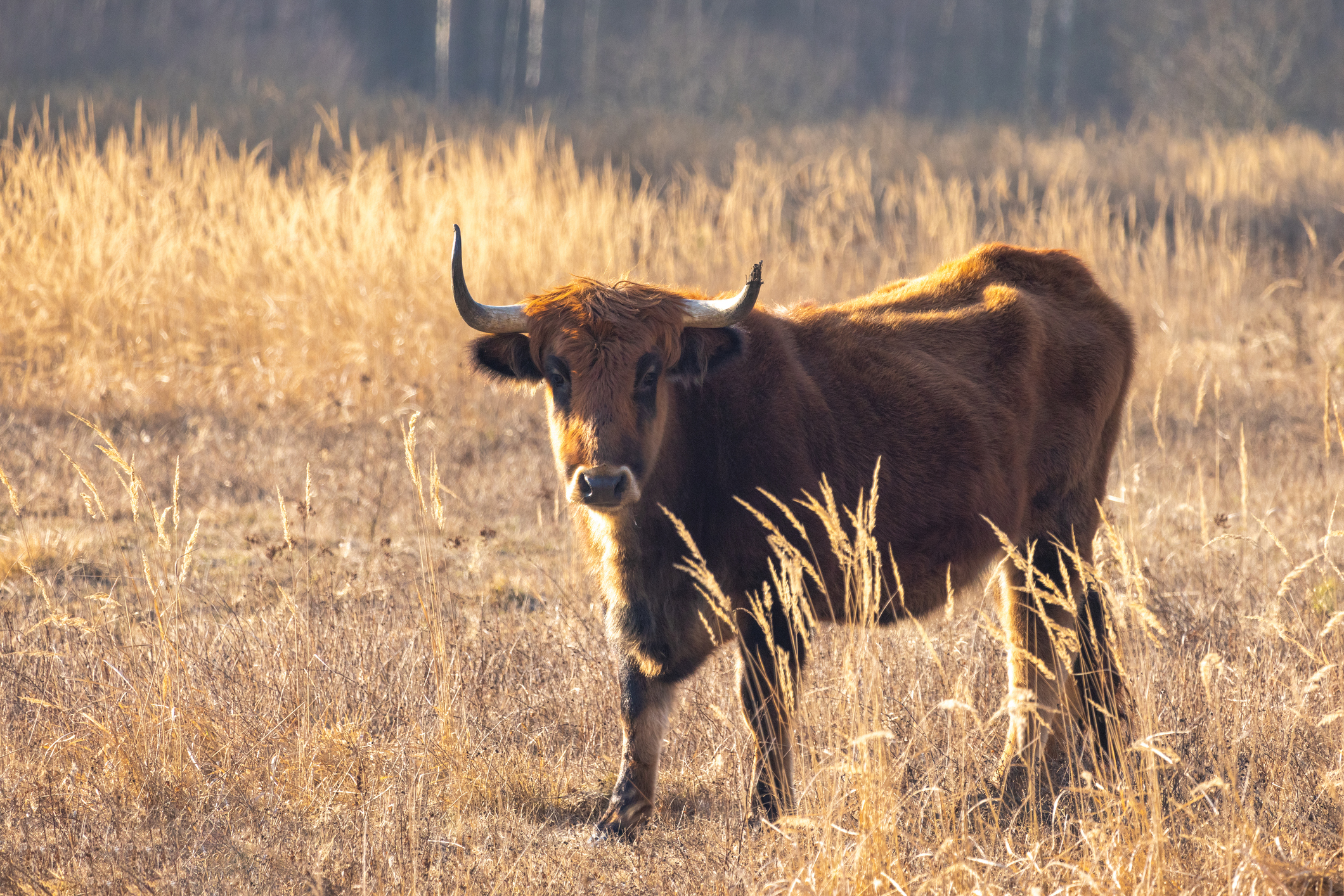
There are plans to introduce a herd of 15 tauros to Dundreggan in Scotland later this year. This five-year project is funded by Rewilding Britain and aims to boost biodiversity and explore how tauros can be used to tackle the emergencies facing wildlife not only in the UK, but worldwide too.
Discover more wildlife stories from around the world:
- “Our guide told us there was a bear cave 300 metres away. We didn’t take him seriously. It was a miracle we survived”
- Scientists discover bald eagle nest on banks of Michigan river – and are stunned at what they find inside it
- It ‘rains’ horizontally, is home to the largest cat in the Americas and provides life to two oceans


