
The ancient Greeks were fantastic story tellers and the likely creators of many mythical creatures, from gorgons to minotaurs. None of their ‘creations’, however, is better known than the cyclops, the one-eyed giant that Odysseus famously defeats in Homer’s epic poem, The Odyssey.
- Cyclops, pouākai, bunyips – 9 mythical, monstrous, monsters that may have been inspired by huge, real-life, prehistoric creatures
- "It's believed that something went terribly wrong and the mother died while giving birth..." 7 groundbreaking fossil discoveries that changed the world
A now-popular theory behind the origin of the cyclops myth was first discussed by palaeontologist Othenio Abel in 1914. He proposed that the fossilised skulls of dwarf elephants, found in caves on islands in the Mediterranean, may have been misinterpreted by Greek explorers as belonging to a one-eyed monster. These skulls have a large, singular hole at their centre, which looks a lot like an eye socket and not immediately like an attachment point for a long, fleshy trunk.
- Researchers went into a Neolithic cave on a remote Swedish island – and found unexpected remains
- Scientists entered a cave on a mysterious Caribbean island, strewn with strange fossils. What they found there was like nothing else on Earth
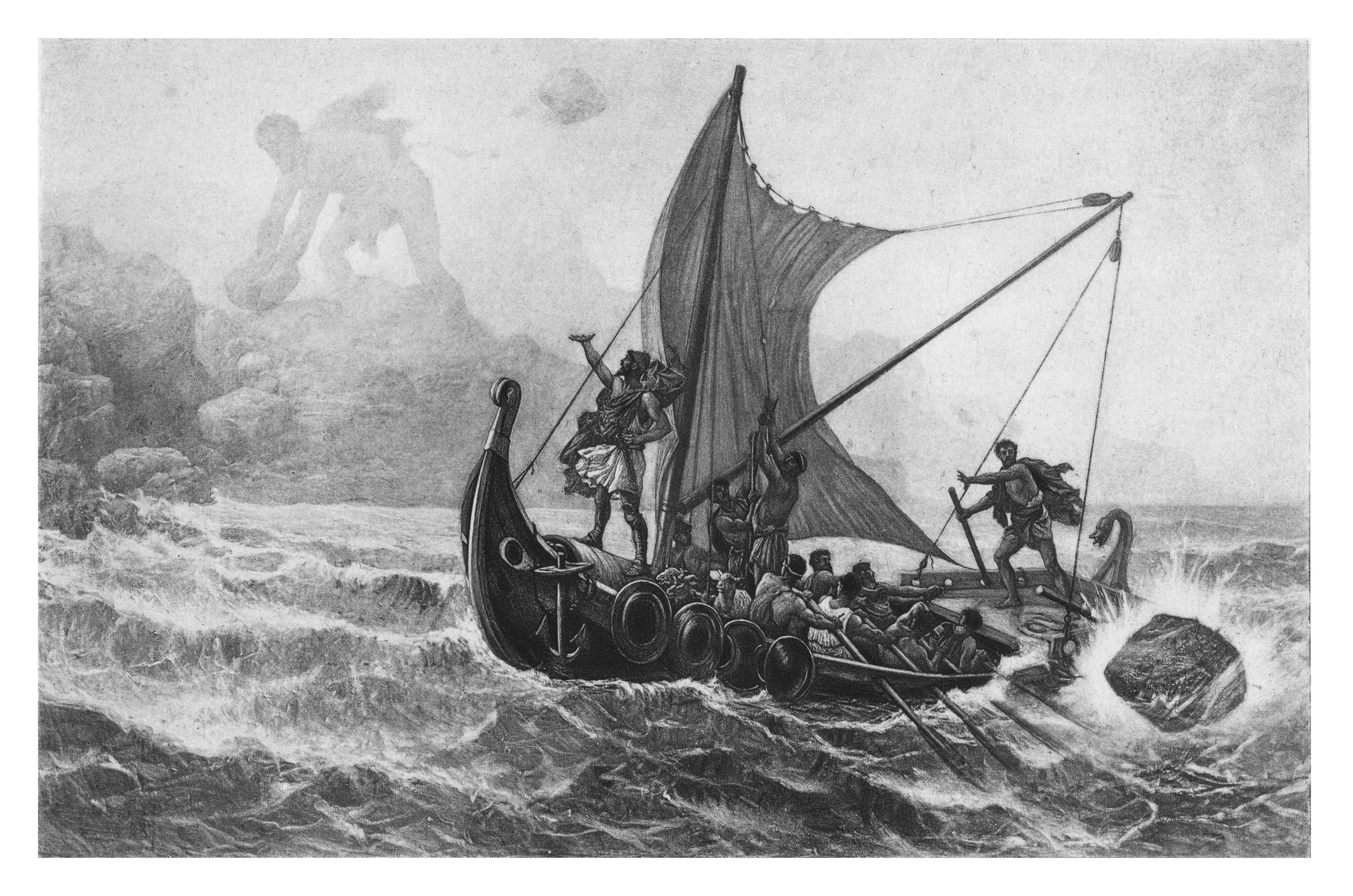
The cyclops from Homer’s epic poem lived on a remote island, traditionally thought to be Sicily. We now know that Sicily, and other islands in the Mediterranean, were home to at least two different species of miniature elephants during the Pleistocene, ~200,000 years ago.
This theory, despite being very popularised, has been criticised for some unsupported claims. Notably, Abel proposed that the Greek philosopher Empedocles identified elephant fossils as cyclops bones 2500 years ago – which didn’t have basis in any surviving records.
This is not the only theory. Some have proposed that the one eye originated from the appearance of volcanism related features, such as craters or bubbles in volcanic water.
- Something amazing is happening on the side of this sleeping volcano – just 50 miles from Mexico City
A possibility of a link between the myth and a rare birth defect called cyclopia, which can result in foetuses with one single eye, has been put forward as well. But the mythical cyclopes' eye appears above the nose, while the actual deformity demonstrates in the eye below it.
Top image: Illustrative, not actual event. A close-up of an elephant's skull and tusks lying on the ground in Zambia's Kafue National Park. Credit: SimonSkafar/Getty Images


