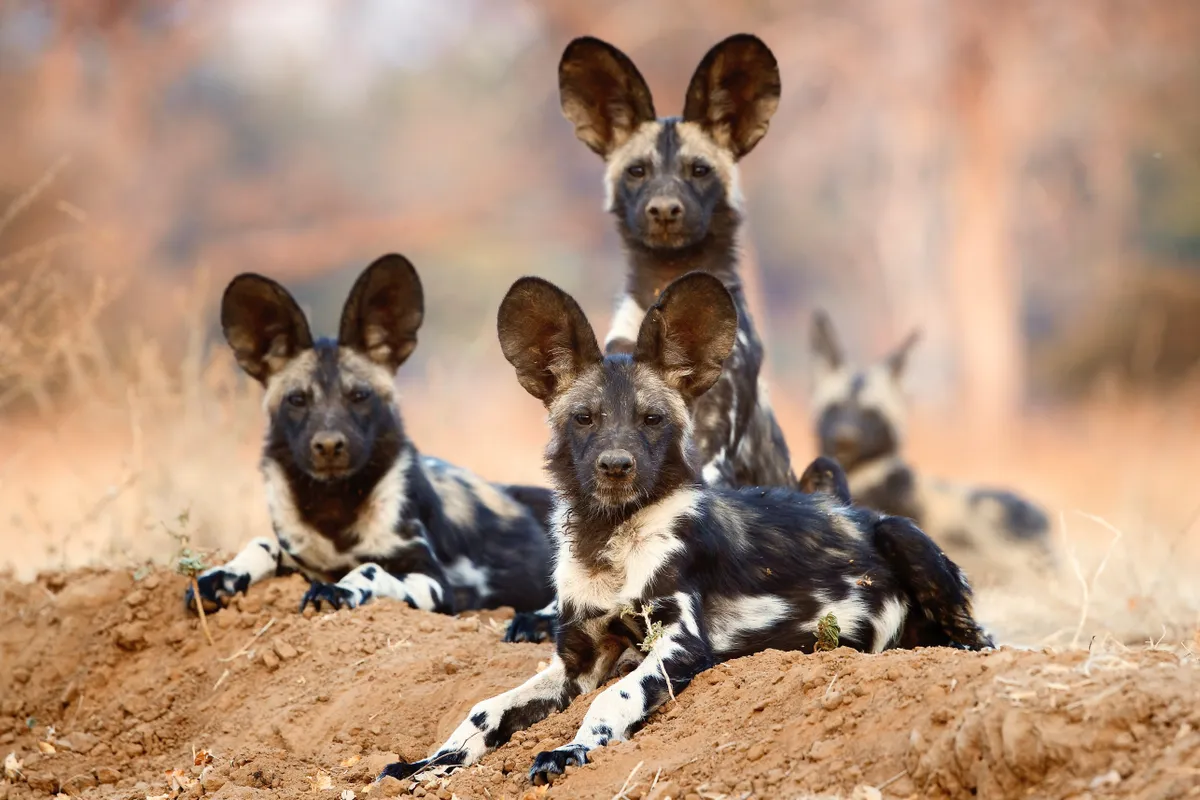
As a group, dogs appeared more than 40 million years ago - roughly 10 million years before their age-old rivals, cats. Hesperocyon is widely considered the first ‘true’ dog and the founding member of a lineage that now includes domestic dogs, wolves, foxes, and a handful of other canids.
What was Hesperocyon?
Hesperocyon is an extinct canid that lived in North America from the Late Eocene (42.5 million years ago) to the Early Oligocene (31 million years ago).
It ranged from southern Canada in the north to Colorado in the south and derives its name, ‘western dog’, from the fact it was endemic to this part of the world.
- "These specialised teeth allowed them to crack, crush, and chew bones." 10 fearsome, deadly prehistoric dogs that roamed Earth millions of years ago
- This prehistoric monster is the largest dog that ever lived and was able to crush bone with its deadly teeth – but was wiped out by cats
There are just two known species of Hesperocyon - Hesperocyon gregarious and Hesperocyon coloradensis - but there are at least 28 species belonging to the subfamily it’s believed to have given rise to, Hesperocyoninae.
This pioneering group was the earliest of the three great dog lineages, followed by the extinct ‘bone-crushing dogs’ (Borophaginae) and the living canids (Caninae).
What did Hesperocyon look like?
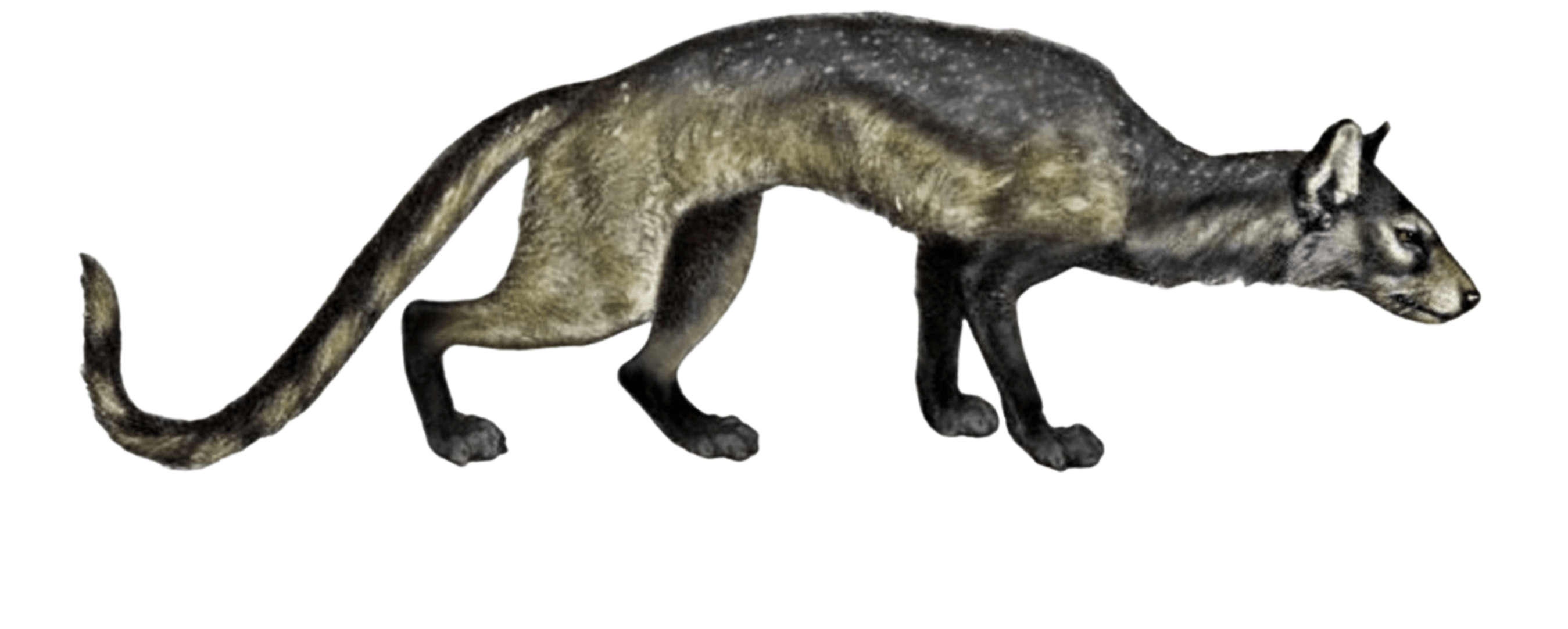
From the tip of its tail to the end of its snout, Hesperocyon measured just 80cm. Smaller than most of today’s domestic cats, it was more comparable in size to a modern mink.
In fact, it resembled a mink in more ways than one. With its long tail, low-slung body, pointed snout, and short legs, it looked more like a member of the mustelid family than the ancestor of modern dogs.
Unlike later canids (including all modern members of the group), Hesperocyon had five toes, plus an enlarged ‘dew claw’ that some palaeontologists interpret as an adaptation for climbing trees.
- Was this the largest, deadliest and most terrifying wolf of all time?
- "They attack by biting the flanks, legs or throat to immobilise it." From Arctic hunters to forest stalkers, here's all you need to know about the dog's wild cousin
Where did Hesperocyon live?
North America during the Late Eocene was considerably warmer and wetter than it is today, with subtropical forests extending across much of the continent.
It’s thought Hesperocyon lived deep inside these forests, scaling trees and scurrying through the undergrowth in search of its prey.
As the climate cooled in the Early Oligocene and forests gave way to more open landscapes dominated by grasses, Hesperocyon may have been forced to adapt and start living on the edges of its ecological range.
The transition from forested to open habitats is what palaeontologists think may have driven the evolution of dogs, transforming them from partially arboreal ambush predators, like Hesperocyon, into large, ground-based pursuit predators, like wolves.
What did Hesperocyon eat?
Although Hesperocyon looked very different from most modern canids, its skull and teeth were unmistakably dog-like. In fact, these distinctive features helped the palaeontologists who first discovered Hesperocyon recognise it as an early canid, rather than a cat.
Based on studies of its teeth, palaeontologists think it may have been an omnivore, feeding mainly on meat but occasionally supplementing its diet with plants, like a modern raccoon or civet.
Unlike later canids, such as the hypercarnivorous borophagines, or ‘bone-crushing dogs’, Hesperocyon predominantly preyed on animals much smaller than itself, such as rodents and perhaps even insects.
It’s unclear exactly how it hunted, though based on its slender, agile build and the fact it may have been partially arboreal, palaeontologists think it may have been an ambush predator that pounced on its prey. This is similar to how some foxes and coyotes hunt today.
- When did domesticated dogs first arrive in Britain?
- Coyote vs wolf: what's the difference between these two beautiful and charismatic canids that thrive in North America?
What did Hesperocyon originate from?
Hesperocyon is widely considered the first ‘true’ dog and the ancestor of the entire Canidae family. It appeared shortly after another, larger group known as Carnivora split into two distinct sub-groups: Caniformia (dog-like carnivorans) and Feliformia (cat-like carnivorans).
The origins of Carnivora can be traced back to the Early Eocene, roughly 52 million years ago. This is an incredibly diverse group of mammals and includes everything from cats and dogs, to bears, mustelids, hyenas, and even seals!
Hesperocyon belongs to Caniformia and is one of its most basal members. It appeared at a similar time to another group known as the bear dogs (Amphicyonidae). These long-extinct animals weren’t bears or dogs, though they do belong to Caniformia and - as a result - are distantly related to both of these living groups.
From Hesperocyon emerged the eponymously named subfamily Hesperocyoninae, the first of the three great dog lineages.
Why did Hesperocyon become extinct?
Hesperocyon lived for approximately 11.5 million years, weathering several climatic storms during the Eocene-Oligocene transition.
It’s unclear exactly why this early dog became extinct, but there are several different factors that - when combined together - could have driven it into irreversible decline.
The biggest factor was undoubtedly a changing climate, specifically the shrinking of sub-tropical forests and growth of grasslands in North America during the Early Oligocene. This change in habitat suited faster, longer legged predators, such as the emerging ‘bone-crushing dogs’ and their cousins, early canines.
Hesperocyon and later members of its sub-family may have also faced some competition from early cats. Cats took much longer than dogs to establish themselves in North America, but once they did, they became the continent’s dominant ambush predators, pushing dogs further and further into the niche of pursuit predation.
What came after Hesperocyon?
Hesperocyon may have come from small, relatively humble beginnings, but it gave rise to three families that are widely considered to encompass all extinct and extant dogs.
Hesperocyoninae, named after Hesperocyon, is the first of the three major groups of dogs and comprises 28 known species.
Some of these species, such as Mesocyon and Enhydrocyon, grew to the size of modern coyotes and persisted into the Early Miocene (around 20 million years ago), overlapping with the first members of the other two groups: Borophaginae and Caninae.
These lineages split from one another around 34 million years ago, most likely evolving from a common hesperocyonine ancestor.
The borophagines, known for having stout but powerfully built skulls that were strong enough to crush bones, diversified rapidly, evolving into giant forms such as Epicyon - a 125kg, bear-sized dog that terrorised North America's grasslands from 12-5 million years ago.
The canines weren’t quite as quick off the evolutionary mark as their bone-crushing cousins, but they ultimately proved more successful. More slender and better adapted for running, they became efficient, long distance pursuit predators.
By specialising in a niche that cats never fully took over, canines avoided the fierce competition that is thought to have driven the borophagines to extinction.
Today, Caninae is the only canid lineage left, the sole surviving branch of a family tree that began with Hesperocyonmore than 40 million years ago. All 37 living species, together with dozens more known from fossils, descend from this small, raccoon-like predator.
Without Hesperocyon, there would have been no wolves, no foxes, no domestic dogs - and no Crufts…
- It looks like a squat, cuddly little bear, chirps like a bird and has webbed feet for swimming – meet the very rare and bizarre wild dog that's like no other
- 10 rarest dogs in the world, many on the brink of extinction, from the beautiful Ethiopian wolf to the bizarre aquatic bush dog...
- The 15 rarest dog breeds, from Irish giants to Cary Grant's favourite pup