
Imagine this: you’re trekking through dense rainforest on a tropical island, climbing higher and higher into a range of unsurveyed mountains, and you stumble upon a remote lake almost 2,000m above sea level. At the lake are thousands of bright green flying frogs, all calling together in a dramatic cacophony. Not only that, but the frogs are unidentified – an entirely new species.
That’s exactly what happened to a team of researchers exploring the Mekongga Mountains on the Indonesian island of Sulawesi. The newly identified Asian flying frog species – described in a new paper published in the journal Zootaxa – adds to the growing list of endemic animals that live on Sulawesi and its surrounding islands.
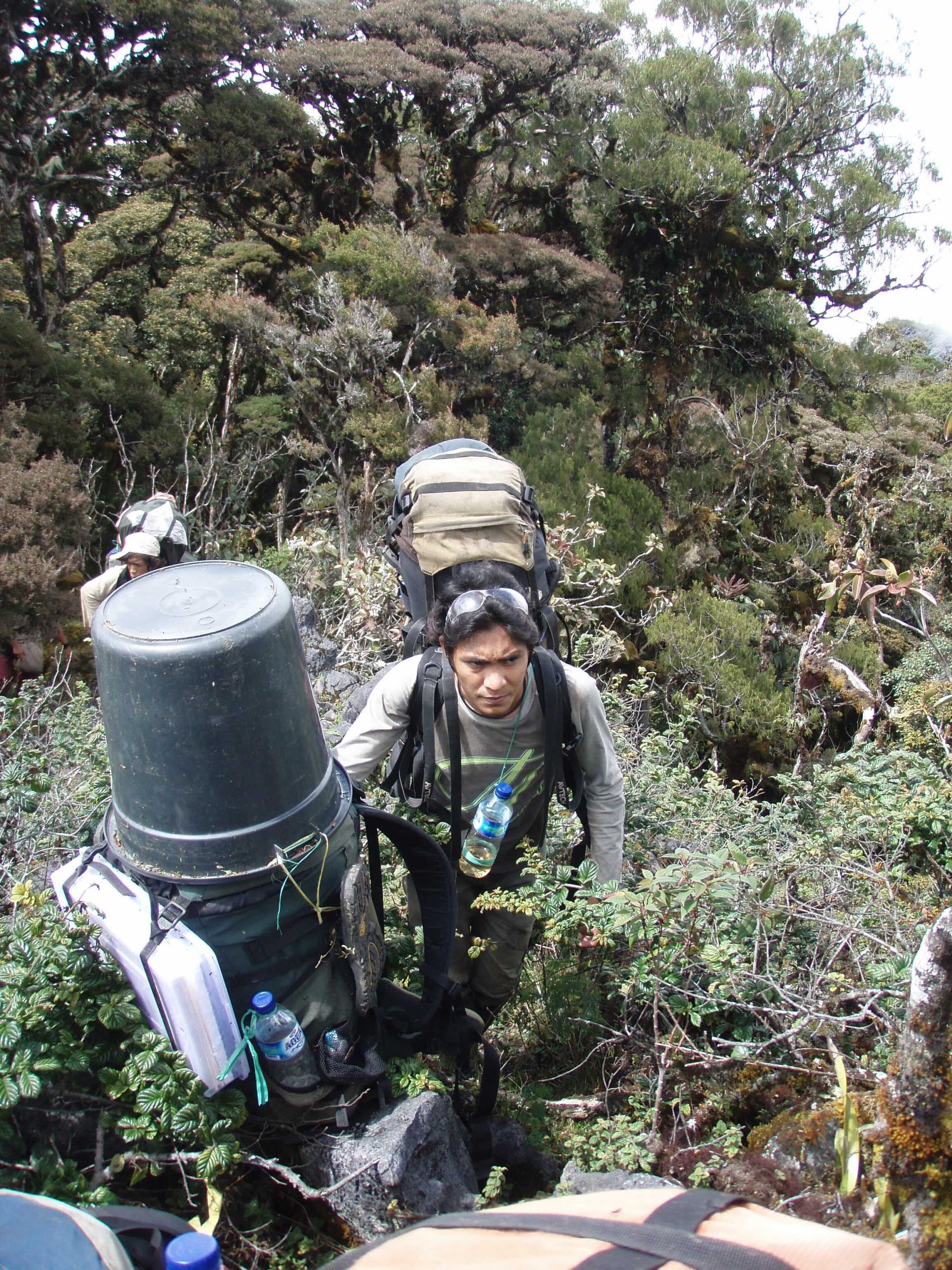
The field expedition was led by Alan Hitch, co-author of the study, from the UC Davis Museum of Wildlife and Fish Biology in California, USA. “We were moving up the mountain, and we came across this big pond covered in these green frogs; they were all over,” says Hitch. “You don’t really see frogs in big congregations like that. This was something super special.”
Flying frogs belong to the genus Rhacophorus and have large, webbed feet, which they use to help them glide between trees. There are lots of species of flying frog, but for the study’s lead author Wahyu Trilaksono, there was something different about the animals found at the remote mountain lake.
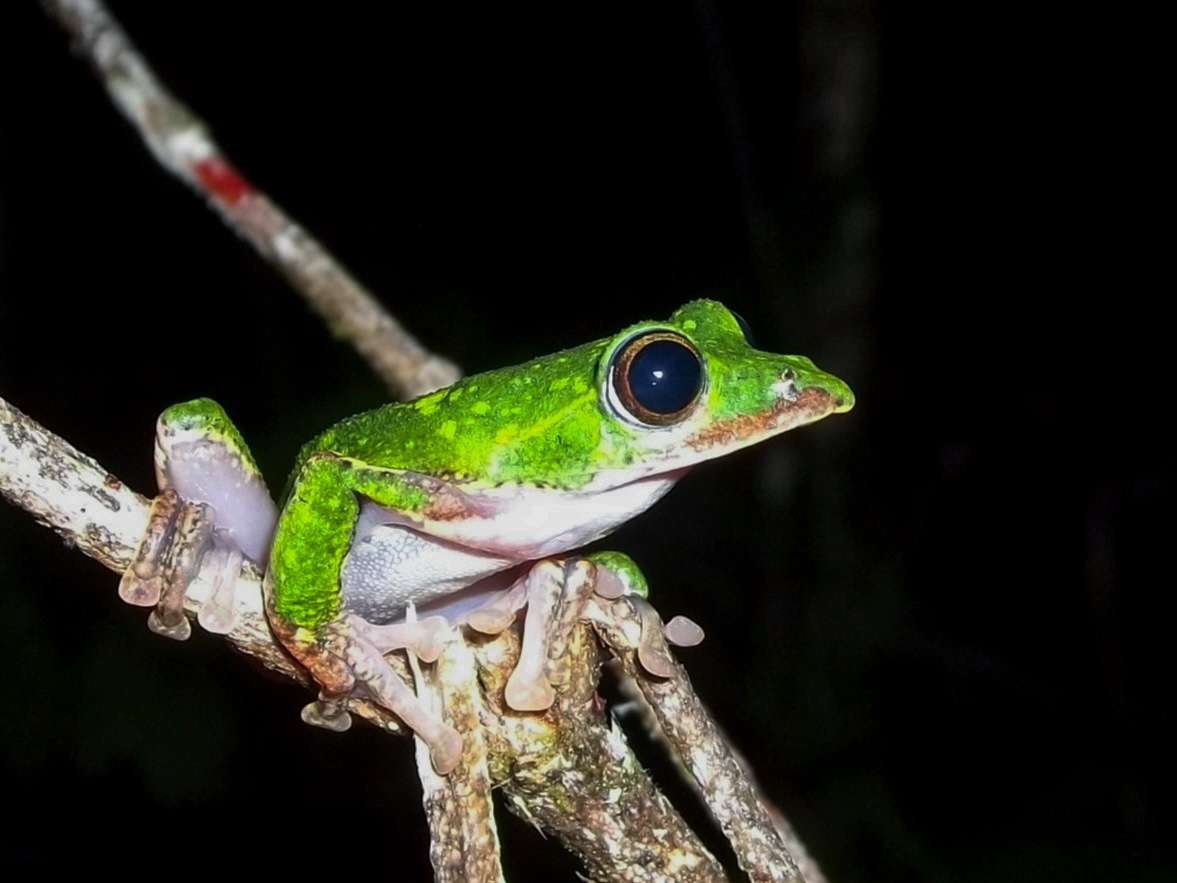
To find out whether the bright green amphibian was indeed a new species, Trilaksono and the team analysed the frog’s physical characteristics, genetic information and audio recordings. This revealed several differences with other flying frog species, including pointed snouts and distinctive calls – and, most significantly, a new egg-laying behaviour.
“This Rhacophorus has a different reproductive strategy from all other Asian flying frogs,” says co-author Alamsyah Elang Nusa Herlambang, a researcher with Indonesia’s Museum Zoologicum Bogoriens.
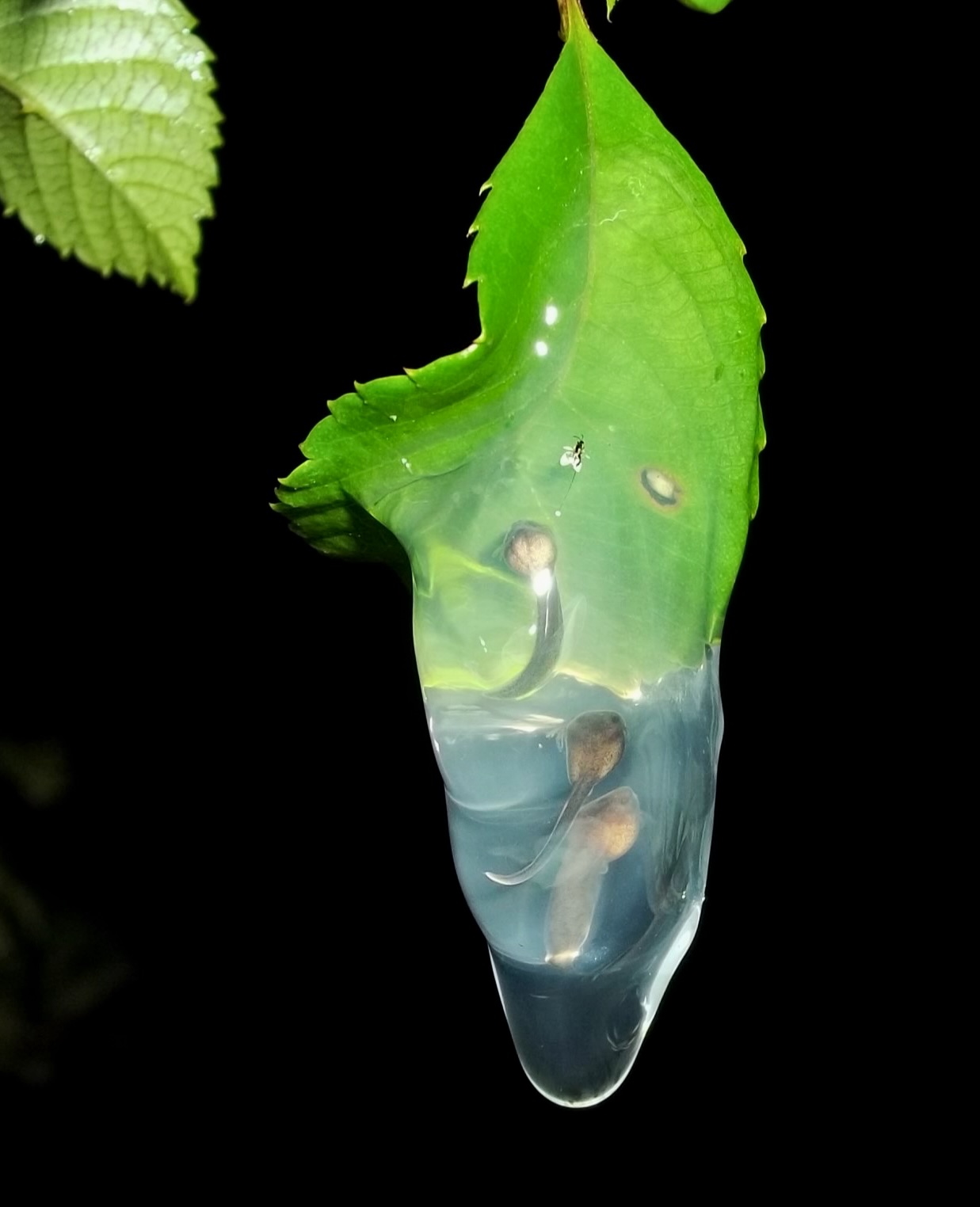
The scientists observed the frogs laying their eggs in jelly-like blobs attached to leaves and other vegetation above or near water. The eggs and tadpoles develop inside this gel. This strategy differs from that of related frog species, which instead create foam nests.
“It’s the first time we have seen Rhacophorus with gelatinous matrix for its reproduction strategy. It’s unique,” says Herlambang.
- These frogs glue themselves together when mating. But sometimes they get stuck in the wrong position
The new species has been named Rhacophorus kurniatiae after the late herpetologist Hellen Kurniati, who played a key role in advancing the study of amphibians and reptiles in Indonesia.
R. kurniatiae was the second new frog species described during the Sulawesi expedition – and further species, including more frogs, mammals and potentially a bird are currently being described.
“When you’re a conservation biologist, your ultimate goal is conserving biodiversity,” says Andrew ‘Andy’ Engilis Jr, curator of the UC Davis Museum of Wildlife and Fish Biology.
“As a result of all the work we did in defining the Mekongga’s unique diversity, including these new species, this region of Sulawesi is now under consideration to become a national park. Continuing our species discovery will hopefully help accelerate that process.”
More amazing wildlife stories from around the world
- A huge ancient predator is lurking in Japan’s rivers – and it’s eating frogs and crabs
- Glassfrogs hide blood in their liver to boost transparency
- It clucks like a chicken, lives beneath mountains and is named after a king – meet India's oddest frog
Top image: lake in Mekongga Mountains, Indonesia. Credit: UC Davis MWFB Archives, NIH-ICBG Expeditions


