
Researchers have discovered that birds in cities tend to fly away sooner when approached by women than by men – but they’re currently unsure why.
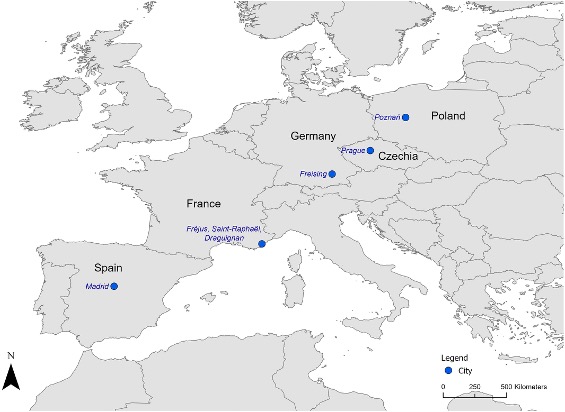
The study took place in five European countries and included bird species such as pigeons, magpies and blackbirds. Male and female participants (matched for height and clothing) walked directly towards birds in city parks and other green spaces.
The findings, published in the journal People and Nature in December 2025, showed that men were able to approach on average one metre closer than women before the birds flew away. The difference appeared across all 37 bird species that featured in the study.
The researchers measured this behaviour using the birds’ flight initiation distance (FID): how close a person could get before the birds took flight. This is used as a metric for measuring an individual’s risk perception when faced with a potential predator. A longer FID suggests lower risk-taking, while a shorter one indicates an individual tolerates greater risk.
The difference associated with the observer’s sex was consistent in bird populations in cities across Czechia, Poland, Germany, France and Spain.
The researchers believe it is the first study to test the potential effect of an observer’s sex on the escape behaviour of wild birds.
“I fully believe our results, that urban birds react differently based on the sex of the person approaching them, but I can’t explain them right now,” says professor Daniel Blumstein of the University of California, Los Angeles, who helped conduct the research.
- It’s home to the largest colony of its kind – and locals sometimes throw its residents off cliffs
- Scientists have just discovered some of the world’s loudest birds – by accident
“We used bleeding-edge comparative analysis techniques that showed our findings were consistent across cities and species, but we simply don’t have a conclusive explanation yet.”
While the results are intriguing, the researchers stress that further work is needed to establish what the birds are specifically responding to.
“Urban birds clearly react to subtle cues that humans don’t easily notice,” explains Federico Morelli, from the University of Turin and one of the study’s co-authors.
“Follow-up studies could focus on individual factors such as movement patterns, scent cues, or physical traits, testing them separately rather than grouping them under observer sex. This approach would help identify the specific cues birds detect.”
Identifying these cues could help researchers understand how animals process potential threats in shared environments with humans, with implications for urban ecology.
Read the full findings here.


