One of the most spectacular sights in nature is a vast gathering of birds. If you can set aside thoughts of Alfred Hitchcock’s avian nightmare movie, you’ll be overwhelmed by the awesome sight, sound, and often smell, of bird families roosting or breeding in huge numbers at these famous spots.
- It weighed more than 2 tonnes and holds the record for the largest bird nest on the planet…
- The weirdest bird nests on the planet – including a 2-tonne giant and one bound together with spider webs
10 of the world’s biggest bird colonies
Bass Rock, Scotland – Northern gannets
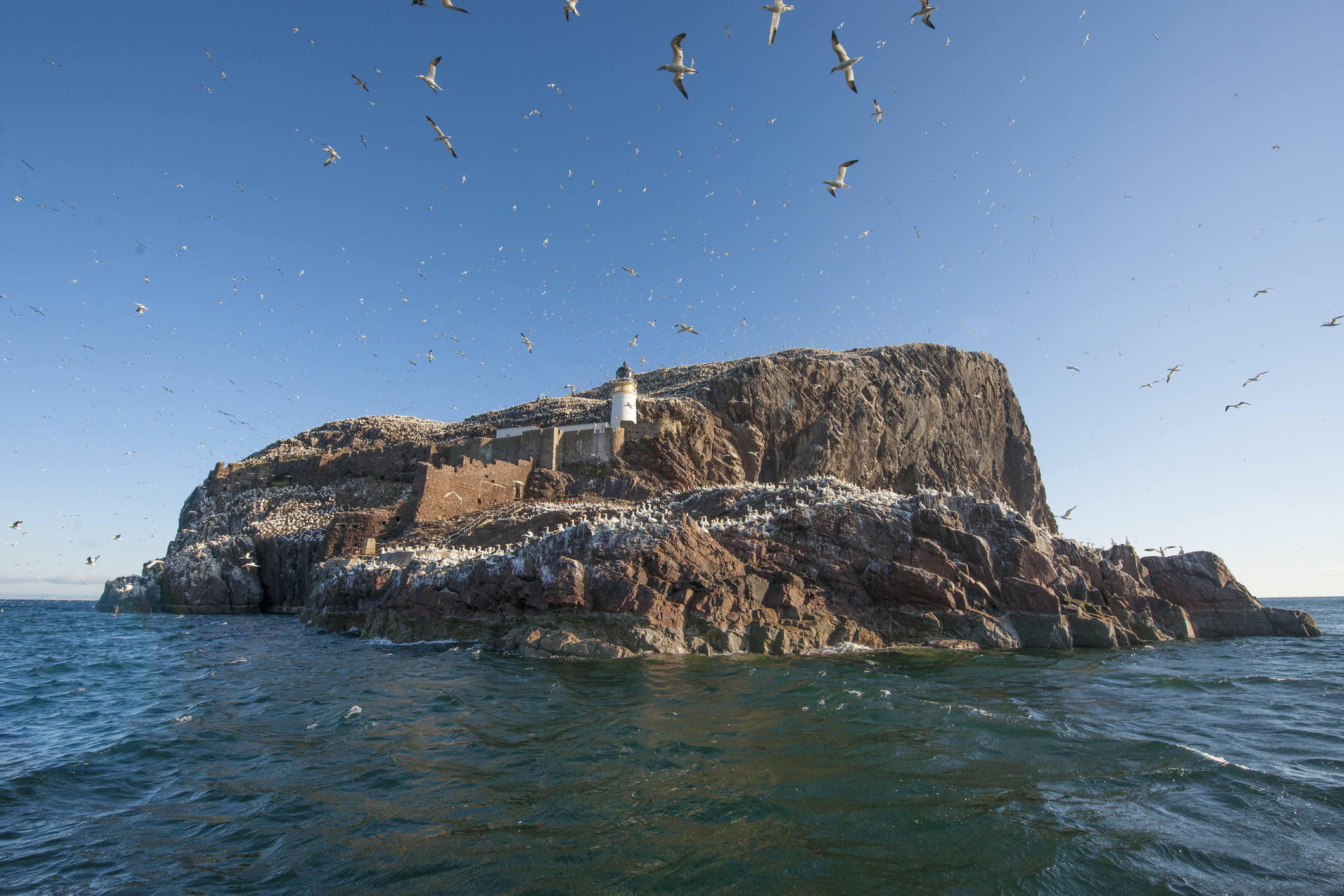
This sheer-sided plug of lava just off the east coast of central Scotland once flowed out of a volcano in the North Sea and solidified 300 million years ago. From February to October each year it is now the breeding place of choice for the world’s most extensive colony of Northern gannets.
Until avian flu took its toll in 2022, there were around 150,000 of the birds inhabiting the ledges and crannies on the guano-covered cliffs. Thirty per cent of the population was lost that year but numbers are gradually beginning to climb to record levels again.
Through the centuries the gannets have shared the rock with an 8th century hermit, a 15th century knight and his family, a bunch of 17th century political prisoners, some 20th century lighthouse keepers and several flocks of sheep. Since 2026 Bass Rock has belonged to the Royal Society for the Protection of Birds so the gannets now reign supreme every spring and summer.
Midway Atoll, Hawaii – Laysan albatross
It was one of this group of three coral islets enclosing a shallow lagoon that gave its name to the Laysan species of albatross. That is because 99 per cent of the world’s population of this medium-sized seabird live there. Surprisingly for such a concentrated and isolated community, there are a lot of Laysans – almost 1.2 million of them – making them the second most-common seabirds found around the Hawaiian Islands (only topped by the numbers of wedge-tailed shearwaters).
That’s not to say that the Laysan albatrosses hang out in Hawaii all the time. When they’re not breeding they range across the whole of the north Pacific, from Mexico to Japan.
- "What no one knew at the time was that many of those committed couples were, to put it anthropomorphically, lesbians…"
- Sharks are attacking albatrosses in Hawai'i. And it's causing other apex predators to flee
One female Laysan has the enormous distinction of being the world’s oldest known wild bird. Wisdom was ringed by the US Geographical Survey in 1956 but they estimated she had hatched in 1951, making her about 75 years old. As recently as November 2025 she was spotted alive and well and preparing a nest for her latest brood.
Steeple Jason Island, Falklands – Black-browed albatross
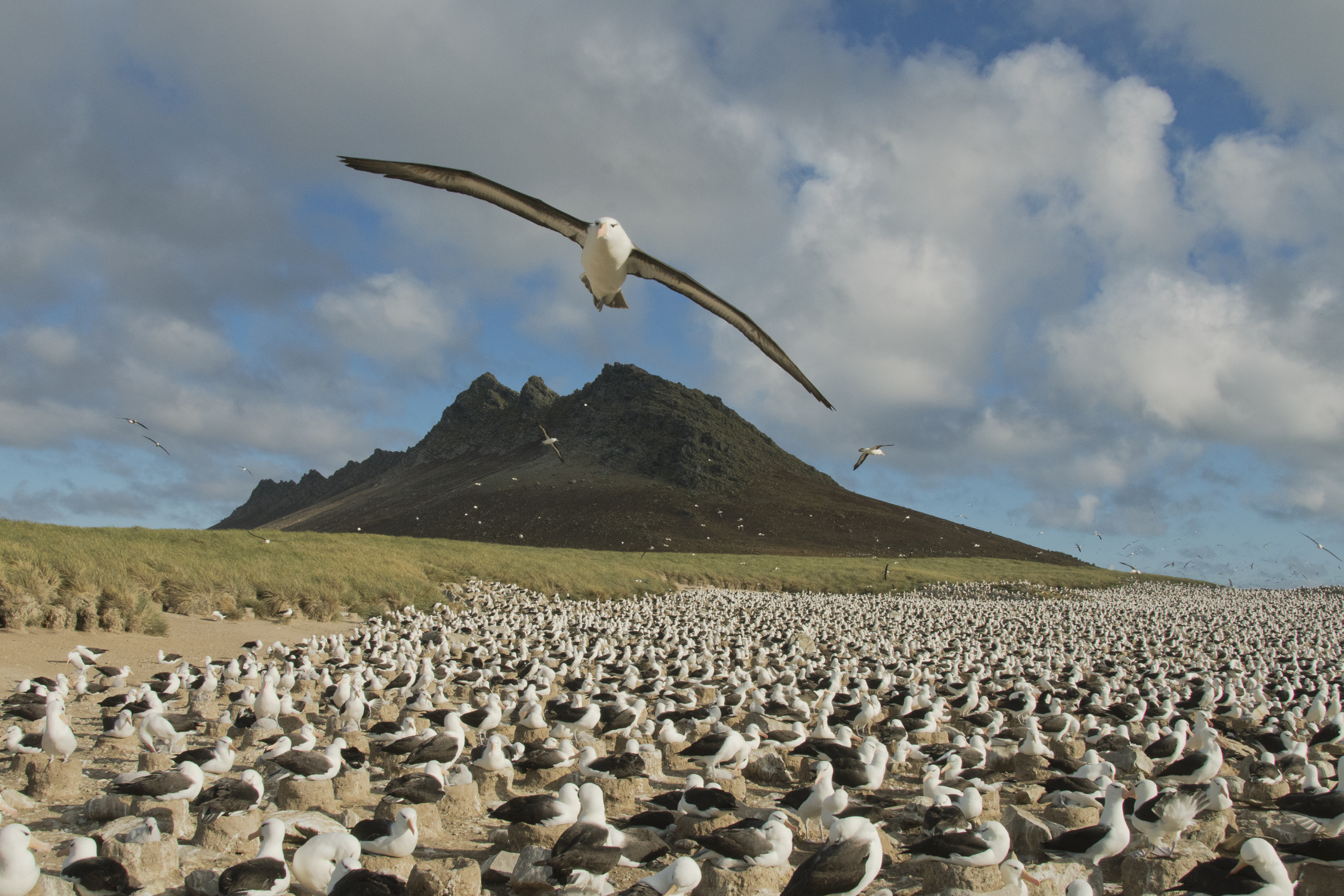
Over 70 per cent of the global numbers of black-browed albatrosses gravitate to the Falkland Islands to breed, and most of them favour little Steeple Jason. Thanks to the philanthropy of a British bird sanctuary owner, Len Hill, who bought the island and its neighbour Grand Jason in the 1970s, the land was cleared of sheep and the seabirds were allowed to occupy it unobstructed. The island was later bought and donated to the US Wildlife Conservation Society to be similarly preserved.
Black-browed albatrosses, also known as mollymawks, usually prefer to nest on steep tussocky slopes and cliffs but they have adapted to ground-floor living on Steeple Jason because its shores are low-lying, flat grasslands that stretch quite far into the interior.
Although the birds are not classed as endangered, numbers of black-brows have seen long-term declines in recent years. They are one species of seabird that is commonly caught by accident in longline fishing operations, but thankfully conservation efforts are underway to reduce this destruction.
Vestmannaeyjar Archipelago, Iceland – Atlantic puffin
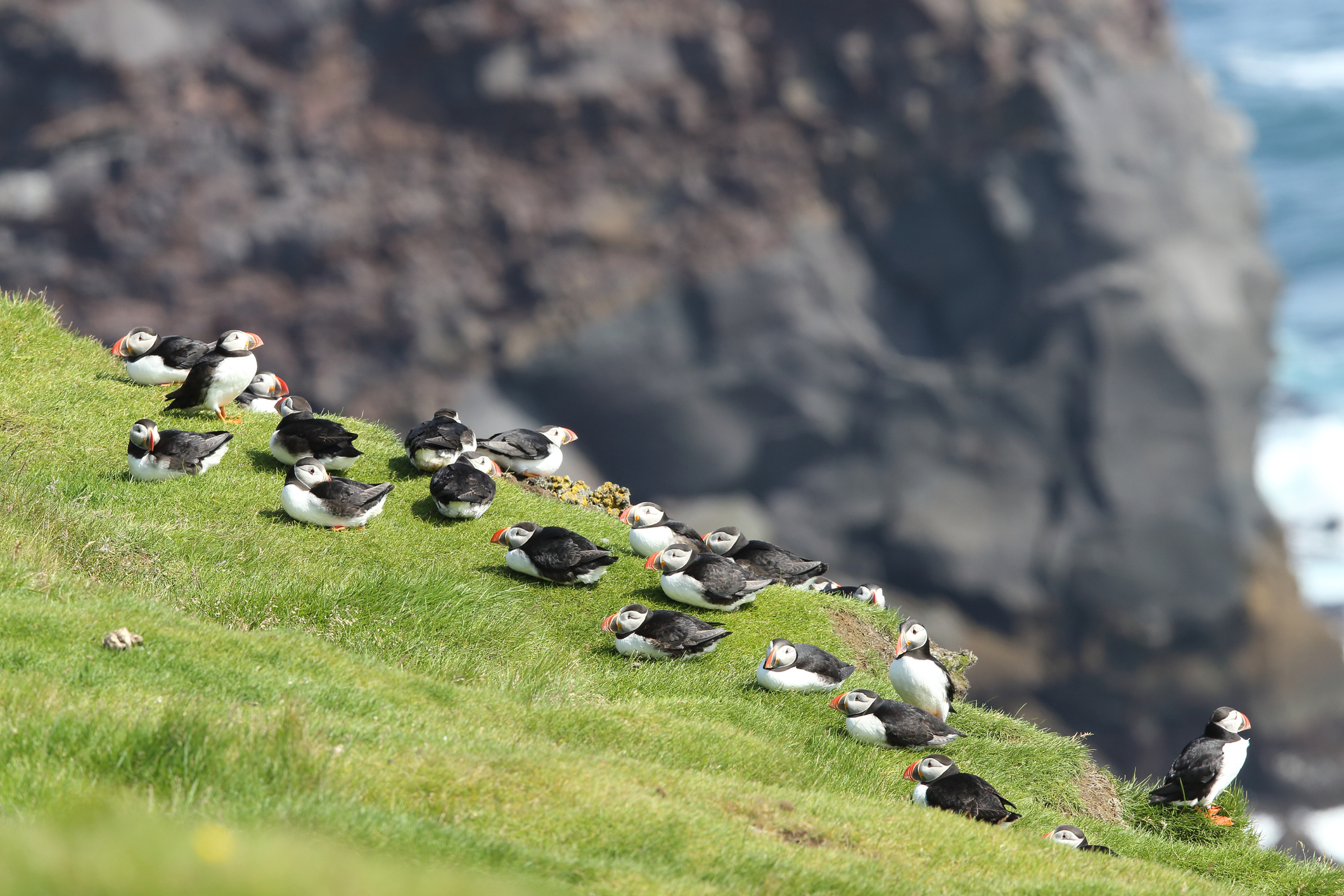
From April to August, 60 per cent of the world’s Atlantic, or common, puffins make their way to Iceland to breed and the Vestmannaeyjar islands welcome most of them. The birds favour this environment because it has a comfortable microclimate with little snow despite its northern location. The waters around the archipelago are also rich in fish to feed the young pufflings when they hatch.
Because the lights of human habitations can confuse the immature birds when they leave the nest burrows to begin their journey to the sea, locals in the archipelago mount Puffling Patrols at night. All ages take part, finding disoriented puffins wandering round their houses and guiding them down to the water.
- It’s home to the largest colony of its kind – and locals sometimes throw its residents off cliffs
- These adorable -and sometimes comical -puffin photos provide intimate insights into their captivating life on Skomer Island
- “I could watch them forever.” This adorable clip will give your soul a boost
Bird Island, South Africa – Cape gannets
It’s only 19 hectares (47 acres) in size but Bird Island in Algoa Bay, Eastern Cape, hosts a tightly packed crowd of 81,000 breeding Cape gannets, one of the sixth largest colonies in the world. Eighty-eight per cent of the world’s population of Cape gannets are found in South Africa and they also breed (although in smaller numbers) on another Bird Island, this one in Lambert’s Bay, Western Cape, as well as Malgas Island in Saldanha Bay, also in the Western Cape.
Wherever they choose for their nests, the birds don’t mind being close to each other. Often there can be up to six breeding pairs occupying a single square metre of ground. There’s not much room on the rocky flat-topped islands to spread too far. There’s also safety in numbers from predators such as kelp gulls or great white pelicans that relish gannet eggs and tiny chicks. The South African islands do not provide the cliffs that the Cape’s cousins, the Northern gannets, rely on at Bass Rock in Scotland, so security cannot be achieved by nesting in a more easily defended rocky crevice.
- “The action was intense… dramatic underwater chaos!" Diver films awesome feeding frenzy in South Africa
- Do penguins get chilly feet from standing on ice all day?
Lake Natron, Tanzania – Lesser flamingos
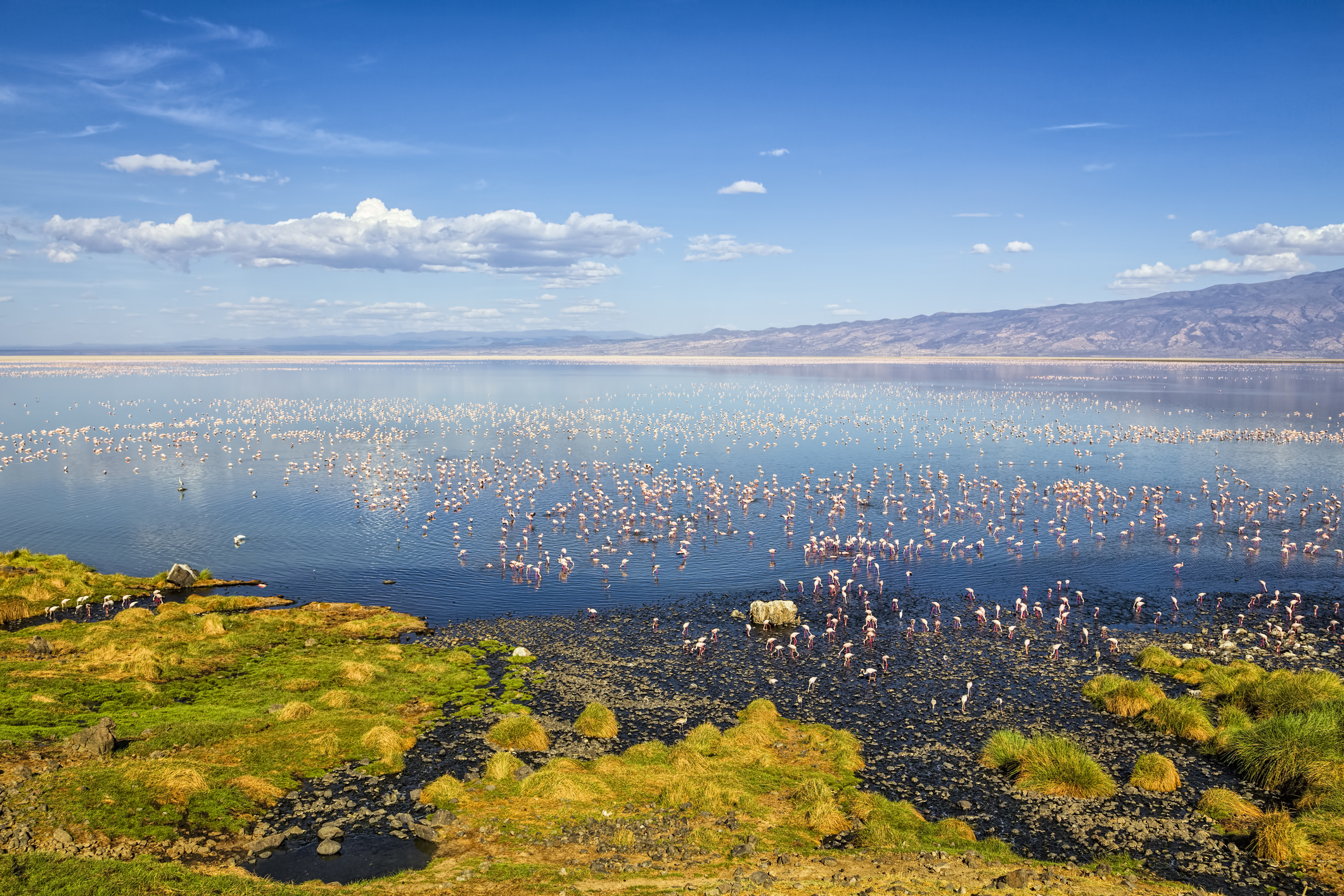
Despite the fact that Lake Natron is a hot, salty and alkaline environment – known as a soda lake – which is very inhospitable for many animal species, it is the favoured breeding place for 2.5 million lesser flamingos. The briny lake promotes the growth of a blue-green-red algae called spirulina that the birds feed on, and the extreme chemical composition of its waters helps to keep would-be predators away from the flamingo nests.
Lesser flamingos lay a single egg on top of a small mound of mud they construct in the shallow waters of the lake. This precarious investment in just one youngster requires a safe haven in which to raise it, and this is what the noxious waters of Natron provides.
- Why are flamingos pink?
- Purple is nature's rarest colour but purple animals do exist: 9 beautiful, incredible purple animals that look like they've been painted
The caustic nature of the lake is not the only thing that makes it an undesirable habitat for the vast majority of African fauna. Its water can also get very, very hot. Temperatures of up to 60ºC (140ºF) are not unknown, that’s roughly twice the temperature that would be comfortable for a bath.
To withstand the effects of these things, lesser flamingos have special adaptations. Tough, scaly legs to survive standing in hot water, glands that filter out the salt while they are feeding, and curved bills that enable them to scoop up the algae without taking in too much mineralised liquid.
Malilangwe, Zimbabwe – red-billed quelea
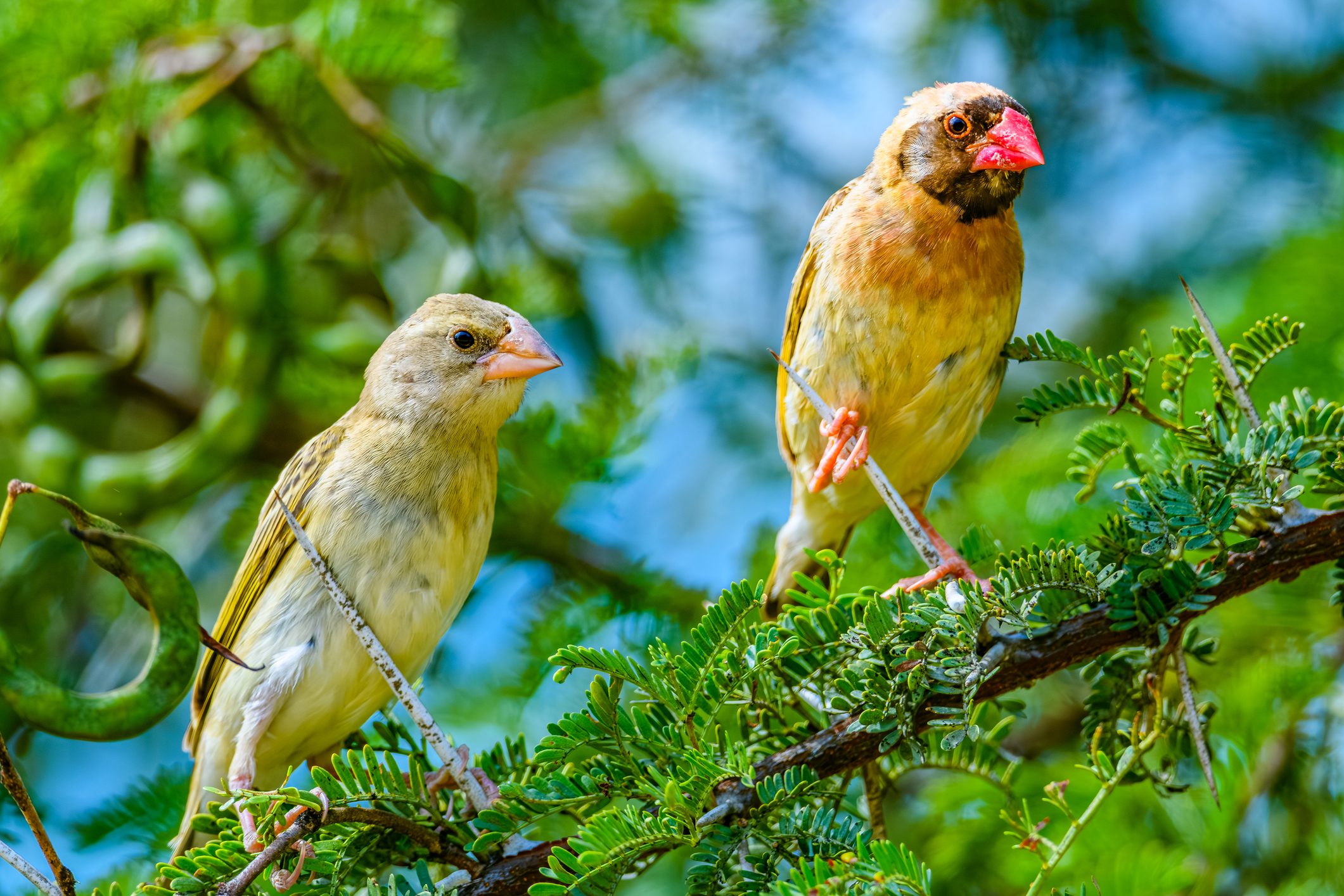
These little queleas, about the size of a house sparrow, are famous for being the world’s most abundant wild birds. Colonies can consist of millions of nests – over 6,000 have been counted in just one tree – and in densities of up to 30,000 per hectare (12,000 per acre).
The birds belong to the weaver family, Ploceidae, and travel in mega-flocks which, from a distance, look like swarms of locusts. Unfortunately, their feeding behaviour is also much the same as the insects. In arable farming areas in sub-Saharan Africa they are about as popular and welcome as locusts because they can strip a field of small-grain crops such as millet in record time. The other members of the quelea genus, the red-headed quelea and the cardinal quelea, are not nearly so destructive.
The Malilangwe Reserve in Zimbabwe is a safe haven for red-billed quelea from eradication by farmers and one colony there was mapped as stretching for as long as 12 miles (20km) and by half a mile (1km) in width.
Alice Springs, Australia – budgerigars
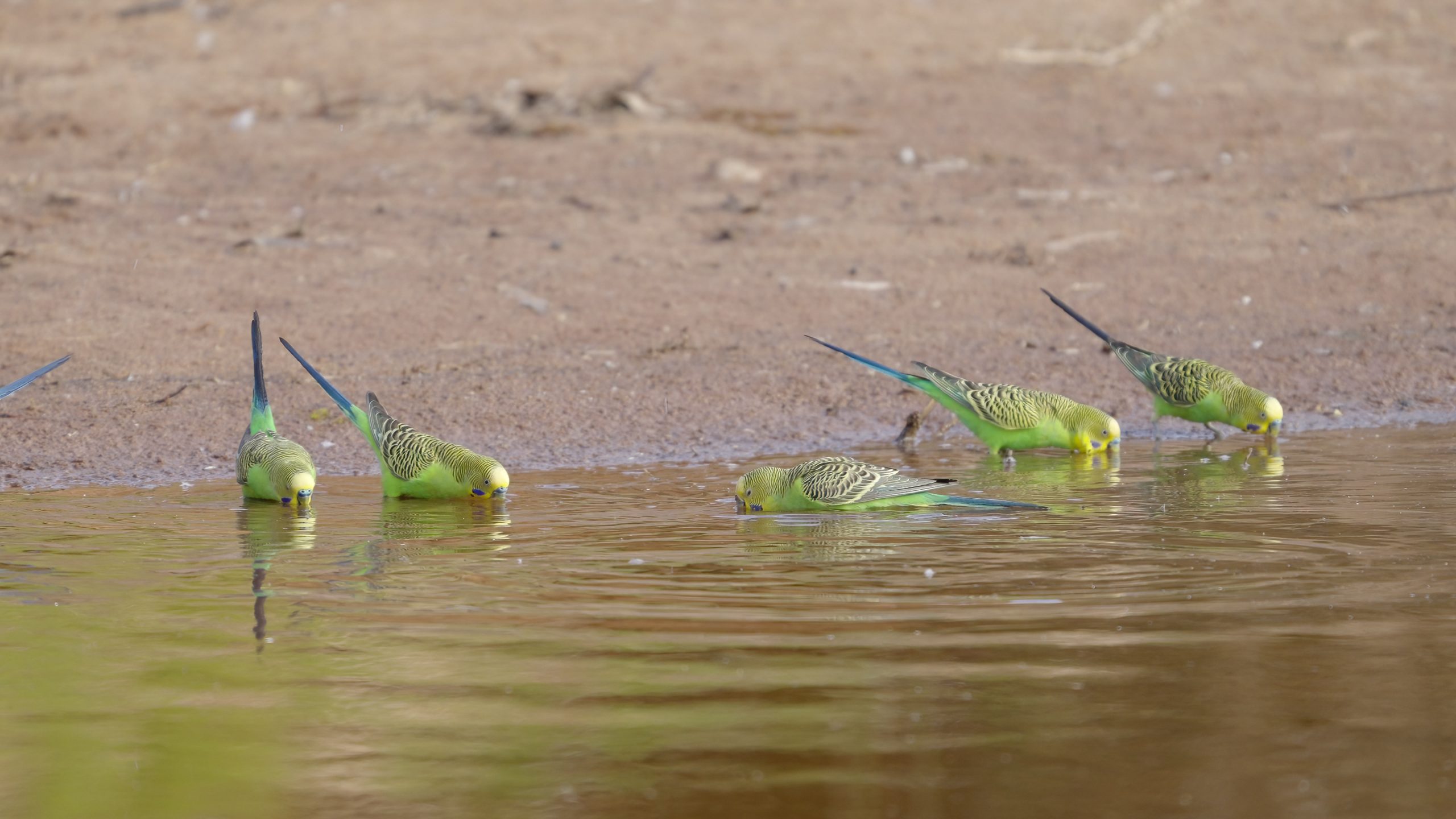
At waterholes in the arid Australian Outback around the town of Alice Springs, budgerigars flock, especially in dry periods, in numbers ranging from just a handful to more than 20,000 birds. In the air these small, brilliant green parrots perform mass synchronised murmurations, wheeling and diving at high speed to confuse and evade aerial predators and socialise with their fellows as they seek water in the mornings.
- What's the world's biggest parrot? There are two contenders: one has a massive 1m wingspan and the other weighs a whopping 3kg
- 32 years ago, researchers made it their mission to protect one of the world’s rarest parrots. Now, the dazzling bird is having one of its strongest nesting seasons on record
Budgies feed on herbs and grass seeds and nest in the hollows of eucalyptus trees. The coming of the annual rains in the desert regions triggers their urge to reproduce, which they do quickly, building nests and raising broods of between four and eight young in less than a month. It is this boom of fledglings at the beginning of the dry season that leads to the super flocks as the young disperse from the nest to seek out their own well-resourced territories.
Baffin Island, Canada – lesser snow geese
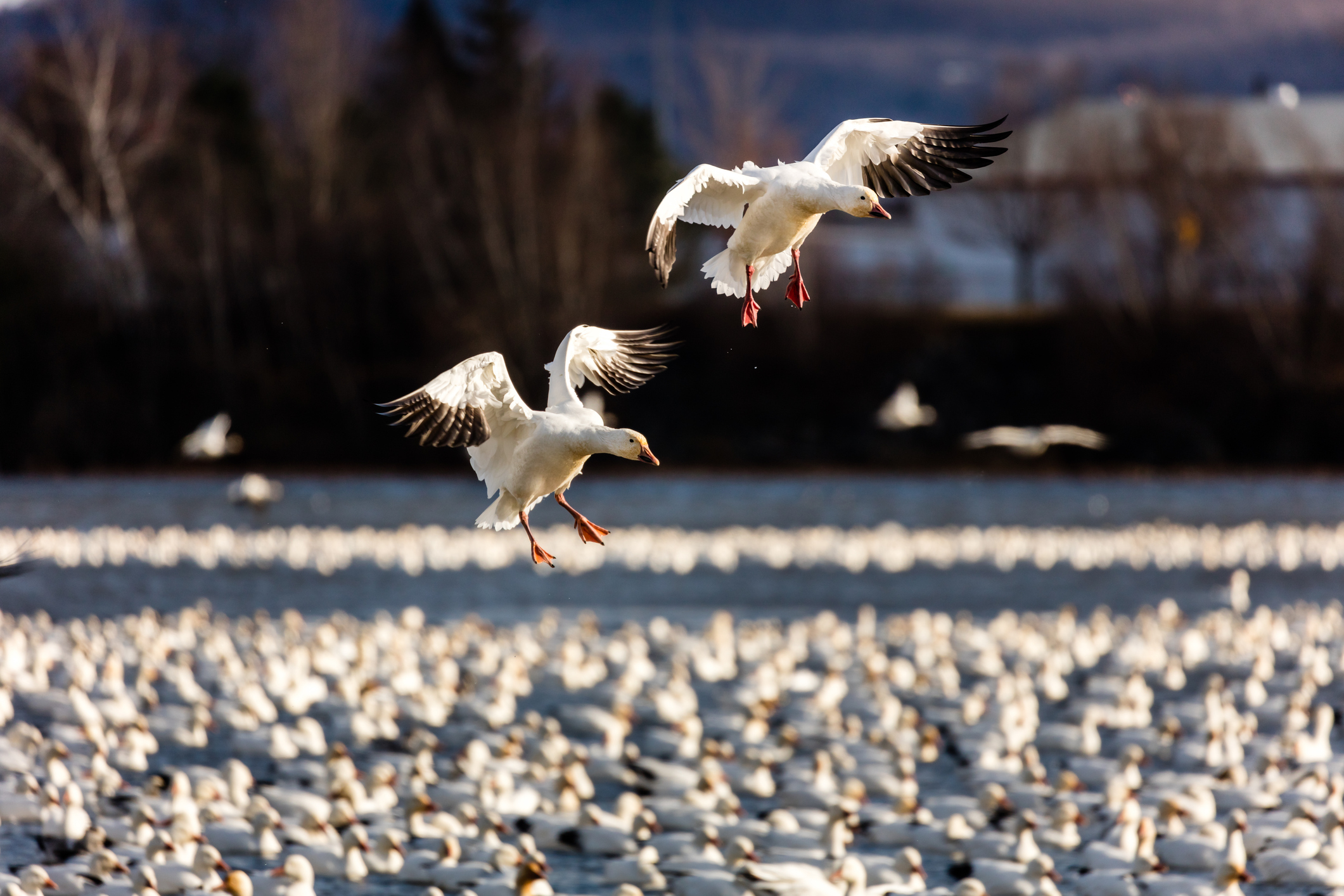
Baffin Island, which lies off the northeastern coast of Canada opposite Greenland, is the location of the first bird sanctuary that was set up in the Arctic in 1957. It is also home to the largest goose colony in the world. The marshy tundra of the sanctuary protects many migratory birds and annually, between May and August, up to 2 million birds of various species go there to breed. Of these, almost a million are lesser snow geese.
Lesser snow geese come in two colour variations – white and what is called blue but actually shows as bluish-grey on the body and wings. Both types have white heads. The two colour versions were once thought to be different species, but as they have been observed to interbreed, the differences are now thought to be just variations in pigmentation dictated by dominant and subordinate genes. There is a larger subspecies called the greater snow goose, which does not tend to have a darker version, but they are not so prevalent on Baffin Island.
Unlike many other avian species, snow geese have actually increased in numbers dramatically since the 1970s. This is thought to have resulted from a rise in the amount of agricultural land reclaimed from forest in northern Canada, providing a reliable food source for the birds. Measures are now being taken to control populations to a sustainable level in the tundra regions around Hudson Bay.
Nebraska, USA – sandhill cranes
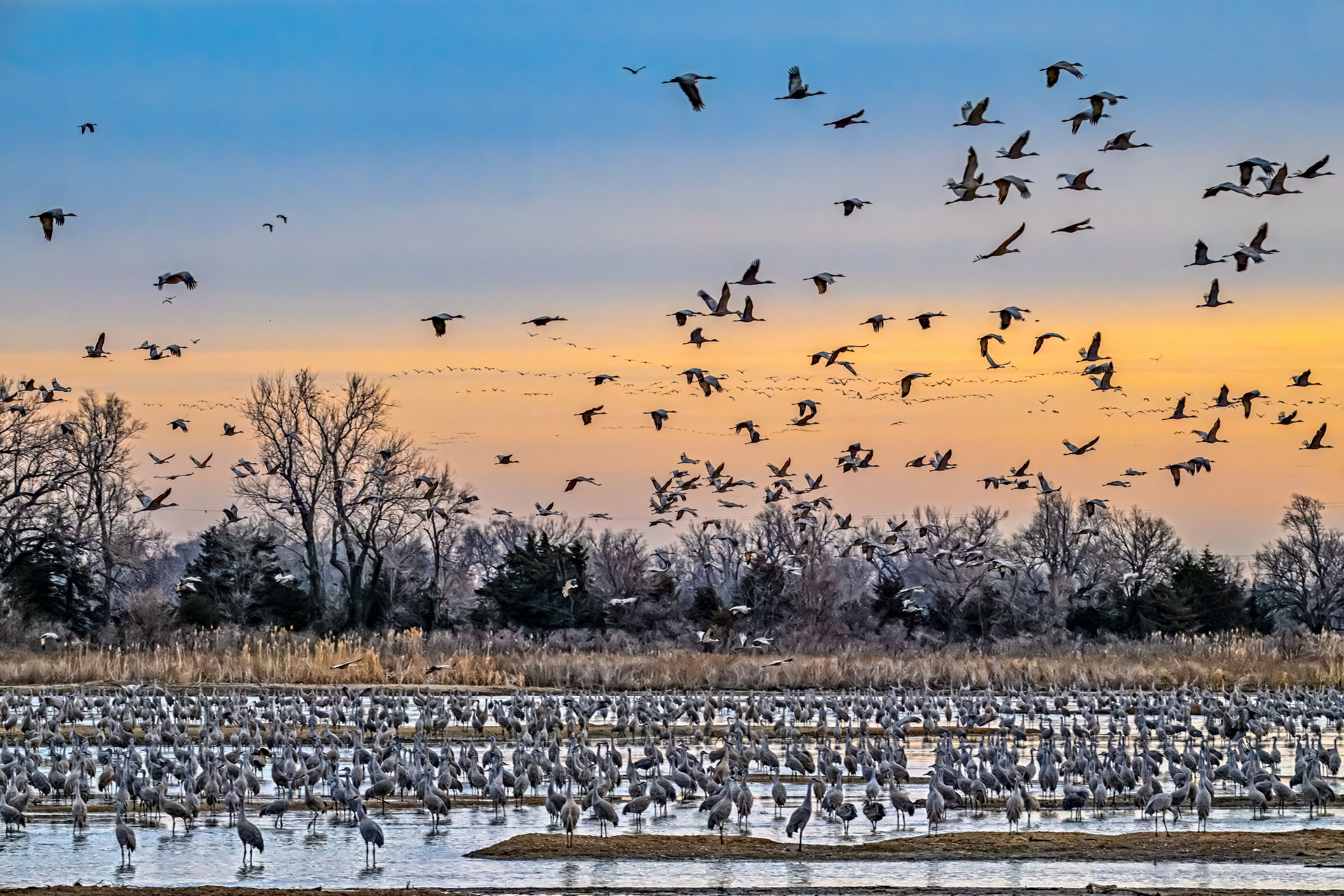
On a mere 80-mile length of the Platte River valley on the Great Plains of central USA, 80 per cent of the world’s sandhill cranes gather each spring. That’s up to a million birds, stopping off on their migration from Mexico, Texas and New Mexico to nest sites in the far north of America and Russia. They arrive in February to feed in the water meadows and surrounding fields by day and sleep in the shallow river waters by night.
During their time in Nebraska the cranes are rebuilding their pair bonds from previous years or finding a new mate if they have lost their life partner. The courtship consists of an elaborate ‘dance’ with head bows, wing displays, leaps into the air and presentation of gifts in the form of stones, twigs and corn cobs thrown into the air.
The adults arrive with their nearly full-grown chicks from the year before, which take the opportunity to find their first mate to pair up with by copying their parents as they do their display dances. By the first week of April the party is over and the birds are gone, responding to warming temperatures to make the final journey to their breeding grounds.
And one world spectacle that has suffered of late…
Zavodovski Island, South Sandwich Islands – chinstrap penguins
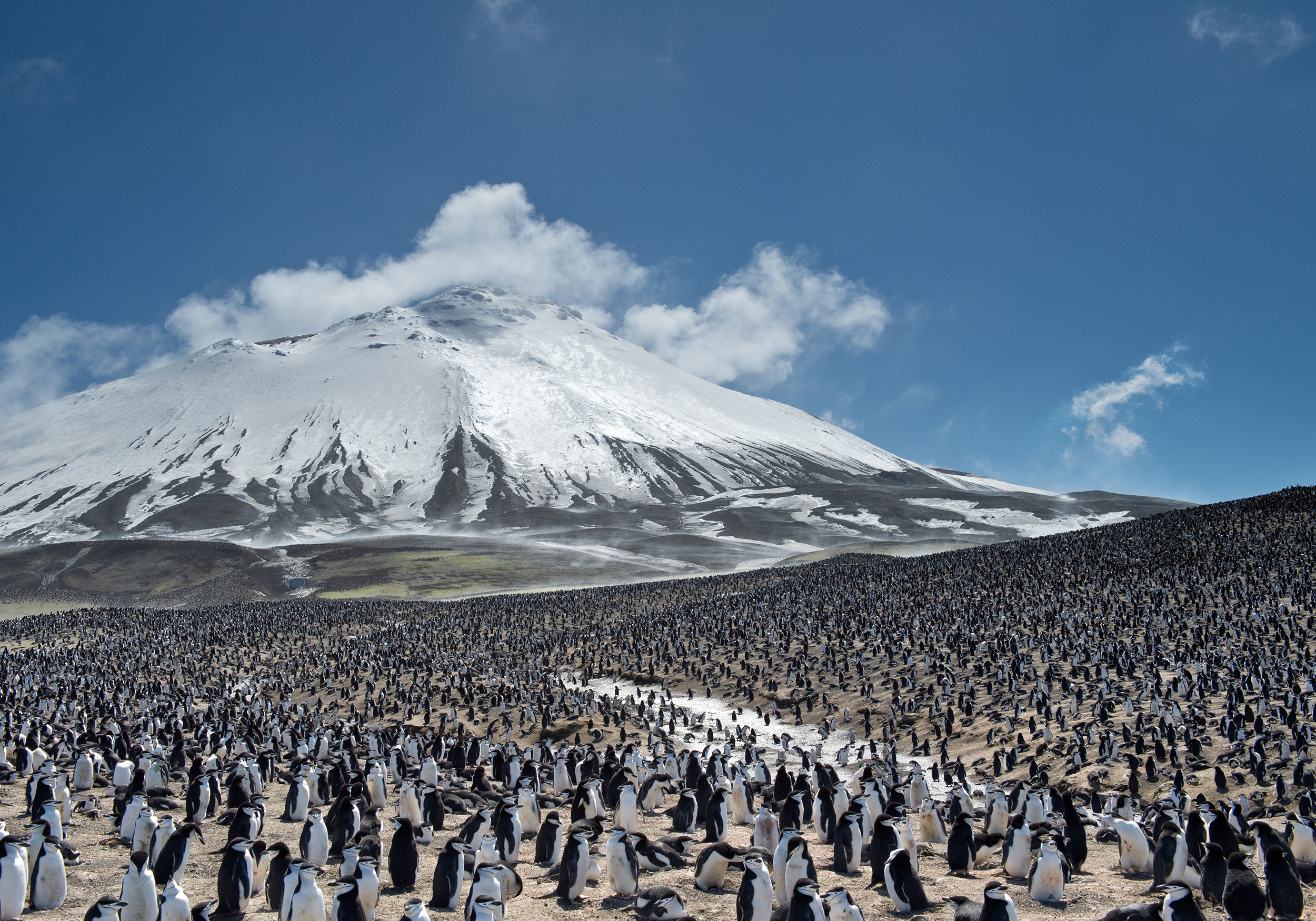
An uninhabited volcanic island near South Georgia in the South Atlantic used to host more than a million chinstrap penguins – a quarter of the world’s population in just one place. However, recently scientists have noted a steep decline in chinstrap numbers and are currently working to find out why.
- Chinstrap penguin guide: where they live, what they eat and key predators
- Amazing new penguin discovered for first time in over 100 years
It was the largest penguin colony on earth, and hopefully will be again in time, but the island is famous not only for the birds but for the ammonia smell from the guano produced by the chinstraps and other seabird inhabitants, which drifts many miles out to sea from the rocky shores. In fact, it’s so odorous that some of the various points of land that project into the sea around the islands have been given the aroma-based names of Stench Point, Pungent Point, Reek Point, Noxious Bluff and Acrid Point. In the centre of the island the volcanic peak has the nickname Mount Asphyxia, indicating just how bad it must get.
To be fair to the birds, volcanic activity in the form of numerous fumaroles steam plumes of sulphur into the air, which can’t help the air quality. Penguins don’t seem to mind, though, as the dwindling chinstraps are joined by sizeable colonies of macaronis and gentoos as well as a dozen different seabird species and Antarctic seals.
top image: Adult black-browed albatross flying over large colony. Steeple Jason Island, Falkland Islands. Credit: Martin Harvey/ Getty Images
Discover more bird stories from around the world:
- “None of us were expecting a hunt." Wildlife watchers in awe as peregrine takes down jay right in front of boat
- Eagle snatches owl and carries it into forest – then something wild happens
- This prehistoric animal lived 150 million years ago – and was a weird mix between dinosaur and bird
- "Long, curved talons can crush the skull and break the spine of large prey – and carcasses too heavy to carry are dismembered where they fall"