
While conducting an invertebrate survey in Jamaica’s Jackson’s Bay Great Cave, researchers stumbled across something unexpected: a species of fish known as Eleotris pisonis.
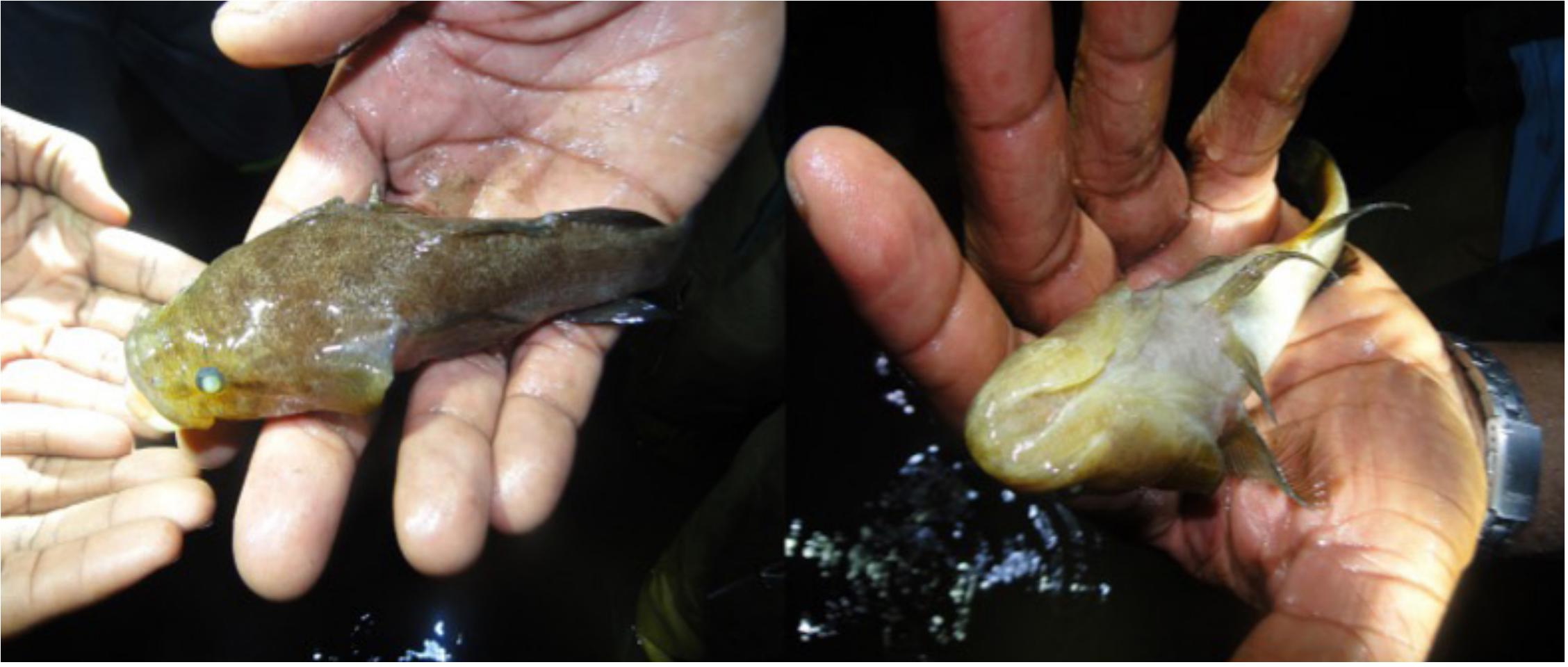
Characterised by its large mouth, opaque eyes and flattened head, the scientists believe this is only the second time the fish has been observed in the cave complex, and the first time it has been photographed.
The findings, published recently in the Caribbean Journal of Science, provide new evidence of caves use by eleotrid fish (a family of largely carnivorous fish more commonly known as sleeper gobies) in Jamaica.
- "We found 20 pairs of wings in an hour.” Secret cameras reveal cause of Jamaica's dismembered bats
- This is the world's largest natural cave – it's wide enough to fly a jumbo jet through
The discovery was made in 2017 by a team of scientists from the University of the West Indies (UWI), Mona, who were visiting Jackson’s Bay Great Cave to find out more about its invertebrate fauna.
The complex is the second-largest cave system in Jamaica and consists of several kilometres of chambers and tunnels, some of which are flooded.
The team – which consisted of Damion Whyte, Gavin Campbell, Taneisha Barrett and Eric Garraway – descended into the cave to reach a chamber known as the Water Cave, where they found pools of clear, brackish water, with traces of bat guano and other debris floating on the surface.
And that’s when they spotted the fish. In the dim light, which crept in from the entrance above, the team spent some time trying to corral the roughly 13cm-long animal. Eventually, they caught it by hand, quickly photographed it and then released it back where they found it. In the new study, Whyte and colleagues identify the species as E. pisonis.
- “Once they descend into the cave, they trudge 150m in the pitch black, feeling around with their trunks.” 9 weird animals found in caves
- Did you know fish can do maths, walk and fly ? 15 fish facts that leave you scratching your head
- Climbers descend 60m vertical shaft in Greece – and find bear scratch marks at the bottom
- There's a weird fish in Washington with a huge hole in its head. Scientists think they've figured out why
Jamaican caves host a range of endemic animals, including numerous invertebrates and bats. Cave-dwelling fish are also known to live in these subterranean worlds; however, few modern records, particularly with photographic documentation, have been published.
“Previous expeditions to the cave complex [Jackson’s Bay Great Cave] documented the presence of unidentified fishes, including a possible eleotrid,” say the authors, but “this observation represents the first photographed record of the fish from the cave.”
The researchers suggest that the fish may feed on other animals that live in the cave, such as amphipods (shrimp-like crustaceans), mysid shrimps and other cave-associated invertebrates.
“There remains considerable opportunity for further study of Jamaican cave faunas, particularly its poorly known aquatic fauna,” the authors conclude.
Find out more about the study, published in the Caribbean Journal of Science.
More wildlife stories from around the world
- Camera traps film predators descending on cave filled with 40,000 bats. What happens next is staggering
- Scientists went into an ancient cave in New Zealand and found a 'lost world' hiding within
- ‘Lost’ animal caught in fishing net in Papua New Guinea. It hasn't been seen by scientists for more than 40 years
- When a mountain collapsed in Mexico, light fell upon an underground lake. What happened next was remarkable
Top image: Jackson’s Bay Great Cave. Credit: Damion Whyte | Whyte et al., Caribbean Journal of Science 2026, under Creative Commons license CC BY-NC-ND 4.0 license


