
It’s widely known that gardens, with their mix of shrubs, trees, grasses, flowers and ponds, mimic the woodland edge, and therefore attract the same species you would naturally find in these areas. But what if a garden backs on to woodland?
- This fearsome ocean crawler slurps prey like a smoothie, breathes through its legs and can grow as big as a cat
- At 12cm it's the world's largest, most gruesome bug – and can suck the life out of prey many times its size, like drinking one giant protein smoothie
Outside my friend’s back door is a copse of trees surrounded by grasses, shrubs and bracken. In spring, it’s carpeted with bluebells as far as the eye can see, and in a mast year, the acorns fall to the ground
like gunshots. On summer nights, it’s alive with the flashing calls of glow-worms.
These creatures aren’t worms at all, but beetles, though I suppose the wingless female could be mistaken for a worm. There are three species in Britain, in the family Lampyridae (from ‘shining’ in Greek), but you’re likely to see only one: Lampyris noctiluca.
- Firefly vs glow-worm: what exactly is the difference between these two dazzling creatures?
- "Their pincer-like mouth parts inject a venom that paralyses and liquifies their hapless victims." 10 gruesome animals that liquidise their prey before eating
The females can’t fly, so climb up grass stems and use bioluminescence to indicate their position to the males.
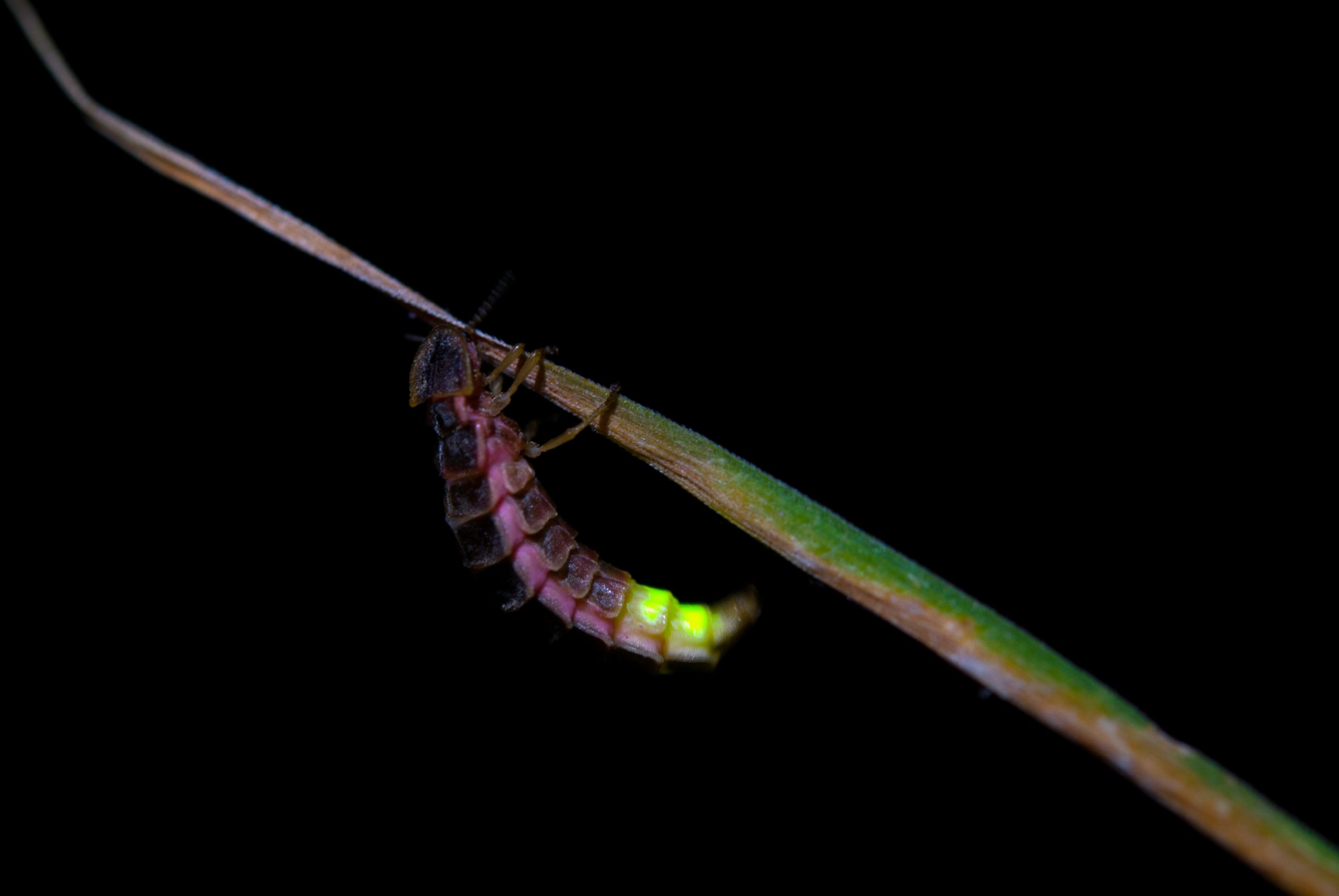
After mating, they can lay up to 100 eggs on the ground. These hatch into larvae that resemble the adult female, but sport a series of orange-red dots on the side of the body.
All of their feeding is undertaken during this larval stage, because the adults don’t have mouthparts.
The larvae gorge voraciously on slugs and snails, injecting them with paralysing toxins that break down the tissues, before sucking up their digested remains. They can eat up to 200 times their bodyweight in this way, and feed for two years before finally reaching adulthood. I like to watch the glowing green lights and think of them as powered by slug and snail juice.
It’s estimated that glow-worm numbers have fallen by 75 per cent in the past 20 years, though the industrial revolution dealt the first, massive blow.
These beetles are commemorated as one of the animals that helped in World War I, enabling soldiers to study maps in the dark. It must have taken a fair few to provide enough light to do this, and I can’t imagine such abundance now.
The decline comes from a host of reasons, not least light pollution, which is thought to disrupt glow-worms’ efforts to mate, due to the males not being able to see the females’ light. Habitat loss is also significant as the females can’t fly. If their home is destroyed or compromised in some way – lawn mowing, use of pesticides or urbanisation – they’ll struggle to move on.
Despite this, glow-worms can be found in fairly urban areas, as long as there are dark skies, a good mix of woodland and grassland, and a plentiful supply of slugs and snails. It always makes me wonder why they aren’t more common in gardens, which mimic the very habitats these little beetles evolved to live in.
In London, they’re found on railway embankments and in churchyards and meadows, though these areas need to stay uncut, or at least cut with the sensitive needs of both adults and larvae in mind.
And so should our gardens: remember, the larvae live for two years and the adults need to climb grasses to emit their glow; a mown lawn, or a meadow that’s completely cut infrequently, won’t sustain them.
If you live near an established colony, do go and see them – the best time is June and July, but I have spotted them in early August. Visit the woodland edge during a new moon and avoid using torchlight, or join a local glow-worm walk.
If you live near suitable habitat, why not open up your garden to them? Trees, shrubs, long grass and logs to hibernate under are all that’s needed, plus an absence of garden lights. It could be really wonderful.
- When a solar eclipse cast darkness over Lake Erie, this happened to the birds that live there
- “It causes excruciating ‘whole-body’ pain that lasts for weeks in humans.” 9 dangerous animals armed with deadly venomous spines
- It looks half-zebra, half-giraffe and has a 50cm tongue that can lick its own ears. Meet one of the world's most confusing animals.


