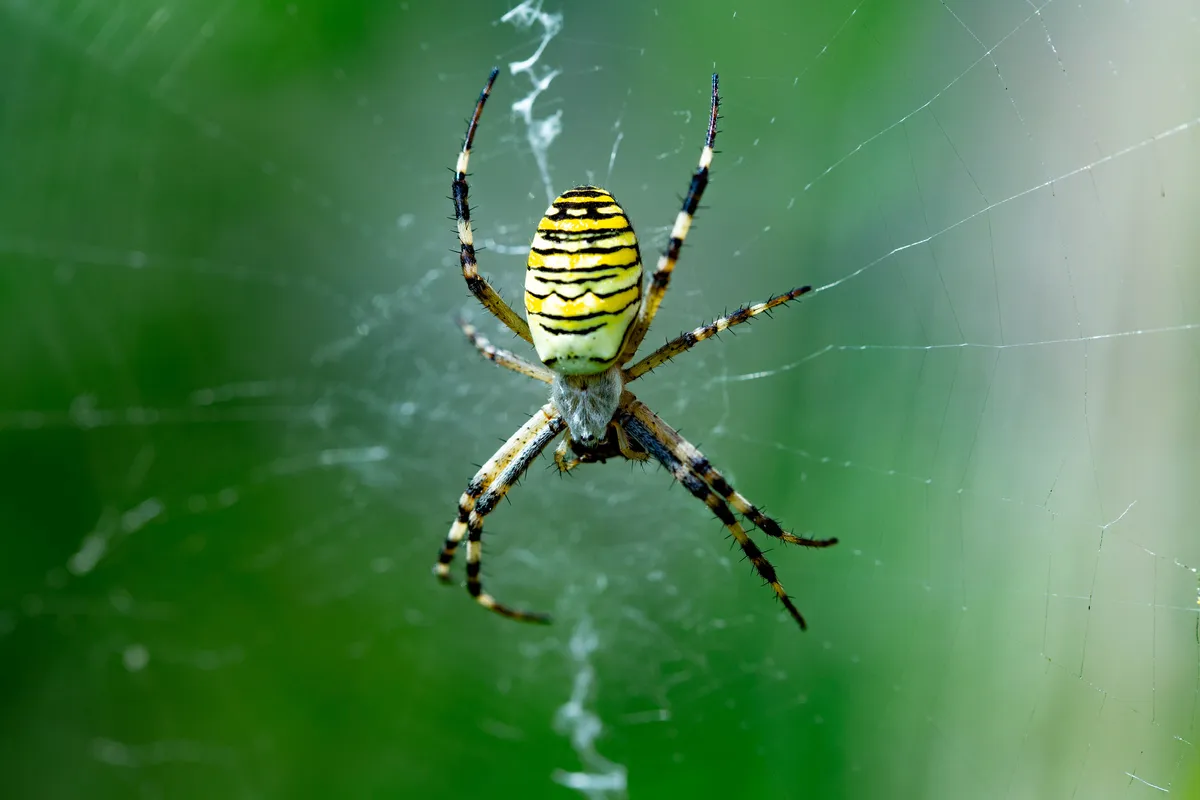
Findings from several institutions in South America, published in the journal Zoosystematics and Evolution, describe a new species of crevice weaver spider named Pikelinia floydmuraria, which could be useful in efforts to control pests in urban settings.
The spider’s name pays tribute to the legendary band Pink Floyd (floyd-) and both references its habitat and gives a subtle nod to the famous Pink Floyd album The Wall (-muraria, from Latin word for ‘wall’).
This spider is small but mighty, measuring at only 3-4 millimetres in length (compare this to the common house spider, Parasteatoda tepidariorum, which averages 4-8mm).
Scientists have observed Pikelinia floydmuraria spiders preying on ants up to six times the size of their front body segment. This behaviour was particularly pronounced in the population observed in the city of Ibagué.
- New species! Tiny jumping spider found wandering around a university campus in England
- How an Australian spider uses its web as a fishing net
This species also feeds on flies, mosquitos, and beetles. It largely favours urban environments, where observed concentrations reached 20-30 individuals per square metre. It's a synanthropic spider, meaning it's a species that lives in close association with humans and benefits from human-made habitats like homes, sheds and gardens.

And benefit it does – it employs a rather smart strategy to capture its prey. It weaves its webs near artificial light sources, toward which many insects are drawn.
There is still much to learn about the Pink Floyd spider: it's only the second recorded Pikelinia species in Colombia, and researchers have emphasised the need for more studies to better understand its evolutionary background, trace its geographic origins, and measure the full impact on regulating urban pest populations.
Top image: Pikelinia floydmuraria. Credit: Julio C. González-Gómez