
Research published in the journal Current Biology reveals a hidden structure inside one of the animal kingdom’s most complex acoustic displays: the songs of male humpback whales aren’t sung uniformly, but rather choreographed to match the whale’s dive, phase by phase.
- This haunting sound was captured near Bermuda in 1949. It's the oldest known whale song recording
- "Balloons don’t get much bigger than a gas-filled whale": Just why do whales explode?
Humpback song has fascinated researchers for decades – haunting, elaborate and audible for miles deep underwater. But almost all of that research has focused on what the songs sound like. Far less has been known about what the whale is physically doing while it sings.
The study (conducted by Julia Zeh, a PhD graduate at Syracuse University, New York) closes this gap and reveals a previously unknown connection – specific songs appear to be tied to specific parts of the whale’s dive.
What’s in a song
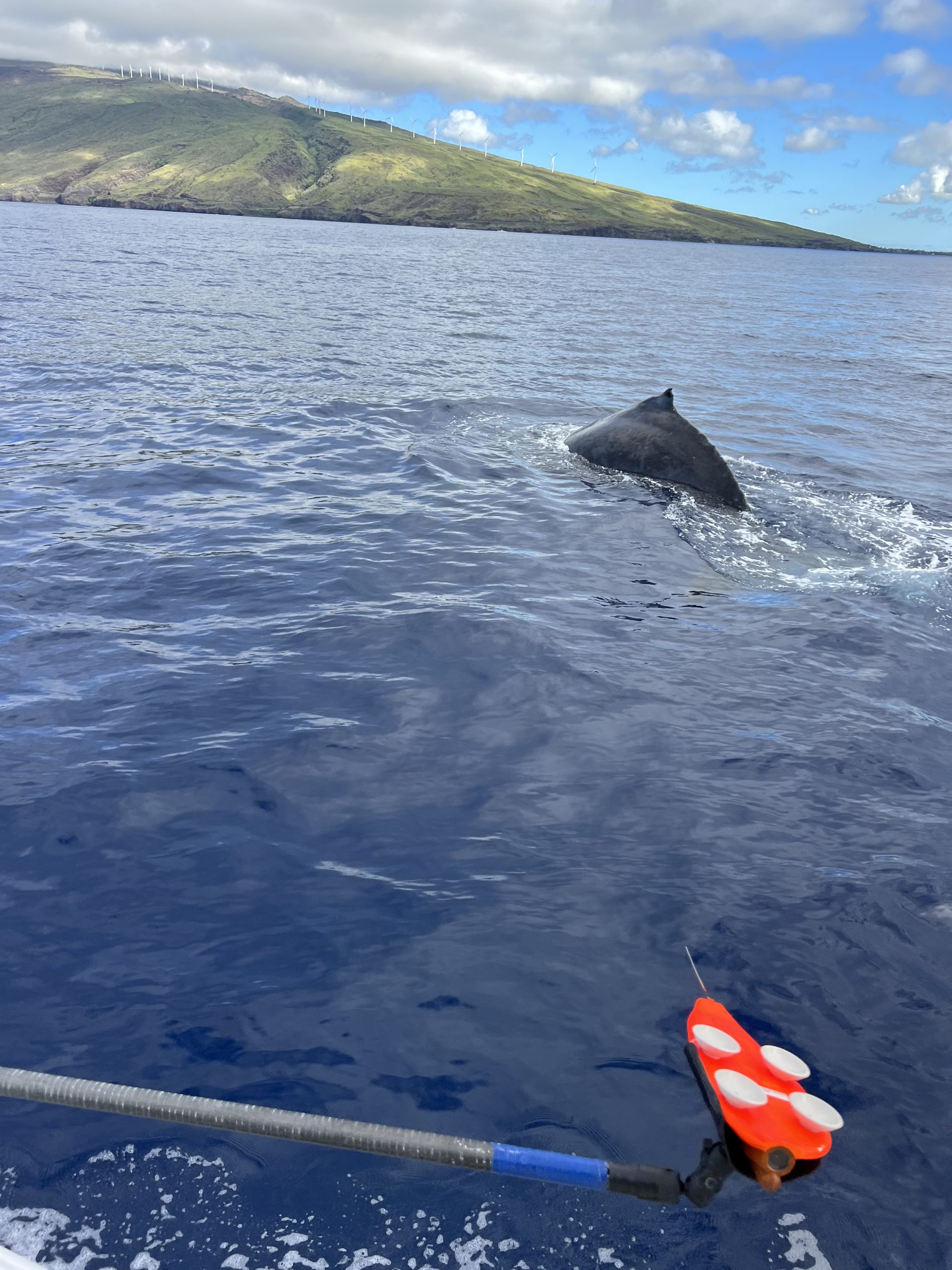
The data was collected between 2018 and 2024 from humpback whale breeding grounds off the coast of Maui, Hawai’i. Recording tags were attached to 16 whales via non-invasive suction cups, allowing the scientists to combine movement and acoustic data.
56 hours of continuous sound and movement data were analysed. The longest complete song session lasted for a whopping 16.5 hours, while the shortest was 1.5 hours.
- Whale shark mating strategy involves aggressively stalking and biting the female, rare footage reveals - but does she respond?
- What's the fastest whale in the world? Clue - it can swim at 37kph, despite weighing a hefty 70 tonnes
Humpback whale songs follow a distinct hierarchical structure. Units (the shortest sounds) combine into phrases, which repeat in sequence to form themes, which then form a song. Singing dives also follow a pattern: a descent phase, a bottom phase, an ascent phase and a surface interval to breathe.
What Zeh’s team found is that these two structures line up. Certain themes consistently show up during ascent and descent, and others at the bottom of the dive. This pattern held up across different whales and years. In contrast, the songs performed at greater depths demonstrated more variation.
The performance
These different levels of variability across dive phases point to two different forces shaping the song: during descent and ascent, a whale is constrained by physical demands like managing oxygen and buoyancy while singing. At the bottom of the dive, where the whale is more or less stationary, coasting at a stable depth, it’s free to improvise.
Zeh and her team think that’s likely the part of the song shaped by sexual selection – a way of signalling fitness to potential mates and rivals.
“This gives us direction for which parts of the song to investigate if we’re interested in variation,” said Zeh.
- A moment of bliss: heartwarming drone footage captures sperm whale family playing in Mediterranean Sea
- Scientists thought this whale could only live for 70 years – turns out it's double that. Here's how they made the discovery
It’s not certain whether the same patterns apply to humpback populations outside Hawai’i. Zeh noted that while she would expect similar constraints to apply across different populations, previously documented differences in song evolution between hemispheres pose the possibility of different song structures. Testing would mean collecting comparable data from singing whales on breeding grounds around the world.
Understanding how whale song relates to movement could allow researchers to determine a whale’s depth or position directly from a recording. This in turn could help in detecting when whales are disturbed by human activity, such as ship traffic or ocean noise.
Read the full findings here.
- "It had been completely severed off." Shocked scientists film humpback whale with no tail swimming down Washington coast
- "Raw and brutal": whale watchers look on astonished as orcas kill humpback whale in South Africa
Top image credit: Sean Steininger/Getty Images


