
With around 7,000 species of lizards worldwide, they vary hugely in size and shape from tiny geckos to massive monitor lizards. The groupings of lizards are Iguania - iguanas, agamids and chameleons - Gekkota - geckos and pygopods - Anguimorpha - monitor lizards and more.
By far and away the largest living lizard on the planet is the Komodo Dragon (Varanus komodensis), but there are lots of other huge lizards that you definitely wouldn't want to meet in the middle of a forest (or sea!) at night.
- “There’s danger in this urban paradise.” Huge carnivorous lizards stalk this popular city park alongside humans
- "An attack can be fatal, due to their venom and bacteria..." The 3 deadliest, most lethal lizards the planet
Komodo dragon (Varanus komodoensis)

Originating from the Indonesian islands, this apex predator is the undisputed heavyweight champion of the lizard world. Verified specimens have reached up to 3.13m in length and weighed a staggering 166kg.
- 7 weirdest lizards on the planet: These reptiles are so strange they could be from a sci-fi movie – except every one of them is 100% real
- It has iron-coated razor-sharp teeth, weighs the same as a beer keg and delivers its deadly venom by raking its teeth through its prey’s flesh
- 10 brutal photos of the largest lizard on Earth that secretes enough venom to kill a human and has iron-tipped teeth
Asian water monitor (Varanus salvator)

Native to South and Southeast Asia, these excellent swimmers can grow up to three metres in length. They are sleek, opportunistic hunters known for their intelligence and varied diet of fish, rodents and birds.
Crocodile monitor (Varanus salvadorii)

Hailing from New Guinea, this monitor is famous for having one of the longest tails of any lizard. Including its exceptionally long tail, it can sometimes edge out the Asian water monitor in total length, occasionally exceeding 2.4 metres.
- Why this lizard sticks its tongue out at predators
- "It can run across water at speeds of 5 feet per second. That's pretty nippy..." 9 weirdest reptiles in the world, including a devil with two heads
Perentie (Varanus giganteus)

As Australia's largest native lizard, the perentie can grow up to 2.5 metres in length. Despite its formidable size, this desert dweller is incredibly fast and is known to be a skilled climber.
Nile monitor (Varanus niloticus)
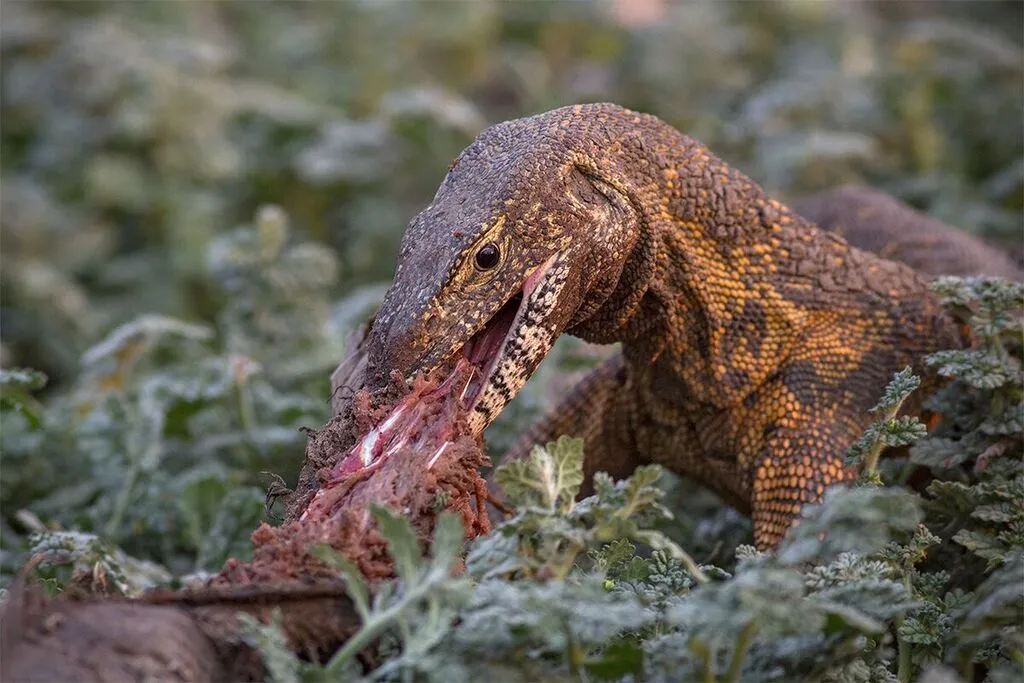
Found across the African continent, the Nile monitor is an aggressive and adaptable semi-aquatic lizard. They can reach robust lengths of up to 2.4 metres and are excellent swimmers and tree climbers.
Lace monitor (Varanus varius)
BBC Creative via Getty
Also native to Australia, this massive goanna can reach lengths of up to two metres. They are heavily carnivorous scavengers that are particularly well-known for their sharp, bacteria-laden bite.
Nothern caiman lizard (Dracaena guianensis) and Argentine Tegu (Salvator merianae)
Creatas Video+
These South American giants are highly robust, with the Argentine black and white tegu being the largest of the tegu family. They can reach lengths of up to 1.2m and are known for their high intelligence.
Green iguana (Iguana iguana)
BBC Creative
The largest lizard found in the Americas, this iconic, herbivorous reptile can reach lengths of up to two metres, though a large portion of that is made up of its long, whip-like tail.
Galápagos marine iguana (Amblyrhynchus cristatus)
The only sea-going lizard in the world, this unique Galápagos endemic spends its time foraging for algae in the ocean. They can grow up to 1.4 metres in length.
Blue iguana (Cyclura lewisi)
Oxford Scientific Video
A critically endangered inhabitant of Grand Cayman, this heavy, rock-dwelling iguana can weigh up to 14kg and measure around 1.5 metres long.


