
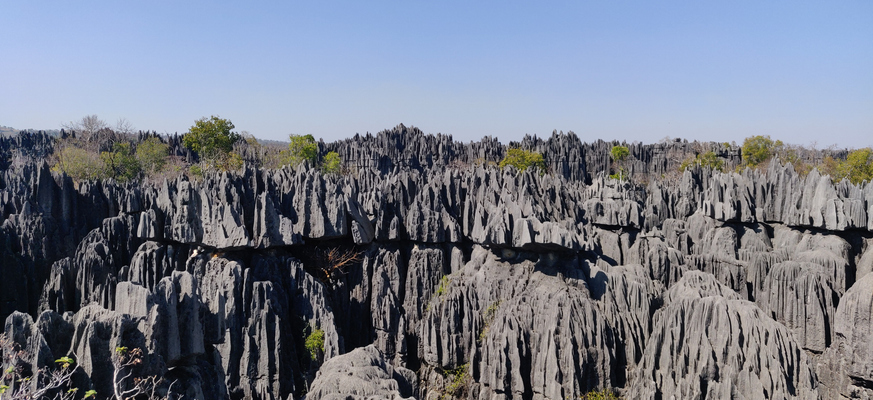
Like a weird alien planet, the landscape on the Bemaraha Plateau in Madagascar is a strange and inhospitable place.
Within a protected UNESCO world heritage site on the island of Madagascar off the coast of East Africa, Tsingy de Bemaraha National Park sits alongside the Tsingy de Bemaraha Strict Nature Reserve. The national park makes up around 723 km2, while the strict nature reserve is around 853 km2, but it's far from easy to find a route through. The name says it all - tsingy is often translated as 'where one cannot walk barefoot' in Malagasy (the Madagascan language).
What is the Tsingy de Bemaraha National Park?
Characterised by rare geological rock formations the Tsingy de Bemaraha make up a national park and strict nature reserve in Madagascar. The landscape is thought to have begun shaping around 200 million years ago, when limestone plateaus formed and were eroded over time to create razor-sharp karst rock shards that can reach to 30 metres. The area is also filled with subterranean streams and rivers, formed from water that can't settle on the craggy rocks. Caves, deep crevasses and canyons all exist underneath the rocks with underwater rivers.
Deforestation is a huge issue in Madagascar. The island is thought to be losing 200,000 hectares (around 770 square miles) of its natural areas each year to illegal logging, agriculture and charcoal production. While only 10 per cent of Madagascar's original forests remain due to human deforestation, the tsingy forests are a stronghold of several endemic species.
What lives in the Tsingy de Bemaraha National Park?
The inhospitable nature of the terrain means that it has been mostly undisturbed by human intervention, so there are many endemic species that make the tsingy their home. Around 430 species of plants have been recorded there and at least 42 species of mammal, 35 of which are endemic to the island. The limestone karst forests feature trees such as Diospyros perrieri and the Madagascar wild banana (Ensete perrieri).
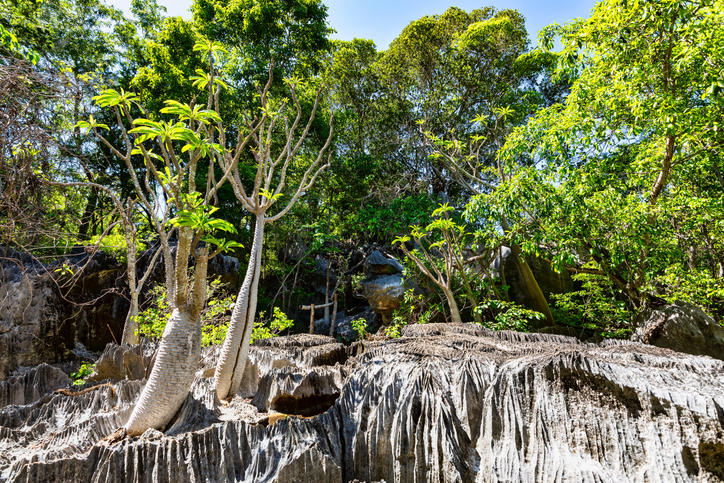
Succulents are particularly at home on the limestone rocks of the tsingy, with many found nowhere else on Earth. One of the most well-known of succulents found here is the Pachypodium lamerei or Madagascan palm - although it isn't actually a palm.
- There’s a cave in Kentucky that’s 426 miles long – and fish-eating spiders lurk in it
- It's a staggering 300 metres underground, features amazing 11-metre-tall crystals – and has a deadly 90% humidity level
Decken's sifaka lemur
While most animals - especially humans - would find navigating their way through the stony forests exceptionally difficult, lemurs - which are only found in the wild in Madagascar - barely blink an eye at the sharp rocks. Many lemurs make their home in the karst forests of Tsingy de Bemaraha, but the critically endangered Von der Decken's sifaka lemur (Propithecus deckenii) is particularly adept at springing from pinnacle to pinnacle.
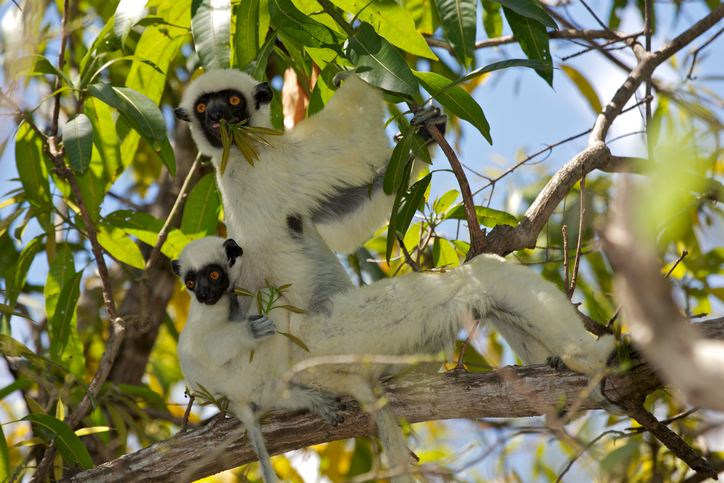
Considered critically endangered by the IUCN, the Decken sifaka lemur lives in the western part of the island, in the deciduous forests and the tsingy. They use their remarkable agility to spring from the sharp tsingy rocks with ease and grace. Smaller than most lemurs, the Decken's sifaka lemurs are usually around 18 inches long, with tails that can be as long again. They are so springy, they have been known to cover three metres or more in one bound and their hook-shaped hands and big toes mean they find it easy to climb. Decken's sifaka lemurs are vital to the area's ecosystem, as they transport seeds and nutrients throughout the rock formation and help to regenerate the forest and plant growth of the area.
Big-headed turtle
This freshwater turtle is found in the western lakes and slow moving rivers of western Madagascar - including in the bodies of water underneath the tsingy rock formations. Critically endangered, the big-headed turtle (Erymnochelys madagascariensis) is one of the world's most threatened due to it being hunted for its meat. Wild populations have depleted by around 70 per cent in the last 100 years.
The turtle's head is, as its name suggests, particularly big and so cannot retract fully into its shell.
Big headed gecko
Another tsingy-based animal with a name that suggests a large cranium are big-headed geckos, such as Paroedura tanjaka. Cave-dwelling during the day, these geckos can be found in the karst forests at night and reach to around 18cm. This gecko is endangered and has a very limited range - currently it is only known to reside in the tsingy forests.
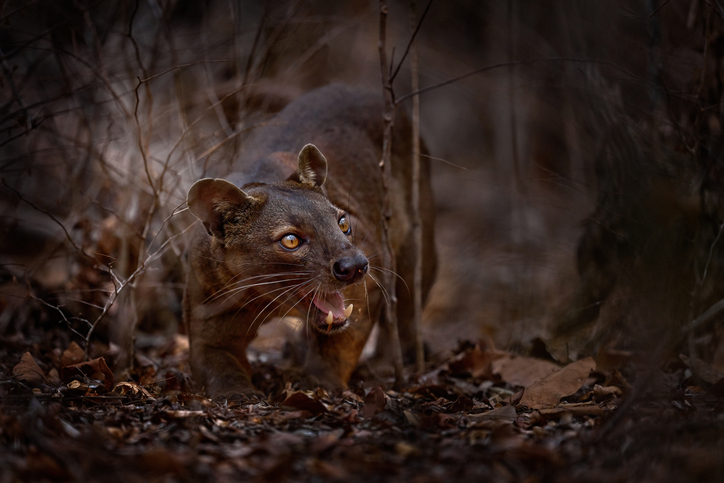
One of Madagascar's most intriguing mammals and its apex predator, the rare Fossa (Cryptoprocta ferox), has also has been seen in the tsingy. A relative of the mongoose, it looks more like a weird small cat, or dog. It has semi-retractable claws and is between 65-85cm long, without their tail, with their tail measuring an extra 60-80cm. They weigh between 6-9kg.


