
Whether they inhabit the world’s oceans, jungles or rivers, there are plenty of deadly animals that are more unusual than average.
From species that can inflict harm when they’re no longer living, to the world’s only venomous primate, these creatures are certainly out of the ordinary. All can do some serious damage to humans – and in some cases, they can kill.
- The deadliest animals to humans: Discover nature’s top – most lethal – killers
- "Death can result very quickly" - Discover the world's most venomous animals
Weirdest deadly animals
Tiger puffer

The pufferfish deserves a spot on this list as it’s capable of killing a human even when it’s no longer alive.
Fugu is a dish prepared using pufferfish – often the tiger puffer – which has lethal levels of the toxin tetrodotoxin (TTX). Eating incorrectly prepared pufferfish is capable of killing a human in as little as 17 minutes, and there’s no known antidote for TTX poisoning.
- "Ingestion can lead to liver failure, kidney failure, encephalopathy, and death" – The deadliest poisons found in nature
- Why are pufferfish so deadly poisonous - able to kill a human - and how on earth do they avoid poisoning themselves?
Australian box jellyfish

This jellyfish is revered for its venomous sting, which comes from its 3-metre-long tentacles. When touched, the tentacles release microscopic poison-filled darts.
It’s considered the most venomous creature in the world, and one of the deadliest animals in the sea.
- "Death can come within five minutes": Discover the deadliest, most venomous, jellyfish on the planet
- It has 24 eyes and is one of the world's deadliest animals, with a sting so venomous it can kill a human in minutes
Blue-lined octopus
Like blue-ringed octopuses, blue-lined octopuses are highly venomous. They contain high levels of tetrodotoxin (TTX), which is the same toxin that makes pufferfish so venomous.
But there’s another surprising use for its venom: during sex. Male blue-lined octopuses inject females with venom to avoid being cannibalised during reproduction. The females turn pale and stop breathing, but they don’t die – and the males live another day.
- This deadly female octopus plans to eat her partner after sex. But the male has a defensive trick in his tentacles
- These are the deadliest octopuses in the world – and one has enough venom to kill dozens of humans within minutes
Slow loris

There aren’t many venomous mammals in the world, but the slow loris is a primate with a venomous bite.
The slow loris bolsters this bite with additional toxins absorbed from its food. The poison oozes from a gland (called the brachial gland) located near the loris’ elbows, which is then transferred to its mouth by licking. A slow loris will also comb its venom through its offspring’s hair to make them unpalatable to predators.
- How one of the world's cutest creatures packs a killer bite: Meet the endearing, yet deadly, slow loris
- A cute but deadly mammal in Indonesia is about to be saved from extinction – here’s how it’s being done
Portuguese man o’war
The Portuguese man o’ war is the odd one out on this list as it’s not one animal, but four. All are genetically identical and live as a colony, with each individual performing a specific function.
Its tentacles can grow up to 50 metres long (the length of a full-size Olympic swimming pool) and are made up of barbed tubes that deliver venom. It’s rarely deadly to humans but can still cause painful welts – even after it has washed ashore).
Cone snail

Snails might not be renowned for being deadly, but the cone snail is a highly venomous sea snail.
One species is known as the cigarette snail, as it’s said that if you’re stung by one, you have time for at least one more smoke before you die. They’ll potentially unleash a dose of venom if you tread on one.
- It might be slow but don't be fooled as this is one of the world's deadliest snipers, causing paralysis, necrosis, coma, respiratory failure and death in humans
- World's deadliest sea creatures: Meet the most dangerous animals in the ocean
Platypus

The platypus is an unusual creature for many reasons: it lays eggs; glows in the dark and the females ‘sweat’ milk to feed offspring.
But the males also possess a unique defence mechanism – venomous ankle spurs. While it isn’t deadly to humans, a strike can still paralyse or kill smaller animals, including dogs. They’re thought to be used while sparring for dominance during the mating season.
Cane toad
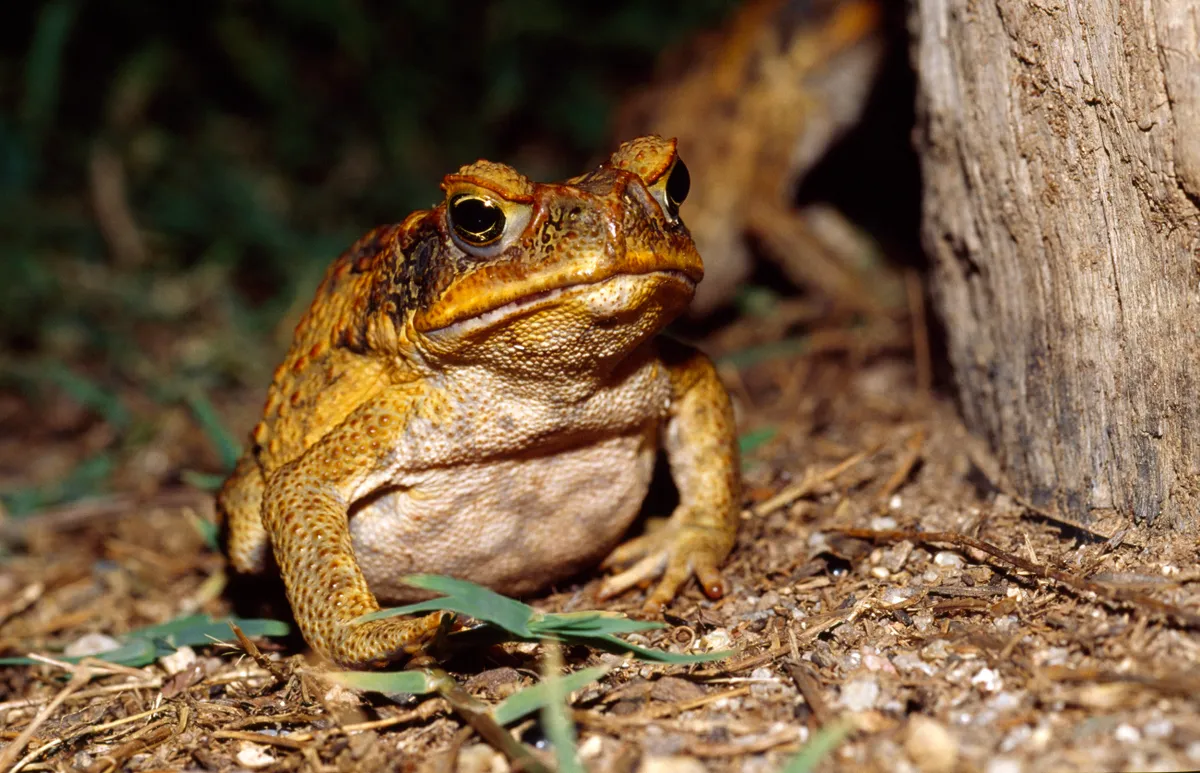
Cane toads are considered one of the world’s most destructive species, after being introduced as a biological control for crop growing.
These creatures have glands on their shoulders which release a milky-white toxin (called bufotoxin) when the cane toad feels threatened.
The toads are toxic at all stages of life, from eggs to adults.


