Even now, much remains unknown about the wildlife of the Congo Basin, and huge parts of the forest have no roads or trails save for the paths made by forest elephants. Legends still abound of mythical dinosaur-like creatures living deep in unexplored corners.
- Epic expedition through Congo's swamp forests reveals “unexpected” find deep beneath the ground
- Researchers put cameras in the trees of the second largest rainforest in the world. Here’s what they found
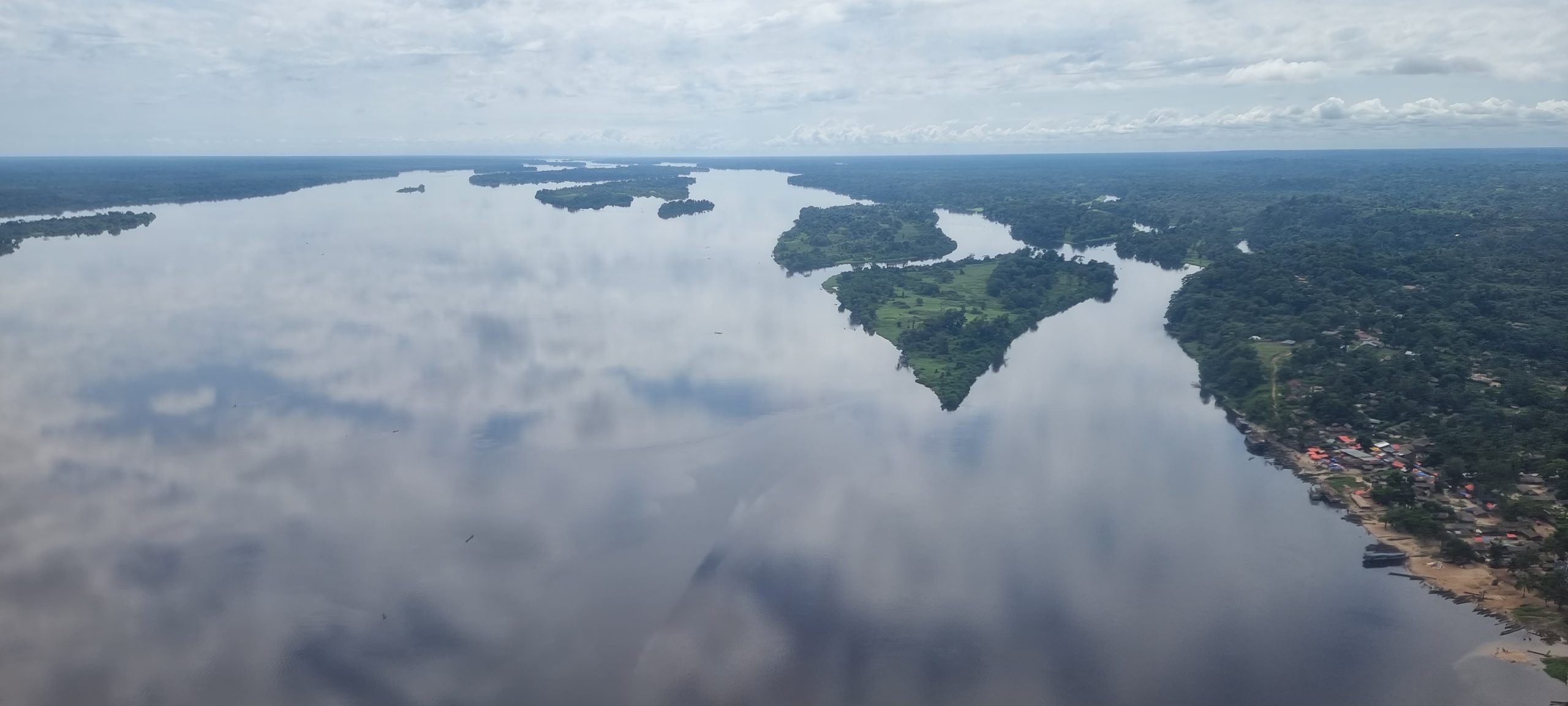
When Portuguese explorers first discovered the mangrove-lined mouth of the Congo River in 1482, they thought it would lead to riches. But very soon they found their way upstream thwarted by immense rapids, some of the most dangerous river waters in the world.
Only later, in 1874-77, would the scale of the Congo Basin – the river and its tributaries - become apparent when explorer Henry Morgan Stanley spent 999 days travelling from east Africa mapping the source of the Congo to the sea.
The Congo Basin drains 3.68 million square kilometres and, after the Amazon, is the second largest tropical forest and river network in the world. The entire Basin comprises much of the Democratic Republic of the Congo (DR Congo), the Republic of the Congo, parts of Cameroon, the Central African Republic, Rwanda, Burundi, Tanzania, Zambia and Angola.
It is made up of tropical rainforest, savannahs and even giant heather dominated landscapes, while on the Atlantic coast lie the world's tallest mangrove swamps at over 60m high.
As recently as 2017, a vast peat swamp forest complex the size of the UK was discovered within the Basin. Known as Cuvette Centrale, it is thought to store some 30 billion tonnes of carbon. The whole Congo Basin is a vital carbon store, offsetting some of the world's fossil fuel emissions.
What is the climate like in the Congo River Basin?
The climate is hot and humid and there are two major rainy seasons, from March to May and September to November, making it one of the wettest places on the planet. Total rainfall averages at 1.5m a year with up to 10m a year near Mount Cameroon, one of the highest peaks in central Africa.
The sheer size and density of the forest – there can be 500 trees per acre – means that it generates its own weather. Trees draw water from soil and it evaporates from the leaves on such a scale that it creates low-hanging cloud.
It is estimated the each hectare of forest generates 190,000 litres of water a year as vapour. And this doesn't just fall as rain within the basin but also irrigates much of the sub-Saharan Sahel region as far east as the Ethiopian highlands.
What wildlife lives in the Congo River Basin?
Few places on Earth have as great a diversity of wildlife as the Congo River Basin – and much is still to be discovered. For instance, there are at least 10,000 plant species, a third of which are endemic to the Congo; over 1000 bird species, 900 butterflies and 280 reptiles, including the 5m long rock pythons that can catch and devour red river hogs, impalas and even spotted hyenas whole.
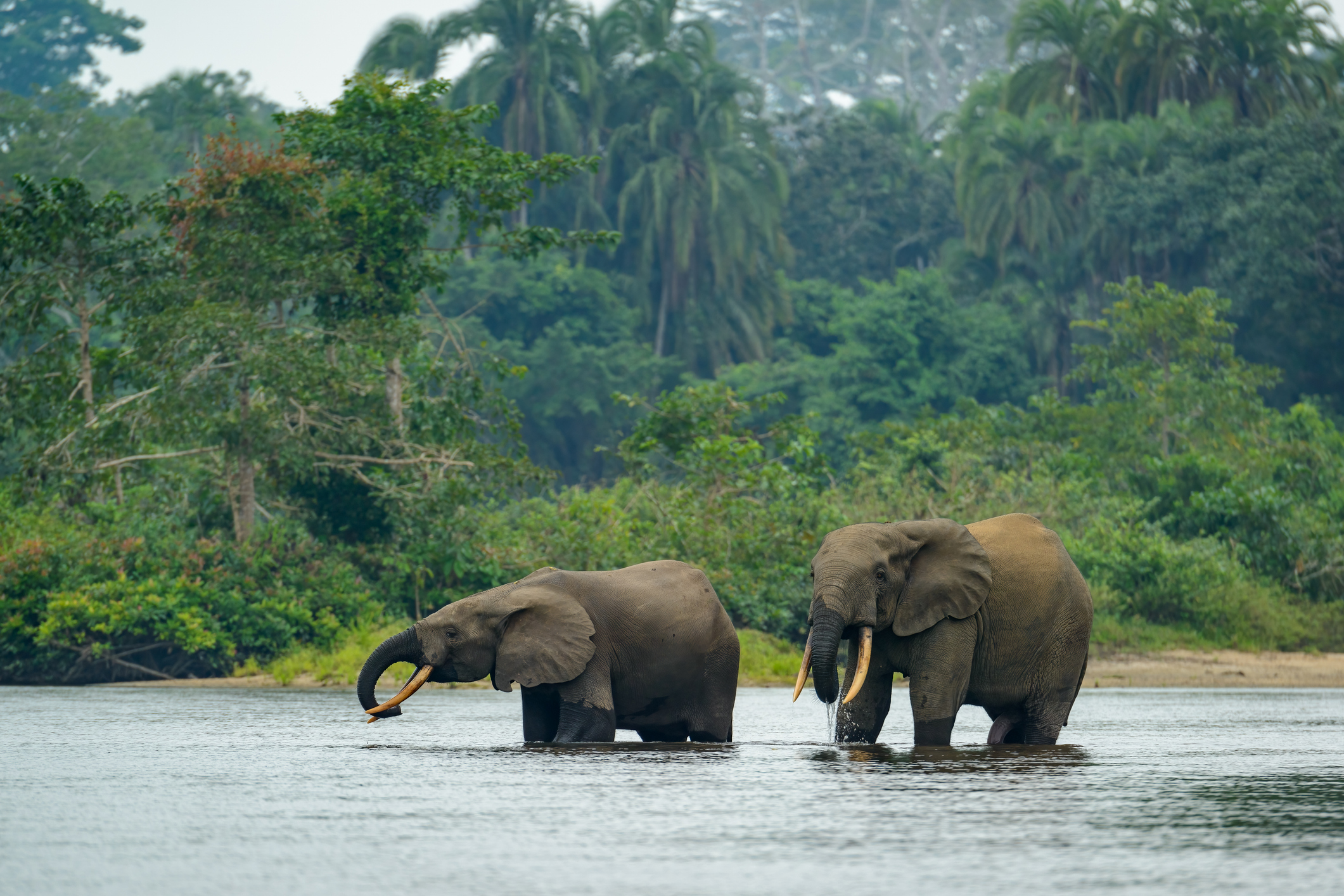
The pythons are the largest predators in the forest but the largest animals are the African forest elephants. Averaging 2.5m height at the shoulder, they are dwarfed by their larger savannah cousins, which can reach 4m. But a comparatively diminutive size is vital for navigating the dense foliage.
Like all elephants, African forest elephants are sociable and a group can create impressive trails and clearings in the forest, which then provides habitat for other organisms. Numbers have declined due to poaching and there are thought to be just 30,000 forest elephants left in the wild.
Other notable social mammals are the apes. Lowland gorillas, chimpanzees and bonobos inhabit the Congo Basin and have been much studied by scientists. Congo chimpanzees show a remarkable aptitude for making and using tools. For example, adult chimps fashion probes from sticks for poking into the nests of stingless bees to get at honey and tasty larvae. Young chimps much watch the adults closely to learn the skill.
And what about those strange dinosaur-creatures? Reports and rumours of the mokele-mbembe have abounded for centuries. This giant creature is thought to resemble one of the long-necked herbivorous dinosaurs and its name means “one who stops rivers”. Despite many scientific expeditions to the little known area of Lake Tele where sightings of mokele-mbembe are concentrated, no hard evidence has been found.
The threats to the Congo Basin
While an impressive amount of the Congo Basin remains pristine, the region has long been exploited for its huge natural wealth. The aforementioned Henry Morgan Stanley was mapping the Congo for King Leopold II of Belgium, who turned much of the area into his personal fief in the late 19th and early 20th centuries. He called it the Congo Free State but plundered the forest for rubber and ivory, his mercenaries committing atrocities on a vast scale. Some 10 million people may have died. Tragically, this brutal episode set the tone for much of the region's subsequent history.
DR Congo, in particular, relies on income from the minerals found within the forests, including vast reserves of copper, coltan and cobalt. These are prized for use in smartphones and batteries in electric vehicles. Conflict over resources and political corruption are endemic throughout the region and many areas bear the scars of mining, conflict and disease.
- “I camera-trapped the Congo jungle for a year. These are my best photos”
- "With a single bite, prey can be incapacitated or sliced in half, by fearsome, razor-sharp teeth the same size as a great white's…"
Today, the Congo is chiefly threatened by deforestation. Some 60 million people rely directly on the Congo Basin for food, medicine, materials and shelter and huge numbers of trees are cut down to make charcoal, the main source of fuel.
However, many native groups in the Congo are still closely connected to nature and their ecosystem, and serve as the Basin's guardians. There are efforts to grow sustainable tree harvests for charcoal and to promote a more sensitive and harmonious approach to harvesting the region's natural wealth.
Top image: Aerial view of the Qdzala-Kokoua National Park tropical rainforests, Cuvette-Ouest Region. Credit: Roger de la Harpe/Getty Images