
Stretching along an over 1,000km-long strip of land in northern Chile, west of the Andes, is the Atacama Desert – the driest non-polar desert in the world.
- The world’s largest desert is enormous and there’s hardly any rain – but it’s not hot. Here’s why
- What’s the hottest place on Earth? And where's the biggest desert?
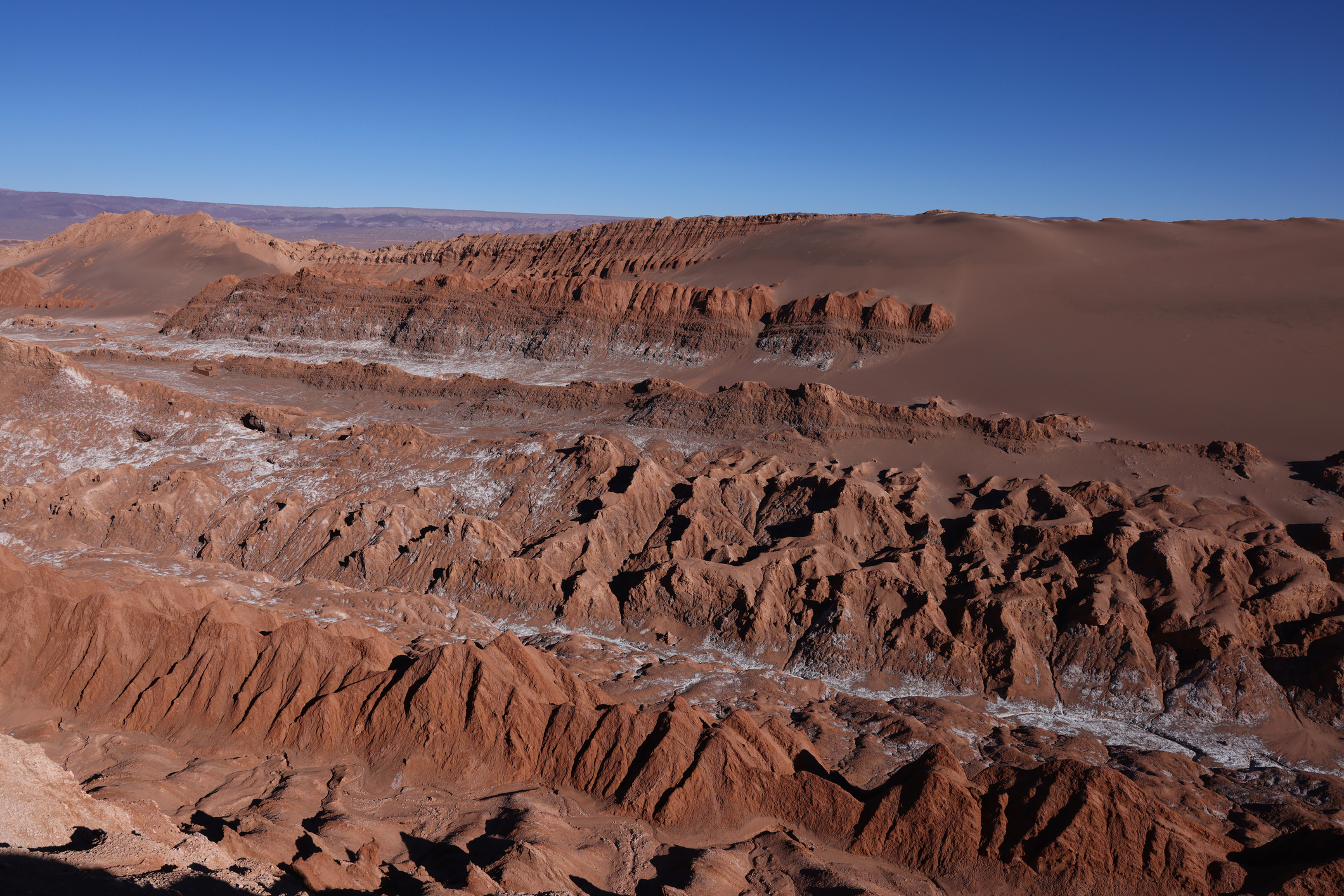
Iconic landscapes such as the Valley of the Moon or the Valley of Death (also called Mars Valley), both near the town of San Pedro de Atacama, Chile, make this desert one of the most otherworldly places on the planet.
The high altitude, dry air and almost total absence of light pollution make the Atacama Desert one of the world’s premier sites for astronomical observation and home to powerful radio telescopes such as the Atacama Large Millimeter Array (ALMA).
The soil composition and nearly total absence of microbial life have also made parts of this desert a perfect testing ground for Mars mission instruments.
But it's not all arid and barren – when the conditions are just right, the Atacama Desert can surprise you with an array of colours fit for a garden.
How big is the Atacama Desert?
The Atacama Desert covers an area of 105,000 km2, bordering Peru to the north and the Chilean Matorral ecoregion to the south.
Why is the Atacama Desert so dry?
Nestled between two mountain chains, the Andes and the Chilean Coast Range, this desert is essentially blocked off from moisture. From the east, the Andes block the westward-moving humidity coming from the Amazon, and the cold Humboldt Current to the west chills the air above the Pacific, making it nearly impossible for clouds to rise and release rain.
These unique conditions leave parts of the Atacama Desert with virtually no precipitation year-round. The average annual rainfall there is around 15mm – for contrast, the Sahara averages about 75mm, while London racks up 600mm annually.
And in certain regions of the Atacama, even the modest 15mm can seem like a lot. Some corners of the desert receive only 1 to 3mm annually, and in the hyper-arid core there are weather stations that have never recorded a drop of rain.
And if you think that sounds dry, there is even evidence suggesting the desert may have received no significant rainfall from 1570 to 1971.
How old is the Atacama Desert?
Until recently, scientists dated the hyper-arid conditions in this desert back to Early or Mid-Miocene, approx. 10-20 million years ago. But recent studies have presented evidence that the area was already experiencing hyper-aridity shortly after global cooling – around 45 million years ago.
“This makes it one of the longest continuously dry regions on Earth and forces us to reconsider how and when such extreme environments develop,” says Dr Benedikt Ritter-Prinz from the Institute for Geology & Mineralogy at the University of Cologne, Germany.
What wildlife lives in the Atacama Desert?
Some parts of the desert are too dry for any plants or animals to survive. But outside of these extreme areas, the Atacama is home to many species of fauna and flora – especially in places known as lomas, areas of vegetation watered by moist and dense fog rolling in from the Pacific, also called Camanchaca.
Grasshoppers and beetles are certainly abundant, providing a valuable food source, and during the warm and humid season desert wasps and butterflies emerge (especially in the lomas).
Surprisingly few reptile species inhabit the desert, and ever fewer amphibians. The Vallenar toad (Rhinella atacamensis) lives on the lomas, and some lizards from the genus Liolaemus can be found in salt flats. Fabian’s lizard (Liolaemous fabiani) is endemic to the Salar de Atacama.
Only a few specially adapted mammal species live in the less arid parts of the Atacama, such as Darwin’s leaf-eared mouse, South American gray fox and the viscacha. Perhaps surprisingly, it’s not uncommon to see gatherings of South American fur seals and South American sea lions along the coast.
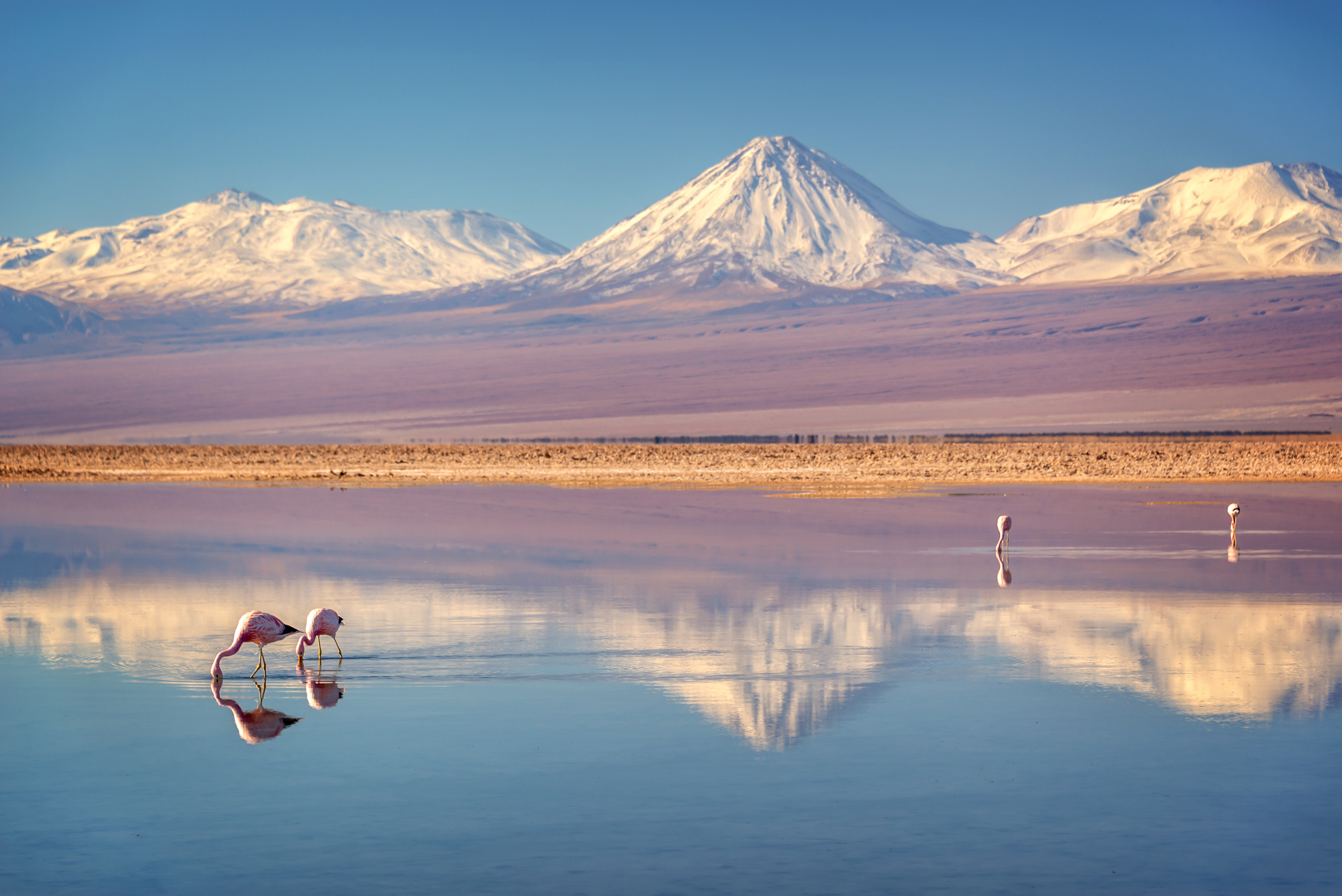
The most diverse animal group in the Atacama is birds. Humboldt penguins live along the coast year-round, and inland salt flats are inhabited by Andean flamingos. Several species of hummingbirds and rufous-collared sparrow frequent the lomas seasonally to feed on insects, nectar, seeds and flowers.
Are there any plants in the Atacama Desert?
The Atacama has a surprisingly rich variety of flora – the most common species are herbs and flowers such as thyme, llareta and saltgrass, and where humidity allows it, trees like the tamarugo (endemic to the desert), the chañar, the pimiento tree and the algarrobo grow.
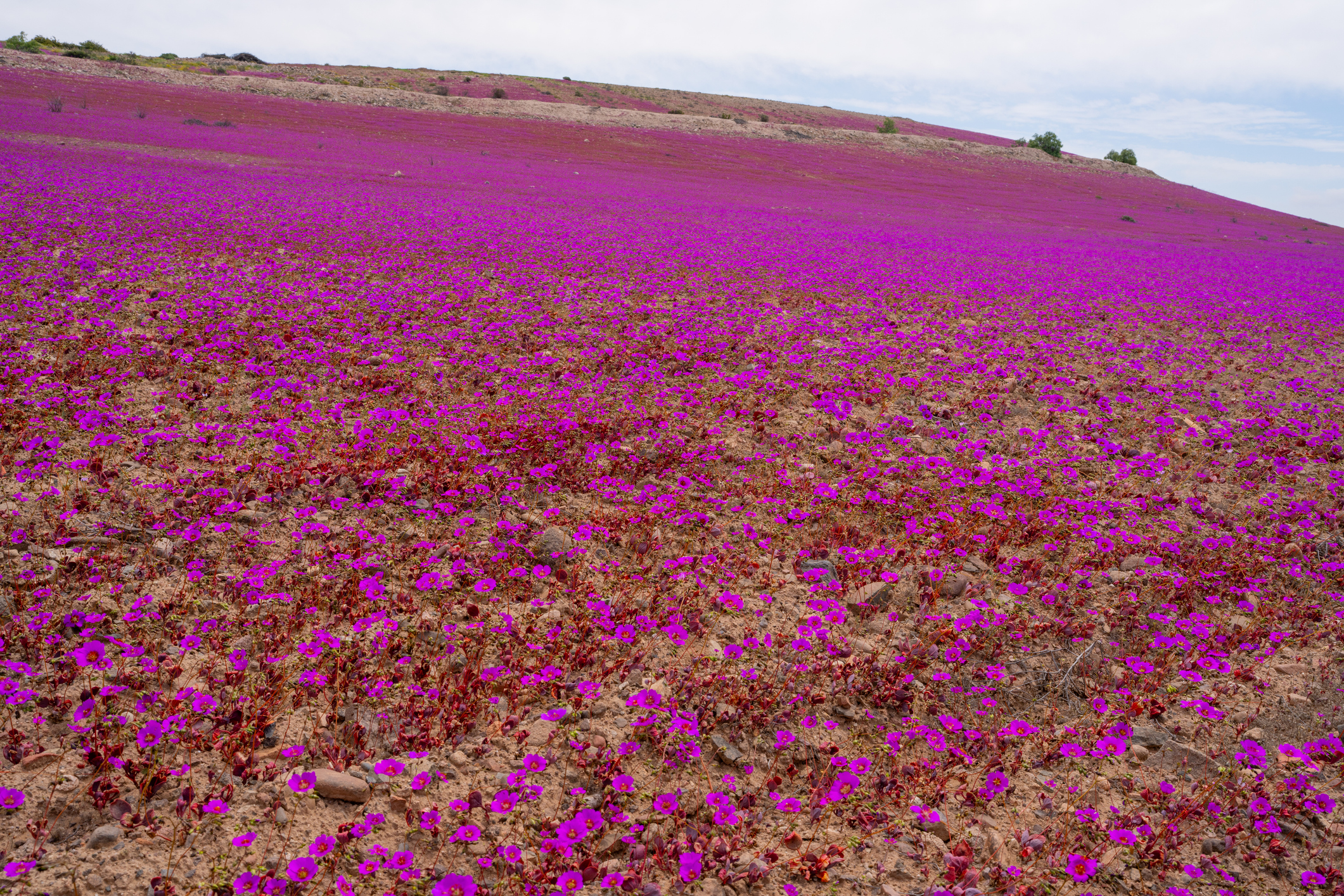
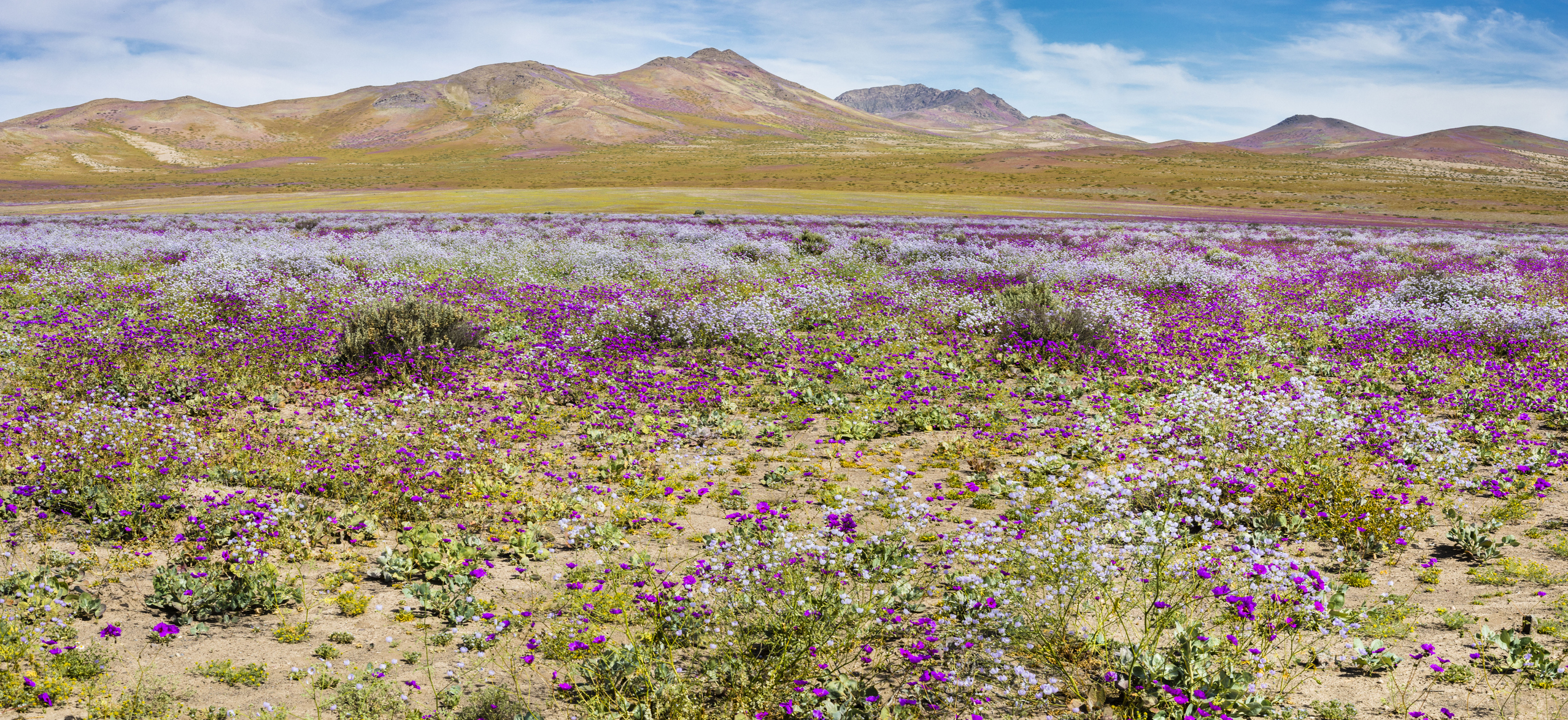
But, when the conditions are just right, something astonishing occurs in the spring – a phenomenon known as ‘desert bloom’, when more than 200 types of flowers bloom in the Atacama, bathing the usually subdued desert in colour.
For the desert to bloom, a very precise combination of rain and cold is needed. Between 15 and 30mm of rainfall, mainly between June and July, plus a buildup of enough cold hours – and the dormant seeds beneath the soil awaken.
Due to the unusually intense rains recorded in the desert in August 2026, a historic Flowering Desert is expected this year, with the National Forestry Corporation predicting the phenomenon could cover an area of up to 15,000km2.
The bloom is expected to begin in early September and reach its peak in the second half of October.
Does anyone live in the Atacama Desert?
Despite being one of the driest places on Earth, the Atacama Desert has a long history of human settlements. Indigenous peoples have lived there for more than 11,000 years.
Today, over a million people live there, mostly concentrated in large coastal cities, e.g. Antofagasta or Iquique, as well as mining towns and small oasis settlements like the town of San Pedro de Atacama.
Top image: Moon Valley at sunset, San Pedro de Atacama, Chile. Credit: Travel Photographer/Getty Images
