
It’s a well-known fact that the ground beneath us is bursting with life – at least in the first few metres of topsoil where bugs, microbes and fungi thrive. But hundreds of feet below the surface, scientists long believed there was very little. It was thought these dark, rocky depths were too extreme for most forms of life. Now, that idea has changed.
A new study, led by the University of Michigan’s Quinn Moon and published in The ISME Journal, has analysed water samples from gas well sites in North America's Great Lakes and discovered a surprising abundance of fungi.
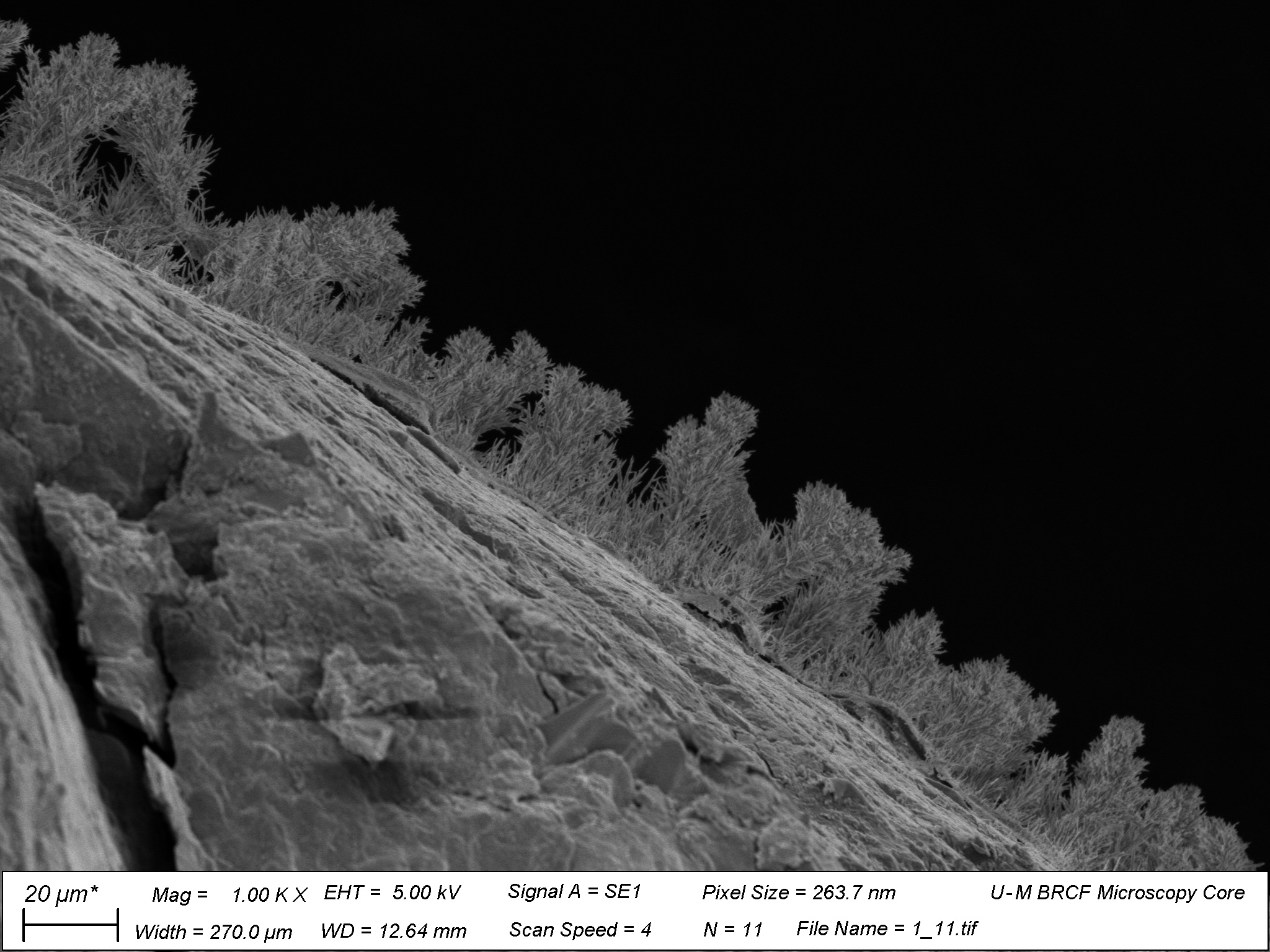
These water samples, which come from deep, subsurface sites as far as 1,640 feet (approximately 500m) below ground, teem with fungi and support complex ecosystems of other tiny organisms.
From the water samples, Moon and his colleagues identified 689 unique species of fungi – 13 of which proved to be entirely new, previously undiscovered species. Using high-powered microscopes and a series of genetic tools, the researchers were able to work out that a single drop of this subsurface water contained roughly 250 fungal cells, which is around the same as a drop of ocean water.
Fungi wasn’t the only form of life detected in the water samples; Moon also found tardigrades – unbelievably cute microscopic organisms nicknamed ‘water bears’ – and tiny, segmented worms. It’s thought these microorganisms, along with the abundance of fungi they were found alongside, form complex, underground food webs, with some serving as the ecosystem’s predators, some prey, and others perhaps as parasites.
“Our study challenges the idea that it’s inhospitable for more complex life like fungi in the deep subsurface, and under favorable conditions, eukaryotes can actually be quite abundant,” Moon said. “We propose in the paper that we may be meaningfully underestimating the biomass and diversity of fungi on the planet because we’ve never incorporated the subsurface into estimates of global fungal biodiversity.”
- Fungi vs plants: what’s the difference?
- What is a fairy ring and what causes mushrooms to form a circle?
- This underground web of fungi is so huge it could reach the sun 1 billion times. Scientists have mapped it for the first time
- Look away mycophobes: Slow-mo footage shows bizarre way mushrooms grow inside a tree trunk
How did the organisms get there?
How these microorganisms found themselves hundreds of feet below Earth’s surface was a mystery, but one that the researchers involved in the latest study were determined to solve.
To work out exactly where this biologically rich water came from, they analysed its stable isotopes to determine its origin and age. They found that it most likely came from the melting of ice sheets that covered Michigan at the end of the last Ice Age, roughly 11,000 years ago.
According to Moon and his colleagues, the abundance of melting glacial water likely carried fungi and other microorganisms down through porous and fractured rock layers, until they settled in cracks of the Antrim Shale - a formation of organic-rich rocks that were originally laid down in the Late Devonian, roughly 380 million years ago. It’s from the Antrim Shale that Moon and colleagues extracted water samples.
- Fungi may survive extreme conditions of Mars and space, say scientists
- Scientists attached moss to the International Space Station. What happened next astonished them
Rock-eating fungi
Further analyses of carbon dioxide and methane in the water samples revealed that the fungi in these subsurface environments feed on the shale itself, munching on the organic material trapped inside.
Unlike ecosystems above ground, where sunlight forms the primary energy source at the base of a food web, it’s organic-rich rocks like those from the Antrim Shale that form the base in deep, subsurface ecosystems.
“For a long time, there wasn’t evidence that eukaryotes can be abundant in the deep subsurface. People have found traces of them using environmental DNA, but they’ve been chalked up to being transient or dormant,” said Moon. “The discovery opens a window into a world that is dark, ancient, and almost entirely hidden - but is far from lifeless.”
Carbon discovery
Tim James, a co-author of the latest study and the curator of fungi at the University of Michigan, has stressed how his team’s findings raises new questions about carbon stored underground.
It’s widely thought that ‘geo-sequestration’ – the term for storing carbon in deep geological formations – is a relatively safe method of carbon capture and storage. However, if subsurface fungi are able to break down carbon-rich rocks and convert them into gas (CO₂), then underground carbon may be more biologically active than previously thought.
“Regardless of whether these fungi originated in or were introduced to these deep spaces, many fungi possess adaptations that allow them to grow and influence the carbon dynamics deep in the earth,” James said. “Fungi need to be incorporated into models of carbon cycling and sequestration in the subsurface.”
Find out more about the study.
Top image credit: halbergman/Getty Images
More wildlife stories from around the world
- 1,900 giant sequoia trees saved from death in California. This is how
- Researchers sawed samples from a remote island in Antarctica. They found a “hidden diversity” of life
- 100km-wide "hidden giant" discovered beneath Antarctic ice sheet
- Scientists resurrect 40,000-year-old organisms from Arctic ice – now they’re worried


