
The fossil record allows us to create vivid reconstructions of what our planet may have looked like millions of years ago. However, in these dramatic windows into prehistory, there’s always one thing missing - sound. Now, a team of researchers led by Sichuan Agricultural University in China has studied ancient insects and compared them with their living relatives to recreate one of the most detailed prehistoric soundscapes ever produced.
- Millions of years old and still here... What exactly is a living fossil?
- "It's believed that something went terribly wrong and the mother died while giving birth..." 7 groundbreaking fossil discoveries that changed the world
What did a Jurassic forest sound like?
170 million years ago, Earth looked very different. Not only was the land the domain of dinosaurs, much of it was also covered in thick, lush forests full of conifers, ginkgoes, ferns, cycads, and horsetails. This was a time before flowering plants (i.e. angiosperms), so there would have been no grasses, deciduous hardwoods, or colourful fruits in sight.
These ancient forests were the backdrop to several episodes of Netflix’s new, Steven Spielberg-produced documentary series, The Dinosaurs. To bring these forests to life, sound designers lent on pioneering research into fossil insects’ wings and the serrated ‘files’ they used to produce chirps and trills.
The research that produced the immersive soundtrack to this series was recently published in the Proceedings of the National Academy of Sciences, where it struck quite the chord amongst the scientific community.
The team, made up of researchers from China, Austria, the US, and the UK, studied fossils of extinct bush crickets (known as katydids), compared them with living relatives, and used computer simulations and machine learning techniques to recreate a Middle Jurassic soundscape.
They found most of the Jurassic species likely trilled at low frequencies, similar to many modern bush crickets. They also found that many of the reconstructed calls were quite narrow in frequency. These are known as pure-tone calls; to human ears, they’d have sounded like clear, high-pitched whistles with little variation.
According to the researchers involved in this latest study, pure-tone calls are, “an adaptation to avoid localisation by eavesdropping predators.” The monotone nature of these calls makes them incredibly difficult for predators to pinpoint - if you’ve ever heard a cricket trilling yourself, you’ll know how hard it is to localise it.
They also found that one species, Sigmaboilus peregrinus, produced calls above 20 kHz, which would make it the oldest known evidence of ultrasonic communication in animals. These kinds of frequencies are beyond the upper limit of human hearing but well within the range of bats, which use ultrasonic echolocation to navigate and hunt.
- “After four short hours hiking its ancient forest, we’d decided to move to the Scottish Highlands”
- Scientists took soil samples from a forest and tested them for microplastics. What they found was disturbing
However, bats didn’t emerge until the Eocene, approximately 100 million years later, suggesting ultrasonic communication amongst insects was established long before these sharp-eared predators evolved. Instead, other, earlier mammals may have imposed ‘acoustic’ pressures on insects before bats did.
How did scientists recreate the sounds of extinct insects?
To recreate their Middle Jurassic soundscape, the researchers developed a biomechanical model and tested it on living crickets, bush crickets, and their close relatives, using lasers to measure how their wings vibrated.
The wings of crickets and other insects bear specialised structures known as stridulatory organs that, when rubbed together, produce sounds that can be measured.
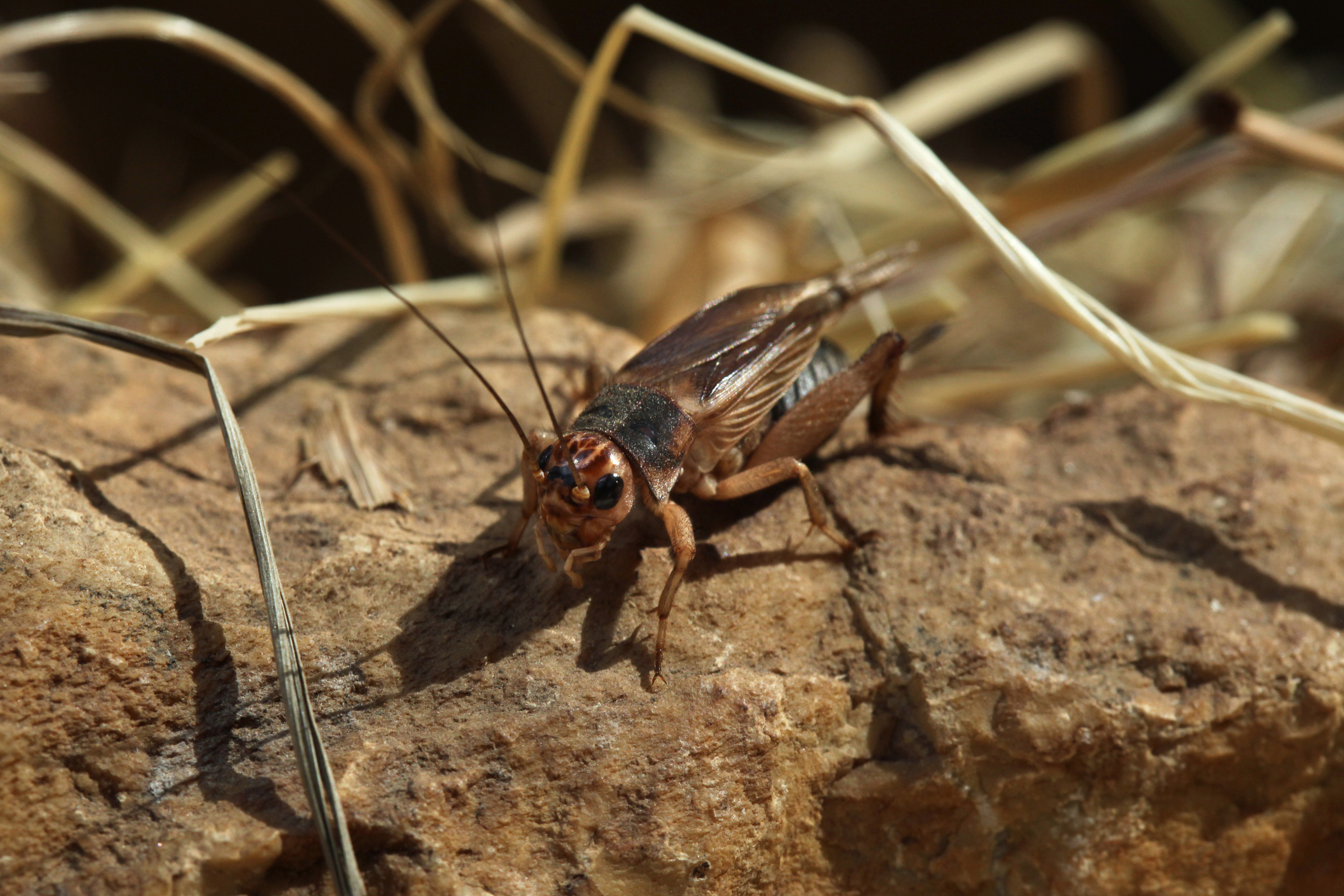
These structures are asymmetrical; on one wing there’s a ‘file’, a surface featuring a row of fine ridges, teeth or pegs, and on the other there’s a ‘plectrum’, a hardened ridge that drags across the file, vibrating as it moves.
After validating their biomechanical model on living insects, the researchers then applied it to the fossilised wings of their extinct relatives. In total, they analysed 20 fossils (representing nine different species) found at the same site in Inner Mongolia, China.
While they were able to recreate a soundscape with a rich diversity of calling song frequencies, the researchers were limited by the fact they weren’t able to extract any behavioural information from these fossils.
Ultimately, this meant that the rhythm and the temporal pattern of each song - elements controlled by the nervous system and wing movement - had to be inferred from living insects.
Nevertheless, this study has still managed to recreate one of the most accurate soundscapes of a prehistoric environment to date.
Is it possible to recreate the sounds of other extinct animals?
Now that scientists have developed a successful method for recreating prehistoric soundscapes, surely it won’t be long until we’re able to listen to a T.rex violently tussling with a Triceratops, or a Neanderthal shouting to another as they coordinate a mammoth hunt - right?
The difference between insect-made sounds and those produced by other animals is that they’re produced by hard-tissue organs that more readily fossilise. The soft-tissue organs that produce sounds in vertebrates, on the other hand, very rarely fossilise.
This means that it’s a lot easier to recreate the sounds of an insect than those of a dinosaur, bird, mammal, or ancient human.
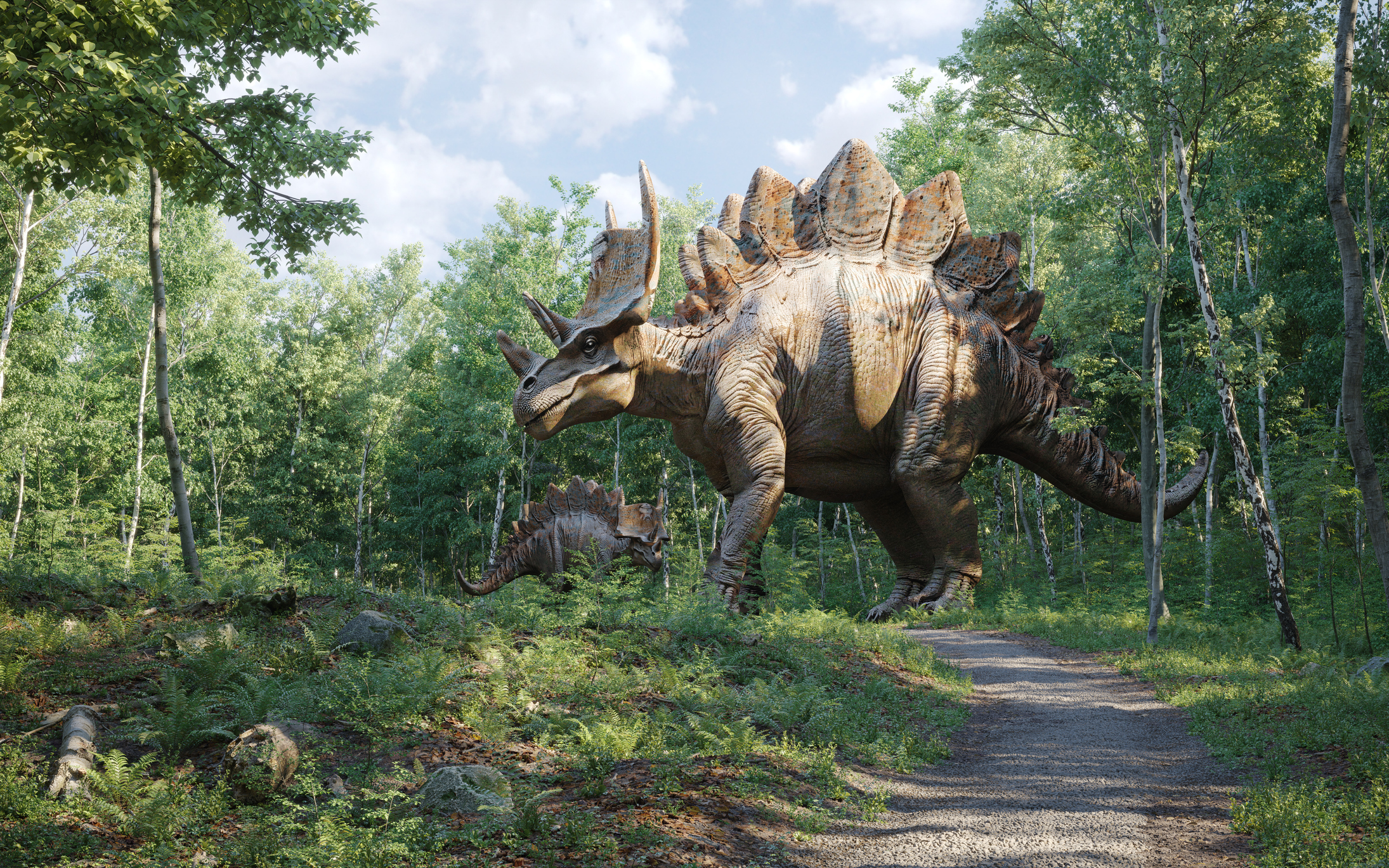
However, that’s not to say that we’ll never know what these animals sounded like. There has been a lot of research into the sounds that certain dinosaurs may have produced.
For example, instead of roaring like a lion (like they do in each installment of the Jurassic Park franchise), T.rex likely produced deep, low-frequency, closed-mouth rumblings and booms. This is evidenced by scans of their skulls and inner ears, which show their hearing was finely tuned to low-frequency, deep vibrations. These kinds of sounds have also been documented in their close living relatives, birds and crocodiles.
- What is the oldest known DNA, and is Jurassic Park still theoretically possible?
- It's more than 185 million years old, as long as the Suez Canal – and locked inside are millions of ancient monsters
A number of studies have also analysed the snorkel-like nasal crest of the plant-eating hadrosaur Parasaurolophus to get an idea of what it may have sounded like. In 1981, researchers made a model of a Parasaurolophus’ skull and nasal crest and blew into it. The resulting honks apparently resembled those produced by a Renaissance-aged wind instrument known as a crumhorn.
As more fossils are discovered and new technologies developed, we should be able to recreate an ever-greater range of ancient sounds, gradually filling the gaps in the prehistoric orchestra.
top image: The Dolomites are rich in fossils that tell the story of ancient tropical seas and volcanic islands in the Triassic and Jurassic periods. Credit: MikeDot/ Getty Images
More wildlife stories from around the world:
- Ginormous king penguin colony filmed on remote Atlantic island. The sound of it is ear-splitting
- This haunting sound was captured near Bermuda in 1949. It's the oldest known whale song recording
- It can grow over 2m long, is made up of 400 body segments and makes a strange gurgling sound as it moves underground
- This elusive bird can be heard up to 5km away – and the sound it makes is extraordinary


