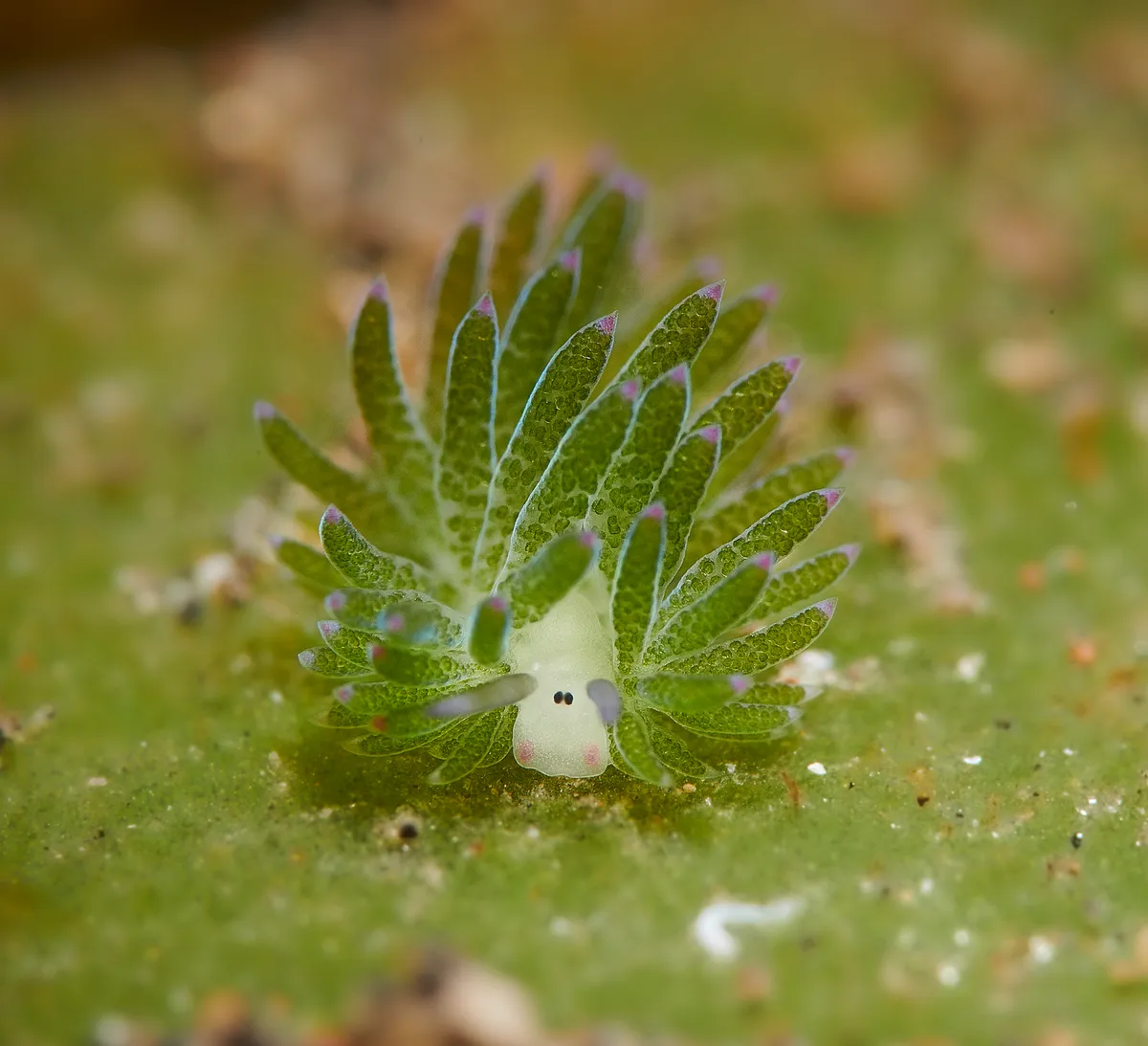
The sentiment that we know more about space than we do about the depths of our oceans has been debated for many years. Though it’s not completely true, it cannot be disputed that both the depths of the ocean and the vastness of space are mysterious enough to invite speculation.
And these animals are so biologically strange that they seem like they shouldn’t even exist on the same planet as us.
Animals that could be aliens
Octopus

Octopuses have eight limbs and a large, donut-shaped brain – with more than half of its neurons distributed not in the brain itself, but in the eight nerve cords controlling the arms.
They also have 33,000 genes, roughly 10,000 more than a human, setting them apart from any other invertebrate on the planet. They can open jars, solve puzzles and use tools. They have a large brain, a closed circulatory system, and eyes complete with an iris, retina and lens – just like ours.
Cephalopods have evolved independently from the vertebrate lineage for more than 600 million years – and yet they’ve arrived at surprisingly similar results.
- These are the deadliest octopuses in the world – and one has enough venom to kill dozens of humans within minutes
- Weirdest octopuses: meet 8 strange sea creatures, including one that pretends to be a snake and one with a detachable ‘penis’
The octopus’ eye is especially close to our own and even improved in design: octopuses lack the central blind spot common to vertebrates because their optic nerve fibres sit behind the retina, instead of passing through it.
There are around 300 octopus species found in every ocean on Earth – that we currently know of. And they keep surprising us with their adaptability, so who knows what else we might discover about them?
- 15 magical photos that show just how uniquely beautiful octopuses can be
- Scientists gave an octopus a mirror. Here’s what happened next
Tardigrades

Tardigrades are an eight-legged segmented micro-animal found virtually everywhere, from the deepest ocean to the top of Mount Everest. They’re easily missed, with even a large tardigrade measuring just 1mm in length.
They can survive dehydration, microwaving and temperatures as hot as 150ºC or as low as -273ºC. They can even cope with being exposed to the radiation of outer space.
To do that, they enter a dormant, dehydrated state known as cryptobiosis where they expel up to a whopping 97 per cent of their body water and shrivel up into a dry, practically indestructible shell.
Platypus

In 1799, when George Shaw, a curator in the British Museum, received the skin of a platypus in the mail, he thought he was being pranked. He even checked for stitches because the platypus is best described as an unlikely mixture of other animals – duck, beaver and otter.
It’s not just its looks that make it confusing. The platypus lays eggs but nurses its young, is covered in fur but lives underwater, and has fleshy bills, webbed feet, sharp claws and venom-filled ankle spikes.
Female platypuses lay round, leathery eggs and lactate without nipples – the young lap the milk directly off the mother’s body.
The platypus also glows a soft blue green colour under the blacklight. Scientists think it might be connected to a camouflage strategy involving UV absorption.
Comb jellies

Comb jellies first emerged 700 million years ago, a long time before dinosaurs, which only appeared around 230 million years ago. For over a century, scientists searched for the earliest branch of the animal tree of life, and according to some studies, that branch is comb jellies.
Although they look similar to jellyfish, they are not closely related – they belong to the phylum Ctenophora. Comb jellies are gelatinous invertebrates that swim through the water by moving their iridescent ‘combs’, sometimes called swimming plates.
They come in all shapes in sizes, and can be found all over the ocean, whether it be the deep sea or near the surface – each comb jelly is uniquely adapted to the waters it inhabits. Coastal comb jellies tend to be tough enough to withstand tidal action, and open ocean species are so fragile they’re rarely captured intact.
- Weirdest sea creatures - meet 15 strange ocean animals, including one that's part vegetable and one that resembles a toast rack
- Banana-sized deep-sea oddity glows red – and resembles an alien spaceship
One of the biggest challenges of living in the depths of the ocean is the extreme pressure, but comb jellies have developed a solution – specially shaped lipids (fat molecules) with an exaggerated cone shape. Under normal conditions, this shape would cause the membrane to fall apart, but the intense pressure of the deep ocean squishes them back into a normal, functional shape.
And this is one of the reasons why studying comb jellies is so hard – many species literally disintegrate when brought to the surface. Without the pressure, their membranes can’t hold together.
Jellyfish

Jellyfish have been drifting through Earth’s oceans for over 500 million years. They predate the dinosaurs and have survived multiple mass extinctions. Which of course raises an obvious question: what’s their secret?
To start, they have no brain, no heart, no blood, no lungs and no bones. Jellyfish are roughly 95 per cent water.
One species of jellyfish, Turritopsis dohrnii, which is no bigger than a fingernail, has solved a problem humans have been grappling with since the dawn of time – death. If it’s faced with a life-threatening situation, or is just simply injured or old, it can revert to its juvenile form and restart its life cycle entirely. It can repeat this process indefinitely, making it essentially immortal.
- "Death can come within five minutes": Discover the 10 deadliest, most venomous, jellyfish on the planet
- NASA officials sent over 2,000 baby jellyfish into space. Tens of thousands more came back to Earth
Cuttlefish

Similarly to the octopus, cuttlefish have three hearts and blue blood. They also have skin that can flicker and change colour. And they’re colourblind.
Cuttlefish are masters of disguise, much like other cephalopods such as octopus. By controlling the 10 million colour cells within their skin, cuttlefish can change colour, pattern and texture – sometimes even making shapes with their tentacles to better blend in.
They’re also great multitaskers, able to display two messages at once – one male cuttlefish was spotted wooing a female mate by flashing courtship colours on one side and disguising itself as a female on the other to trick a male rival.
The fact that the cuttlefish is colourblind is fascinating – its retina contains only one type of light-sensitive photoreceptor, so it should be unable to distinguish colour.
- "Within its beautiful softly fluttering fins are a dozen spines able to deliver a dose of powerful venom." 10 prettiest, sparkliest sea animals on the planet...
- "We were amazed to observe a cuttlefish waving back" – video experiment stuns scientists
And yet, its camouflage is perfect. Scientists think the answer to this lies in its distinctively W-shaped pupil. When light passes through a lens, different colours bend at slightly different angles, meaning they don’t all land at the same point. Blue light focuses closer to the lens, red light further away. In camera and glasses design, this is considered a ‘flaw’ to be corrected.
The cuttlefish uses this ‘flaw’ by rapidly shifting its lens back and forth and cycling through the spectrum, catching each colour at the moment it comes into sharp focus – the brain then reads where the lens had to move, and interprets that information to figure out what colour the light is.
One marine biologist, filming a giant cuttlefish gathering off South Australia, put it best: “When I’m down there watching cuttlefish just changing colour in front of me, it just feels like I’m on a different planet. It honestly feels like you’re just watching aliens under the sea.”
Portuguese Man o’ War

It looks like a jellyfish, but it isn’t one. It’s not even a single animal, but rather a siphonophore: a colony of organisms working together. The Portuguese Man o’ War comprises of four separate polyps, each with a different ‘job’ – floating, feeding, capturing prey and reproducing. They all work in perfect coordination despite having no brain.
- Killing off the sickest and creating brains: The secrets behind super organisms
- Astounding deep-sea 'galaxy' filmed off Californian coast
The Portuguese Man o’ War gets its unique name from the polyp that sits above the water (the gas-filled bladder) and which resembles a warship at full sail. Its tentacles can extend 165 feet (50 metres) in length – that’s longer than a blue whale, the largest animal on the planet.
- Meet the tiny, virtually invisible creature that causes blinding pain and violent illness in humans, which can lead to life-threatening complications
- They're 2 metres long, 10,000 times heavier than the males and can even rip off the infamous Portuguese man o’war's tentacles and wield them as weapons
The Man o’ War delivers its venom through microscopic stinging capsules called nematocysts, located on the tentacles. When triggered by physical touch and chemical cues, the capsules’ internal pressure rapidly increases, shooting the coiled, barbed stinger outward like a harpoon to puncture the skin.
Even detached tentacles washed ashore can still fire, so make sure you don’t get too close. The Portuguese Man o’ War’s venom is deadly to most of its ocean prey, essentially punching holes in cell membranes, resulting in complete paralysis. In humans, it’s not usually lethal, but can be quite painful and lead to complications.
Top image: view of Earth from space with illuminated horizon and starry night sky. Credit: loops7/Getty Images