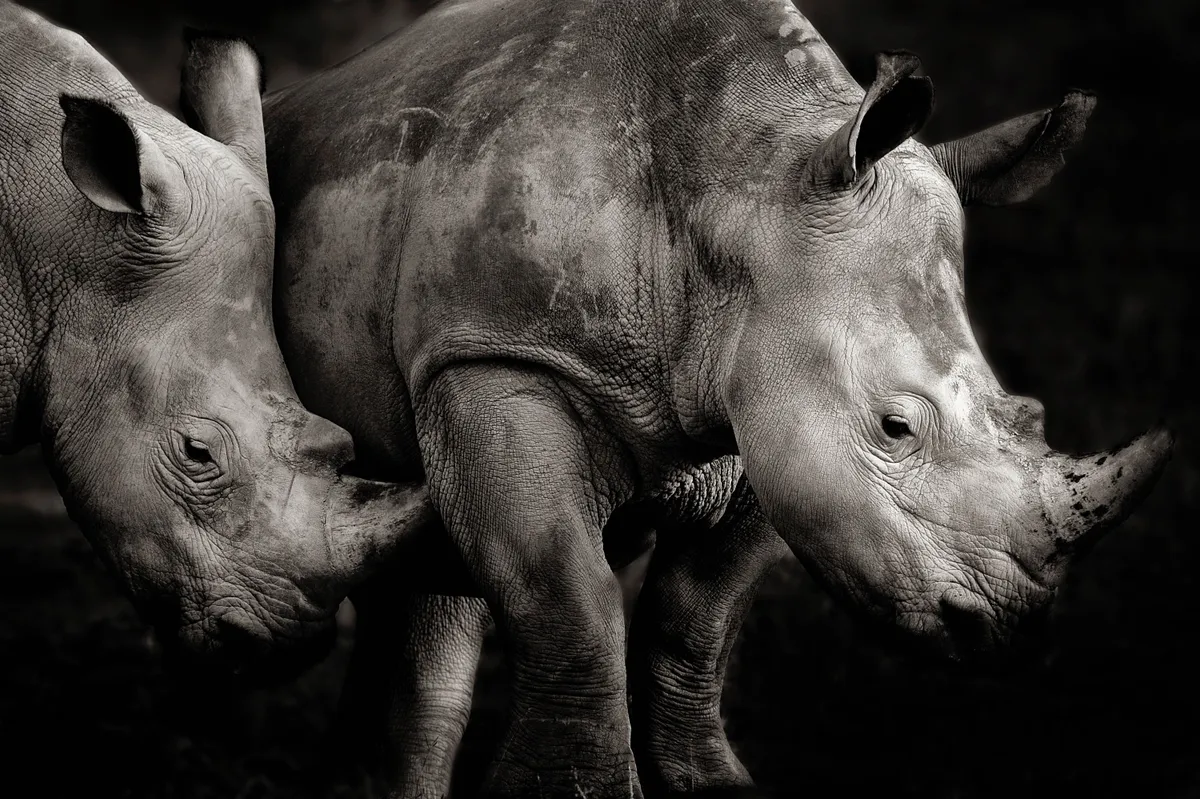
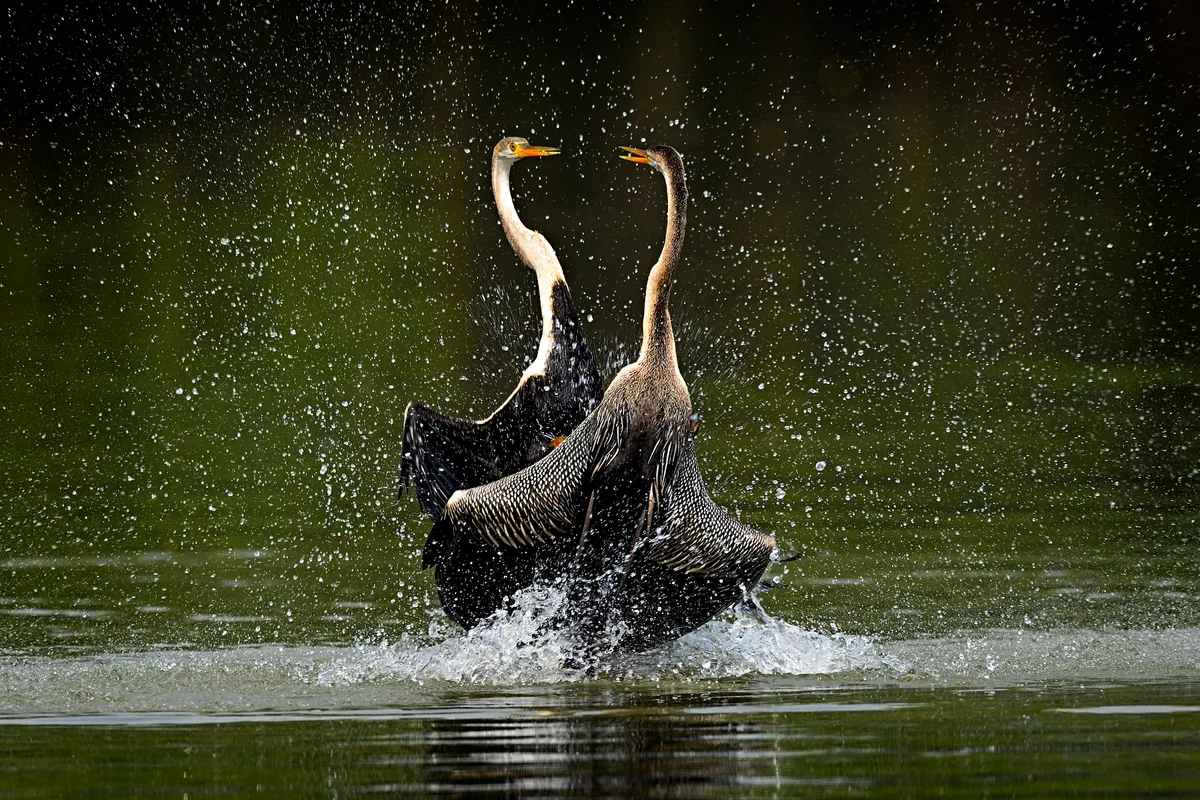
Imagine this: you’re on your own in the wilderness, minding your business. You happen to make a weird face – but it’s okay, because you’re alone in the wilderness, so no one saw it.
Wrong. There was a camera, and now you’re part of a 'comedy animals' gallery. Oops.
Below you can enjoy 11 photographs of beautiful and majestic animals caught out making funny faces and striking ridiculous poses.
Comedy animals gallery
Tarsier, Philippines

Caught mid-blink and with a mischievous smirk, it seems this tarsier knew the camera was waiting.
Tarsiers are primates, and although they were prehistorically more globally widespread, all of the remaining species are restricted to Maritime Southeast Asia – mainly Brunei, Indonesia, Malaysia, and the Philippines.
Tarsiers are small with enormous eyes (approx.. 16mm in diameter), which are as large as, or in some cases even larger than, their entire brain.
- Yoda-like tarsiers are struggling to sleep – and it could be the death of them, warn scientists
- “Their real super-power is their ability to shoot blood from their eyes.” The 23 weirdest animals on the planet – including the striped pyjama squid
- It has a creepy stare, prowls the night, taps on trees to find food – and is feared as an omen of death. Is this the weirdest primate on the planet?
Elephant seals, Antarctica

This seal is not impressed with the display of emotion at all.
Both species of elephant seals, the northern elephant seal and southern elephant seal, were hunted to the brink of extinction for lamp oil by the end of the 19th century; their numbers have since then improved.
Despite their name, elephant seals aren’t closely related to elephants. They get their name from the large appendage on the adult male’s head, which resembles an elephant trunk.
- “No way!” Gob-smacking footage of a gigantic two-tonne elephant seal taking a rest on a South African police car
- Researchers played elephant seals the calls of their nemeses. This is what happened next
- Sea lion vs seal: What’s the difference between these two popular pinnipeds
Red kangaroo, Australia

This kangaroo would definitely beat most of you in a dance battle – just look at these moves!
The red kangaroo is the largest of all kangaroos and the largest terrestrial mammal native to Australia. They are sexually dimorphic, meaning they exhibit different morphological characteristics not directly involved in reproduction.
Males have short, red-brown fur, fading to pale below and on the limbs; females are smaller than males and are blue-grey with a brown tinge and pale grey below.
- The kangaroo: All you need to know about Australia’s most iconic animal – and its famous hop
- What’s the fastest land mammal in Australia? It can outpace a human thanks to giant ‘springs’ in its legs
Bear, Katmai

Morning stretches are universal, whether you’re a human or a bear.
The brown bear is native to Eurasia and North America, and is the largest predator living in mainland Europe.
Interestingly, bear cubs are usually born in hibernation season – brown bears give birth in their sleep. Cubs then feed from the mother until she is ready to wake up.
- This tiny, solitary bear can mimic facial expressions like humans – wait, what?
- These are the world’s smallest (and adorable) bear species – and no, you still can’t cuddle them
Snow monkey

What’s funny, exactly? This monkey is not impressed by being included in the comedy animals gallery.
The Japanese macaque, also known as the snow monkey, is a terrestrial Old World monkey species native to Japan. The ‘snow’ in their name refers to the fact that some of them live in areas where snow covers the ground for months each year.
This is the only non-human primate that lives this far north, and in a climate this cold. They have quite an impressive lifespan, often living up to their 30s.
Baboon, Tanzania

It’s either time for bed, or the baby baboon might be in line to be the next Mariah Carey.
Baboons are primates, mostly native to Africa. A baby baboon is born with an instinct to grasp tightly with both hands and feet – this is so that the infant can hold itself against the mother’s belly.
- Kidnapping isn’t just a human crime: 7 of nature’s most shocking, brutal – and sometimes ballsy – abductors
- It can scale vertical cliffs, shuffles along on its bottom grazing like a cow, and has flowing blond hair and a blazing red chest: Here's the planet's weirdest monkey
- Sun, sand and a deadly paradise for Kenya’s rarest monkeys: Inside the battle to save them before it's too late
Barn swallow chicks, NY

Enough talking, where’s the food?!
Swallows (also martins or saw-wings) are a family of passerine songbirds found on all continents. They use their excellent flying skills to feed and attract mates.
- Swallow guide: migration, nesting and where to see
- This 'karaoke queen' uses its song to fend off rival mates from vicious nest vandalism
White-handed gibbon, Thailand

Just pondering…
The lar gibbon (also known as the white-handed gibbon) is an endangered primate in the gibbon family. Many things pose a danger for this species: gibbons are sometimes hunted for their meat; sometimes a parent is killed to capture youngsters to keep as pets. But perhaps the most dangerous is the loss of habitat – construction of roads, agriculture, etc.
- Can chimpanzees and other great apes breed with monkeys?
- Hainan gibbon guide: where they're found, and why they're so rare
Sea otter, Alaska

Just relaxing with a mate, nothing to see here.
The sea otter is a marine mammal native to the coasts of the northern and eastern North Pacific Ocean.
Sea otters eat 25% of their body weight in food every day. Their diet includes sea urchins, crabs, mussels, and clams.
They love to rest in groups – researchers have found concentrations of over 1,000 otters floating in each other’s company.
- Otter guide: where do they live, what do they eat, and how to identify them
- Sea otters are suddenly flourishing along the Monterey Peninsula – for a surprising reason
- Watch this adorable baby sea otter learning to float on its own. What happened next is heartbreaking...
Red-tailed hawk, USA

Something turned this hawk’s head…
Red-tailed hawk is a bird of prey and one of the most common hawks in North America.
To attract a mate, a male Red-tailed hawk might catch prey and pass it to a female mid-air. The male and female hawks often fly in circles and sometimes even lock talons and take a dive together.
- 10 fastest birds of prey in the world – able to reach speeds of almost 200 MPH, these deadly aerial predators strike in a blink of an eye
- White-tailed eagle vs osprey: what's the difference between these two stunning birds of prey?
Red squirrel

Hi, I’d like to get in on the comedy animals gallery?
The red squirrel is a small mammal, common throughout Eurasia. Red squirrels are predominantly vegetarian, but occasionally eat small birds and their eggs.