Wild animals are not the most dangerous thing about hiking in remote regions, but they are definitely worth bearing in mind. Here we look at the main species you need to take account of.
Given the preponderance of large predators – big cats, especially – in Africa and some parts of Asia, we’ve assumed people will not be foolish enough to go out on their own in those areas they are likely to encounter them.
- Don't pet the lion: the rise of the reckless wildlife tourist
- I've caught the baby wombat": 10 unbelievably idiotic and reckless acts committed by wildlife tourists that will have your blood boiling
10 most dangerous animals to encounter while hiking
American black bear
When Katie Jackson was charged by an American black bear in Montana last year, she freely admits – despite being an experienced hiker and runner – she didn’t follow the rules.
- "They are designed for ripping apart blubbery seals, so they will make short work of our puny bodies:" The 10 deadliest bears on the planet
- Larger and considerably more powerful than humans, they can run at an impressive 50KPH as well as swim & climb trees – so you don't want to mess with them...
She got between a mother and her cubs and compounded this error by trying to get footage for her socials rather than focusing on survival. She then messed up with the pepper spray badly. Luckily, the mother bear saw sense and ran off. In general, guidelines for managing encounters with both North America bear species are the same – stay calm, make yourself known and don’t run.
Brown bear

Being stalked by a brown bear would be nerve-wracking whoever you are – but when you’re a 12-year-old boy out hiking with your step-father in northern Italy, presumably more so. In fact, as a video of the incident shows, the boy in question reacted perfectly, not panicking but continuing to walk away from the animal that was no more than curious.
The risk of attack from a brown bear is very low – the vast majority would not see a human as prey and have little interest in interacting with you. One key thing to remember – a bear can run as fast as a racehorse, both up and down hill.
- What is the biggest bear in the world? Clue: it towers overs humans and weighs almost a tonne
- A year in the life of European brown bears
Cougar or mountain lion
This video show what can happen if you disturb a female cougar with cubs, as Kyle Burgess did while hiking in Utah in 2020. Despite backing off from the irate feline (and shouting multiple profanities aggressively), he’s followed for more than five minutes.
She makes several intimidating charges. Cougar attacks are rare, but in 2024 BBC News reported an incident that resulted in the death of an 18-year-old male hunter, while in a separate episode, a woman was attacked while cycling with a group of friends.
Guidelines for dealing with a cougar involve “making yourself tall, shouting, waving arms and generally making yourself appear obvious”.
Rattlesnake

Brian Hearn learned the hard way why you should leave rattlesnakes alone. Walking across his allotment in Florida in 2012, he attacked a timber rattler for the sake of other people on the plot.
He was bitten and ended up in hospital for seven days. He describes a 40-minute period where his symptoms went from “tingling” in his body to difficulty breathing and slipping out of consciousness. But while their venom is highly potent and can kill, rattlesnakes are not aggressive and really want nothing to do with you – avoid them, and they’ll avoid you. Safety tips for hikers include sticking to the trail, wearing stout boots and not putting your hands or feet where you cannot see what’s there.
Wolf

In 2010, BBC News reported that a teacher living in the tiny community of Chignik Lake, south of Anchorage in Alaska, was killed by animals while out for a jog. From the tracks at the scene, the authorities determined she’d been taken down by up to four wolves.
- These 11 intimate photographs capture the stunning beauty of wild wolves
- Was this the largest, deadliest and most terrifying wolf of all time?
But the reality is that attacks on humans are very rare in the USA, Canada or indeed Europe where they are becoming more common – this was the first documented fatal wolf incident in the US in 50 years, though in parts of India and Turkey, they are more common.
- Wolf vs dog: what's the difference between man's best friend and its wild cousin?
- 9 brutal grey wolf photos that reveal the power and ferocity of these formidable apex predators
If you should encounter wolves in the wild, the guidelines are the same as for many animals – stand tall, group together and maintain eye contact with the nearest one.
- What is the biggest wolf in the world? Meet the deadly canine apex predator - as well as its domestic rivals
- The 10 deadliest dogs on Earth: Discover the world's most ferocious and savage wild canine hunters
Elk

It’s not just predators that are dangerous to humans – many herbivores can be, too, and elk, or moose as they are known in North America, are a good example. How close should you get to a moose, asks wildlife biologist Kristine Rines from New Hampshire’s Fish and Game Department.
- Moose vs elk – what’s the difference between these enormous deer species?
- Watch amazing, jaw dropping footage of fearless elk chasing grey wolf in Yellowstone National Park
“You should be far enough away to get behind the nearest tree before a galloping horse could get there,” she says. The species is especially common in parts of New England in the US where hiking is popular. Look out for an animal with its ears back, smacking its lips, tossing its head back or even urinating on its back legs as these are clear signs of irritation, but any animal can become grumpy at any time.
Bison

Hiking in a state park in Texas, Rebecca Clark encountered a small herd of bison that looked uninterested in her – until that is, one charged and gored her, leaving her requiring helicopter evacuation.
- Scientists spent 6 years tracking Yellowstone's great bison migration. What they found is remarkable
- Watch agonising BBC footage of a bison calf being lured away by a wolf pack – will the herd save him in time?
Raised tails, lowered heads and pawing the ground are all indications that a bison may be irritated, according to Texas Parks and Wildlife, and it recommends this rule for ensuring you keep sufficient distance from any you see. “Stretch your arm out away from your face and give the bison a thumbs up! Now close one eye. Can you cover the bison with your thumb? If not, you’re too close!” the agency says on its website.
“In bison culture, a head-on gaze can communicate a threat or just simply rude behavior, especially to dominant males,” it adds. There are bison now in parts of Europe including Poland, Romania and Bulgaria.
Brown snake

It’s not got the most exciting name, but there’s nothing dull about the brown snake – or, its venom, at least. Endemic to Australia, a land of multiple deadly creatures, the brown snake (there are two species, the eastern and western) is one of the deadliest.
- What are the most dangerous snakes in Australia? Discover the country's top 4 deadliest serpents
- What's the most dangerous animal in Australia? Does the country's wildlife deserve its deadly reputation?
One woman in Western Australia was so alarmed by an encounter while being guided on a hike, she ignored all the instructions to stay calm. “There's a venomous snake. The tour guide literally just said, back away slowly, and I ran,” she admitted.
Stats show that between one and four people die from snake bites in Australia every year, but very few of them are hikers. As with rattlesnakes, the advice is to give them a wide berth and keep your eyes on the trail.
Asian elephant
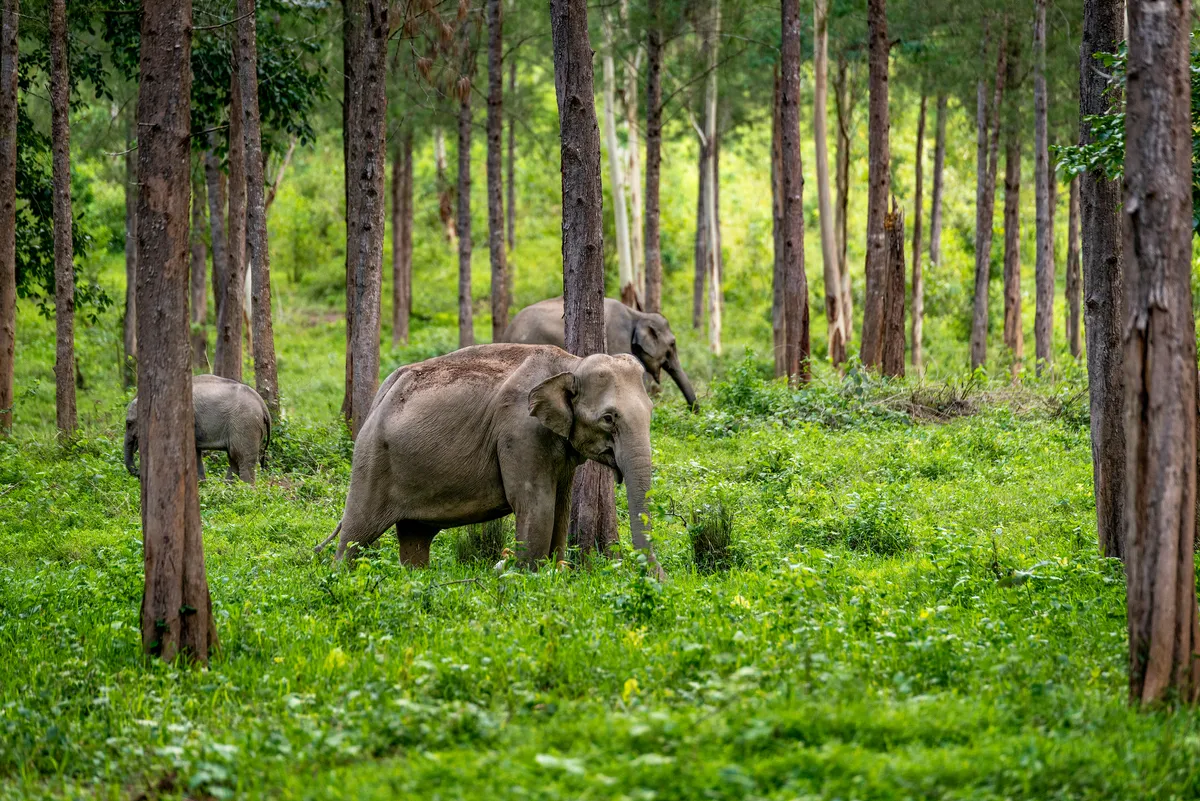
You may encounter wild Asian elephants on your trek, warns one company that organises adventure trips in Thailand, and they can be a risk, but here’s how to recognise any danger signs. “If its ears are flared wide, or it’s swaying its head, raising its trunk, or trumpeting, those are signs of agitation,” it warns.
- "Our jungle guide sprang into action, shouting urgently 'Run! Quickly! Run!' We were seemingly running for our lives from we knew not what"
- The car was stuck in the mud. Then an elephant charged. I still can’t believe what happened next
Earlier this year, a Thai tourist was trampled by an elephant while camping in Khao Yai National Park. Rangers, it was reported, said the bull elephant was in musth, a natural, breeding state which makes them more unpredictable and aggressive.
Feral dogs

In all likelihood, the most dangerous animals you can meet while hiking in remote regions are feral (or even just loose) dogs. One local guide on the island of Curaçao in the Caribbean describes how he has been bitten twice, once badly, by dogs that were either not or poorly restrained.
He’s tested a number of deterrents and now recommends either an ultrasonic device or a very loud ‘doghorn’ to ward off potential attacks. Failing that, a big stick can be handy.
If you are bitten or scratched by dogs - or any wildlife – always seek medical attention within 24 hours and let them know if you are vaccinated against rabies