
12 Angolan giraffes have been successfully reintroduced into Bicuar National Park in south-west Angola, as part of an ambitious multi-year effort to restore the species across the country.
Once widespread across southern Angola, native Angolan giraffe populations disappeared from much of their historic range following decades of civil conflict, habitat degradation and poaching.
Building on the recent reintroduction of two Angolan giraffe herds to Iona National Park in 2023 and 2024, the latest translocation was completed by the Giraffe Conservation Foundation (GCF), in partnership with Angola’s Instituto Nacional da Biodiversidade e Áreas de Conservação (INBAC) – an important step forward in restoring Bicuar’s the wildlife and ecological integrity of the landscape.
“Every translocation is years in the making,” says Stephanie Fennessy, Executive Director for GCF. “Lots of assessments, planning and then so many players and logistics - everything has to come together. The actual capture, tagging, the long journey, border crossings…. Everything is super-stressful, and you worry about the animals all the time.
"It’s such an amazing feeling to see the giraffe step of the truck and set foot into this new landscape. It’s such a relief, and then the feeling sets in that you have done it: we have returned Angolan giraffe to their historical home in Angola. We have made a difference. Not many people can say that.”
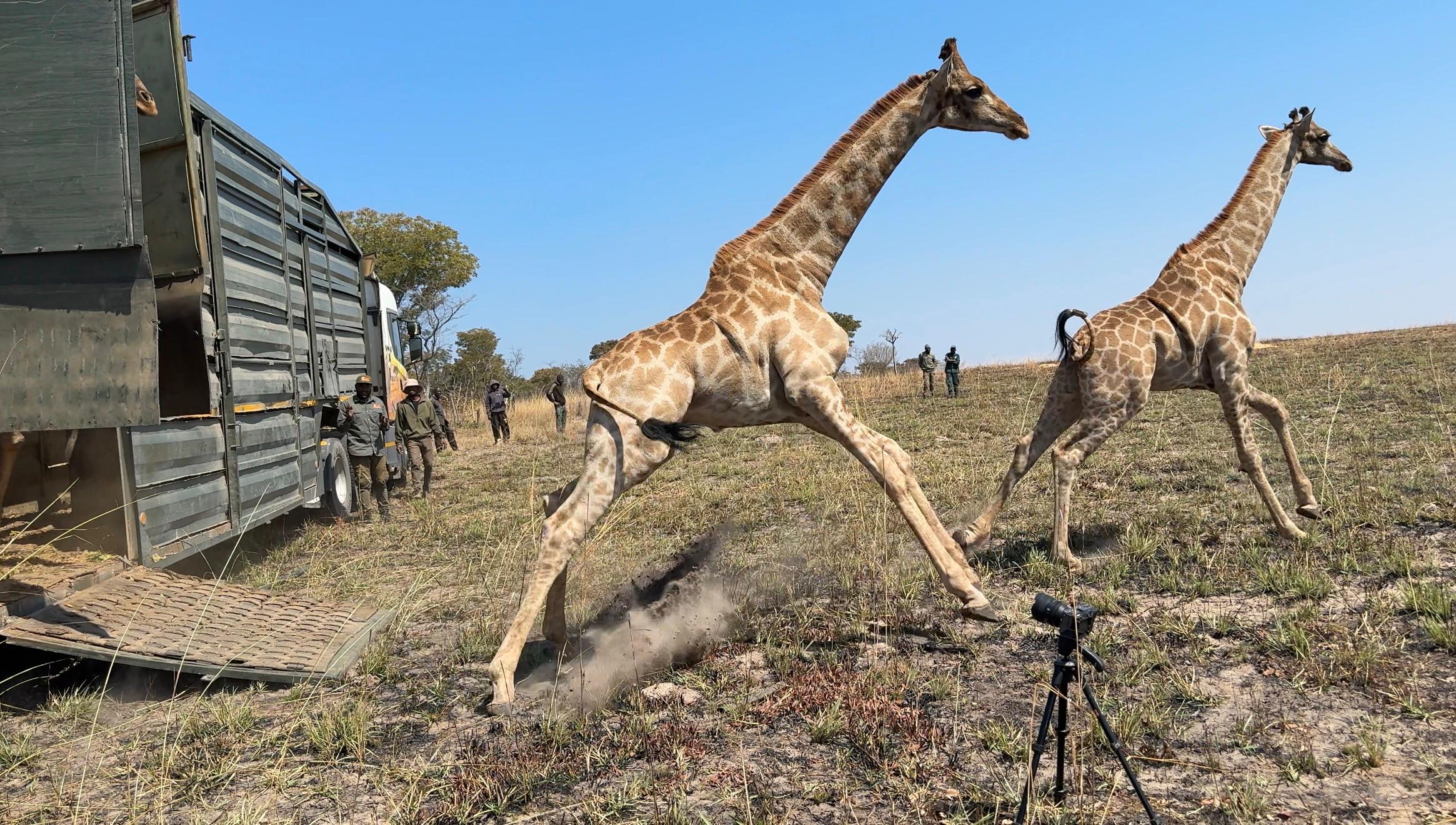
Only 140,000 giraffes remain currently across the whole of Africa, including an estimated 15,600 Angolan giraffes. Giraffes play a vital role in a functional ecosystem, serving as landscape architects and ecosystem engineers. Their browsing habits maintain vegetation structure, which supports a wide array of biodiversity.
To maximise genetic diversity and long-term population viability, the 12 giraffes were carefully selected from two distinct properties in Namibia.
Capturing and transporting 12 such large animals isn’t easy. “Clearing the border is a challenge that takes time, even if all the right paperwork is in-hand, and then from the border, it was still a 24-hour drive on challenging roads,” explains Fennessy.
“The road into the park hadn’t been prepared well, so the truck got stuck at 2am. But in the end, they made it. There are lots of challenges in a translocation that need to be overcome and you have to think on your feet. The cell phone network in all of Angola was down during the entire operation, which didn’t help either.”
- Giraffes only sleep for 30 minutes a night and only drink a couple of times a week? Discover crazy facts about the world's tallest animal
- Giraffe guide: species facts, lifespan and habitat
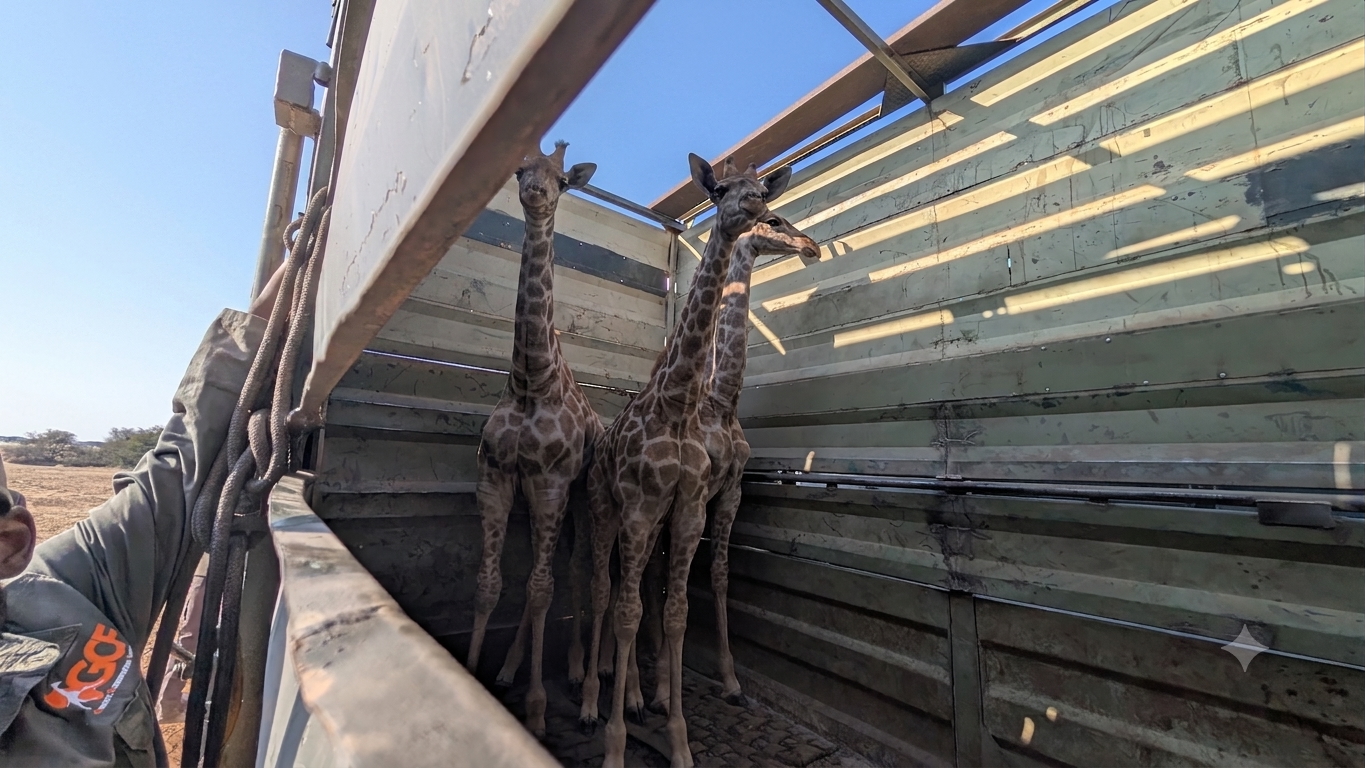
All 12 giraffes have been fitted with solar-powered GPS satellite-tracking devices to allow the GCF and INBAC field teams to remotely monitor their movement patterns, home range establishment and habitat use, observing whether they remain together or explore their new home independently.
This translocation is part of a larger, long-term national recovery framework and aligns with the newly approved National Giraffe Conservation Action Plan for Angola (2026–2030), recently endorsed by the President of Angola.
Pending the success of this initial group, additional translocations are likely to follow in the coming years to further strengthen the population, including planned reintroductions for Kissama National Park and Chimalavera Regional Park, following feasibility studies to evaluate multiple historic range areas.
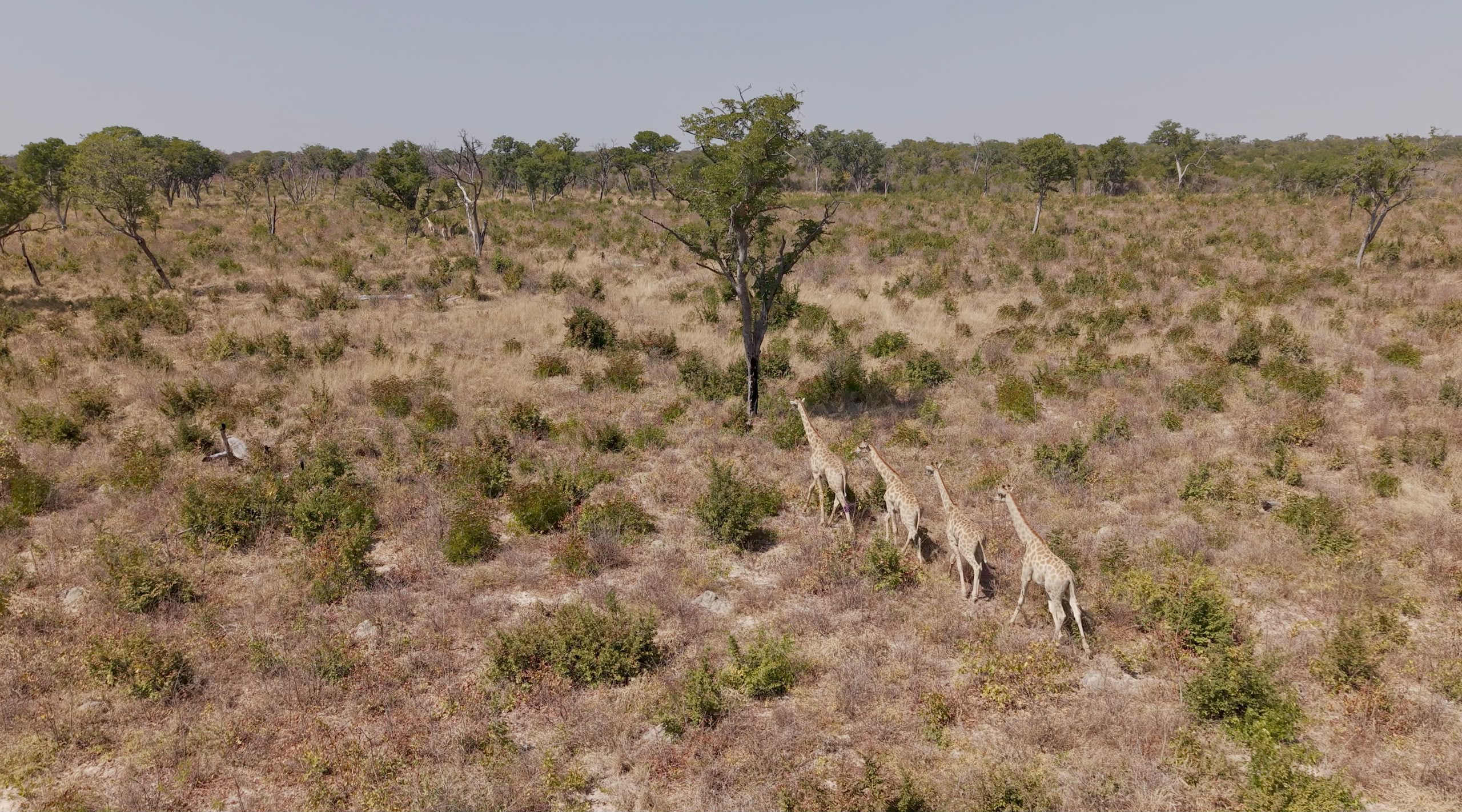
As well as their importance in the long-term conservation picture, giraffes are also a major draw for visitors, with Angola currently working to increase tourism in the country. New flight routes are launching in the next few years, with several new safari lodges and camps also set to open.
Elephant populations have already been reintroduced into the south-east of the country, with longer-term plans including rhino reintroductions. “INBAC asked GCF for our support, as Angola is keen to rewild their national parks,” says Fennessy.
“There is a lot of enthusiasm and we have developed a strong partnership over the years. Angola is keen to develop tourism and it goes hand in hand with conservation. We’re excited to work with the government to make a real difference."
Top image: Angolan giraffe capture in Namibia. Credit: Giraffe Conservation Foundation
More wildlife stories from around the world
- Rare primate spotted in Vietnamese forest. It was carrying something special in its arms
- Jaguar experts camera-trapped the Amazon – and discovered a dark secret
- 1,900 giant sequoia trees saved from death in California. This is how
- Researchers sawed samples from a remote island in Antarctica. They found a “hidden diversity” of life


