
Despite being widely regarded as solitary predators, jaguars have much more complex social lives than previously thought, according to new research published in the journal Animal Behaviour.
- Researchers tracked 172 jaguars across the Americas. What they found could help protect the big cats
- Jaguar experts camera-trapped the Amazon – and discovered a dark secret
The Pantanal, the world’s largest tropical wetland area in the Brazilian state of Mato Grosso do Sul, is sometimes referred to as the ‘kingdom of the cat’ – and for good reason, as it hosts the highest density of jaguars on the planet.
Northern Pantanal is a particularly good setting for observing the social behaviour of jaguars because the abundance of both aquatic and terrestrial prey means the wild cats are more likely to have interactions that don’t escalate into conflict.
That's why researchers from the Jaguar Identification Project – along with the help of citizen scientists, the University of Florida, University of Mato Grosso in Brazil, Panthera and World Wildlife Fund (WWF) – chose this region to conduct a 13-year study of elusive wild cats.
Between them, they identified 459 individual jaguars, forming the largest long-term dataset of directly observed jaguar interactions.
Based on 1,710 days of systematic river-based surveys conducted in Porto Jofre, a settlement in southern Brazil, the researchers documented 167 social interaction events involving 69 individual jaguars.
“Several years of identifying individuals, following family relationships and recording observations created a unique opportunity to ask questions about jaguar social behaviour that cannot be answered through short-term studies,” said Abigail Martin, Jaguar Identification Project director and co-author of the study.
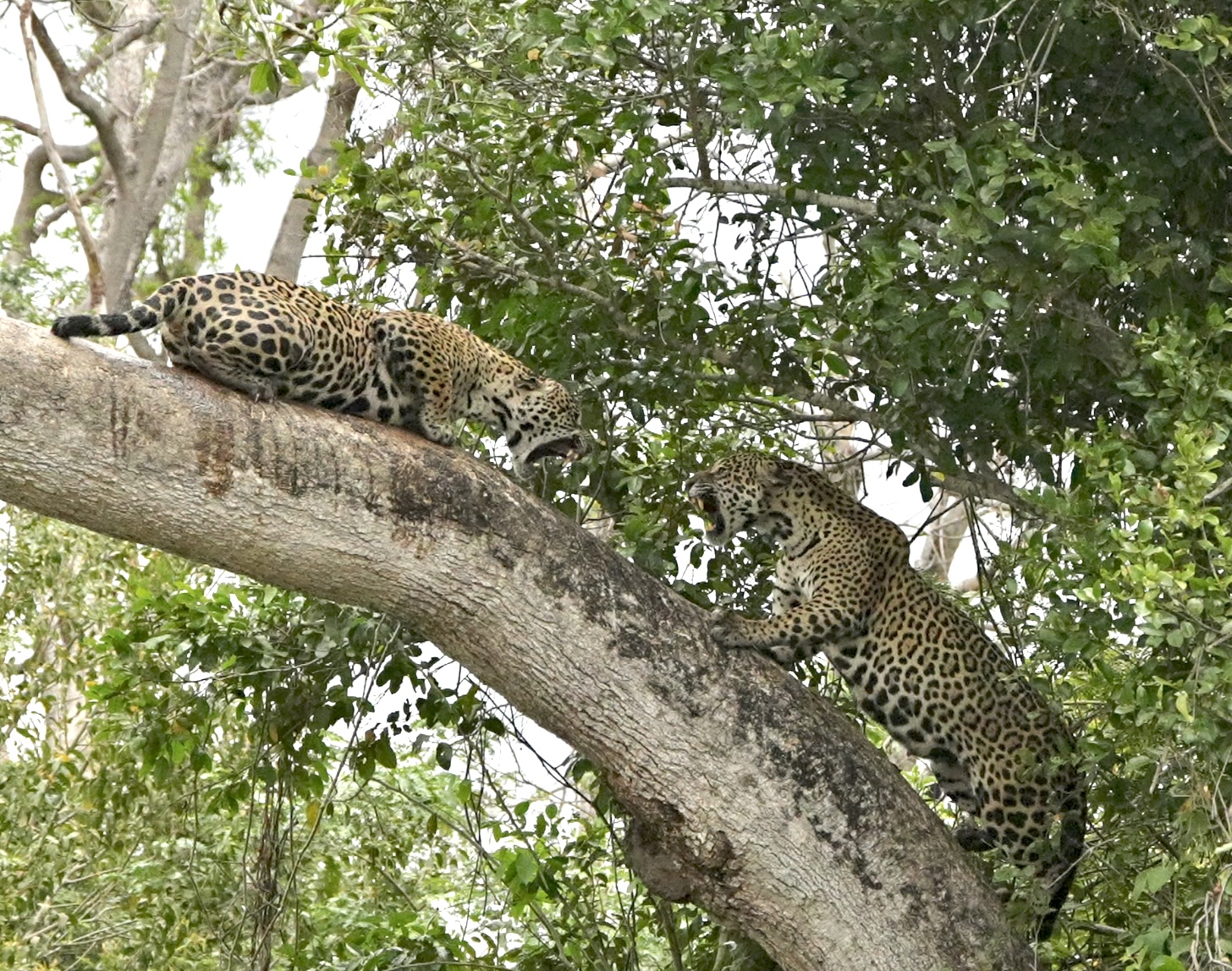
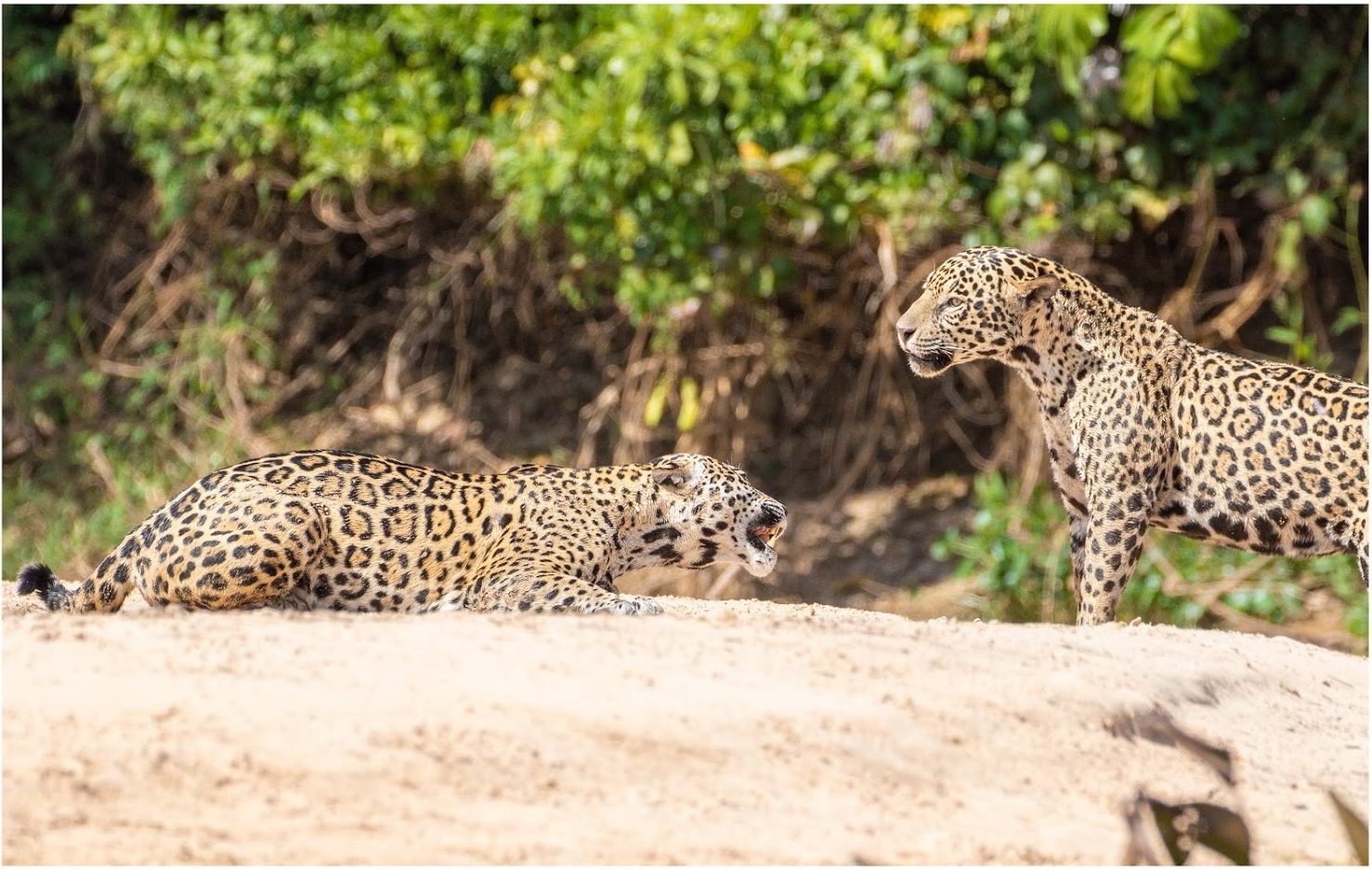
The study shows that the social lives of these wild cats are not dominated by aggression, with only 24.5 per cent of the recorded interactions interpreted as agonistic – related to struggle, contest or conflict. The majority were neutral (36.5 per cent) or affiliative (38.9 per cent). Affiliative behaviours included eating, resting, moving, grooming, hunting or playing together.
Nearly 68 per cent of those affiliative interactions happened between related individuals, mostly related males. In contrast, the majority of agonistic interactions occurred between individuals with an unknown relation to each other.

- Tourists witness jaguar fighting puma in Brazilian wetlands
- These 9 incredible, brutal jaguar photos reveal the lethal power and fierce cunning of these top predators
Kinship
“The study also provides the first evidence that kinship plays an important role in jaguar social interactions, similarly to other felid species such as leopards, ocelots, bobcats and Eurasian lynxes,” said Valeria Boron from WWF-UK and lead author of the study.
“The kinship hypothesis proposes that related individuals are more likely to relax territorial boundaries and disputes because they are still favouring the success of their genetic lineage.”
The researchers didn’t just focus on individual interactions – for the first time in a study of jaguars, they used social network analysis to investigate how those interactions were distributed across the population.
What emerged from this analysis was a semi-structured network comprising 13 distinct but connected clusters of jaguars. These clusters also seem to have ‘representatives’ of sorts, as a small number of individuals played a disproportionately important role in maintaining connection within and between groups.
“What surprised us was not simply that jaguars interacted, but how these interactions were organised, said Raissa Sepulveda, conservation scientist for Panthera. "The findings suggest that jaguar populations may be organised not simply as isolated, territorial individuals, but as networks of animals whose movements, family relationships and interactions are interconnected."
Conservation
Jaguars are facing increasing pressure from habitat loss, human-wildlife conflict and direct killing. With the species listed as Near Threatened on the International Union for Conservation of Nature's (IUCN) Red List, the new findings on social relationships and dynamics between populations are extremely important for future conservation of jaguars.
The researchers are arguing that conservation strategies moving forward should consider these wild cats not only as individual animals but as members of socially and spatially connected groups.
The findings show that a negative impact on one individual jaguar does not just impact one animal – now that we know some of them play a bigger role within their communities than others, the impact can trickle down the social chain. A loss of a jaguar that plays a vital role in connecting clusters can have lasting effects on the whole population.
- "When their lives are threatened their 4 inch razor-sharp claws come out and one swipe can sever an artery…" 7 animals that can kill a jaguar
- 9 beautifully intimate photos that capture the raw vulnerability and power of endangered species that could be lost forever
Read the full findings here.
More photos of jaguars
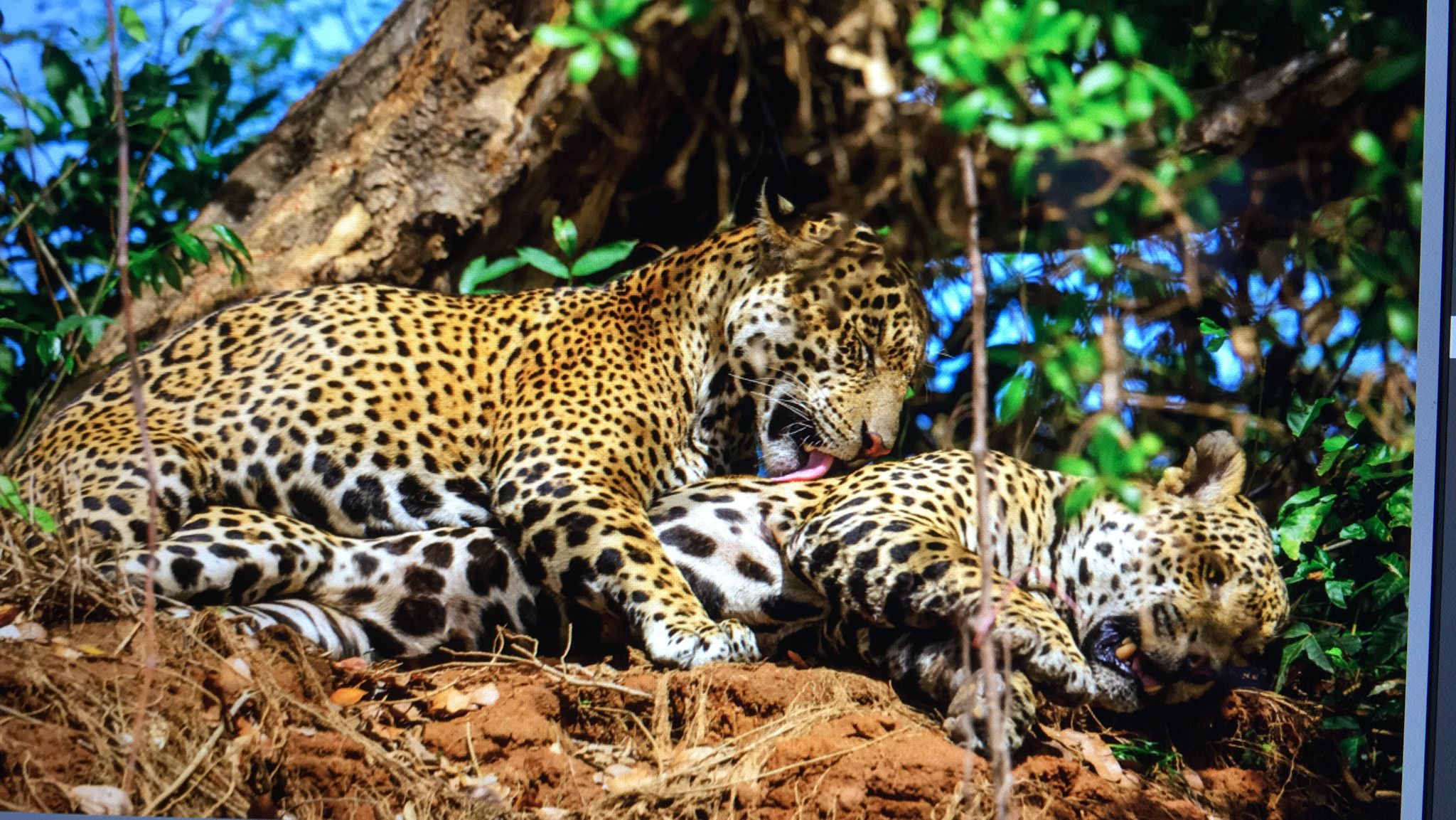



Top image: Cousin jaguars grooming. Credit: Gabriel Felipe via Jaguar ID Project
